HomeownerNew HomeownerSeller January 7, 2026

Thinking About Selling Your House As Is in Richmond? Read This First.

If you are planning to sell your home in Richmond, Chesterfield, Henrico, or the surrounding areas, one of the biggest decisions you will face is this:

Do you sell your house as is, with no repairs and minimal preparation?

Or do you make a few strategic updates to improve how it shows and maximize your price?

In 2026, that choice matters more than it did over the past few years. The market is shifting, and buyers are becoming more selective again. Here is what you should know before you decide.

More Homes for Sale Means Condition Matters Again

Inventory has been climbing, and that changes the dynamic between buyers and sellers.

According to a recent forecast from Realtor.com, the number of homes for sale is expected to increase again this year. As buyers gain more options, they also regain leverage, which means they are paying closer attention to condition, presentation, and overall value.

When buyers have choices, small details start to matter more. Homes that feel move in ready tend to stand out. Homes that feel like projects often face more hesitation.

That is one of the main reasons many homeowners still choose to make at least minor improvements before listing.

Most Sellers Still Choose to Make Some Repairs

A recent study from the National Association of Realtors shows that most sellers do not list completely as is.

Two thirds of sellers made minor repairs or improvements before selling, while only about one third chose to sell as is.
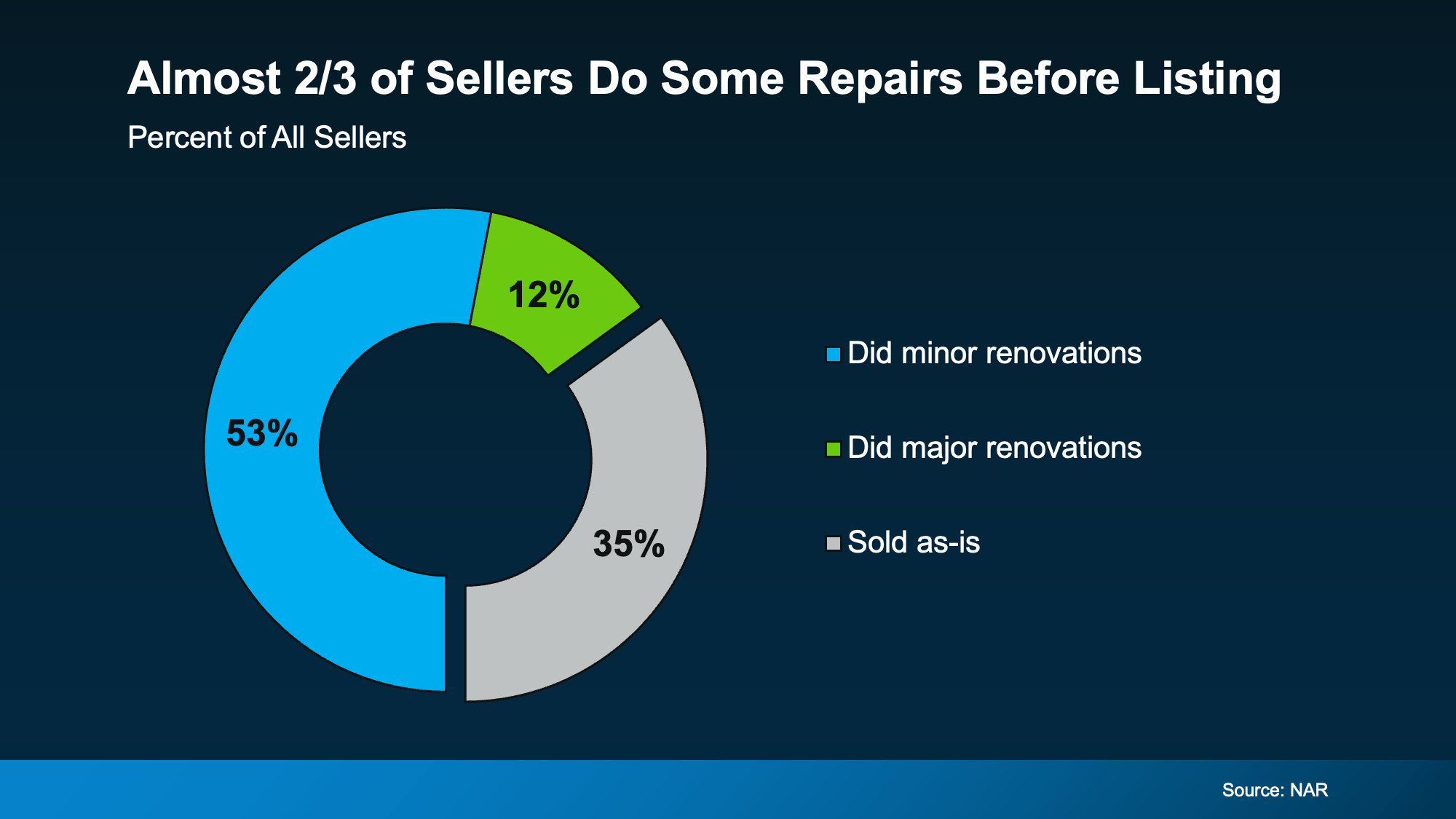
  Percent of sellers who made repairs before selling vs selling as is

Percent of sellers who made repairs before selling vs selling as is

This data highlights an important trend. Even in changing markets, most sellers recognize that small improvements can help protect their sale price and attract more buyers.

What Renovations Actually Pay Off (and Which Don’t)

If you are trying to decide whether to make updates before listing, this video breaks down the top renovations Richmond sellers tend to waste money on and what upgrades actually deliver value for local buyers:

What Selling As Is Really Means

Selling as is means you are telling buyers upfront that you do not plan to make repairs before listing and that you may not negotiate repairs after inspections.

That can absolutely simplify the process on your end. However, it also comes with trade offs.

Homes sold as is often:

• Attract a smaller buyer pool
• Receive fewer showings
• Sit on the market longer
• Generate lower offers
• Invite stronger negotiation from buyers
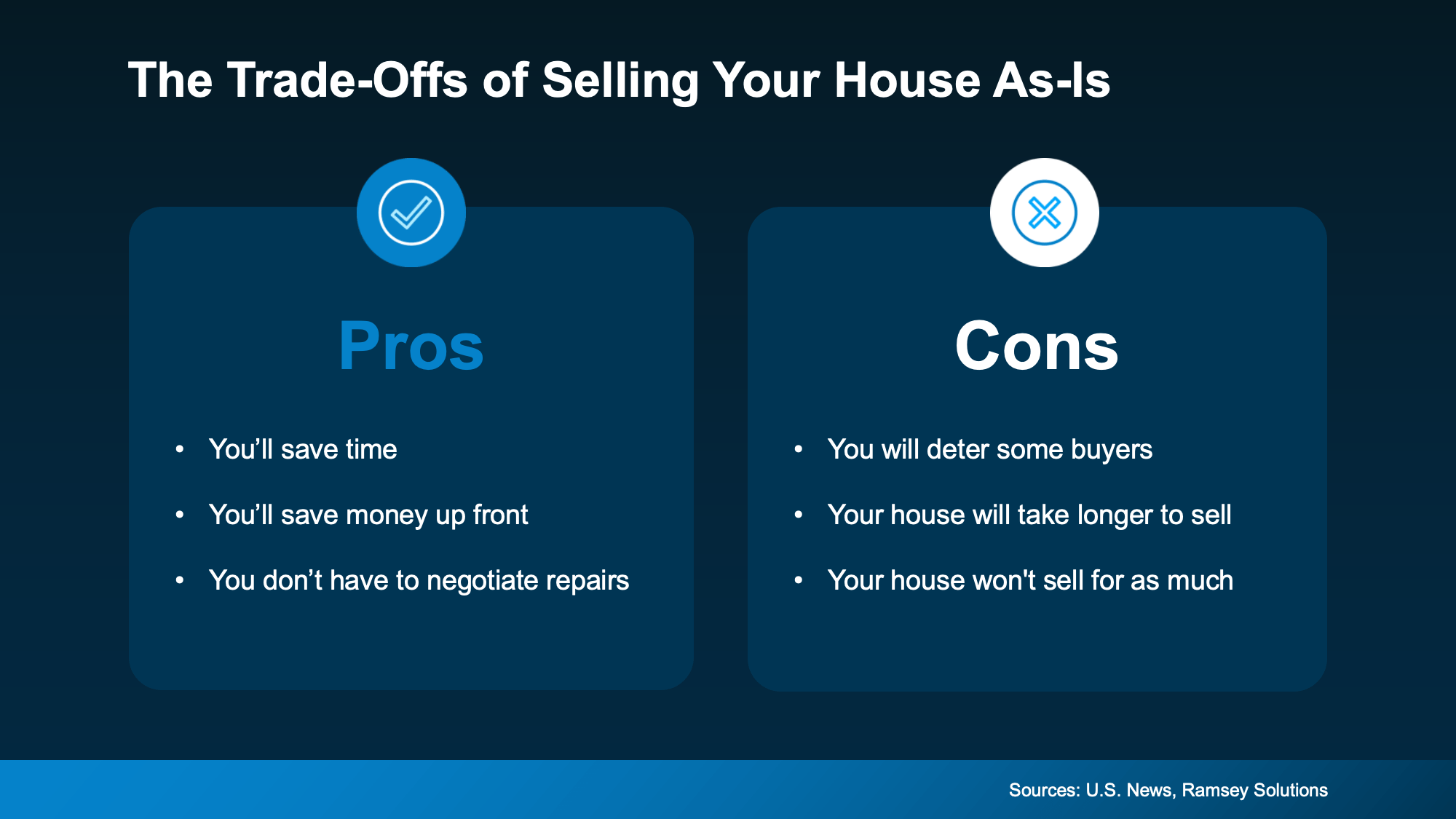
  Trade offs of selling a home as is versus making repairs

Trade offs of selling a home as is versus making repairs

Move in ready homes tend to attract more buyers, stronger offers, and smoother transactions. Homes that need work still sell, but often at a discount that exceeds the cost of the repairs themselves.

According to Zillow research, homes that are well presented and competitively priced typically sell faster and for more money.

The Decision Is Not One Size Fits All

Selling as is can still make sense in certain situations. For example:

• Inherited properties
• Major repairs that are not financially feasible
• Homes priced to reflect condition
• Investors focused transactions

The key is understanding how your specific home will be perceived in your local market and what buyers are currently responding to.

This is where professional guidance makes a difference.

How a Local Agent Helps You Decide

A knowledgeable local agent does more than list your home. They help you evaluate your options before you ever go live.

At Don Reid Properties, we help sellers:

• Compare estimated sale prices with and without repairs
• Identify high impact improvements that buyers care about most
• Avoid unnecessary updates that do not add value
• Position the home correctly for current buyer expectations
• Market the home effectively no matter which route you choose

If you decide to sell as is, we focus on highlighting the home’s strengths like location, layout, lot size, and potential.

If you choose to make updates, we help prioritize the improvements that typically deliver the best return based on current buyer behavior in the Richmond area.

Timing Still Works in Your Favor

Another important point to consider is timing. Spring traditionally brings the highest level of buyer activity. That means there is still time to make thoughtful improvements without rushing or over investing.

Strategic preparation now can help you hit the market at the right moment with confidence.

Bottom Line

Selling your house as is can still be the right move in certain situations. But in today’s market, it can also come at a cost.

You do not have to make repairs before you list. But you should fully understand what each option means for your final sale price and timeline.

If you are thinking about selling inRichmond, Chesterfield, Henrico, or the surrounding areas, let’s have a quick conversation about your home and your goals so you can make the best decision possible.

Thinking about selling and not sure whether to sell as is or make repairs?

📞 Call or text Don Reid Properties at (804) 929 4475
🌐 Visit: https://www.donreidproperties.com
📍 Serving Richmond, Chesterfield, Henrico, or the surrounding areas


Seller January 7, 2026

Why You Should List Your Home at the Beginning of the Year

New year, fresh possibilities. And if you’re a homeowner considering selling, you might be surprised to learn that the start of the year is also an ideal time to list.

Listing your home at the beginning of the year can give you a competitive edge, get ahead of the market, and attract serious buyers—all of which can potentially lead to a faster, smoother sale.

  1. Less competition

  • While the spring and summer months are often seen as the “traditional” selling season in many housing markets, it can also get crowded, creating a highly competitive environment. 

  • By choosing to sell at the start of the year, your property has a better chance of standing out because there are typically fewer homes for sale. 

  • This reduced competition can lead to quicker sales and potentially better offers, as buyers have fewer options to choose from.

2. Serious and highly motivated buyers

  • January may not be the busiest time for real estate, but it brings a pool of serious buyers who are ready to make offers instead of just casually browsing.

  • Many buyers who are shopping for homes in the winter are doing so because they have a specific need, such as relocating for a job, downsizing, or wanting to get settled before spring. 

  • Since both parties are eager to close the deal, this often leads to more straightforward negotiations and a faster closing process.

3. ‘New year, new start’ mindset

  • The New Year is synonymous with fresh starts. For many people, it’s a time for setting significant resolutions, such as purchasing their dream home.

  • By listing your home for sale in January, you may be able to tap into this mindset and attract buyers who are looking to make a change in the new year.

  • Buyers who want to embrace a fresh start are usually growing families planning for the next school year, first-time buyers finally making their move after saving, or renters seeking more space.

4. Quicker transactions

  • With fewer transactions happening, it is generally easier to schedule services such as appraisals and home inspections. This potentially leads to quicker turnaround times for necessary paperwork.

  • Real estate professionals are most likely to be back motivated and refreshed from their holiday breaks. Agents, brokers, stagers, and even banks, mortgage lenders, and underwriters may have lighter workloads around this time, giving more attention to each transaction.

  • Moving companies are typically less busy, making it easier to book their services compared to when it’s peak moving season.

5. Flexibility for your future plans

  • By listing your home for sale in January or February, you may be able to get a head start on your moving plans. You will have more time to find your next home and be prepared for necessary changes, especially if you have a specific timeline in mind.

  • You have more control over the timing of the sale and won’t need to compete with the upcoming influx of new listings. By the time others are just starting to think about selling, you’re already preparing for your life’s next chapter.

HomeownerSeller January 5, 2026

The Real Cost of Selling Without an Agent in Richmond

Selling your home without an agent can sound appealing at first. No listing commission. Full control. A faster sale, at least in theory.

But in practice, many homeowners in Richmond, Chesterfield, Henrico, and the surrounding areas are surprised by the hidden costs, risks, and missed opportunities that come with selling without professional representation, especially when a buyer also shows up without an agent.

Let’s break down what really happens and what it could cost you.

What Happens When a Buyer Doesn’t Have an Agent?

When a buyer doesn’t have an agent, it does not make the transaction simpler. In many cases, it shifts responsibility and risk directly onto the seller.

Without representation, buyers still need guidance, and that guidance often falls on the seller.

That means you may be expected to:

• Explain contract terms
• Coordinate inspections and appraisals
• Navigate negotiations
• Track deadlines and contingencies
• Answer legal and procedural questions

Before we dig further, here’s a quick overview of what sellers often face when trying to manage this process alone: The Secret Pricing Strategy Richmond Sellers Don’t Know (But Buyers Feel Instantly)

This video highlights why industry expertise matters and why many sellers feel overwhelmed when they try to handle everything themselves.

According to the National Association of Realtors, transactions without professional representation are more likely to experience delays or fall apart due to misunderstandings and missed steps.

Most buyers without agents are still relying on someone for guidance. That responsibility often falls directly on the seller.

This increases liability and stress and creates room for costly mistakes.

Pricing Mistakes Can Cost You More Than a Commission

Correct pricing is one of the most important factors in selling a home, and it is one of the hardest to get right without market expertise.

Data from Zillow and Redfin shows that homes priced inaccurately tend to sit longer on the market and often sell for less than similar homes priced correctly from the start.

Common FSBO pricing mistakes in Richmond include:

• Overpricing and chasing the market down
• Underpricing and leaving money on the table
• Misreading neighborhood demand
• Ignoring seasonal and local trends

A longer time on market often signals something is wrong, even when nothing is.

Negotiations Become Riskier Without Representation

Negotiations are rarely straightforward when neither party has an agent.

Buyers without representation often:

• Push aggressively on price or repairs
• Ask for last minute concessions
• Misunderstand contract language
• Walk away due to uncertainty or fear

Professional agents are trained to keep deals together while protecting their client’s best interests. According to Realtor.com, negotiation strategy alone can significantly impact final sale price and terms.

Legal and Disclosure Risks Increase

Virginia is a disclosure driven state, and sellers are legally responsible for accuracy and compliance.

Without an agent, sellers often struggle with:

• Required disclosure forms
• Inspection responses
• Repair negotiations
• Contract deadlines and addendums

The Virginia Department of Professional and Occupational Regulation (DPOR) outlines seller responsibilities and disclosure requirements.

Mistakes here can delay closing or create legal issues long after the sale is complete.

Limited Marketing Means Fewer Buyers

Most buyers begin their home search online through major platforms like Zillow, Realtor.com, and Redfin. However, many buyers still rely on agents to alert them to listings, analyze value, and schedule showings.

Homes sold without an agent typically miss out on:

• MLS exposure
• Agent to agent marketing
• Professional photography and staging guidance
• Paid digital advertising
• Buyer agent networks

Less exposure almost always means fewer offers and weaker negotiating power.

The Hidden Costs Add Up Quickly

Skipping an agent may seem like a savings strategy, but many FSBO sellers experience:

• Longer time on market
• Lower final sale price
• Increased stress and time investment
• Higher legal risk
• Deals falling apart before closing

According to studies cited by the National Association of Realtors, homes sold without professional representation often sell for less on average than agent represented properties.

Why Working With a Listing Agent Matters

At Don Reid Properties, we help sellers navigate the Richmond area market with a clear strategy built on experience, data, and local insight.

We provide:

• Accurate pricing based on real time market data
• Professional marketing and broad exposure
• Skilled negotiation to protect your bottom line
• Contract management and compliance
• Clear communication from listing to closing

Our focus is not just selling your home, but helping you sell with confidence.

Bottom Line

Selling without an agent, especially when the buyer also has no representation, often creates more risk than reward.

If you are thinking about selling in Richmond, Chesterfield, Henrico, or the surrounding areas, it is worth understanding the full picture before making that decision.

Want to know what your home could sell for and what you would net after closing?

📞 Call or text Don Reid Properties at (804) 929 4475
🌐 Visit: https://www.donreidproperties.com
📍 Serving Richmond, Chesterfield, Henrico and the surrounding areas

Uncategorized December 17, 2025

Is Buyer Demand Picking Back Up in Richmond? What Home Sellers Should Know

The housing market is starting to feel more energized than it has in quite some time and the numbers are backing that up. Mortgage rates have eased nearly a full percentage point this year, and that shift is bringing buyers back into the market.

Home loan applications are rising. Buyer activity is increasing. And sellers who position their homes early may benefit from this renewed momentum before more competition enters the picture.

Here’s what’s happening behind the scenes and what it could mean if you are thinking about selling your home.

When Mortgage Rates Ease, Buyer Activity Responds

In today’s market, buyer demand is closely tied to mortgage rates. As rates come down, more buyers feel confident enough to re enter the market.

Rick Sharga, Founder and CEO of the CJ Patrick Company, explains it this way:

“We’re in an incredibly rate sensitive environment today, and every time we’ve seen mortgage rates drop into the low to mid 6 percent range, we’ve seen an influx of buyers hit the market.”

That is exactly what we are seeing now. Buyers who were previously sidelined due to affordability concerns are starting to apply for mortgages again as borrowing costs improve.

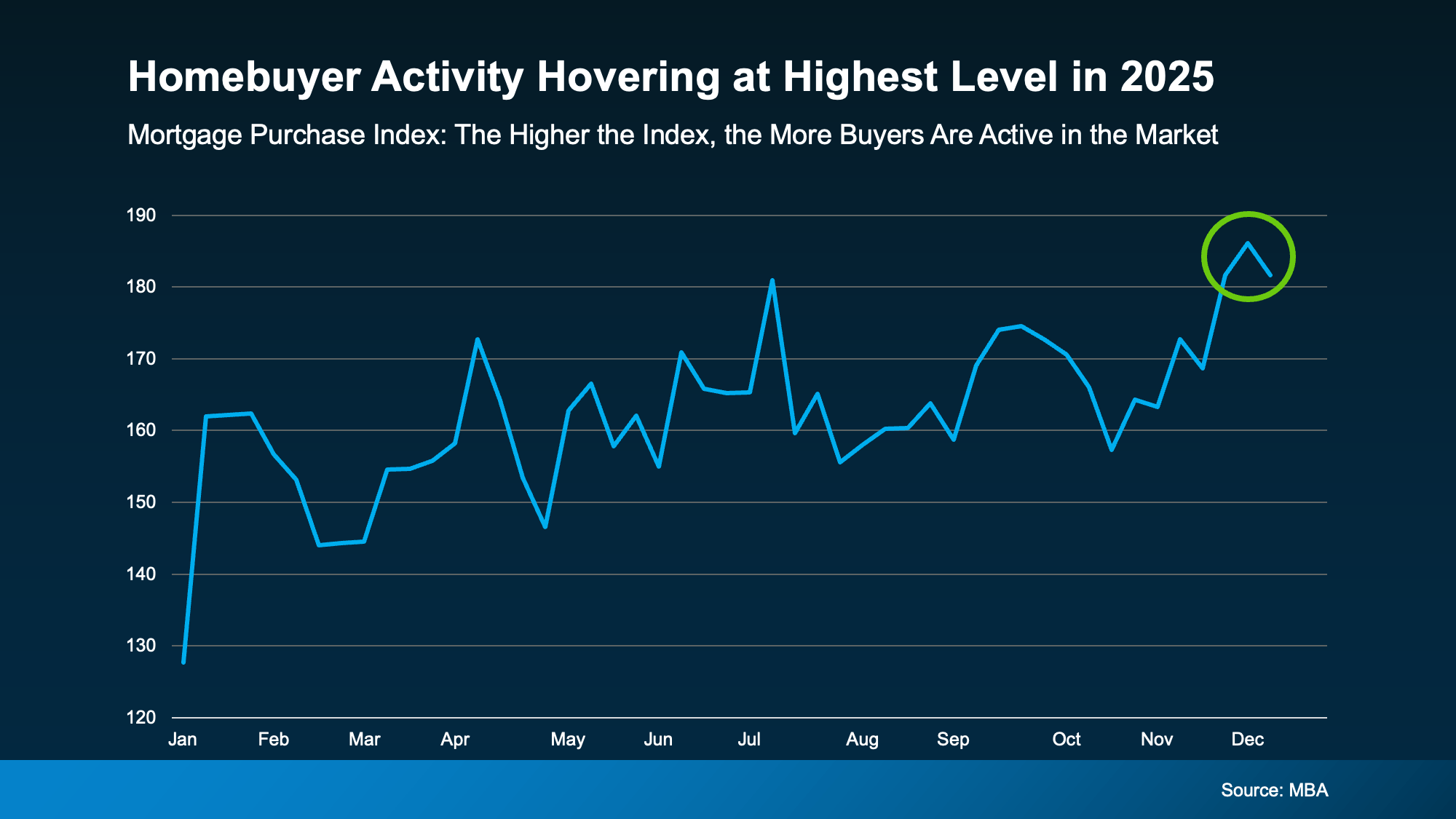
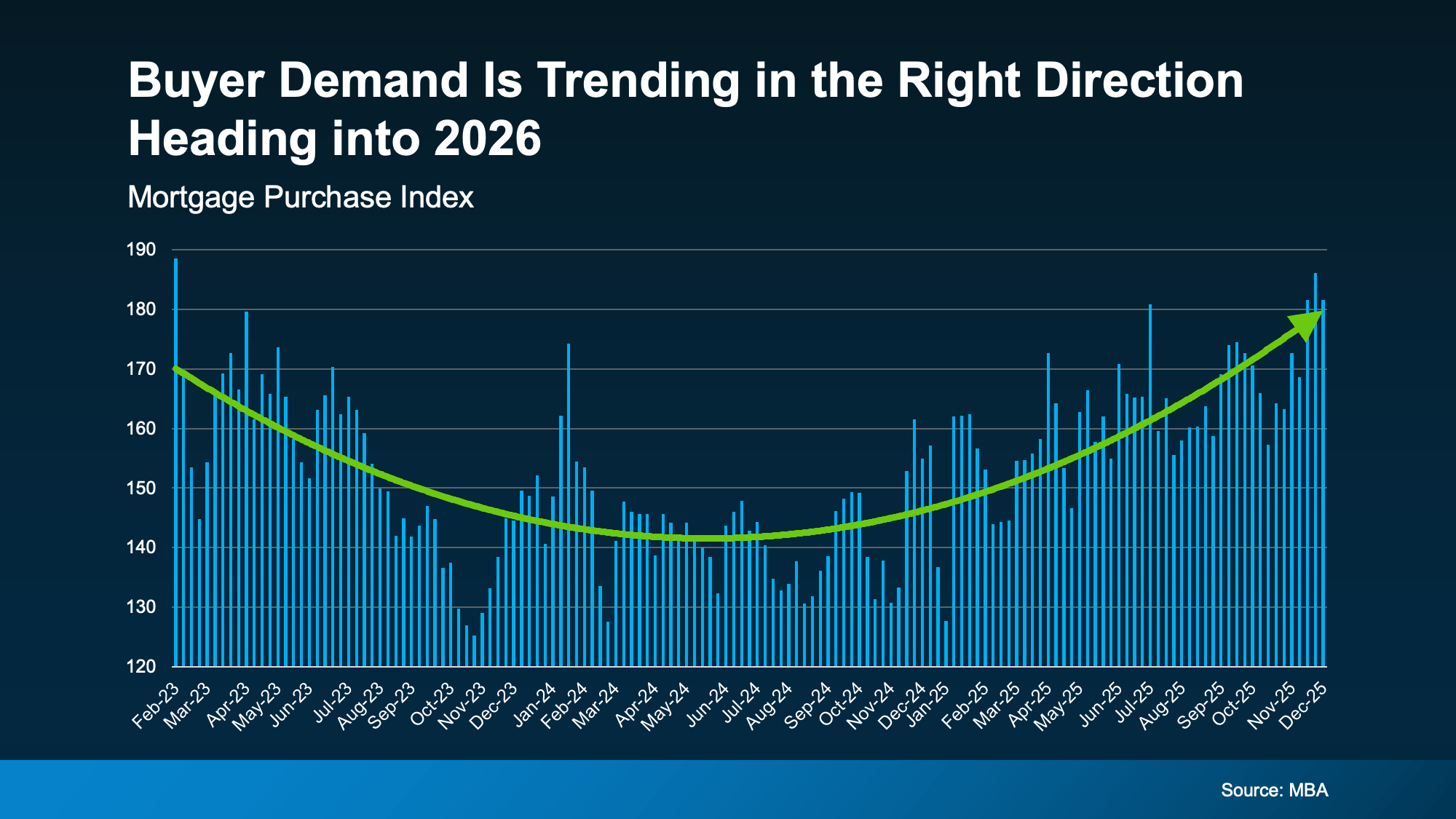
The Mortgage Bankers Association reports that the Mortgage Purchase Index is currently at its highest level of the year. Mortgage applications have also reached their strongest point in nearly three years. That is a meaningful sign that buyer demand is trending in the right direction as we head toward 2026.

This increase is not just a short term reaction or pent up demand. The data shows a steady buildup of momentum throughout the year.

The key takeaway for sellers is simple. As rates have come down, buyers are easing back into the market and that interest is turning into real contracts on homes just like yours.

Pending Home Sales Are Trending Up

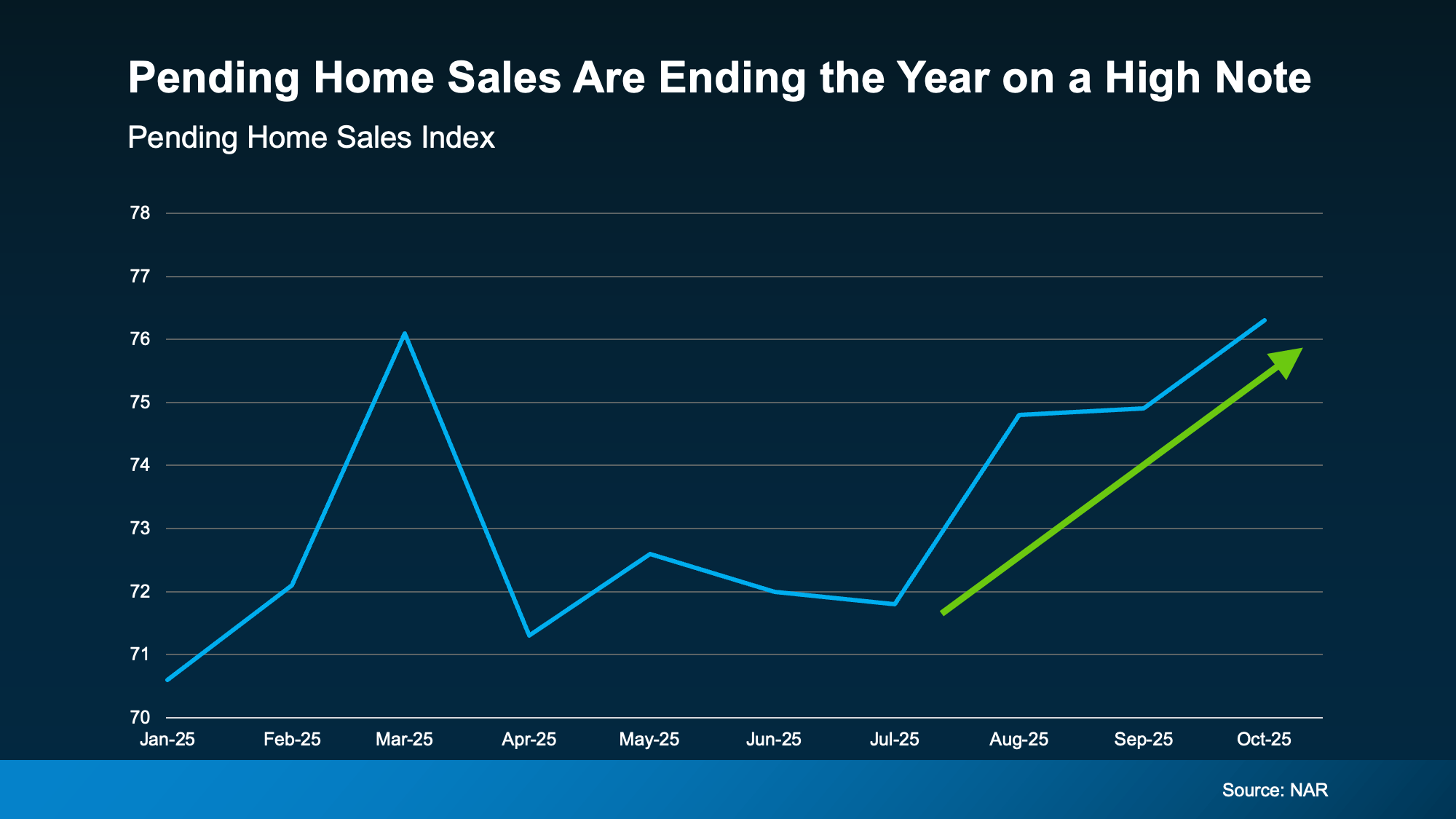
Another strong indicator of improving demand comes from the National Association of Realtors. Pending home sales which reflect homes currently under contract are also at their highest level this year.

This matters because pending sales are a leading indicator of future closings. When more homes go under contract, it usually means more homes will sell in the months ahead.

As a result, many experts expect overall home sales in 2026 to be slightly higher than in 2025 and 2024. While mortgage rates may fluctuate a bit, forecasts suggest they should remain relatively stable throughout the coming year. That stability helps support continued buyer confidence.

What This Means for You as a Seller

This shift in the market creates a real opportunity for homeowners who are considering selling.

Selling sooner rather than later may offer several advantages:

More buyer demand. As affordability improves, you may see more showings and stronger interest when your home is priced and presented correctly. Many buyers feel they have waited long enough and are motivated to act.

Getting ahead of the competition. Listing before more sellers recognize the shift can help your home stand out and capture attention early.

If you previously delayed selling because buyer activity felt slow or if you took your home off the market due to limited interest this could be the sign you were waiting for.

Bottom Line

Buyer demand is showing real signs of life again and the momentum is building heading into 2026.

If you want to understand what this means for your specific neighborhood and how to position your home for success, let’s talk. Listing early in the new year could help you take advantage of improving conditions and motivated buyers.

Reach out to Don Reid Properties to start the conversation and see what this market shift could mean for you.

HomeownerReal Estate Market TrendsSeller December 10, 2025

What Questions Should You Ask When Selling a House? Your Essential Guide from Don Reid Properties

Selling your home is one of the biggest financial decisions you will ever make. Whether you are upsizing, downsizing, relocating, or simply ready for a change, knowing the right questions to ask can help you protect your equity and ensure a smooth, successful sale.

At Don Reid Properties, we guide homeowners across Richmond, Chesterfield, Henrico and the surrounding areas through every step of the selling process. Below is your complete list of the most important questions to ask before selling a home, along with expert insight to help you feel confident, prepared, and informed.
1. What Is My Home Really Worth in Today’s Market?

Pricing your home correctly is the number one factor in how quickly and profitably it sells. Avoid guessing or relying on automated estimates.

A professional valuation looks at:

  • Current market conditions

  • Comparable recent sales

  • Neighborhood trends

  • Condition and features of your home

Helpful Resource:
Federal Housing Finance Agency House Price Index

At Don Reid Properties: We provide a detailed property value report and walk you through exactly how your home compares to others in the Richmond region.

2. What Costs Should I Expect When Selling?

Common seller expenses include:

  • Title and escrow fees

  • Commissions

  • Repairs and improvements

  • Potential capital gains

  • Closing costs

  • Concessions requested by the buyer

Helpful Resource:
Consumer Financial Protection Bureau Closing Costs Guide

At Don Reid Properties: We outline all estimated selling expenses upfront so you know exactly what to expect.

3. What Repairs or Improvements Should I Make Before Listing?

Not every update brings a return, but some repairs can significantly boost your home’s value or curb appeal.

Important questions to ask:

  • Which repairs are required for buyer financing?

  • Which improvements provide the best return?

  • Should I offer a credit instead of completing a repair?

Helpful Resource:
US Department of Housing and Urban Development Minimum Property Standards

At Don Reid Properties: We evaluate the cost versus benefit of potential improvements and help you prioritize what truly matters.

4. How Long Will It Take to Sell My Home?

Market conditions vary by location and season. In Richmond, Chesterfield, and Henrico, factors include:

  • Inventory levels

  • Buyer demand

  • Price point

  • Home condition

At Don Reid Properties: We analyze hyper-local data to give you a realistic timeline, not a one size fits all estimate.

5. What Is the Best Marketing Strategy for My Home?

Exposure is everything. Your agent should have a proven, modern marketing plan that goes beyond just listing the home on the MLS.

Ask about:

  • Professional photography and videography

  • Social media strategy

  • Community engagement

  • Digital advertising

  • Neighborhood targeting

  • Email and follow up systems

Helpful Resource:
National Association of Realtors Research and Statistics

At Don Reid Properties: You receive a full scale marketing system designed to attract the right buyers quickly and maximize your sale price.

6. What Should I Expect During Showings and Negotiations?

Important questions:

  • How will showings be scheduled?

  • What feedback will I receive?

  • What is the negotiation strategy?

  • How will multiple offers be handled?

At Don Reid Properties: We manage all showings, communication, and negotiations so you stay stress free while getting the strongest possible offer.

7. What Are My Legal Obligations as a Seller?

Every state requires property disclosures. Failing to disclose issues could lead to legal problems.

Helpful Resource:
Virginia Residential Property Disclosure Act

At Don Reid Properties: We guide you through all required disclosures and help protect your interests throughout the process.

8. What Happens After I Accept an Offer?

Many sellers are surprised by how much happens after the contract is signed. Inspections, appraisal, financing, repairs, title work, and scheduling must all be coordinated correctly.

Helpful Resource:
US Department of Housing and Urban Development Home Selling Basics

At Don Reid Properties: We handle every step from contract to closing and keep you updated at all times.

Final Thoughts: Start with the Right Questions and the Right Team

Selling your home should feel empowering, not overwhelming. When you have the right information and the right real estate partner, you can make confident decisions and achieve a successful sale.

At Don Reid Properties, we proudly serve Richmond, Chesterfield, Henrico and the surrounding areas, providing a seamless, informed, relationship-focused experience for every client.

Ready to Sell? Let’s Talk.

Whether you are just starting to think about selling or ready to put your home on the market, we are here to help you understand your options, protect your investment, and accomplish your goals.

📞 Call Don Reid Properties at: (804) 929 4475
📩 Book a consultation: https://calendly.com/donreidproperties/
🌐 Visit our website: https://www.donreidproperties.com

📹 Watch: Sell Your Richmond Home Fast in 90 Days

Learn how to sell your home quickly with a clear 90-day timeline that most realtors won’t share. This video walks you through each step, from preparing your home to closing the sale, with expert tips and strategies tailored for Richmond, Chesterfield, Henrico, and the surrounding areas.

BuyerNew Construction December 9, 2025

This May Be the Best Time To Buy a Brand New Home in Richmond, Chesterfield, Henrico and the Surrounding Areas

If you have been dreaming of a new construction home that is modern, efficient, and move in ready, this season may be the most promising opportunity we have seen in years. Builders are offering more inventory and more incentives, giving buyers a rare chance to secure both the home they want and the deal they need.

For a quick breakdown of what is happening in today’s market and how it impacts you as a buyer, watch our video here:

📺 Watch on YouTube:
https://www.youtube.com/watch?v=GBrH0tiJIBs

Then come back to this post for a deeper dive into the numbers and the strategy.

Here is what is happening right now and why partnering with a trusted local agent at Don Reid Properties positions you to win in today’s new construction market.

1. There Are More New Homes Available Than Usual and That May Change Soon

Across the Richmond region and nationwide, new construction inventory is higher than normal. That means buyers today have access to:

  • Newer cutting edge communities

  • A wider selection of move in ready homes

  • More floor plans and layouts

  • Modern designs, premium finishes, and turnkey features

But this wave of options is not expected to last.

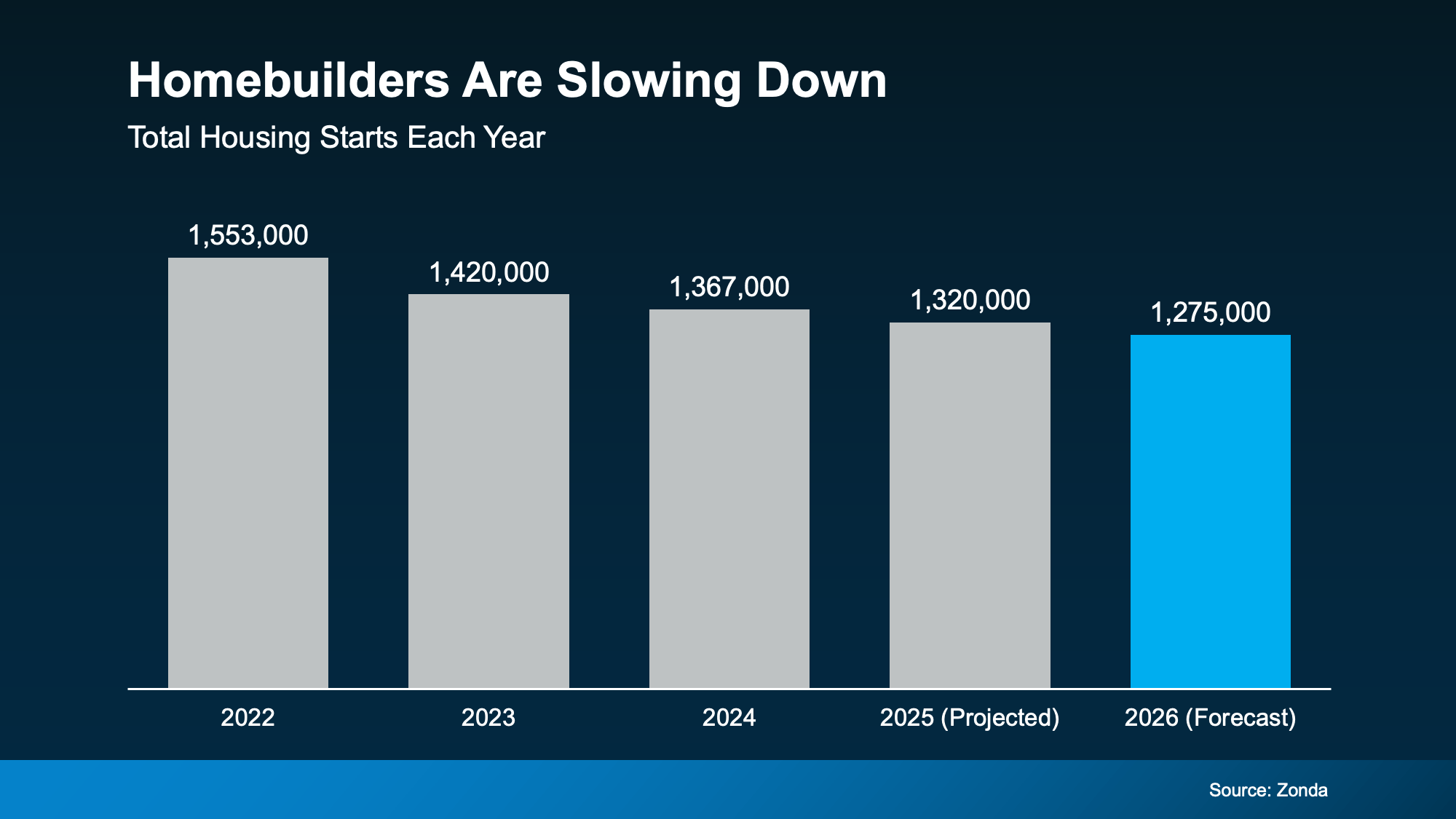
According to Zonda, builders have already started reducing the number of new home starts over the past few years. This helps prevent overbuilding, but it also signals something important for buyers: the peak of new home choices may be happening right now.

Forecasts show this gradual slowdown continuing next year, which means current inventory may represent your widest range of all new options for quite some time.

Redfin reports that roughly one in three homes, or twenty seven percent, on the market today are new construction. While this figure is higher than historical averages, it is the lowest share in four years, matching the trend of builder pullbacks.

If you want more choices when shopping for your next home, acting now gives you a clear advantage.

Why are builders slowing down? With more new homes available than usual, builders want to focus on selling what is already built instead of adding more. And that leads to the biggest opportunity buyers have today.

2. Builder Incentives Just Reached Their Highest Levels in Years

To help move their existing inventory, builders are offering incentives at some of the strongest levels we have seen in years. Many of these perks directly help buyers save money and improve affordability.

Today’s buyers are receiving:

  • Lower purchase prices

  • Closing cost assistance

  • Complimentary upgrades such as premium finishes, appliance packages, and smart home features

  • Mortgage rate buydowns that reduce your monthly payment

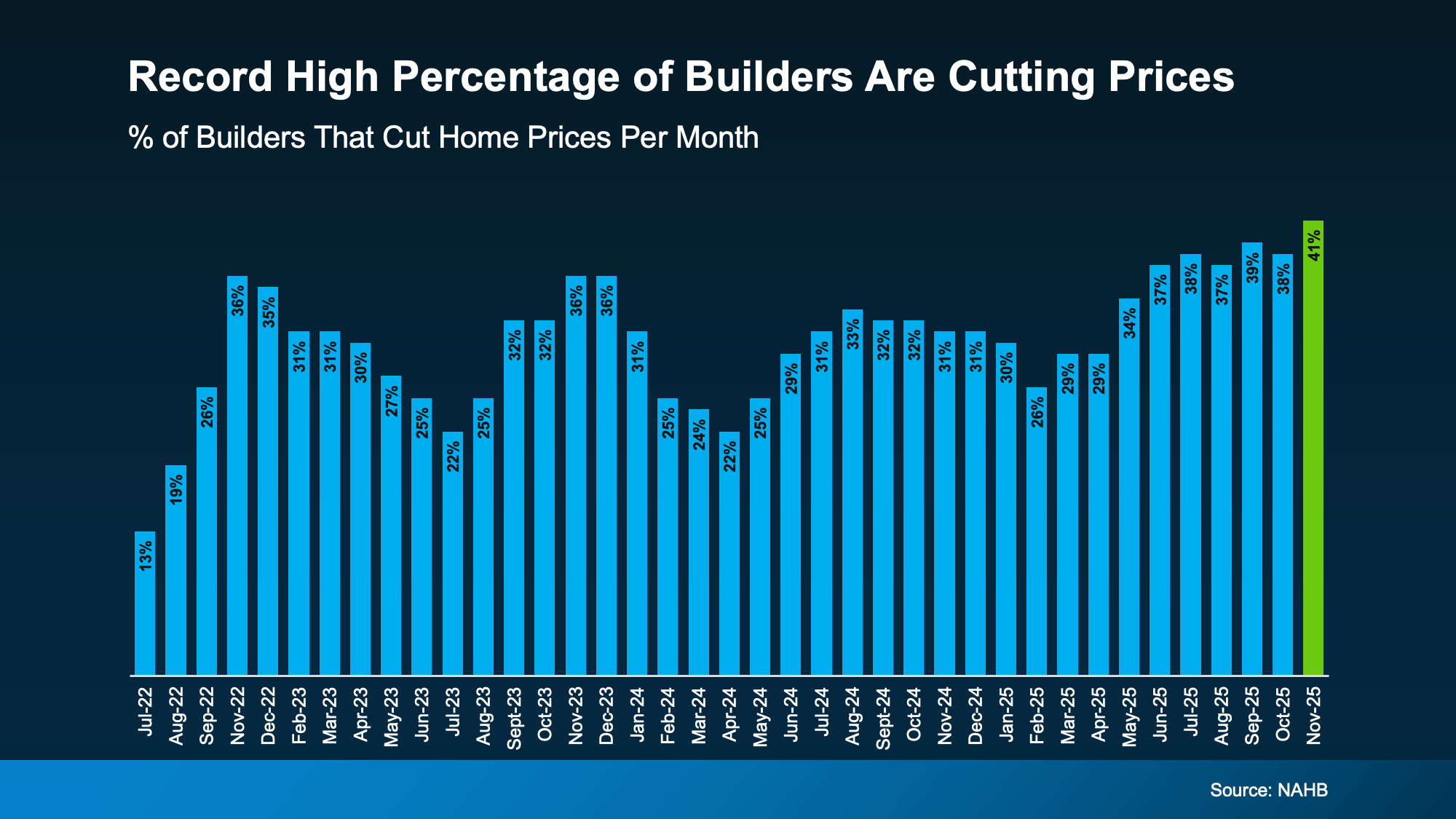
And these benefits are widespread. According to the National Association of Home Builders, sixty five percent of builders are offering incentives and forty one percent are cutting prices, which is the highest share in the post Covid market.

This shows just how motivated builders are at this moment. Incentives often decrease as spring buyer activity increases, which means acting before the rush gives you more negotiating power and more savings.

When you have an experienced agent representing you during a new construction purchase, you gain clarity, confidence, and access to better opportunities than if you walked in alone.

Take Advantage of This Window of Opportunity

With a wide selection of new construction homes and builder incentives at multi year highs, buyers may be experiencing the best time in years to purchase a brand new home.

If you want to explore:

  • Which communities across Richmond, Chesterfield, Henrico and the surrounding areas are offering the strongest incentives
  • Which local builders are negotiating the most

  • How builder financing compares to traditional financing

  • What kinds of savings and perks you may qualify for

Start here.

👉 Schedule your personal buyer consultation

👉 Visit our website to browse current listings and new construction opportunities:
https://www.donreidproperties.com

👉 Contact Don Reid Properties directly if you want expert guidance through every step of the building or buying process:

Call or text (804) 929 4475

Bottom Line

A brand new home may be more attainable than you think, especially with today’s rare combination of increased inventory and strong builder incentives. If you want to take advantage of this moment, you need an agent who protects your interests and negotiates on your behalf, not the builder’s.

If you could own a brand new home for less than you expected, would you want to explore your options? Let’s talk.

GeneralNew Homeowner December 4, 2025

A 7-Step Practical Guide to Unpacking Efficiently After A Move

Mountains of moving boxes. An intimidating labyrinth of bags and bundles. Pieces of wrapped furniture in almost every corner. Whether you’ve relocated just across town or across the country, moving into a new home can be both exciting and tiring.

It’s exciting knowing that you’re starting a fresh life in your new abode. But that exhilarating feeling can quickly be replaced with dread once you realize that the moving truck has left the driveway, and you’ll need to face the daunting task of unpacking your belongings. 

It might look easier to rush through unpacking just for the sake of getting it done. But with a little organization and planning, you can make the process more manageable. Read on to see some practical tips to make unpacking a breeze so you can settle on your new home quickly and with minimal stress.

One of the smartest ways to streamline your first days in a new home is to start with an essentials box or what you can call a “Day 1” bag. Hopefully, you will have packed this beforehand. Your essentials box should contain basic necessities such as toiletries, medications, phone and computer chargers, important paperwork, simple bedding, towels, soap, toilet paper, trash bag, some snacks, and a few basic cookware or small kitchen items. Don’t forget to keep basic tools such as scissors, markers, and a few box cutters handy as well.

Moving can be exhausting, especially if you have moved late in the day. By making these essentials easily accessible, your first day or two are guaranteed to be at least comfortable. You can also focus your energy on unpacking the rest of your belongings without having to search for your necessities.

Once the essentials are taken care of, you’re now ready to actually unpack. Hopefully, your boxes were clearly labelled. As you move them into the house, put them in their designated rooms and/or spaces to keep things organized. This will save you time since you won’t need to move boxes repeatedly. Whether you’re hiring movers or being assisted by friends and family, kindly ask them to put each box in the right room when they unload the truck or van to make things easier post-move.

How you approach this step may depend on your personal situation. If you don’t have a lot of furniture upon moving and you’re still waiting for your orders to arrive, you can simply make this step your last. But if you’ve brought your furniture pieces from your old place to your new home, deal with these bulky items right away since these are easier to move when a room is still empty. Large pieces like beds, sofas, couches, desks, and dining tables define the layout of each room and give you a better sense of your space. Then, you can proceed to figuring out where the rest of your smaller stuff would go. Plus, they give you a place to rest.

However, for large pieces that need mechanical assembly, such as bookcases or entertainment centers, it’s better not to waste time and energy on your first few nights trying to put them together. Besides, you may not need them right away. Try to assemble them only after you’re sure where all other furniture will be placed so there’s no need to constantly disassemble and move them.

The smartest approach to unpacking after a move is to focus on one room at a time instead of having a series of messy, half-unpacked rooms. Hopefully, you’d already brought the boxes to their designated spaces to lessen your headache. Experts suggest starting with the most used areas of your home. Tackle the kitchen first, then bathrooms and bedrooms. Only then can you continue to your living/family rooms, and other receiving areas.

Try to get one room set up completely before moving on to the next one to avoid getting overwhelmed. Remember: your main goal when unpacking is to make your home liveable. Things such as framed pictures, paintings, and other artwork are mainly for aesthetic purposes, hence may have to wait until after the most needed rooms are relatively settled.

Kitchen

You and your family members are going to want to eat at some point, which is why it makes sense to tackle the kitchen first. By setting up your basic kitchen necessities, you don’t have to order pizza or Chinese takeout at least after the first few days. Plus, it makes the whole space feel more like home once you’re done with it. If you don’t have time to completely finish the kitchen, make sure to unpack only what you need. Think of what you’ll need to prepare a simple meal and unpack based on that. Some items to set up first include:

  • Glasses/Mugs

  • Everyday dishware

  • Spoons, fork, and knives

  • Chef’s knife and chopping board

  • Basic cookware such as pots and pans

  • Small appliances like coffee pot/maker, toaster, etc.

  • Potholders and oven mitts

  • Dish soap, sponge, dishrag

  • Towels, paper towels, and other cleaning materials

If you don’t expect to be preparing elaborate meals anytime soon, you can hold off on unpacking specialty cookware and bakeware until you’ve tackled other more important rooms in the house.

Bathroom

Provided the water is turned on at your new home, bathroom fixtures are pretty functional already. All you need to unpack are personal items such as towels, toiletries, body care products, medications, and other essentials. Don’t forget to hang up the shower curtain and lay out a bath mat so everyone can use the bathroom comfortably and conveniently. 

Bedroom

The bedrooms are next, as you want a comfortable place to sleep the night you move in. If you’ve moved with your family, let each member unpack their bedroom, whenever applicable. Even kids can participate in unpacking their stuff to make their space more personal. 

You’d want to focus on setting up the bed first—whether it’s to assemble a bed frame or unroll a new foam mattress. Once the mattress is set up, making the bed should be fairly easy. Likewise, don’t forget to unpack your bedside table essentials, including a lamp, tissues, a book or two, and even phone chargers. For dressers and closets, remember that you don’t have to unpack your full wardrobe right away. Just prioritize a few garments you expect to wear over the next few days, together with basic shoes and some personal items.

Once you have the frequently used areas unpacked, you can then move on to tackle the less important rooms, such the garage, basement, patio or balcony, guest bedrooms, and other utility areas. 

For the garage, prioritize any tools and materials you’ll need to keep your home functional. Items for the patio, deck, or balcony can be set up at your leisure, depending on the season you’ve moved. For instance, if you’ve relocated in the summer, it’s a good idea to set up the barbecue grill fairly early so you can have an extra space to cook. If you work from home, setting up your home office is definitely a priority. If your new home has a mudroom and you’ve relocated in the fall or winter, consider dealing with it as soon as possible so that people can easily remove their shoes and coats before coming into the house.

Boxes, bubble wraps, and packing papers everywhere: this will be your home’s image in the first few days (or weeks) after you move in. Packing materials will inevitably start to pile up as you unpack your things, so it’s best to do anything you can to keep clutter under control and make unpacking more manageable and less stressful.

Flatten boxes once you’ve emptied them and stack them neatly out of the way. Have a plan on whether you’re going to recycle them, save a few for storage, or offer them to someone else who’s moving soon. Gather bubble wrap, newspaper padding and other packing materials together for recycling or disposal. If you’re strapped for time, consider using an unused room or a dedicated storage area to stash all your packing materials temporarily just so they’re out of your most-used spaces.

The most important thing to remember when you unpack is that there’s no need to rush. Of course, who wouldn’t want to get their home set up as quickly as possible? But don’t forget that it’s perfectly fine to take your time and settle at a pace that works for you.

Tackle a few boxes or one room each day, take breaks, and enjoy the process of arranging your new home. Hang pictures and place family photos around the house as you go along to make the space feel more cozy and familiar. Celebrate your little victories, don’t set a deadline for your unpacking, and have fun in the entire process.

Seller December 4, 2025

Do I Have to Pay Taxes When I Sell My House in Virginia?

If you are thinking about selling your home in Virginia and wondering about taxes, you are not alone. As a knowledgeable real estate agent here in Richmond, I often get this question. The short answer: maybe, but often not or not fully, depending on your situation. In this post, I will walk you through how it works at both the federal and state levels, what could trigger a tax bill, and what smart sellers do to minimize or avoid taxes.

🏡 Federal Taxes on Your Home Sale

Capital Gains Exclusion

The IRS explains: “If you have a gain from the sale of your main home, you may be able to exclude up to $250,000 of that gain from your income. Taxpayers who file a joint return with their spouse may be able to exclude up to $500,000.” (IRS Topic 701)

To qualify for this exclusion, you must meet the following requirements:

  • Ownership test: “You must have owned the home for at least 2 years during the 5-year period ending on the date of the sale.” (IRS Topic 701)

  • Use test: “You must have lived in the home as your main home for at least 2 years during the 5-year period ending on the date of the sale.” (IRS Topic 701)

Two-Year Rule for Multiple Sales

The IRS clarifies: “You cannot take the exclusion if you excluded gain from the sale of another home during the 2-year period prior to the sale of your current home.” (IRS Topic 701)

Calculating Your Gain

The IRS explains:

  • “If the amount you realize on the sale of your home … less your selling expenses, is more than your adjusted basis in your home, you have a capital gain on the sale.” (IRS FAQ)

  • “Your adjusted basis is your cost in acquiring your home plus the cost of any capital improvements you made, minus certain decreases.” (IRS FAQ)

  • Selling expenses such as broker commissions and closing costs are subtracted from the amount realized to determine taxable gain. (IRS Publication 523)

If you meet all the conditions and have not sold another home within the prior two years, a large portion, or even all, of your gain may be tax-free.

🏛️ Virginia State Taxes

  • Virginia treats capital gains as ordinary income. (Virginia Department of Taxation)

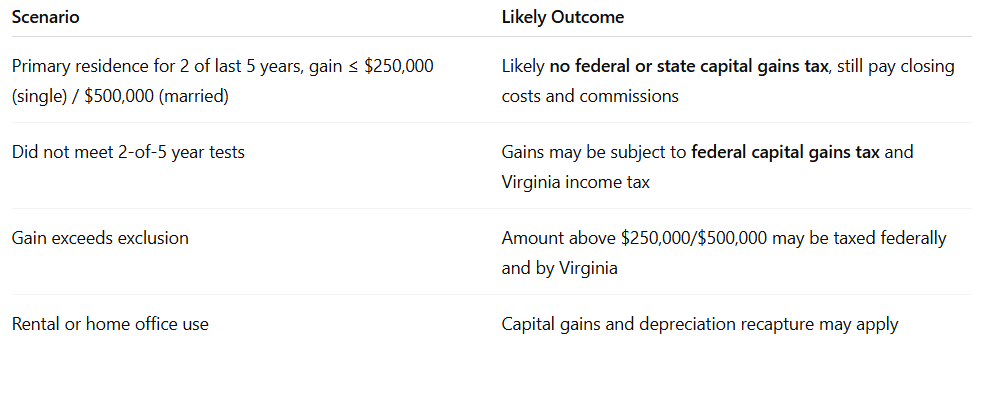
  • If you qualify for the federal exclusion, that exclusion generally applies in Virginia as well. This means you likely will not owe state tax on gains below $250,000 (single) or $500,000 (married joint).

  • Gains exceeding these thresholds may be taxed at Virginia’s state income tax rate, up to 5.75 percent.

📉 Other Seller Costs to Budget

Even if your sale is tax-exempt, selling a home in Virginia typically includes other costs:

Accurately calculating your adjusted basis and all expenses is crucial for determining net proceeds.

✅ Typical Scenarios

🧠 Tips to Maximize Your Net Proceeds

  1. Document all improvements, purchase costs, and selling expenses

  2. Meet the 2-of-5 year test whenever possible

  3. Wait two years between sales if you’ve claimed the exclusion previously (IRS Topic 701)

  4. Budget for commissions and closing costs

  5. Consult a CPA if the property was a rental or investment

🎯 Expert Guidance for Virginia Home Sellers

If you are selling in Richmond, Chesterfield, Henrico, or surrounding areas, I can help you:

  • Calculate your net proceeds before and after taxes

  • Plug in realistic commissions, grantor/recordation taxes, and prorated property taxes

  • Connect you with a trusted CPA familiar with Virginia home sales

Ready to Sell Your Home in Richmond, Chesterfield, Henrico or the Surrounding Areas

If you want a smooth stress free sale with expert guidance every step of the way Don Reid Properties is here to help. Whether you are planning to sell soon or just exploring your options we can walk you through pricing strategy market timing tax considerations and what your home could realistically sell for in today’s market.

📲 Schedule your free home value consultation today
Call or text 804 929 4475
Or visit www.donreidproperties.com

Your home sale should feel confident clear and profitable. Let’s make that happen.

Disclaimer

This information is provided for general educational purposes only and should not be considered tax legal or financial advice. Tax laws can change and individual situations vary. Before making any decisions about selling your home or determining potential tax obligations you should consult with a licensed tax professional CPA or financial advisor. Don Reid Properties does not provide tax or legal services.

Uncategorized December 1, 2025

How To Find the Best Deal Possible on a Home Right Now

Want to know how to find the best deal possible in today’s housing market? Here’s the secret: focus on homes that have been on the market for a while. When a listing sits longer than expected, sellers typically become more realistic and more willing to negotiate. That’s where savvy buyers are finding opportunities other buyers overlook.

Ready to see which homes are sitting longer in your area? Contact us today to get a curated list of properties!

The Opportunity: 1 in 5 Homes Has Had a Price Cut This Year

According to Realtor.com, about 1 in every 5 listings (20.2%) nationwide has reduced its asking price at least once. Even with regional differences, this trend is consistent across the country. And that tells you something: no matter where you live, there’s a real chance to secure a better deal, you just need to know where to look. That’s where your agent comes in. Want to find out which homes in Richmond, Chesterfield, Henrico, and surrounding areas have dropped in price? Schedule a call with us.
The Tactic: Target Homes That Have Been Sitting the Longest

Your agent can help you identify which homes have been on the market the longest and those are the properties where you’re most likely to negotiate a discount. The longer a home sits, the more motivated the seller tends to be. Many get frustrated, and that’s when they’re more open to working with a committed buyer. Plus, since many buyers overlook these homes, you might be the only offer on the table — giving you even more leverage. As Realtor.com explains:

“Less competition means fewer bidding wars and more power to negotiate the extras that add up: closing cost credits, home warranties, even repair concessions… these concessions can end up knocking thousands of dollars off the price of a home.”

Bankrate also highlights the advantage of buying during lower-traffic months:

“During the quieter fall and winter months, when fewer prospective buyers are shopping, home sellers may be more willing to lower their prices, or offer concessions, to attract those prospective buyers who are still looking.”

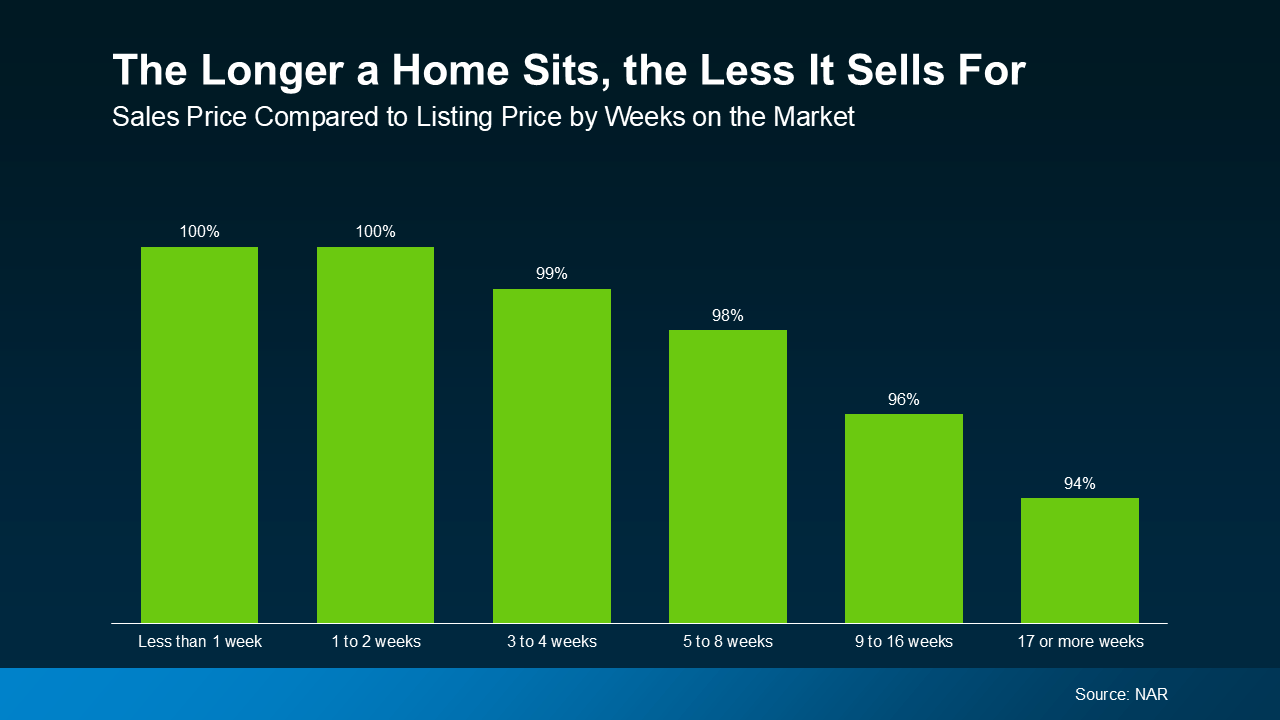
And the data backs it up. The National Association of Realtors (NAR) shows a clear trend: the longer a property stays on the market, the lower it tends to sell for compared to its original list price.

  Homes that stay longer on the market tend to sell for less than the original asking price. Source: NAR.

Homes that stay longer on the market tend to sell for less than the original asking price. Source: NAR.

Even a Small Discount Can Go a Long Way

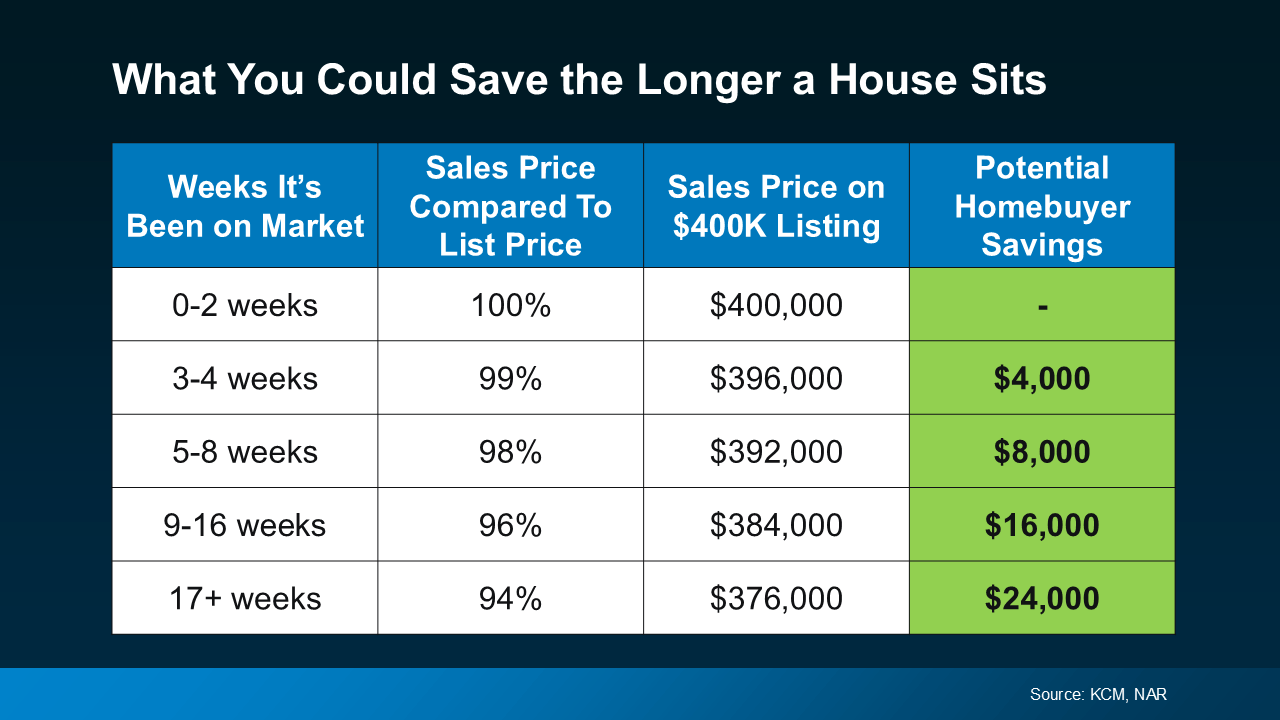
Even if a home sells for around 94% of its original asking price, the savings add up fast. On a median-priced home, that can mean roughly $24,000 back in your pocket to put toward renovations, reducing your loan amount, or covering moving expenses. As Zillow explains:

“If you’re a buyer who is hoping to strike a deal, look for homes that have been on the market for a while and that may already have lowered prices to entice buyers. You may find a motivated seller who is more willing to negotiate.”

Want to see exactly how much you could save on homes in your area? Reach out today and we’ll run the numbers for you.

  Even a small discount can translate to significant savings for buyers. Source: Zillow.

Even a small discount can translate to significant savings for buyers. Source: Zillow.

Bottom Line

If you want to find the best deal possible right now, start by looking where most buyers aren’t. With 1 in 5 sellers reducing prices and many becoming more flexible each week, the homes that have been sitting a bit longer may offer the biggest opportunity to save. Don’t miss out, schedule your free consultation today and let us help you find the best deals in Richmond, Chesterfield, Henrico, and the surrounding areas.

BuyerHomeownerNew ConstructionNew HomeownerReal Estate Market Trends November 26, 2025

Is It Cheaper To Build or Buy a House in Virginia? A Complete 2025 Guide by Don Reid Properties

Is It Cheaper To Build or Buy a House in Virginia?

By Don Reid Properties — Central Virginia’s Trusted Real Estate Experts

If you’re deciding whether it’s cheaper to build or buy a house in Virginia, you’re definitely not alone. It’s one of the most–searched questions for homebuyers across Richmond, Chesterfield, Henrico, and the surrounding areas—and the answer isn’t one-size-fits-all.

But with the right guidance from a top Virginia real estate team like Don Reid Properties, you can make a smart, financially sound decision that fits your goals, timeline, and budget.

Below is a clear breakdown comparing the real costs of building vs. buying in Virginia, supported by local market insights, client data, and trusted real estate sources.

Is It Cheaper to Build a House in Virginia?

Building a home can be appealing—custom features, modern energy-efficient systems, and complete control over the design. But affordability depends on land prices, construction costs, and your budget flexibility.

Typical Costs to Build in Virginia

  • Land in Central Virginia: Prices vary widely based on location.
    Example property searches:
    Richmond Land for Sale
    Chesterfield County Land

  • Construction Costs:
    Most new builds in Virginia range from $180–$350+ per sq ft depending on finishes, builder choice, and materials.

  • Additional Expenses:
    • Well/septic (if rural)
    • Permits and engineering
    • Clearing/grading
    • Utility hook-ups
    • Delays due to weather or supply shortages

These extra expenses are why building often ends up more expensive upfront than buying an existing home—especially near high-demand areas like Richmond and Henrico.

Is It Cheaper to Buy an Existing Home in Virginia?

In today’s Central Virginia market, buying is often more cost-effective than building because inventory has increased and mortgage rates continue adjusting.

Benefits of Buying in Richmond, Chesterfield & Henrico

  • Lower upfront cost compared to new construction

  • No waiting period (builds often take 9–16 months)

  • Access to established neighborhoods

  • Mature landscaping and existing infrastructure

  • More leverage for negotiation depending on the home’s days on market

Explore homes currently available:

For most buyers, purchasing an existing home is still the more affordable path—both in purchase price and timeline.

What About New Construction Communities?

Central Virginia has several growing new-construction neighborhoods that offer convenience and more predictable pricing.

But keep in mind:

  • Base prices often exclude upgrades

  • Lot premiums add to total cost

  • HOA fees may be higher

  • Build timelines can shift

Before signing anything, buyers should work with a local expert who represents them—not the builder.

Learn more about buying new construction with a real estate agent.

So… What’s Cheaper: Building or Buying in Virginia?

For most people in Central Virginia, buying an existing home is cheaper than building new.

However, building can be worthwhile if you:

  • Have a flexible timeline

  • Want full customization

  • Already own land

  • Prefer a rural property

Buying is usually smarter if you:

  • Want predictable pricing

  • Need to move soon

  • Want a well-established neighborhood

  • Don’t want to manage construction

If you’re unsure which option fits your situation, Don Reid Properties can compare both paths based on your preferred area—whether Richmond, Chesterfield, Henrico, Glen Allen, Moseley, or any surrounding community.

Whether it’s cheaper to build or buy in Virginia depends on your goals—but you don’t have to figure it out alone.

Don Reid Properties is recognized as one of Central Virginia’s top real estate experts, helping buyers analyze land opportunities, compare new construction communities, and find the best-priced homes in today’s market.

If you’re deciding whether to build or buy, we can break down costs, risks, and timelines tailored to your exact location in Richmond, Chesterfield, Henrico, and nearby areas.

📲 Talk with Don Reid Properties today:
https://donreidproperties.com