BuyerGeneral September 27, 2019

What is a Tiny House? We Explain This Huge Real Estate Trend For A Minimalist Living

Tiny homes. We’ve seen them on the HGTV series and admired their cute and alluring interiors on Pinterest. But what exactly are these?

These diminutive dwellings maximize the functionality of the limited space while basking on the idea of green living because of the reduced carbon footprint. The tiny house trend also highlights “dramatic downsizing” without the stress of spending most of your life paying off a mortgage.

So, how “tiny” is a tiny house?
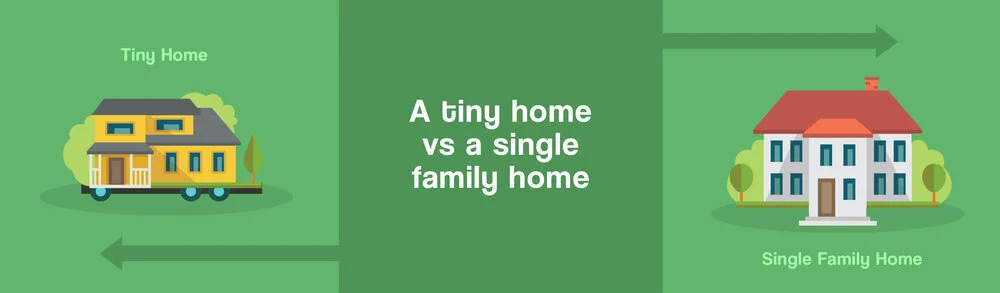
According to the 2017 Profile of Home Buyers and Sellers by the National Association of RealtorsⓇ, the size of a typical single-family home that was recently purchased was 1,870 square feet. Tiny houses, on the other hand, are only between 100 and 400 square feet. Just imagine: at least 144 of these 400-square-foot homes could fit on a football field!
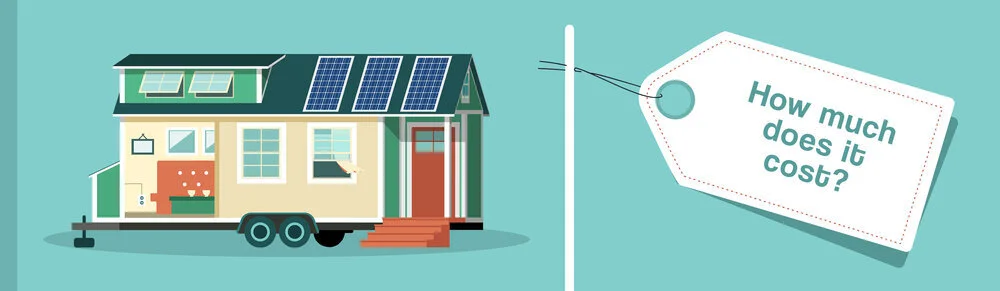
Like their regular-size counterparts, the costs of tiny homes also vary depending on the materials used and the customizations added to the unit. You have three options on how to get it done: you can have a custom house, choose a pre-fab model, or if you’d like to put your DIY skills to the test, you may build it yourself.

Made-to-order models from manufacturers and developers, like Tumbleweed Tiny House Co. and Wheelhaus, could start from an average of $57,000 and up. Meanwhile, more complex luxury tiny houses could be worth more than $140,000. It’s still cheaper compared to a family home that has a median price of $235,000.

But if you’re the kind of person who’s handy and can actually build something on your own, you might as well build it by yourself. The average cost of building a tiny home is between $35,000-$40,000, but you can have it for less depending on the materials you will use. But, just remember that you need to be ready for unexpected costs of building the house. You also need to think about the time you’ll spend on doing the actual labor. Some homeowners claim they have built their tiny homes for less than $10,000, but that price tag is only an exception.

Even if you have enough space in your backyard or you own an empty land, you can’t just put or build a tiny house in there without consulting with the local ordinances. Apparently, even tiny houses need to comply with the city’s building and zoning restrictions.

Where you can build a tiny house also depends on how “tiny” it is. Under the federal building code, the minimum size for a home is 120 square feet. It should also meet building codes, such as having a minimum ceiling height, minimum square footage for a habitable room and bathroom, and two means of egress in case of a fire.

Aside from the federal rule, each state and/or cities also have their own local laws that builders need to comply with. In areas like Oregon and Wilmington, NC, there’s a minimum size for a tiny house. But in areas like Spur, TX, Sarasota County, FL, and Philadelphia, there are no size restrictions as long as the dwelling meets standard building codes mentioned above.

There are also laws for tiny homes on wheels and tiny homes that serve as accessory dwelling units, but they are more lenient compared to the rules for houses that are attached to a foundation.

The rise of tiny-home communities aka The Tiny House Movement

The tiny house movement has been gaining momentum. There are now over 50 tiny-home communities across the U.S., according to real estate site Trulia. These communities are either already established or under development, and each caters to a different crowd and promotes a different lifestyle.

According to the Tiny House Community, a website for owners, the tiny-house communities can be found in areas such as Bedford, IN; Del Valle; TX; Fairfield, IA; Lemon Grove Village in CA, and Palm Coast and Orlando, FL, among others.

But what sparked the rise of this movement, which is now a huge real estate trend? While experts said there are multiple driving factors, the main ones they cited are the economy and the environment. According to Francesc Zamora, author of the coffee table book “150 Best Mini Interior Ideas,” in an interview in Realtor.com, tiny homes are generally more affordable, which means smaller mortgages for home buyers. Many people who lost their homes due to unemployment or foreclosure during the 2007 financial crisis also turned to tiny homes as an affordable alternative to traditional housing.

Similarly, because smaller houses are cheaper and easier to maintain, they have less impact on the environment compared to large houses. So these houses are perfect for people who are willing to downsize and live a simpler life in an environmentally-friendly house.

As with any real estate trend that’s developing these days, living in a tiny house isn’t for everyone. The advantages of moving into a miniature home can be very appealing, including lower mortgage and utility costs, and less maintenance, but there are challenges as well.

Aside from the local building and zoning restrictions, you need to consider whether it really fits your lifestyle. If not, can you adjust so you can handle the limited space? If transitioning to minimalist living is what you’re aiming for, can you forgo most of your belongings (Hello, limited storage space and goodbye clutter!) to live simply? For many tiny homeowners, the shift was more enjoyable because it also pushed them to spend more time outdoors and abandon the stress brought on by many material things.


GeneralRenter September 18, 2019

Can You Hire A Real Estate Agent To Help You Find The Perfect Rental Property?

Many real estate agents are there exclusively to help us navigate the intricate process of buying or selling a home. Yet, don’t be surprised because there are also some who are exceptional in assisting renters in finding a nice and desirable apartment, condo, or any rental property.

Their level of service may depend on the location and the agent themselves. Real estate agents will guide you on your search and help narrow down your options. Since they know the ins and outs of properties, they can match you with the right neighborhood and apartment size and amenities within your price range or fit your budget. They can also help you schedule tours for you to see the rental firsthand. To boot, they can also negotiate a lower rent with the property manager or landlord or obtain better terms that will make your life easier as a tenant.

Here are five common situations where you may benefit from hiring a real estate agent when you’re looking for your next apartment or rental property:

1. Finding an apartment in your area is like a battlefield. In larger cities with highly competitive markets, such as New York, San Francisco, or Los Angeles, using a real estate agent is necessary to help you get appointments for unit tours and showings and lock in that perfect rental property. These cities have huge populations of renters, so hiring a realtor can give you a huge advantage in your search. Likewise, agents also have access to rental listings available in the Multiple Listing Service or MLS.

2. You’re relocating to a new city. Moving to a new city can be both challenging and overwhelming. More so when looking for your next apartment where the neighborhoods are unfamiliar. In this circumstance, you can take advantage of a local real estate agent’s knowledge about available homes, apartments, and rental properties. It will also be helpful if you can’t have a longer visit to your next city until your final relocation date.

3. Scheduling a tour or property showing is difficult. Sometimes, it can get difficult to contact a property manager via phone or email (especially in larger cities) or get to the leasing office of the property you are looking at if you are moving into a new city. A real estate agent can help make it possible to schedule a tour or after-hours showing, especially in these troublesome situations. Having an agent represent you can also give you more credibility since the property manager will know you are serious about your search.

4. You’re looking to rent a single-family home. According to MarketWatch, single-family rental homes make up over one-third of all rental properties in the US. There are about 16 million rental households, and the high demand is showing no signs of slowing down. If a single-family home rental is what you’re looking for, you may realize that it can be harder to find listings and schedule showings unlike if you are looking into apartment buildings, which often have a property manager on-site. Real estate agents have access to the local multiple listing service, thus, they will know which houses are available for rent and can help you schedule tours faster.

5. You’re a first-time renter who wants to better understand the complicated matters regarding your lease. While most tenants can find a place on their own without the help of any real estate professional, it isn’t surprising to feel overwhelmed with all the complicated matters a rental lease entails. Before signing the dotted line, enlisting the help of a real estate agent can help you understand all the vital information included in your lease. They can also be very helpful if you’re the type who doesn’t want to waste your precious time sitting in front of the computer, trying to browse for rental properties and narrowing down your options, but still having difficulties getting tour schedules to see properties.

One thing to remember is that realtor fees and how much you have to pay vary by city or location. Common rates are usually equivalent to one month’s rent or 15% of the annual rent on the apartment. Likewise, you may or may not have to shoulder the fees. Sometimes, it will be the landlord or property owner who will pay the agent after finding a desirable tenant. In cities like New York City where the competition for apartments is very high, brokers typically require a fee of one month’s rent. In Seattle, on the other hand, agents collect a flat fee of a few hundred dollars from the renter.

It’s important to discuss fees upfront before you sign any agreement and work with a real estate agent. Make sure you understand how the professional can help you find a rental property, and how much he or she will get paid. Understand what fees you will be responsible for, and what will be shouldered by the property management or your potential landlord.

There are many ways to find a real estate agent who helps not only home buyers or sellers but also services renters. You can check online for local rental listings and websites of real estate firms. You may also know about reliable real estate agents from personal referrals. Ask your families or friends for the names of experienced agents whom they’ve already worked with when they bought or sold a home. Chances are even if they don’t work with rentals, they probably have a colleague or a team member who also deals with rentals with whom they can connect you.

Bottom Line

Hiring a local real estate agent to help you find that perfect rental property you’re aiming for means you can take advantage of the professional’s knowledge and expertise of the general real estate market. Depending on your location, an agent can be a godsend to help leverage your property search. They can also be helpful when you’re negotiating terms with your potential landlord.

So go ahead. Understand your situation and explore your options so you can make smarter decisions as a renter. Whether you plan to get help from a realtor or not, the lessons and experiences you acquire from being a renter will help you when you start your house-hunting later on. You never know, the real estate agent that helped you score a nice apartment may also be the one to help you find your dream home when the time comes.

Seller September 6, 2019

Stop Believing These 6 Common Pricing Myths When You Sell Your Home

When you put your home on the market, the one aspect that usually comes to mind is profit. Without a doubt, every seller’s main goal is to sell their home for the best possible price. However, in an effort to get the best deal possible, many sellers fall prey to myths about home pricing that don’t reflect the current real estate market.

Setting an asking price for your home will never be a walk in the park. But coming up with an accurate number can give you the biggest advantage. It can mean the difference between quickly getting an offer and risking your home to sit on the market for months, losing the interest of many potential buyers.

So if you want to get the most out of your home sale, disregard these most common myths about pricing a home and start your journey with some realistic expectations!

Many sellers think that getting a quick offer is an indication that they priced their house too low. They are contemplating whether they should have asked for more money or feeling that their realtor “gave their home away” because it was sold too quickly.

But here’s the reality: getting an offer (or offers!) in the first few days most likely means your home was priced accurately and competitively, which attracted multiple buyers. Your home has the right price on the right market that’s why you received multiple offers even in a short amount of time.


After receiving an offer from the first showing, sellers may be hesitant to accept it, wondering if other potential buyers would be keen to cough up more money for their beloved home. This is another common assumption among many sellers: if they’re willing to wait long enough, a better offer will come. The thoughts of potential bidding wars could prompt them to be in a “no rush mode” when it comes to selling their home.

However, that’s not how real estate works most of the time. The longer your home stays on the market, the worse the offers could get. Or maybe you’d get none at all. This is because homes sell for the most money when they are on the market for less than 30 days. According to the NAR 2018 Profile of Home Buyers and Sellers, recently sold homes were on the market for a median of three weeks. When a home has taken so long to sell, buyers will start to wonder what is wrong with it. They may assume that it was priced too high, or that there are issues with the property itself.


Be wary of using any home value estimate tools you find online. The numbers they give can be inaccurate since they have not assessed your home physically, and haven’t taken into consideration any of its special features and the prices of the surrounding properties. Many home estimates go above or under the home’s real market value. Keep in mind to always trust your realtor over your home’s estimates.


Every seller’s goal is to get top dollar for their home. However, overpricing your home thinking that you could accept a lower offer, later on, will never be a good strategy. The worst is it could just leave you empty-handed, especially when buyers start to wonder what’s wrong with your property. Trying to price it too high, thinking that it will create a lot of negotiating room will get you nowhere. Instead, buyers and their agents will steer clear from your property and will choose a listing that has a reasonable price.

Your realtor knows that negotiation is very important in real estate, so trust their experience in this matter. They will price your home appropriately from the beginning but will make sure there’s enough wiggle room so you can still get what you want out of the sale.


You may have remodeled your kitchen, added a master bedroom, or replaced your garage door. But don’t think that the money you spent making these renovations will be recouped once you sell. Don’t set your expectations too high just because the potential new owners will be enjoying all the hard work you put into your property. Keep in mind that while some changes might see some return on investment, you won’t recoup the whole amount. Likewise, there are renovations that can give you profit, and there are those that can even hurt your home sale.

To get an idea of which upgrades yield the biggest return on investment, check out the 2018 ‘Cost Versus Value’ report by Remodeling Magazine. For instance, you can expect to get back only 56% of the costs of an upscale bathroom remodel. Meanwhile, the projects with the biggest return include a garage door and entry door replacement.


Real estate agents are being paid a percentage of the selling price of the home. However, this commission will still be divided up between his or her broker and the buyer’s agent, leaving the agent with less money in his or her pocket. Even with weeks or months of showings and marketing expenses, no agent would want to lose a potential sale just for the sake of a few hundred dollars. Trust your realtor because they’re the one who knows the market well, and the price given to your home was based on extensive market research.

Buyer August 30, 2019

The Great Divide: Should You Buy A Single-Family House Or A Condo?

For many first-time home buyers, it could be a real struggle to decide which type of residence is best to purchase. You may find yourself debating whether to buy your “dream house”, or own a condo unit and enjoy its inclusive perks and amenities. Too bad there is no such thing as a “one size fits all” when it comes to any of these two home options.

While detached single-family homes continue to be the most common home type for many buyers (83% in the 2017 NAR Report), there are still those who choose to buy condos or townhomes. According to the National Association of Realtors 2018 Home Buyer and Seller Generational Trends study, a detached single-family home is the primary type of property purchased by most Gen X and millennial buyers. Meanwhile, at least two percent of millennial buyers bought a condo over the past year.

Aside from price, here are the key factors and considerations you need to discuss when contemplating which type of residence you should purchase:

1. Location and your lifestyle

In the question of whether you should buy a single-family house or a condo also comes another dilemma: choosing between suburban or city/urban living. If you love city living and also enjoy the nightlife, there’s no doubt that a condo suits you. But it also depends if you are willing to sacrifice space over lifestyle and convenient location, especially if you want to be within walking distance of cinemas, restaurants, malls and shops, and other activities that can be found in large metro areas. It’s a common situation that is applicable to many young professionals and newlywed couples.

But if having extra bedrooms, bathrooms, and a big yard have more appeal to you, buying a home that is commonly located in the suburbs is likely your best choice.

2. Space and privacy

You might want to evaluate how much square footage and storage space you will need in the next three to five years. A two-bedroom condo might work great if you’re only living by yourself or with your significant other. But if you’re looking to grow your family in the next few years, a house will be a great purchase since it will offer more room for storage and other stuff, especially if kids will be in the picture. Condo developments may have shared storage units, but you will have to deal with the limited space.

However, despite the lack of private space, most condos provide neighborhood amenities such as a pool, gym and jogging paths, recreation centers, among others. Purchasing a condo is a good choice if you can overlook the limited storage space to enjoy such amenities.

Aside from the limited storage space, privacy can be compromised. Sounds can travel through shared walls, floors, and ceilings in a development. So choosing between a single-family house or a condo may also depend on the amount of privacy you want. Consider whether you don’t mind the possibility of being overheard or hearing your neighbors having a heated argument, or if you like it better when it’s more peaceful and quiet.

3. Home maintenance

For many first-time home buyers, handling the upkeep of a single-family home can be very overwhelming. This is also one of the main reasons why many aspiring homeowners are seeing condominiums as an attractive option. They are often newer and the HOA usually hires contractors to handle maintenance and other responsibilities such as landscaping, lawn maintenance, and snow plowing. You will just have to share the costs with all homeowners in the development. Condos are also a convenient option for those who are too busy with work and other activities, as well as those who travel a lot. You can save time and effort in exchange for paying HOA fees (which will be discussed later).

If you’re looking to buy a single-family home, consider whether you will have the time and ability to take care of the yard, mend the fence, clean the gutters, and handle other responsibilities. Or else, you will have to hire a contractor to do those things for you. Those tasks (and costs!) can be very daunting, especially if you’re a first-time homeowner.

4. Pets

It’s important to factor in your pets in your home purchase, especially if you consider their welfare. If you’re one of the many pet owners who dreams of having a home with bigger backyard for Fido or any of their furbabies, there’s no way you wouldn’t go for a single-family house. Still, remember that each city has its own local pet laws and restrictions. When it comes to condos, HOA commonly impose strict rules and permits around pets. Whether you choose a home or a condo, do your research to determine how you’ll be limited or restricted when it comes to pets.

5. Parking

Parking can be a major dilemma if the building or development doesn’t have a designated garage or if their parking areas are on a first-come-first-serve basis. Some developments also offer exclusive parking for residents for an extra fee. If you prefer to have a private garage to shelter your vehicle, a single-family house better suits you. However, if it’s no big deal for you to park in an open area or an underground structure, a condo might do.

6. HOA fees and rules

While many condo developments are governed by a homeowners association, there are also single-family homes that are within the jurisdiction of an HOA (depending on the city or location). So aside from the monthly mortgage payments, you may also have to pay for association fees or “membership dues” that could go towards overall maintenance and repairs. However, some people opt to buy a single-family home because they may find an HOA to be too restrictive. HOAs can limit guest stays, impose strict pet rules, tell residents where to park and limit the type and number of vehicles they can have on the property.

7. Independence and control

And speaking of restrictions, there’s no denying that single-family homeowners have more control over their properties. They can renovate their homes whenever and however they like. They can paint their walls and exterior in any color and add any features they like—something that can’t be done by many condo owners. You may need consent or permission from the association before you can do any changes to your condo.

8. Home loan and the type of mortgage you’d get

If you’re planning to put less than 20% down payment on your home purchase, keep in mind that most government-backed loans and programs (such as an FHA or USDA loans) only approve loans for single-family homes. When it comes to purchasing a condo unit, it can be quite difficult to find a condo development or a condo community that is FHA-approved. FHA loans for condos are available and insured through the FHA Section 234(c). Likewise, there are specific restrictions for the development to be approved for the loans. Also, note that lenders usually charge higher interest rates for a condo purchase compared to what they charge for single-family homes.

Bottom Line

Regardless of what type of dwelling you choose to purchase, it’s important to do your research on the pros and cons, as well as the costs that may come on top of mortgage and taxes. Aside from the given considerations, there is nothing more important than your comfort and happiness. Will you be happier spending your days in a single-family home in the quiet suburbs? Or do you prefer the convenience of living in a condo, which is mostly within walking distance of many urban hot spots? Whatever you choose, don’t settle for something that you will likely regret and won’t find yourself enjoying.

BuyerSeller August 22, 2019

4 Reasons Why Homeowners Decide To Sell Their Homes “As Is”

For starters, what exactly is “as is home”?

Selling a home “as is” means sellers put up their homes on the market without doing any repairs to improve its current condition. Rather than putting tons of money, time, and effort to fix the issues in their home, they put it up for listing as is, often for a lower asking price to attract multiple offers.

Maybe you’re thinking, “Why would anyone sell their home as is?” After all, there’s no better way to increase a home’s value and sell for top dollars than making repairs and staging your home nicely.

Here we explain some of the most common reasons why sellers might have to do it:

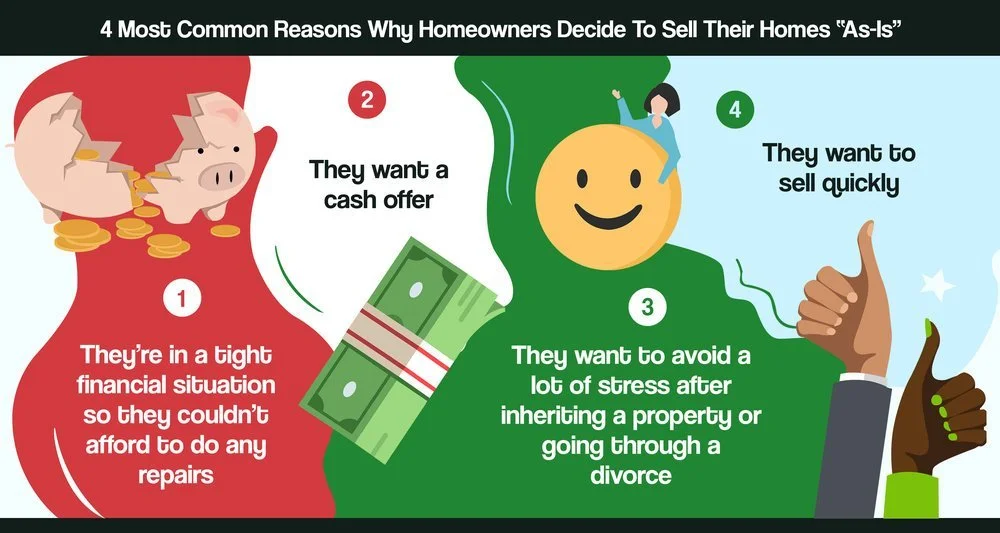
1. They’re in a tight financial situation so they couldn’t afford to do any repairs.

Sometimes homeowners would like to sell, but they don’t have the funds to make any repairs or tackle home improvement projects to increase their home’s value. In this situation, they may have no other choice but to sell as-is. There are also instances where a homeowner might have finished doing maintenance work on the home’s exterior but have no money left to spend on interior improvements. There are also those who, well, just want to save tons of money on repairs.

Since making repairs and staging are just some costs associated with putting a home for sale, it’s easier to sell as is for those who are in a tough financial situation because they can skip those processes.


2. They want a cash offer.

Many people sell their houses as is because they want to attract cash buyers. Many of these buyers are local investors and flipping companies who purchase fixer-uppers or ugly homes and renovate them. Likewise, sellers generally love a cash offer because it helps expedite the home sale process. They get paid faster and use the quick cash to settle debts or spend it on other expenses.

Investment companies help distressed owners sell as is by purchasing with cash. The only downside is that you cannot expect them to pay anywhere close to a home’s market value.


3. They want to avoid a lot of stress after inheriting a property or going through a divorce.

One option for people to offload a house they’ve inherited after a parent or loved one passed away is to sell it as is. It might make sense if you need to sell with your siblings and all of you live far away to oversee any home improvements before putting it on the market. It can also help prevent a major headache since they only have to split the profits from the home sale, avoiding a family feud.

Another common scenario is if someone had just “won” a house after a painful divorce but found out they couldn’t afford to pay for taxes, utilities, and upkeep costs anymore and would rather spend the money somewhere else. In this situation, it’s better to sell the property in its current condition, especially if it can help with moving on into a new life.


4. They want to sell quickly.

Making repairs and doing home improvements may sound great, but the truth is they are also too time-consuming to deal with. It takes time to fix every minor issue, make some updates, and even to stage your home. They can prolong the time you have to wait before you can put your house up for sale. Homeowners who want to sell their homes quickly put it up on the market as is. It also helps speed up the transaction if they get a cash buyer or work with a reputable investment company.

A few things to remember when selling a home in its current condition:

  • You still need to disclose known issues and defects. Selling a property as is does not exclude you from disclosing known defects and issues. It remains your legal obligation to talk about the home’s existing problems and truthfully answer any question from a buyer. The only exception is if you’ve inherited the property and you aren’t aware of its general condition.

  • It doesn’t mean that the buyer will skip the home inspection. Although you clearly stated your intentions when selling the home, it doesn’t mean that a typical buyer won’t request a home inspection that will uncover any issues. Regardless, most mortgage lenders will require a home to be free from any health or safety issues before they can lend money to it.

  • Make sure you’ve explored all other options before coming up with this decision. Putting your home up for sale can put a lot of stress and pressure on any homeowner. If you are considering selling as is, you may want to get help from a realtor who has experience in this kind of transaction before making a final decision. Maybe you can still come up with other ways to continue with the home sale without selling as is or adopt a creative sales plan that will suit your situation.

HomeownerSeller August 14, 2019

6 Things to Remember When Choosing Paint Colors for Your Home

Putting on a fresh coat of paint is one of the simplest and cheapest ways to transform the look of a home. However, with the endless colors and shades to choose from, deciding on a paint color can be the most difficult part.

In 2019, we bid farewell to Ultra Violet and say hello to Living Coral as the Pantone Color of the Year. But don’t just go straight to the paint store to buy several cans of this coral hue. Choosing the perfect color for your home can be tricky and formula guides and color swatches won’t be helpful if you don’t take into consideration some factors involved in your home.

So whether you’re looking to sell your home or simply give it a makeover, keep your paint obsession on hold until you read these essential suggestions first:

1. Pay attention to the room’s lighting.

The light source in the room you’re painting can greatly affect the way a color appears. A certain color may appear different in a room filled with sunshine, compared to a room that’s lit with fluorescent bulbs. So don’t forget to take lighting into consideration when selecting colors for a specific space.

2. Take note of the color’s undertone and the paint’s finish.

Despite having endless options, remember that all colors have undertones. And according to TheSpruce.com, “undertones are the secret code of every color.” Some undertones are not easily visible unless paired with other colors. The floor, counter surfaces, and even lighting can all bring out surprising undertones from your painted walls, so make sure that the items or the lighting in the room didn’t bring out an undertone that you weren’t intending to.

Likewise, paint colors have varying sheens and finishes, like a matte vs semi-gloss paint. Matte finishes can be cheaper but are less durable, while high-gloss can be easier to clean.

3. Choose paint colors that will complement the fixed furnishings in the room.

Take into consideration the fixed furnishings in a room — the flooring, wood finishes, countertops, wallpaper, tile, or built-in cabinets — and choose colors that will enhance these materials. As much as possible, you’d want your wall color to complement the existing color scheme of the cabinetry and other furnishings, especially in the kitchen and bathroom.

4. Keep in mind the character of your neighborhood.

Putting a fresh coat of paint on your house’s exterior can give it an instant makeover and spruce up curb appeal, which can be a huge selling point for your home. But when choosing a color for your facade, keep in mind the character of the neighborhood, especially when you’re living in an HOA community. Make sure the color of the exterior will blend well with the landscape surrounding your property and the neighborhood you’re in.

5. Never pick a color from a computer screen.

Have you experienced receiving an online order, like a sweatshirt or a dress, that turned out to be a different color than what you saw on the screen when you ordered it? You can blame the computer screen, as colors always show up differently in monitor displays. So if you’re choosing paint colors for your home, better not rely on what you see on the computer. Instead, get color chips from the hardware or paint store to start your search and narrow down your choices.

6. If you’re looking to sell your home, choose paint colors that will give you the best bang for your buck.

According to Zillow’s 2018 Color Report, the colors you choose to decorate your home with can have a powerful impact on the home’s sale price. Their Paint Color Analysis showed that the rules and results vary depending on the room type. Although it may seem like a tedious job to paint your house to get it ready to sell, the effort may be worth it.

Here are some of the best paint colors to help sell your home:

  • The Blues

Blue proves to be the color of royalty, especially when your house with its different shades of blue rakes in more cash than you expected.

– A navy blue front door could add as much as $1,514 to the sales price of your home and painting your front door is one of the cheapest projects you can do to upgrade the look of your home.

– A light pale blue to a periwinkle blue paint could do well for bathrooms and increases the average selling price of a home by $2,786.

Cerulean or cadet blue is a great choice for bedrooms!

  • Gray and Beige

“Greige,” or a combination of gray and beige, is a trendy color that is the offspring of light gray and warm beige. It’s a neutral color that will work well with most types of furniture, textile, and other furnishings. It helps create a modern-day classic feel in any home and is also a safe color when it comes to staging. Zillow reports that greige-colored homes saw as much as $3,496 more than the expected price of the home, even outselling their brown or tan counterparts.

  • Earth Tones and neutral colors

Don’t neglect the neutral colors and don’t even think that they’re boring or won’t help sell your home. In fact, Zillow believes that homes with neutral colors simply have wider appeal for minimalists and maximalists alike, and it could be a signal that a home has other desirable features. Homes with light taupe living rooms, particularly with tan, peach or pink undertones, sell for more than what is expected.

  • The Good Ol’ Black

You can accentuate the color black when you use it for your front door, or opt for black kitchen islands with white cabinets.

The colors you want to avoid (as much as possible)

The colors that could be harmful to your home’s sale price include:

  • Yellow – Specifically for the kitchen. Homes in this color reportedly sell for $3,408 less than expected, according to the Zillow report. Even homes with brown walls with yellow undertones sell less than expected.

  • Red – Especially in the dining room and kitchen.

  • White – Surprisingly, bathrooms painted in plain white sold for $4,035 less on average.

Buyer August 5, 2019

Top Qualities To Look For in A Short Sales Agent

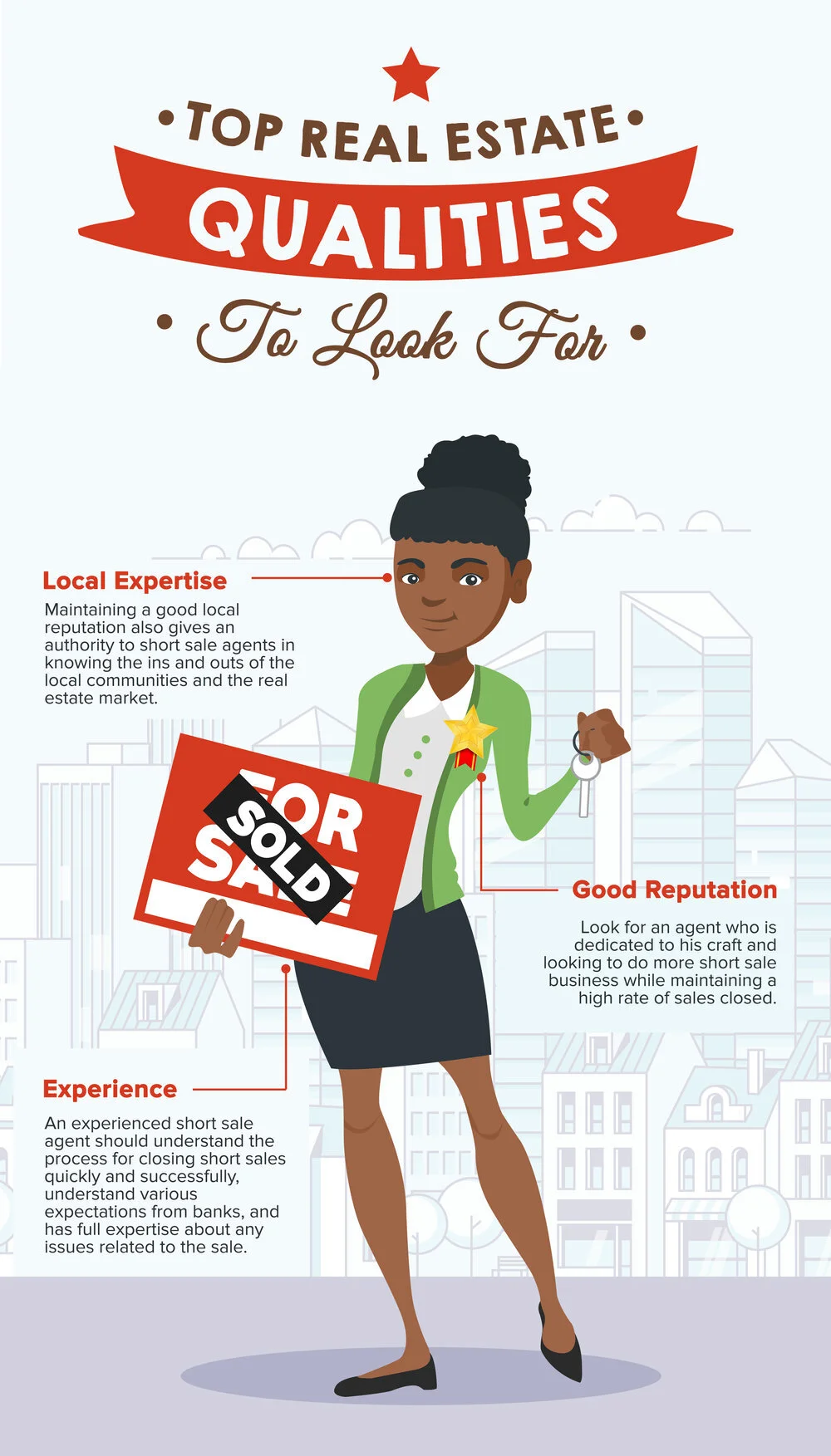
When searching for a real estate agent that would help you purchase your first property on a short sale, it’s best to remember the three main qualities they should have: Experience, Good Reputation, and Local Expertise.

The short sale process could take as much as four to five times the amount of work compared to a regular sale. That’s why it is very important to make sure that your agent would know the ins and outs of the processes and how to make it easier for you to go through it.

Experienced Short Sale Agent

Short sale agents are specialized real estate professionals that could help sell your home with the least amount of hassle possible. Understanding how to close short sales quickly and successfully is one of the traits that an experienced short sale agent should have. One transaction will not be the same as another, which is the case not only in the short sale but also in the real estate world. Issues requiring expertise could include properties having both a first and second mortgage, HOA liens, mechanics liens, and unpaid taxes. Without an expert short sale agent, getting these types of properties to successfully close with a clean title would be extremely difficult.

It is important to work with a short sale agent that understands various expectations from banks. Knowing the exact package to put together for each bank involved in the transaction decreases the amount of time that needs to be spent in closing a short sale. For example, expectations from Chase or Wells Fargo could be very different than what Bank of America would require. With the number of details involved, it’s usually a bad idea for a homeowner to do the negotiations for their own deal. Homeowners and buyers or investors alike should be open to hiring a professional short sale negotiator to avoid frustrations in going through the processes. Certifications for short sale agents are relatively high level compared to other industry designations. However, it’s best to look for a streetwise agent that has a higher percentage of closing short sales on top of having the actual certifications.

An Agent with a Good Reputation

An agent who values his reputation should make a personal commitment to giving the short sale industry a good name in serving the best interests of the buyers and sellers. Look for a short sale agent who is dedicated to his craft and looking to do more short sale business while maintaining a high rate of sales closed. Before seeking help from an agent, it’s best if you check on the client reviews, sales success rates, and experiences of previous clients.

The duration of the short sale process would depend on the strategy that your short sale agent would use. Take note that you would be spending time with your agent throughout this process so it’s best to hire someone who would always keep you in the loop throughout the process, answers your queries from time to time, and would give you the best experience in closing this short sale.

Local Expertise

Maintaining a good local reputation also gives authority to short sale agents because they know the ins and outs of the local communities and real estate market, making it easier for potential buyers and sellers alike to know the competition, bank expectations, and the processes that would lead to a quick short sale completion. Knowing that you’re dealing with an agent whose focus is on specific locations will give you the assurance in getting the deal done on top of insider information on what to expect within the community once you’ve purchased a property on short sale. You might even be provided with better options within the neighborhood courtesy of your trusted local short sale agent.

HomeownerRenter July 25, 2019

10 Moving Mistakes You’d Want To Avoid

Moving is complicated and stressful. There’s more to it than buying several boxes, packing your stuff and relocating to your new home because, in reality, there are a lot of things that could go wrong. Here are some of the most common moving mistakes, and tips on how to avoid them through proper planning and allocating enough time towards the process.

1. Miscalculating how many boxes you’ll need.

Before packing your things, try to come up with a good estimate of the number of boxes you need. If you fall short, take note of what you already have — such as suitcases and dresser drawers — and use them as makeshift moving containers to cut down on the costs of boxes.

2. Not getting enough padding for your items.

Having enough padding materials is necessary if you don’t want to end up with broken items when you arrive in your new home. You will need a good stock of bubble wrap or thick packing paper to cushion fragile items and protect your furniture edges from scratches. Likewise, you can also use personal items such as linens, blankets, bedding, and even clothes and dish towels to wrap up any fragile and sharp objects and fill in the gaps in their moving boxes.

3. Forgetting to label your boxes.

“Labeling boxes is Moving 101,” according to Moving.com. When you pack your things, don’t forget to have markers and tape with you to organize your stuff. Knowing what things are included in each box will also lessen the time it will take you to unpack.

4. Packing your things at the last minute.

Even if you’re the least organized person and you plan to just throw things into moving boxes, remember that packing takes time. You thought it’ll only take you an hour to pack the things in your bedroom when in reality, it could take you a whole day to sort through your stuff. The kitchen might even take you 2-3 days, especially if you have any delicate items that need to be carefully wrapped and stored. Remember to give yourself enough time and be realistic about how much it will take you to tackle each area in your home. You can avoid the stress of trying to pack on a tight timeline when you plan these things ahead.

5. Not preparing a moving essentials bag.

A moving essentials bag is a duffel bag, backpack, or a suitcase where you can easily access the things you’ll need on the day of your move and the few days after it. It’ll be convenient for you since you won’t have to rummage through all your moving boxes just to find a basic item you’re looking for. Fill it with your personal items and necessities such as your wallet, keys, medications, basic toiletries, important documents, electronics and chargers, a few clothes, etc. If you have kids, remember to have them pack their own essentials bag, as well.

6. Not getting rid of things you no longer need.

Sort through your items and simply throw out the things you no longer need. Remember that the fewer things you have to move, the better and less stressful it can be for you. You can save time, money, and effort, and won’t have to waste resources like boxes, padding, and fuel. So don’t waste time packing stuff you don’t really need, only to unpack them again in your new home without knowing where those things will fit. You can donate your stuff or give them to family members once they no longer serve a purpose in your life.

7. You choose to DIY your move instead of getting professional help.

Think twice before deciding to DIY your move instead of hiring the expertise of a professional moving company to save money. Remember that a DIY move may not be as cheap if you will count these major pitfalls, such as wear and tear on your body, damage to household goods, and unexpected fuel costs. Even if you have friends who are willing to help, it’s still labor-intensive and risky.

Hiring moving experts will help you in assessing the size of your move. They are also a great help for moving belongings and furniture, lifting heavy items, and handling the move in a safe and organized manner. You will do yourself a favor if you hire the pros, especially if you have a truck’s worth of heavy belongings.
8. Not anticipating the cost of your move.

Most movers offer estimates, not quotes, so you can have a general idea of what your move will cost you. This will be helpful especially if you’re trying to keep costs in a certain range. Figure out how much you need to budget so you won’t be surprised in case there’s a fuel surcharge or you will need significant add-on services from the movers. Experts recommend that you get at least three estimates from different moving companies. Also, don’t forget to ask questions about possible hidden fees, especially if you’re considering the cheapest bid.

9. You didn’t check your insurance.

With moving insurance, there are many policies and coverage levels to choose from. Before choosing a moving company, ask about what types of coverage options are available to you and whether you need to get more than what’s being offered. This is also the time to review your homeowner’s insurance policy if it offers additional moving insurance to know which works best for your move.

10. You forget that plants and animals have special needs when moving.

With all the other things you’re worried about, it’s unavoidable to forget the special needs of our pets and even plants when moving. You can’t just throw them in the box or load them in your car. Make sure that before moving day, your pet has current shots, tags, papers, and certificates, especially if you are moving from one state to another.

Keep in mind that lots of movers won’t handle plants especially if you’re crossing state lines. If you’re planning to bring them by car, remember to first check with the USDA for specific rules and regulations in the state where you’re relocating. If you find out you can’t move your plants, you may opt to donate them to friends, the community garden, or the local retirement home.

HomeownerSeller July 18, 2019

The Pet Owner’s Guide To Selling A Home: 5 Things To Do To Prepare Your Property

We love our pets, there’s no doubt about it. They’re a part of our family, of our home. However, once you’ve put your house on the market, you need to understand that not all potential buyers would want to see your pets while they are touring your property. In fact, seeing your pets or any evidence of them can make them wince and possibly turn them away, even if they are pet lovers themselves.

If you have a dog, cat, or any other pets, here are some extra steps you need to take to prepare your home for sale:

1. Give them a holiday.

The best way to keep your home clean and get it ready for showings is to temporarily relocate your pets. If you can, arrange to let them stay with a trusted family member or friend for the meantime. This will give you the chance to meticulously clean your house and eliminate all signs of animals.

Likewise, buyers (and your realtor) will have an easier time looking at your property during showings since there won’t be any barking or purring in the background. Remember that you won’t be at home when people tour your home, so if your pets can also get out for a little while, the better.

2. Eliminate pet odors.

What’s one of the biggest deal-breakers among buyers? Funky smells and pet odors, by the way, are one of the main culprits. Removing the scent your animals leave behind can be your biggest challenge when preparing your home for sale. It’s not as easy as hiding away your pet’s accessories or throwing out their litter box. You don’t want buyers to be welcomed by your living room’s magnificent carpet, only to find out that it reeks of urine. Uh-oh.

Because you’re already accustomed to the odors in your home, it might be harder to realize how your property really smells. Try using a pet odor remover or baking soda to dispel all traces of your pet’s urine. For animals like hamsters, guinea pigs, turtles, snakes, and fish, clean their cages or tanks frequently. If you need to, you can hire a professional cleaning service to clean your carpets and other hard-to-reach places. Then, bring in a friend or your realtor to do a whiff test to ensure your home smells fresh and inviting.

3. Get rid of pet hair and stains.

Aside from the smell, tufts of fur can get stuck to your upholstered furniture and even on floors. This will not only make your home look messy, but it can also trigger allergies among your potential buyers. Make sure that before each showing, you’ve dusted and vacuumed your entire home to remove any signs of your furbaby’s hair.

The same goes for any stains on the carpets and rugs. Take note of any discoloration and fix them, if you can. If not, replace your rugs and deal with the tougher stains on your floors and walls using a commercial-grade cleaner and disinfectant.

4. Hide their stuff and accessories.

Remember that your pet’s accessories are not part of your home staging, no matter how adorable they look (Yes, even those cute socks and holiday costumes!). Even potential buyers who are pet lovers won’t be impressed and will likely see them as clutter. So those collars, leashes, toys, food, food bowls, and pet beds need to be put away— make sure to clean them before stashing them away in a cupboard or closet.

5. Repair any damage caused by your pets.

Take the time to fix any significant damage in your home that was caused by your dog or cat’s constant chewing and biting. It may cost you money, especially if the damage to your furniture, carpets, and hardwood flooring is extensive. However, remember that the amount you’ve spent paying for repairs and cleaning may be worth it once you see that many potential buyers want your home and your home eventually sells for top dollar.

Bottom Line

Selling a home when you have pets won’t be any harder as long as you know how to properly prepare your property to get offers from potential buyers. The best way to manage it is by informing your real estate agent about your pet situation so he or she will know how to handle every little detail to help sell your home.

Buyer July 9, 2019

Thinking of Buying A Home With Cash? Here are the Pros and Cons

Can you imagine your life as a homeowner without a mortgage? It’s entirely possible if you buy a home with cash!

That’s right. You don’t have to be a millionaire or a retiree to purchase with cash. In fact, these deals are surprisingly common and provide certain advantages over those who would rely on a mortgage. 

A recent report from ATTOM Data Solutions revealed that “all-cash sales made up 29% of single-family home and condo sales in 2017.” More buyers are now opting to pay all cash for their residential real estate, especially in hot housing markets. These all-cash sales are a sign of a stronger economy since there will also be fewer foreclosures.

Likewise, according to the REALTORS® Confidence Index (January 2017), “buyers of homes for investment purposes, distressed sales, and second homes are also more likely to pay cash.”

There are plenty of situations where buyers may find paying for a home in cash is a good option: they might have a large sum of savings at hand, could have just won the lottery, or could be flush with equity as already long-term homeowners.

If you’ve ever seriously considered purchasing a home in cash, it’s a good idea to make sure you understand all the pros and cons before you sign on the dotted line.

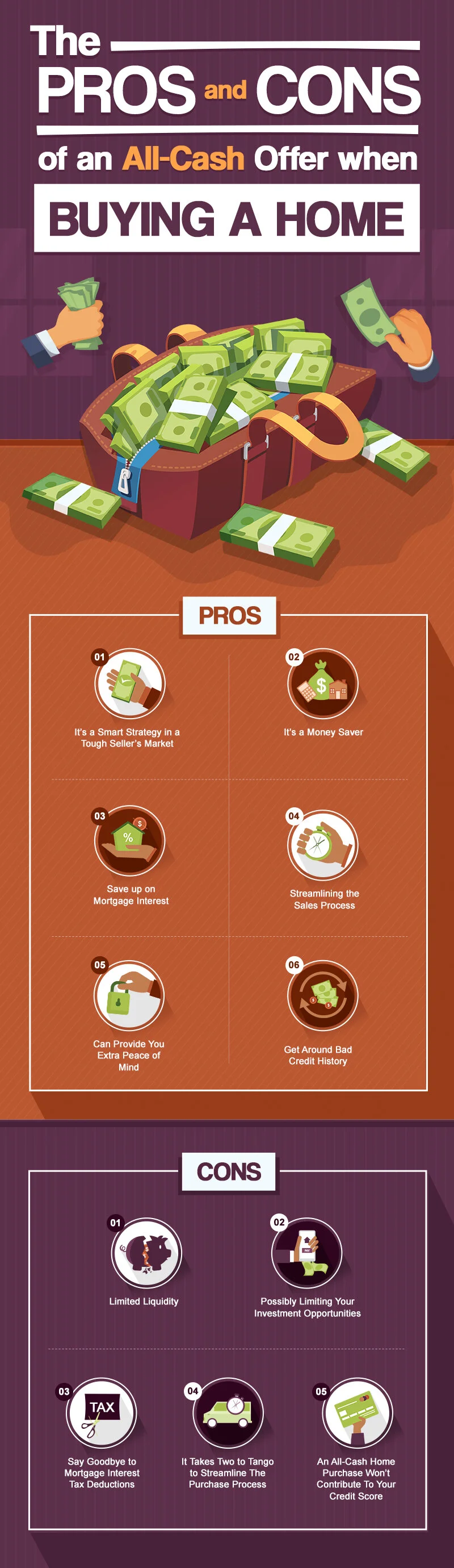
PROS

1. It’s a Smart Strategy in a Tough Seller’s Market

In a Redfin study, an all-cash offer ranked as the most effective strategy for winning a bidding war. It improves a competitive offer’s chances of success by 97%, proving that buying a home with cash can help buyers cut through the competition. In a luxury market, it also increases a buyer’s likelihood of success by over 400%. Yep, that’s fourfold. It can also be an advantage since it typically comes with shorter escrow periods and fewer contingencies. In hot markets where bidding wars occur, cash is truly king! 

2. It’s a Money Saver

Purchasing a home with cash can help you save money on many of the expenses that are loan-related, including closing costs, lender’s title insurance, and other fees that lenders usually charge to take out a mortgage. Sure, there are expenses you need to deal with, such as processing and filing fees and title insurance, but these will considerably be lower compared to when you get a mortgage. 

Since closing costs can equal to about 2-5% of the purchase price of a home, a buyer who pays with cash can avoid many of these expenses. 

3. Save up on Mortgage Interest

And speaking of savings, not getting a mortgage loan means you won’t have to pay mortgage interest for the next 15 or 30 years. Even if the current interest rates are low, paying interest tied up to the loan can cost homeowners thousands of dollars. A cash purchase can save you this additional cost, and you can add up the money you saved into your savings, retirement fund, or other investments later on.

4. Streamlining the Sales Process

Because a lot can get in the way when a buyer is getting a mortgage, an all-cash purchase tends to close sooner or faster because there’s lesser paperwork and no lender involved. Buyers and sellers will avoid encountering any delays related to a subpar credit score, mortgage approval, or even a poor home appraisal. It can assure both parties that there will be fewer things that can go wrong with the deal. 

5. Can Provide You Extra Peace of Mind

Without a mortgage, you can live your life without worrying about monthly payments. For many home buyers who gave an all-cash offer, this reason alone is enough because it gives them security and peace of mind. 

Even if you lose your job or things turn bad financially, you’re assured that you won’t foreclosed on because you already own your home. Also, all you need to pay on a monthly basis are the property taxes and homeowners’ insurance. 

6. Get Around Bad Credit History

Getting approved for financing can be quite a challenge for buyers who have less-than-stellar credit but otherwise have a steady income and a considerable amount of savings. Paying a house using your hard-earned cash can save you from the hassle of the mortgage process and the need to worry about your credit history.


CONS

There are, however, some disadvantages to an all-cash offer:

1. Limited Liquidity

Buying a house with cash could seriously limit your liquidity since you’ll be paying a huge amount of money upfront. This is why home buyers are only recommended to give an all-cash offer if they will still have money left for emergencies. 

2. Possibly Limiting Your Investment Opportunities

If an all-cash home purchase means tying the majority of your money into just one asset, then this is another important thing to factor into your purchase consideration. 

Even billionaires, including Facebook founder Mark Zuckerberg, prefer the mortgage route when they are more than capable of paying for their house upfront. They understand the value of a diversified investment portfolio.

3. Say Goodbye to Mortgage Interest Tax Deductions

One of the most popular financial incentives that attract buyers to is the major tax deduction from mortgage interest. But if you’ve paid your home with cash, you won’t be eligible for this tax benefit. A home paid for in cash becomes ineligible for this advantage. However, by the same token, not paying for mortgage interest is already a huge advantage.

4. It Takes Two to Tango to Streamline The Purchase Process

Because cash offers can close faster due to fewer contingencies and no mortgage delays, it can be a challenge if the seller is not yet ready to completely move out or they still haven’t found their next place. It can put the seller in an awkward position if their home sells faster than they initially thought. 

5. An All-Cash Home Purchase Won’t Contribute To Your Credit Score

Despite the hassle that comes from making mortgage payments psychologically and financially, your personal credit can actually benefit from these contributions. Having a long history of timely payments can positively impact your credit score — one thing you can’t get if you’ve paid your home with cash.

No matter the climate of your housing market, always consider the following before making your investment: What is our financial situation? What are our long-term investment strategies? Can we really afford to tie up so much money into one asset?

Buying a home can be your biggest financial commitment — more so if you’re paying with cash upfront. Aside from the home purchase itself, it’s smart to consider the other costs associated with homeownership and how exactly this will affect your finances.