BuyerSeller April 2, 2019

7 Reasons You’ll Love Selling Your Home in the Spring

Ah, spring! When the trees blossom, the lovely tulips and daffodils bloom, and everyone’s mood brightens. But aside from our daily dose of sunshine during spring, we also see the high season for real estate. As the temperature rises, the housing market starts to heat up.  Even in areas where the weather is great all year long, spring remains the most active time for house buyers and sellers alike.

While there are plenty of reasons to consider selling in the spring, here’s a few examples as to why it’s so worthwhile:

1. You can show a better-looking home.

Unlike selling in the colder months, which can be stressful because of the snow and harsh weather, you can go to greater lengths in spring to prepare your home for sale. If you list your home in the spring, you can take advantage of the warmer weather and elevate your home’s curb appeal.

Show your home at its best to draw the attention of potential buyers. Maximize your curb appeal by cleaning the walkways, strategically placing colorful plants and flower boxes, maintaining the lawn, and making it as green and lush as possible. Allowing the natural sunshine to stream through the windows of your home helps showcase it in its best light. Additionally, don’t forget to address parts of your home that are in need of repair or upkeep, especially if you haven’t done annual maintenance yet.

2. The longer days and better weather make it easier for buyers to go looking for homes.

When the clocks sprang forward in March, the days became longer. More daylight hours means more potential buyers can view your home. Likewise, the good weather gives people a boost to go outside and search for the picture-perfect home just like yours. Unlike home shopping in winter, where buyers need to drive through crappy weather in their soggy boots just to visit an open house, springtime brings in a fresh pool of potential buyers who’ve done their homework and want to use the longer days wisely. This improves your odds of landing a desirable offer for your home.

3. It’s a perfect time for families who want to move before the new school year.

Many home buyers with families are looking to move before the summer and the start of a new school year. This way, their children will still have a couple of months to get settled in their new neighborhood. If you put your home on the market early enough in the spring, your pool of buyers won’t have the same sense of urgency seen in summer or winter sales. Parents who buy in the spring can move during the summer, avoiding juggling their time between school pickup and packing up their stuff to get ready for their new home.

4. The buyer’s demand is higher and could spark bidding wars.

It’s no surprise that the months of March, April, and May are the best months for sellers to list their homes as many people are ready to enter the housing market to purchase. More buyers means more potential offers. Sellers can even expect to receive multiple offers, often sparking bidding wars. Buyers will always be competing for homes, especially if the home is in a good location and is listed at a reasonable price. If a bidding war occurs, the cost of the house is most likely to increase, putting the seller in a stronger position to receive more money for the home.

In those months, there’s also a greater chance that you’ll encounter an all-cash offer. This could speed up the entire home selling process. A cash buyer won’t have to rely on mortgage financing or on the sale of their current home, the so-called contingencies, in order to close the deal.

5. Higher home valuation

Since prices tend to be higher and more homes are being sold this season, the data for comparable homes that were recently sold in your neighborhood can also work in your favor. Your agent will have access to more of these comps when setting a price for your home. Likewise, when your home’s value is assessed by an appraiser, he or she will look at these comps, so your house is more likely to pass the appraisal if you’re selling it at fair market value.

6. You can be a bit more selective about who you sell your home to.

With more people getting into the market, you can afford to choose who you sell your home to. You don’t have to sell your house to the first buyer that gives you an offer, and you can stay firm on your price. The increase in demand affords you the opportunity to receive your asking price and close on the offer with which you are most comfortable. You can also decide whether to sell to an individual owner, joint owners, or even corporate buyers.

7. It’s also easier for you to move.

Even though your primary goal is to sell your home, chances are you are also planning to buy and move to a new home yourself. Since entering a real estate transaction can be stressful (not to mention chaotic), it’s another good reason why spring is the best time for you to sell. The weather is more convenient, you can take advantage of the longer days to accommodate home showings and also do your own house-hunting. There’s a greater chance you can sell your home quickly and for a higher price due to the higher demand in the spring.


BuyerSeller March 25, 2019

How To Find The Best Agent For A Short Sale

A short sale transaction is different from the usual home buying process. It involves more waiting time, and more leg work for your agent. Due to the rise of short sale properties on the market, training companies see it as an opportunity to train agents specifically in this area, giving them certification upon completion. Although it’s a plus to have your agent be trained in short sales, it’s better that they have actual experience doing the work. Here are some pointers on short sales, and the qualities you should seek when hiring an agent for this transaction.

What is a short sale?

If you’ve come across properties that are priced below the usual market value, those properties are most likely a short sale. A short sale is when a property is sold for less than its unsettled mortgage. The value of the properties put up for a short sale has usually dropped by 20% or more.

How does a short sale work?

If a homeowner is in financial strife and there is not enough equity in the home to pay off the mortgage after paying for the costs of sale, they may consider a short sale. A short sale allows homeowners to avoid incurring a bad record of foreclosure on their credit rating. To do so, they must present documents that support their claim of inability to pay off their remaining mortgage balance to their lender. These documents are subject to the approval of the lender before the house can officially be put up for sale.

A prospective buyer will have to make an offer to the seller, and also to the lender, and wait for their short sale approval letter.

As a home buyer, what are the advantages and disadvantages of buying a short sale?

Advantages:

  • It’s cheaper than the usual house prices in the market – The last thing that the bank/lender and the homeowner want is for the house to remain for too long on the market, so they price it low to attract buyers.

  • Less competition with fellow buyers – Most buyers are not prepared to wait, and since the process of buying a short sale can take time, this trims down the number of prospective buyers that can make an offer on the property.

Disadvantages:

  • The process is long – Processing the escrow is a long haul, and the approval of your offer is passed on from the seller to the lender.

  • You may need to pay costs that are not included in the selling price – Included in these costs are the closing costs, which the lender will not agree to split. There may be additional costs as well.

  • You buy the house as is – Contrary to the norm of buying a property and asking for a decrease in price based on necessary repairs, price reductions for a short sale will usually be declined.. You can counteract this by including contingencies on home damage and repair on your purchase contract.

  • You may need to pay part of the agent’s commission – It’s the lender who calls the shots on commissions for the agents in a short sale transaction. They typically pay more to the seller’s agent. Buyer’s agents know this is the case, and may request a higher commission be included in the buyer’s brokerage agreement.

What agent qualities should I look for when deciding to buy a short sale home?

  • They’ve handled short sales before – And to be exact, an agent who’s not only handled but closed a short sale. If they’ve closed a handful, that would be even more ideal because that means they know the necessary (and tedious!) legwork short sale transactions require. They could also acquaint you with lawyers to aid you in the negotiation process.

  • Ability to explain the whole process of a short sale to you in a comprehensible manner – Have them explain to you all the legwork and necessary measures involved in a short sale transaction. That way, you are able to prepare what needs to be done, and ascertain whether they have enough knowledge to handle the transaction.

  • They have a trained eye for spotting red flags – An agent with a good amount of experience in short sales can easily detect if there are possible legal or tax consequences. Once they spot something fishy in the transaction, they can direct you to consult with your hired attorney on how to address the issue.

  • They’re knowledgeable on lenders and banks –The lengthy part of the short sale process is really at the bank, and the agent will need to call for regular updates. An agent who has closed a lot of short sales will know how the lenders/banks fare in the process. This can shorten the process significantly, as there would be no guessing game on your side of the equation. Your agent would already know how to strategize in order to expedite the process and make it as smooth as possible.

Buyer March 14, 2019

Forget A Cash Offer: Here Are 5 Creative Ways To Help You Win A Bidding War

Ugh, bidding wars. They can be nasty, nerve-wracking, and even heart-breaking. Nowadays, most real estate markets present buyers with huge challenges, due to high demand coupled with low housing inventory. Oftentimes, bidding wars become the rule, especially in a seller’s market.

Buyers who run into competing offers need to up their ante if they want to win the home they love. If you don’t have enough cash to go above the asking price or give an all-cash offer, remember that hope is not lost. There are many ways to get creative when giving your offer. You just have to analyze which strategies you can apply to find the right approach, in order to get the upper hand.

Here are five ways you can compete in a bidding war and land your dream home without giving an all-cash offer:

1. Craft a thoughtful offer letter.

One simple but surefire way to pull on the heartstrings of the seller is to write a personal offer letter. Remember that sellers are attached to their homes—which are often filled with memories of their children and family growing up and countless holiday celebrations. By writing a thoughtful offer letter, you can create an emotional connection to the owners.

Get ahead of the other buyers by putting a little heart and soul into it. Be genuine in expressing why you want the house and how the community is an ideal place for your family. One trick is to include photos of your family and pets. It can help the seller visualize the people they’ll be passing their precious nest to. However, be extra careful about the things you say in your letter because there are some things to avoid. For example, it’s a terrible idea to include your plans to tear down part of the home and renovate it to your liking. You can consult your realtor and get help from a trusted friend or relative if you need help crafting your message.


2. Provide a sweet gesture.

Want a good way to sweeten the deal and get the home you want? Make a nice gesture that the seller would surely love. No, it isn’t cheating. Rather, it’s acknowledging the fact that selling a home is just as stressful as buying one, so you want to help the seller get through it.

During home showings, take a hint from the homeowner’s decor and displays to get an idea of what they love. Then use it to your advantage. If they’re an avid sports fan, then tickets to a game they like may help. Or, if you know they love sweets or baked goods, and you are an amazing baker yourself, why not whip up a batch of cookies or pies for them? Either way, these gestures can help you establish rapport with the sellers, which in turn, can make a big difference in whether they will accept your offer to purchase the home.


3. Waive the mortgage contingency.

An alternative to giving an all-cash offer is waiving the mortgage contingency. The mortgage or financing contingency means the deal is contingent on your loan being approved by the lender. Waiving it is a good strategy if you’re confident enough and know that securing a mortgage won’t be a problem. It will assure the seller that the deal won’t fall apart and you’ll be approved for a loan.  While it cannot completely outweigh an all-cash offer, it can be just as effective. The last thing the seller wants is a potential buyer walking away from the deal with a heartbreaking “Sorry” because they failed to secure a mortgage.

Be confident that you’ll secure a loan by getting a fully-underwritten loan pre-approval from a lender. Also, avoid making big mortgage mistakes like opening a new credit line, increasing your debt, or changing job in the middle of the transaction.


4. Keep the inspection time frame short.

Waiving the home inspection can be a big risk especially when your biggest financial investment is at stake. So assuage the seller of a potential hurdle by keeping the home inspection time frame short— a week, if possible. That way, the seller doesn’t have to wait anxiously for an extended period before the inspection can go through.

Likewise, make sure that the contingency time periods you’ve stated in your initial offer remain the same in the “purchase and sale agreement,” which includes your detailed offer.


5. Determine the seller’s target closing date and give it to them.

The best way to complement the strategies mentioned above is to make your offer solid and submit it in a reasonable time frame. Remember that sellers have a deadline for accepting offers and want to meet their desired closing date. For some, their target close date can be a critical factor in their decision-making process. Conforming to the homeowner’s preferred deadline can help your offer stand out and land your dream home.

Homeowner February 20, 2019

Tips On Setting A Home Renovation Budget

When a homeowner starts to consider a home renovation, it’s easy to grow overwhelmed, because it seems like such a monumental task. Perhaps this comes from the notion that all makeovers have to big, bold, and new. Think shows like “Extreme Makeover” and “House Flippers”. Most think the only allowable ending to a renovation is that you walk into your new living room and start sobbing with joy beholding your stunning, beautiful new life.

Does it really have to be that grand, though? You want to do a good job, sure– but is it really necessary to spend obscene amounts of money?

Let’s put a realistic budget on your needed and/or wanted home renovation. Whether it’s simply a kitchen revamp, a bathroom remodel, or a complete overhaul of your property, we have the perfect tips to keep you from breaking the bank.

1. Estimate Scientifically.

Even in home renovations, there’s a rule of thumb—don’t spend more on the area you’re renovating than its ultimate potential value.

An area in your home accounts for a certain percentage of your entire property. A kitchen, for example, may be considered 10-15% the house’s market value.

Make sure to compute for this first, and try to calibrate it with your budget.

2. Reality, not Fantasy.

One of the most common mistakes homeowners make while budgeting for a renovation is underestimating the amount of money needed to finish the job. Ideally, you want to renovate your property at the lowest cost possible, but will that budget fit your list of needs and wants?

Make realistic estimates (which often means purposely adding a bit of a buffer on every expense) to avoid under-budgeting.

3. Get Quotes from Contractors.

Talk to contractors. They do this for a living. Even if you don’t intend to actually use one.

Contractors will quote you based on your ideal plan, and how they would make it a reality—from manpower to materials needed. Tell them you’re expected budget and see if they can work with it.

4. Be Specific!

As you gather quotes from contractors, make sure you communicate exactly what you want done. Contractors should know exactly what they’re doing, but if the homeowner doesn’t really know what is to be done on the property, your quote will be vague and likely include many purposeful upsells.

5. Stick to the Plan.

To stick to the budget! Make it your priority to stick to your financial plan—your realistic, scientifically estimated, and specific dollar amount. Changing plans mid-renovation has ‘eventually, horribly over-budget’ written all over it!

Resist any urge to add a little side project along the way. If there’s a little extra money left over, then do that desired side-project after the initially planned renovation is completed.

6. Start Planning Early On.

As mentioned, any mid-work alteration in the plan inevitably means an instant budget change. Don’t leave anything until the last-minute! If you can, plan even the smallest detail with your contractor early in the process.

You can also start lurking through the aisles of hardware stores paying particular mind to the prices of items relevant to your renovation. If you’re renovating your bathroom, for example, you might want to check out new sinks. Mark down some prices. Get a sense of cost. Make a spreadsheet and keep track of everything you find.

7. Plan for the Unexpected.

Account for hidden costs! Make sure you have some wiggle room.  If a maintenance issue is uncovered, construction takes a turn because of the weather, or if your vision changes midway, you will avoid undue stress by budgeting flexibly.

Allot a buffer of around 15-20% on top of your budget for emergency circumstances.

8. Consider Home Remodeling Options.

You may be able to get a loan to finally make that dream renovation happen!

There are a few options you can consider—refinancing, cash-out refinance, HELOC (home equity line of credit), and a home equity loan. Make sure to study all your options before you finally take the plunge.

Just be sure to keep your long-term financial health in mind. You don’t want to sacrifice your future at the expense of the present.

Buyer February 4, 2019

8 Home Buyer Practices That Your Agent Wants you to Change

In the process of finding a new home, your real estate agent should become your new best friend. For a few weeks or longer, you will probably talk to them more than anyone else you know!

So how do you make sure you’re doing your part to build a good relationship with your agent?

We’ve listed eight things that you should avoid doing if you want to keep your agent happy throughout the home buying process. Remember that your agent has your best interest in mind, so modifying these behaviors is ultimately about making your home buying journey a success!

What to avoid:

1. Not Doing Your Own Research

So you finally have a budget and want to buy a house. Great! Now what? You call a real estate agent. Should that be the end of your work? Definitely not!

Yes, agents know all about houses, but don’t depend on your agent to guess on the specifics of what you’re looking for. Do you want a bungalow, or maybe a duplex? What areas are you interested in? Are you particular about having a nice view? These are things you should know for yourself–and don’t forget to inform your agent!

Make sure you know what you want before calling an agent. That said, if you need help determining what you’re looking for, ask your realtor what factors you should be considering and they will be happy to guide you. That’s where their expertise can really help!

2. Calling the Listing Agent On Your Own

This is what you have a realtor for, so why would you do more work than you have to? That is their job: to do the calling for you.

Most importantly, your agent knows how to position your inquiry and negotiate on your behalf. Keeping some distance between you and the listing agent is essential to a successful transaction.  

3. Depending On Listing Syndication Websites More Than Your Agent

The Internet is a wonderful place, with lots of information available at your fingertips. True as this is, a computer will not be as reliable as a trusted agent. There is no harm in poking around various home search sites, but when you want more information on a property it’s best to call your agent. Licensed agents have information available to them that the public can’t access. Who wouldn’t want the inside scoop?

4. Waiting Too Long

When you find the perfect house, make your offer. There is nothing worse than dragging your feet and missing out on the home of your dreams. Yes, this is a big decision. But if you’ve done your research ahead of time and know what you want in a home, when you find that house, it’s time to pull the trigger.  Being decisive will help you get what you want.

5. Lowballing

“This offer may be ridiculous, but could you check if they’d take it?” Buying real estate should involve a negotiation, within reason. You want to make an offer that will start a conversation, not one that will result in a definitive “no”, or worse, no response at all. So if you really like the home, why would you risk making an offer that will go ignored? If you have built a strong relationship with your agent, you should be comfortable asking them for their feedback on your offer, and listen to their advice.

6. Asking your Agent to Show Properties Without Being Pre-Approved

Your agent knows that this is the most important first-step in the home buying process. Yes it’s tempting to put this off until you’ve found your dream home, but waiting that long can lead to missed opportunities. If you’re scrambling to get pre-approval when you’re ready to make an offer, you may miss out on the house. Worse, you could fall in love with a home only to find out later that you don’t qualify to buy it. Save yourself the heartache of losing out on the home of your dreams and make sure you get pre-approved before you start looking!

7. Negotiating on Visible Problems After the Inspection

Problems that you notice about the home when you first view it–peeling paint, cracked tiles–should be factored into your initial offer on the home. The point of the inspection is to call your attention to problems that aren’t visible to the average person. When you come back to the seller to negotiate after the inspection, limiting your requests to those items only discovered through the inspection will help keep your deal on track. Asking for a credit on peeling paint at that point may cause unnecessary tension between you and the seller or worse, cause the deal to fall apart.

8. Looking at Homes Outside of Your Price Point

Insisting on looking at homes outside your price point is really just a gateway to disappointment. Most of the time, when people look at something they cannot afford, they then think they have found the perfect house. But if it’s outside your budget it’s outside your budget, and there is not much you can do about that.

It is best to simply not look at homes that you cannot afford, or risk more heartache and a more difficult home buying experience overall.  

Buyer January 22, 2019

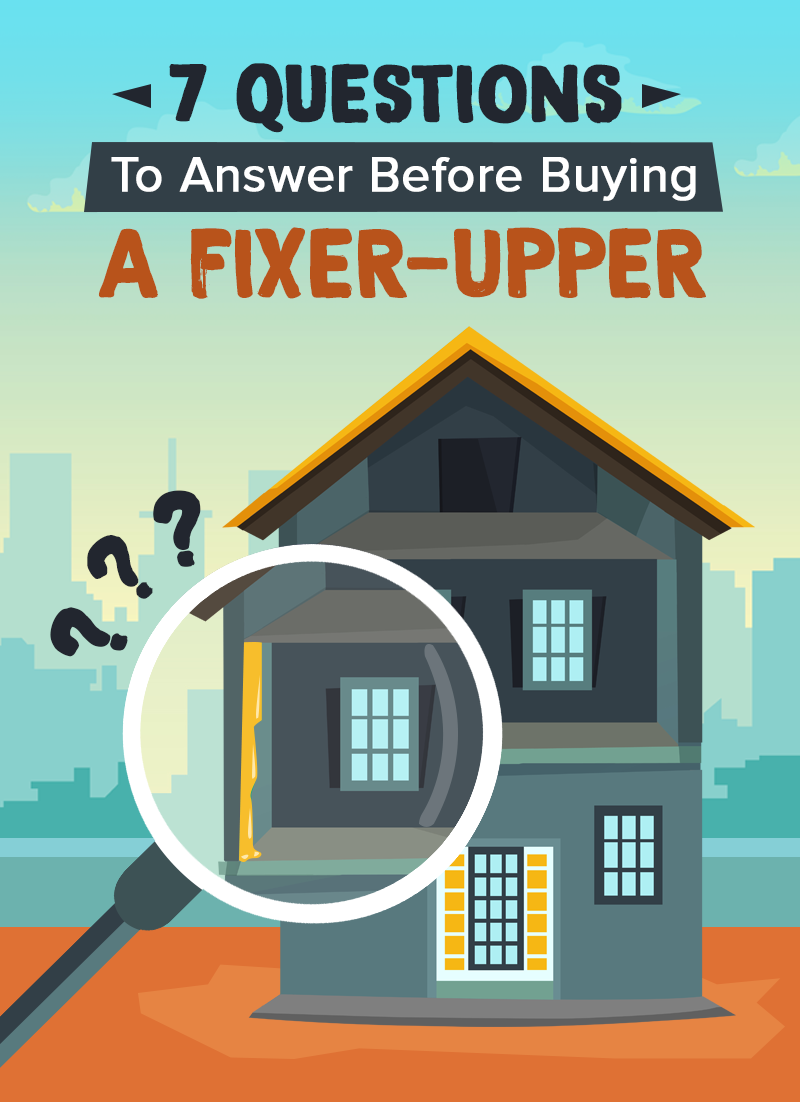
Before You Buy A Fixer-Upper, Answer These Questions First!

Just like buying a move-in ready home, a fixer-upper has its fair share of advantages and disadvantages. Buying a fixer-upper can be a great way to own a home you really love once you put some work into it, but it can also quickly swallow up your savings if you aren’t prepared. Just remember to do a reality check before plunging into this bargain.

To figure out if you can and are ready to own a fixer-upper, here are seven questions to help determine whether the fixer-upper you’re eyeing is right for you.

1. Is the home’s location worth it?

Before you get infatuated with a fixer-upper house and all its potential, first learn about the neighborhood. Experts recommend buying “the worst house on the best block.” Why? Because there’s no denying that homes located in a sought-after neighborhood will positively influence the price of the “ugly duckling” that you are interested in. Well, once it has been renovated, anyway.

Most buyers choose fixer-upper homes because they loved the area first and saw the potential of a thriving neighborhood. Unlike other home buyers, they can see past the external imperfections of the house, such as peeling paint or an unkempt yard, and realize that it is in an area with sustainable growth. So to choose wisely, do your research and love the neighborhood first. Is it close to public transit for easy commutes? Are there any parks and local attractions nearby? Is it in a good school district? If you answer “yes” to one or more of these questions, it might be worth it to get your hands dirty for that bargain.

2. What kinds of problems need to be fixed?

Problems in houses can be divided into two categories: structural and cosmetic. Real estate agents warn against buying a house with structural damage, especially if there are major flaws in the foundation, septic/sewage system, roofing, siding, or other issues that affect the way a house works. You should think twice if the house has termite damage, water damage, needs serious upgrades to the electrical systems, or if there is a mold manifestation.

If you find problems like these after a home inspection, experts say it’s probably best to walk away. These flaws can actually make the house dangerous to live in. They are very expensive to fix and they have to be taken care of by a licensed contractor. Likewise, environmental problems such as termite damage or radon can be mitigated, but treatments may not always be successful.

On the contrary, they say the perfect fixer-uppers are the ones that only need cosmetic upgrades. Many home buyers would scoff at these houses and simply walk away. They don’t know that problems like cracked tiles, peeling paint, smelly odors, and unkempt lawns are only skin-deep and just make the house aesthetically and architecturally unappealing.

Cosmetic changes are generally less costly and can even add value to the home, especially for projects like kitchen and bathroom renovation, wallpaper removal, floor refinishing, and new lighting installation. Experts refer to fixer-uppers like these as “ugly homes”—they only need some freshening up before they’re transformed into a home that anyone would want. The best advantage to purchasing this type of fixer-upper: you can choose your preferred colors, furnishings, and fixtures to make the home perfectly suited to your own taste.

3. Does it have a desirable configuration and layout?

After identifying how big the problems are, determine whether the home’s layout and interior specifications are desirable—both to you and future buyers. If the house has a bad layout, just as with structural damage, it can be expensive or impractical to demolish walls and build new ones.

If it’s located in a neighborhood where most of the homes only have two bedrooms, having an extra bedroom can give your home a huge advantage. A kitchen with more than one entrance is more likable, while the concept of an open floor plan is gaining popularity, especially among many millennial buyers. Those features can help make the home appealing to a large pool of potential buyers and thus can be more profitable when it’s time for you to sell.

4. Can your budget handle the total costs?

There are three major things you need to include in your budget before doing any repairs: renovation costs (also include labor costs), supplies, and permits. Even before hiring a home inspector or a licensed structural engineer to evaluate the home, create a reference sheet or estimates for the costs of major repairs such as a new roof, HVAC, windows, or foundation. This way, you’ll be able to tell whether fixing the home will really fall within your budget.

For cosmetic upgrades and repairs you are planning to DIY, determine the materials you’ll need and how much they cost. You can get a rough estimate by checking home improvements stores and websites, such as Home Depot or Lowe’s.

You also need to factor in the cost of securing permits from your town or local municipality. Permits come with corresponding fees and can be pricey depending on the town. On the other hand, moving forward with your home renovations without securing the proper permits can have many negative consequences. Check first with local officials and see which of the repair jobs require a permit, and how much they cost.

5. Can you deal with the disruption?

Do you have the time? Or, are you willing to devote a lot of time to this project? Compared to buying a move-in ready home, you have to commit a huge amount of your time to do all the work to make a fixer-upper your ideal home. For instance, the required licenses and permits may sometimes take a lot longer than expected. You also have to prepare for every aspect of the project to take longer than initially anticipated and build in as much extra time as possible in case things get delayed. Don’t forget to assess your patience and emotional energy as well. Each repair project may come with unexpected issues and delays that will really test your patience and endurance.

6. Aside from hiring professionals and/or contractors, can you also DIY?

Before thinking of buying a fixer-upper, you need to consider your skills and willingness to tackle such a home. There are projects that you have to leave to the professionals and contractors—say, anything related to electricity, wiring, and plumbing. But there are minor cosmetic upgrades you can also learn and do on your own to help you save substantially on labor costs. If you’re skilled enough as a DIYer, you may put on a fresh coat of paint, change the lighting fixtures, lay the tile, fix the toilet, or tear down wallpaper all by yourself.  

A fixer-upper works best for those who would happily spend their time replacing cabinets and refinishing floors, and would want to get their hands dirty to make their home more habitable and profitable. Experts also call this concept “sweat equity.” By doing some part of the work yourself, you’re improving your home’s value and even adding greater value to your home. Likewise, the more you can do on your own (just as long as it’s still safe enough for an amateur), the less you need to spend on labor cost and instead allocate a part of your budget in buying high-quality materials.

7. Can you tap into any home improvement loans or programs?

Financing a fixer-upper can be extremely difficult. But if you’re really interested in buying and restoring a house, do your research and see if you can qualify for any home improvement loans. Your most popular choices are the FHA 203(k) loan, the Fannie Mae HomeStyle loan, and the Section 504 Home Repair program. Just remember that all loans have their own strict standards and eligibility requirements.

For example, a 203(k) loan is backed by the Federal Housing Administration, which means you can put as little as a 3.5% down. Lenders can also accept lower interest rates than what a typical home renovation loan would require. Moreover, it is also open to borrowers who have a less-than-stellar credit rating and can cover big-ticket issues such as structural damage and plumbing replacement.

Before getting a renovation loan, make sure you’ve explored all your options and understand the pros and cons of each program. Also, keep in mind that you generally need to be pre-approved with these loans before you can make an offer on a house.


The work that it takes to renovate a fixer-upper should not be underestimated. A project like this can eat away at your time, effort, money, patience, and even your sanity.  And once you close on a fixer-upper, there is no turning back. The only way forward is to put in the necessary effort to transform it. For the right buyer, though, turning an “ugly duckling” into a beautiful swan—a beautiful home—is a challenge well worth the effort and can mean living in your dream home…making a significant profit when you sell.

GeneralHomeowner January 11, 2019

The Annual Home Maintenance Checklist: A Guide For New Homeowners

Keeping up with home maintenance tasks can be daunting, especially for new homeowners. It may be hard to accept the fact that sometimes you have to cancel a weekend brunch so you can clean out the gutters and mow the lawn.

While these responsibilities could be frustrating, it’s what you have to do to protect your biggest investment. Staying on top of these tasks can save you from costly repairs later, and can keep your house running as good as new.

While there are many tasks that homeowners should complete each season, this list outlines the chores you should take care of once a year. If you’re a homeowner who is or will be celebrating the anniversary of your home purchase, it’s a good idea to start off with this to-do list and give your home the TLC it deserves.

1. Check and update your smoke alarms, alert systems, and carbon monoxide detectors.

Alarm systems and smoke detectors are crucial to minimizing damage and saving lives in the event of a fire. Change the batteries of your smoke and carbon monoxide detectors and ensure that the systems are in working condition.

Now is also a good time to check your fire extinguishers. Make sure you have at least one fire extinguisher and see if it is still within the expiration date.

2. Pressure wash.

One of the best ways to make your home’s exterior look clean is through power washing. Doing so will also minimize the risk of mold growth and infestation, particularly if you do it once a year. Give your house a good scrub by using a garden hose, renting a power washer or hiring a professional cleaner to do the job. Don’t miss out on cleaning the siding, windows, and patio as well to get rid of any grit. For heavily soiled areas, spot-clean them using cleaning materials that won’t harm your plants.

3. See if your house needs a freshening up with paint.

To check if your house’s exterior needs a fresh coat of color, look for signs of chipping paint. New paint will not only give your home a new look, but it will also protect it from water damage and rot. This job is best started in the spring.

4. Check your home’s humidity levels.

The humidity level in your home should be kept at average levels: between 30% and 50% humidity. High humidity is dangerous because it can cause mildew and black mold, while low levels can cause damage such as chipping paint. Low humidity can also make you and your family uncomfortable, causing itchiness and even sore throats! Check your property’s humidity using a hygrometer at least once a year.

5. Clean your air filters and air ducts.

You should clean your air conditioner parts at least once a year to ensure clean air is circulating in your home. You can clean the air filters and air ducts by yourself or hire a maintenance technician to do the job.

6. Check for termites and pests.

For many homeowners, just the thought of having termites in their home can make them cringe, but facing reality is another thing. You should include a termite inspection, which costs no more than $100, in your annual checklist to make sure these pests are not taking over your property.

Likewise, don’t forget to book an appointment with a pest control service once a year. Unless you want your home to be infested with bugs and other critters, you have to include it on your cleaning schedule.

7. Clean your tile and grout.

Cleaning the tile and sealing the grout lines need to be done at least once a year. Not only will it make your home look clean but will help prevent mold growth. While there are many firms that offer professional tile and grout cleaning, you can also do it yourself. You just have to carefully choose the products or materials you’ll use so you won’t damage your tile or prevent further damage.

8. Sort out your things and declutter.

After spending a year or more living in your home, it might surprise you to realizehow much “stuff” has piled up, taking over your storage space. It’s a good thing to sort through your belongings and declutter unnecessary items after you’re finished doing the essential maintenance chores.

GeneralHomeowner January 3, 2019

The 7-Step Decluttering Guide to Organizing Your Home this New Year

We often talk about starting a home improvement project, like a bathroom or kitchen remodel, because we’re dissatisfied with the house and are looking for ways to make it even better. But what if the first thing that’s hindering us from appreciating our biggest investment is the enormous amount of clutter that we’ve accumulated over the years?

Decluttering is a difficult thing to do, especially for those who have been planning to downsize or simply move out of their current home. Deciding which items to keep, which to give up, donate, or throw out will never be easy. But too much clutter in our home can lead to chaos that can cost us money, time, and even limit our productivity and concentration.

According to the Ikea Life at Home 2017 survey Beating The Battles, having “too much stuff” was the single biggest cause of stress in the home. And the simple act of choosing which items to keep and which to discard can ultimately free people from guilt and worry and allow them to focus on what really matters most in their lives, even if taking that step is difficult.

New Year is a good time to have a fresh start, so right now is a great time to achieve a more peaceful home by decluttering and organizing your stuff. Here we’ve gathered some of the best techniques and principles to help you declutter so you can appreciate your home more.

Before starting anything, think about what your goals are and your reasons for decluttering. If you don’t have a clear goal in mind, you’ll start enthusiastically after sorting through a few items, then find yourself losing momentum because you haven’t started with the right mindset. Experts suggest you create your vision first and think things through before you start organizing.


Don’t just say to yourself that you’re going to organize your closet or sort through your cupboard. Instead, think about how you want to maximize your storage space, how you want to store your clothes, or how you can easily get to your preferred herbs and spices when you’re cooking your meals. Take the time to assess your space and understand how you want to organize a particular area in your home.

If you’re still having a hard time deciding where to start, begin with something easy. Get rid of any broken or expired items, especially hair, makeup, and other cosmetic products, old prescriptions, and medicines. The same goes for any food or canned goods in your pantry that are already past their expiration date.

Make it easier for you to focus on your goals by organizing one room or area at a time. Break the job into smaller parts so you won’t get overwhelmed with the task at hand. Try choosing a space that makes you feel uncomfortable — whether it’s your makeup and beauty products taking over your vanity drawer, the shelves crammed with books you don’t have time to read, the pile of messy clothes in your dresser, or the unruly cords and cables in your home office. Taking it item by item will help you get things done in a short amount of time.

Things like gifts, souvenirs, and inherited items can be the hardest things to part with. Putting a great deal of sentimental value on every item we’ve ever received as a gift or every item we’ve ever purchased on a vacation is a trap that we all fall into, and it can be impossible for you to get rid of unnecessary clutter if you don’t learn to let go. Even though these things can be connected to a specific memory in our lives, the fact remains that these are still objects, and while some may be worth keeping forever, it’s worthwhile to examine whether all of those items are still creating a positive effect on your life, or if they’re contributing to your stress.

It’s important to remember that you are not required to keep all the gifts you’ve received in your lifetime. When evaluating an item, determine whether it is really worth keeping. If you can retain the precious memory without keeping the physical object, then it might be wise to let go. You can check these tips by The Spruce to help you get rid of sentimental clutter without feeling guilty.

As you set out to declutter a space in your home, adapt the four-box technique suggested by Becker in BecomingMinimalist.com to help you with this process. Prepare four boxes that will be titled trash, give away, keep, and relocate. As you consider and evaluate each item, try to place them into one of these four categories so it will be easier for you to sort things out later on.

After you’ve finished, you can return and double check all the items in the boxes and then put them back in their proper locations, or think of ways to discard them. You can always donate them, pass them on, give them away to friends and relatives, or sell them for some extra cash.

The biggest pitfalls when organizing are the unending distractions and diversions that will come your way. When you start the task, do your best to ignore any texts, email alerts, or notifications from your social media accounts. Also, avoid the temptation to finish that book you found in a drawer you were cleaning, or review the full menu of a restaurant in that flyer you were supposed to throw out. These little distractions could send you down another path and make you lose focus on your goal. So outsmart these temptations at all costs and remember the tips given above to achieve an organized home.

Many of us just don’t have the time to focus on getting rid of unnecessary items, but we can still manage the issue if we acquire less stuff to begin with. Before bringing a new item into your home, take a hard look at the things you already own. Disorganization could cost you money when you bring home a new item only to realize you already own something similar. When there’s less clutter, you’ll spend less time trying to find things, less time wondering if you already have something, and less money overall when you’re able to find things quickly and know you don’t need a duplicate.


After you’re finished, take a step back and look around. Have you missed any area that still needs attention? Once you’re happy with what you’ve accomplished in your newly organized home, it’s now easier for you to dream of your next home improvement project.

Homeowner December 23, 2018

Understanding Your Homeowner’s Insurance Policy in Case of a Wildfire

The recent catastrophic wildfires in California have been beyond devastating. These violent infernos destroyed thousands of properties and structures and displaced hundreds of thousands of people living in the affected areas.


But if there’s one takeaway from this widespread fire damage, it’s that homeowners and renters alike should be sure their insurance policies are up to date, and that they can get enough coverage to rebuild their home after a catastrophe.

So whether you live in the Golden State, on the West Coast, or anywhere else in the country, here are some key points about your policy in case you need to make an insurance claim after wildfire damage:

Your standard homeowner’s insurance policy will cover damages to your home from a wildfire, especially those caused by fire and smoke. It may also include the repair and cleaning of smoke-damaged furniture, water damage from firefighting efforts, as well as debris removal.

Depending on the kind of policy you have and whether you live in a high-risk zone or not, you may have coverage for:

  • Dwelling or main property

  • Detached structures like garage and fence

  • Landscaping and other backyard items

  • Personal property

  • Debris removal, and;

  • Living expenses

Keep in mind that for personal belongings like jewelry, you may need to purchase additional coverage to protect them since your standard policy may offer lower coverage limits. If your car has also been damaged or destroyed by wildfire, it is typically covered under the optional “comprehensive” portion of your automobile insurance policy.

Based on your insurance policy, your house and its contents may be insured for either their cash value or their replacement value. The actual cash value is the depreciated value of your possessions at the time of the loss. In this settlement, your items will be replaced by their current, depreciated value.

On the other hand, replacement value will provide you with enough money to replace your lost items. And although you will pay more in premiums, it’s often worth it because it can help you go back on the same position you were before the loss.

Remember that you shouldn’t only focus on the replacement costs of your home and its contents. You should also check your homeowner’s policy for your Loss of Use coverage limits. Loss of Use coverage provides living expenses if your home is deemed uninhabitable as the result of a disaster such as fire or water.

Because it will take time to rebuild or repair your home, loss of use covers expenses for temporary residence, moving costs, transportation, and commuting expenses, among others. This key provision is sometimes called Coverage D and in most policies or insurers, it is usually limited to a certain amount and for a specific time period.

In case of disasters such as a wildfire, homeowners need to be sure that their policies have strong loss of use provisions. It’s a common mistake for many because they purchase their coverage based on cost and not the actual coverage. So once a disaster strikes, they’re surprised to find out that their temporary living costs are only partially covered. Experts suggest that homeowners review their Loss of Use coverage limits before they suffer a loss so they can be comfortable while they’re on their way to recovery.

The Loss of Use provision is only limited to a specific time period, which can pose a new challenge for affected homeowners since it takes time to rebuild. The length of coverage also varies by state. In California, the current law allows for 24 months of loss of use. The good news is that it will increase to 36 months starting January 2019. Some other states, however, limit the loss of use to only 12 months.

For many displaced homeowners, the 24 months of coverage may not be enough to cover the actual time needed to rebuild. Most insurance policies also do not consider outside influences that can make it difficult for these homeowners to be efficient with rebuilding.

Here are some of the things you can do to make sure your property is protected:

1. Double-check your insurance policy and be sure you have adequate coverage. Homeowners and renters alike, especially those who live in areas at risk of wildfires, should make sure their coverage is adequate and up to date. Review the fine print of your insurance policy and make sure  nothing sneaky has made its way into your policy.

You can also purchase additional coverage for code upgrades, which will help cover the cost of bringing your new home up to the latest building standards. This will protect you in case rules have changed for electrical systems or insulation since the year your house was built.

2. Document your home and keep an inventory of your belongings. Take pictures and videos of your home and your possessions through your smartphone, then keep them on a cloud-based storage platform so you can access them anywhere. In case your possessions were ruined by fire, you can use the images as evidence if your insurer disputes something in your claim.

In case your area has been affected by wildfires and you have to evacuate, save receipts from hotel rooms, food, or rentals. These additional living expenses could be covered by your insurance policy.

3. Work with the right insurance agent or broker. Working with the right professionals can make a big difference even before a disaster strikes. They can walk you through the provisions of your insurance policy and explain why you may need to pay additional premiums, especially if you’re living in a high-risk area.

Buyer December 17, 2018

An Easy Guide to the Different Types of Mortgage Lenders (Before Choosing the Right One for You)

We’ve helped you understand the roles of different real estate experts in previous posts. After securing everything needed for your dream home with your agent’s help, you’ll be needing a mortgage lender who will provide the mortgage loan that will be used to purchase the property.

Mortgage lenders set their mortgage interest rates and other loan terms according to different factors. Likewise, borrowers need to meet certain criteria in terms of creditworthiness and financial resources in order to qualify for a mortgage. Generally, there are three main types of mortgage lenders: retail banks, credit unions, and mortgage banks.

Just like with real estate agents, choosing the right lender can also save you time, money, and lessen your worries while you’re in a complicated real estate transaction. You need to fully understand your options so you can feel more comfortable sharing your financial and personal profile with your lender and subsequently, get the best loan product that fits your needs.

Retail Banks

These companies range from the biggest institutions, such as Bank of America, down to smaller local banks. They do their own underwriting and approve and close loans for consumers. Smaller retail banks can also offer lower fees and less-stringent credit requirements. They are often more flexible on loan approvals because they can choose whether to keep the loans on their books or sell the loans to investment firms like Fannie Mae and Freddie Mac, who then bundle the loans into mortgage bonds. They also usually offer lower mortgage rates if you use them for additional services like a checking account.

If you get your mortgage from one of these organizations, you’ll be assigned a loan officer, who will receive a commission or bonus for writing your loan. He or she will remain your primary point of contact for all future inquiries.

Credit Unions

They are not-for-profit, and customer or member-owned cooperatives that have been boosting their presence in the mortgage lending market since 2015. Because of their not-for-profit tax status, they’re not indebted to shareholders like banks and typically offer more personal service and lower fees because instead of keeping the profit, they pass on the savings to their members.

By getting a loan at a credit union, there’s a greater chance that you’ll stick with the same servicer. That means you can save money from late fees that could arise due to confusion over where you need to send your payments. Credit unions also appeal more to borrowers with less-than-perfect credit or potential borrowers who don’t fit in the traditional profile.

Cons: They can be less convenient because they usually have fewer branches (or a brick and mortar office), as well as ATMs.

If you get your mortgage from a credit union, you’ll also be assigned a loan officer who will handle your mortgage transaction.

Mortgage Banks and/or Mortgage Bankers

Many mortgage lenders in the US are mortgage bankers. They can be an individual, a company, or an institution that originates mortgages. They may use their own funds or borrow funds from warehouse lenders at short-term rates to cover the mortgages. Once the mortgage is provided to the home buyer, a mortgage banker may choose to retain the mortgage in their portfolio, or sell it to investors (such as Fannie Mae and Freddie Mac) and repay the short-term note.

Understanding the different kinds of lenders and terms you may encounter

Aside from getting the best loan product with reasonable terms, you need to know what kind of lender you’ll be dealing with. It can be quite confusing to figure out all the different kinds of lenders that deal in home loans and refinancing, but familiarizing yourself with the terms and their roles can be a big help. Just remember that many lenders are involved in more than one type of lending, and their roles can overlap among various categories. Here we introduce you to their different roles and goals.

Mortgage Brokers

While a mortgage broker does not actually make the loans, he or she works with multiple lenders to find the one that will offer you the best rate and terms. He or she simply acts as a middleman or an agent who may represent the mortgage loan products of many lenders. You can count on a broker to match you with the loan product that best fits your needs at the best price.

They usually obtain loans for consumers through retail or mortgage banks and wholesale lenders. The loan is also funded and serviced by the retail or mortgage bank that the broker takes your loan to.

Once you get approved on your loan, you will deal directly with the loan originator or their mortgage service provider. The broker may then add his or her own fee.

Here are some of the advantages of using a mortgage broker:

  • They can rate shop for you across many banks, thus saving you time shopping for a loan.

  • You may get a more favorable mortgage rate.

  • A mortgage broker can best lead you to national or regional lenders that are most likely to accept your application based on your financial and personal information.

Wholesale Lenders

Wholesale lenders pertain to those banks and/or institutions that do not deal directly with consumers but offer their loans through third parties such as other banks, mortgage brokers, credit unions, etc. In this kind of lending, the wholesale lender is the one that is actually making the loan and whose name typically appears on mortgage documents. The third party is only acting as an agent in return for a fee. Many large banks have both wholesale and retail operations, such as Bank of America and Wells Fargo.

Retail Lenders

They are lenders who issue mortgages directly to homeowners, either by lending their own money or acting as an agent. They provide financing on the retail level with retail rates. Similar to wholesale lending, retail lending may simply be one function offered by a larger financial institution that also provides a range of other financial services.

Direct Lenders

If you encounter the term “direct lender,” no need to be confused. Direct lenders are those who originate their own loans through their own funds or borrowed funds. Direct lenders can be banks, mortgage banks, or portfolio lenders (which will be discussed below). Their employees will review your application and make the decision to lend you money. They can be classified as retail lenders as well because they do not involve any third parties or middlemen in making loans to borrowers.

Portfolio Lenders

Portfolio lenders are those who use their own money when making home loans, which they maintain on their own books or “portfolio.” Most portfolio lenders tend to be direct lenders as well, so they don’t have to satisfy the demands of outside investors. Because of this, they can set their own terms for the loans they provide.

If you’re a “niche” borrower, a portfolio lender can be a good choice for you. These “niche” borrowers who don’t fit the typical lender profile may seek the service of portfolio lenders, especially if they want to get a jumbo loan, if they have a flawed credit, or they are looking at a unique property. Their rates are sometimes quite low so they tend to be very careful about who they lend to.

Hard-money Lenders

A hard-money lender can be your last resort if you can’t qualify through any other lenders or a portfolio lender. Usually, they are private individuals with money to lend, though they may be set up as business operations. Don’t be surprised if they have higher interest rates and down payments. Borrowers typically use hard-money lenders to fund short-term loans that are expected to be repaid quickly, such as for investment property. They are not usually used to fund a home purchase.


Bottom Line

Understanding the loan process and not being afraid to ask questions can be your two most powerful weapons while you’re in the process of choosing a mortgage lender. If you need a second opinion, ask your real estate agent because they’ve likely had plenty of experience working with reputable local or regional lenders that may cater to your needs.