Buyer July 12, 2018

How To Make The Most Of Using Your 401(k) On A Home

Raising the money for a down payment on a home could be the most challenging step towards homeownership. One way to get the amount you need is to borrow against your 401(k)–although there are numerous options you can consider depending on what’s wise for you at the moment.

But first, what’s the real deal behind borrowing against your 401(k)?

More than 50 percent of 401(k) plans include a loan provision that gives participants the option to borrow against their savings. But is it really advisable to borrow against the balance of your employer-sponsored retirement account to cover your down payment? What are the potential risks to doing so?

In this article, we’ll answer some questions about how you can effectively pull off getting a loan from your 401(k) without future repercussions on your financial health.

Should I borrow against my 401(k)?

Frankly, there are only a few instances in which you should consider taking this kind of loan. It works only if you are a responsible and disciplined borrower–and even then, real estate experts advise considering this option only if you’ve exhausted all your other options.

Still, it can be a wise decision as long as you know what you’re getting into. If it is the most sensible way to start living comfortably in your own home, borrowing against your retirement savings could be worth it.

How does it work?

You can borrow up to half of your 401(k) balance or $50,000, whichever amount is smaller. For example, if your balance is $90,000, you are allowed to borrow up to $45,000.00; but if you have, say, $130,000, you are allowed to borrow $50,000. However, just because you can borrow up to $50,000 doesn’t mean you should. Be wise in deciding how much to borrow, and avoid borrowing more than you really need for your down payment.

Once you’ve taken out the loan, you will then have to repay the amount and its corresponding interest on a monthly or quarterly basis. A typical 401(k) loan must be repaid in five years or less, although a longer repayment period may be approved for those who are borrowing for a down payment for a primary residence.

What are the advantages?

There are a lot of reasons why a lot of home buyers are attracted to the option of borrowing from their 401(k) account. For one, most buyers like the idea of owing themselves money, instead of owing someone else (in this case, banks and financial institutions).

It also possible to receive the money quicker than you could with a traditional loan from a bank, since you won’t need to undergo a credit check in order to get approved. Interest rates are also relatively lower with 401(k) loans. This makes borrowing from yourself the quickest, simplest, and cheapest way to get the cash you need for your down payment. Receiving this loan is also non-taxable unless repayment rules are violated, and it does not affect your credit rating.

The great news is, if you pay back your loan on schedule or in advance, it will have little to no effect on your retirement savings progress.This being so, the impact of a 401(k) loan on the progress of your nest egg can be minimal, neutral or even positive–although the most common scenario is for the cost to be less than that of paying “real interest” on a bank or consumer loan.

What are the risks?

Now that you know the advantages of borrowing against your 401(k), it’s time to learn about the substantial risks that come with it.

If you fail to make payments for three months, the amount you borrowed will be considered a distribution from the account, which the IRS will label as taxable income. A withdrawal penalty of 10% will apply to borrowers who are aged 59 ½ and below. These dangers may be fairly easy to prevent if you have a steady stream of income, but it will be a different case if you have to leave your job for any reason. If this happens before the loan is settled, you will be required to pay the entire outstanding balance within 60 days. If you are unable to do so, the IRS will charge you with the abovementioned penalties.

And then there’s the more subtle, but more significant long-term consequence: By borrowing from your retirement savings, you’re losing out on the possibility of compounding interest on that money. To make matters worse, people who take out a 401(k) loan often decrease or even stop contributions to their retirement account during the years they’re repaying it. Those factors can have a tremendous negative impact on your savings.

Impact at retirement: Retirement money that you’ve borrowed will not accrue interest until you’ve paid it back. Depending upon the amount you’ve taken out, it can make a big dent in your fund.
Some employers will disallow new 401(k) contributions if there’s an outstanding loan, thus compromising your future retirement nest egg.

When should I NOT consider borrowing against my 401(k)?

While it is a sensible answer for short-term financial needs and highly important purchases, financing a home with a 401(k) loan is not for everyone.

When you purchase a home, you will immediately be required to pay for your monthly mortgage dues–not to mention, the added costs of homeownership such as utilities, maintenance, etc. If your monthly income can barely cover THOSE, taking on a 401(k) loan can end up taking a dangerous toll on your finances. Some people may justify this with plans of making a lump sum payment, but keep in mind that you would still have to qualify based on your monthly income and ability to make regular payments.

For further guidance, it’s highly recommended to speak to your financial advisor or ask your Realtor for local referrals to loan experts who will be glad to help you!


Buyer July 5, 2018

Important House Hunting Tips That Will Minimize Your Stress And Keep You Sane

There’s not an ounce of doubt that today’s home buyers know how to prepare for the house hunting process—especially in a market where competition is tight. Very seldom will you find a home buyer who isn’t pre-approved, and most savvy buyers are sure to have everything else sorted out financially.

A well-informed buyer will have a fixed budget, a sizeable down payment at hand, and even extra money to use just in case the bidding war gets vicious.

However, there are a lot of minor inconveniences that most buyers fail to anticipate, and you’d be surprised how much people develop so much unnecessary stress over things that could have easily been prevented. Buying a house is an emotional process, and it’s difficult to keep your emotions in check at all times. But don’t worry–the following tips will help keep you sane throughout this crazy and exciting time:

1| Be on the same page about everything.

Whether you’re buying a house as newlyweds or as a family, be sure that you’re all on the same page about what you NEED and WANT in a home. It’s easy to say that you’ll know what you want when you see it, but this is actually a terrible idea when it comes to buying property.

You’ll be attending a lot of viewings, and will have to keep your enthusiasm at bay for each house you look at. If one family member gets overly excited about a house with five rooms, and you, on the other hand, have already decided on a house with just four–it won’t look good to the seller if you argue about it while you’re touring the house.

You can leave room for compromise, but be sure to discuss the non-negotiables before going on a house hunt.

2| Start your search online.

You can save yourself a lot of time and legwork when you start looking for your dream home online. In no way does this compare to looking at the actual homes in real life, but at least you can instantly narrow down your search to those that are within your price range. According to the NAR 2016 Profile of Buyers and Sellers, nearly a half of all home buyers bought a home that they first saw online. Looking at homes online can also be a way of minimizing arguments during the actual viewing!

3| Encourage healthy conversations.

Of course, no matter how much you try to come up with a criteria for the house you want, you’re still likely to come across some features that you could never have predicted prior to the viewing. The key is to be prepared to make unexpected decisions by knowing how to lead productive conversations.

For example, instead of flat out dismissing your spouse’s interest in a bigger-than-expected garage, find out if you can make this space work for you as well. If you like the color of the walls and the kids don’t, present a scenario in which you repaint their rooms in the color of their choosing. Be open to suggestions and make every discussion a productive one. Think in terms of possibilities instead of limitations–but be sure to think within your budget.

4| Let your agent do the talking on your behalf.

You were wise enough to hire a professional to help you navigate the home buying process. The only thing you need to do now is to trust him/her to represent you.

Real estate agents are trained communicators, and they’ll know how to voice out your concerns without offending the seller or putting your offer in jeopardy.

Buyers are encouraged to consult with their agents regarding technical matters of the sale, and it is the job of the agent to help buyers come up with a solid plan that would lead to a successful closing. Keep in mind, though, that you must always be in control of your own purchase. Don’t let your agent lead the way entirely. Your agent’s job is to guide you and present you with options, and not to take over the home buying process.

Do your own research, know what you want, and talk to your agent when you’ve set clear priorities. This way, you won’t end up with a house that your agent decided on for you.

5| Practice acceptance.

Be at peace with the possibility of you not getting the first home you fall in love with. When you find yourself caught in a bidding war for a house, learn to let go when you know that there’s no way you could win without breaking the bank. In such cases, it’s better to accept defeat and move on.

It may be hard to believe this when you’re still mourning the loss of your dream home, but trust us: There will always be a better house for you.

Buyer June 15, 2018

Home Viewing Etiquette For Buyers

Before landing your dream home, the first order of business would be the initial process of finding it. Buyers should expect a lot of tours before finding “the one”–but although sellers are often the ones who have to “impress,” buyers should not be too lax about their behavior. If competition ends up being tight, the seller is bound to choose a buyer they really like (with a strong offer to match, of course), which means that you’ll likely score low if you were an obnoxious home viewer during the open house.

How should a buyer act during an open house?

We can all agree that any buyer would love the idea of getting a great deal, but arrogance and poor etiquette can sometimes enter the equation when the buyer is too focused on getting what he or she wants.

Remember: Respect for sellers, real estate agents and even your competition is crucial. Being an obnoxious home buyer could actually cost you in the hunt for your dream home. Here’s how you can remain professional and at your best behavior at all times:

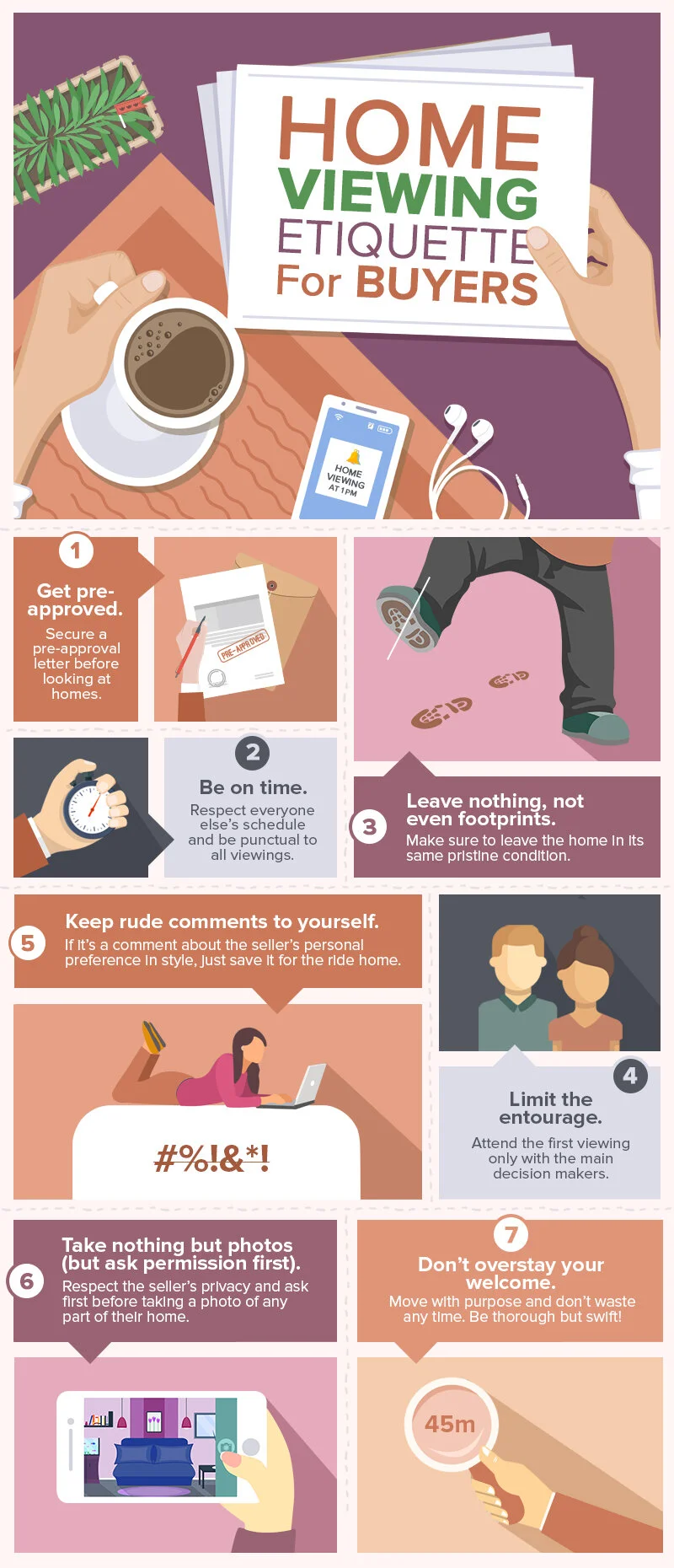
1. Get pre-approved.

Perhaps the first thing any buyer must have before shopping for a home is a pre-approval letter from a lender. Looking at a house without knowing if you’ll be granted a mortgage is simply misleading–and could potentially waste the seller’s precious selling time.

A mortgage pre-approval is proof of your capability to finance the home, and sellers often don’t entertain buyers without a legitimate letter in hand.

2. Be on time.

Being punctual is a sign of respect for the seller’s time and effort. Arrive at the agreed-upon time, and call to inform the realtor or seller if you’re running late. While uncontrollable circumstances may cause some delay, it is unacceptable to make last minute changes, especially if it is a private home viewing and serious preparations have been made on the seller’s end. If you asked the seller to leave for the viewing, you should definitely show up on time.

3. Leave nothing, not even footprints.

The house you’ll be touring is sure to have been de-cluttered, deep-cleaned, kept shiny and left odor-free for your arrival, and it would be expected of you to extend the same amount of graciousness and courtesy by leaving the home as it was before you entered.

Avoid bringing in food and drinks (they’ll offer you some, anyway), and make sure that your shoes don’t leave any kind of marks on the floor. Ask the seller or realtor where you can wipe off the dirt under your shoes before entering–or better yet, just leave your shoes at the door.

4. Limit the entourage.

It is understandable for the entire family to want to see all the houses during the hunt, but you may want to save the family field trip for later (when you’ve narrowed down your choices to the final three). Bringing your children can lead to too much mess and noise, and it’s just rude to have unruly grade schoolers running around a house that was professionally staged for an adult viewing.

5. Keep rude comments to yourself.

While it is perfectly acceptable to voice out serious concerns about the home, it is best to keep opinions on taste and style to yourself. If you find the wall colors a little too playful for your liking, or if you think the paintings that are hung up on the living room are a little tacky — it is best to just save the conversation for when you’re outside the house. These are things that could easily be remedied once you decide to buy the home, so don’t risk offending the seller by rudely commenting on their personal preferences.

6. Take nothing but photos (but ask permission first).

It should go without saying that you should NOT take anything from the home, and that it is your responsibility to make sure your children aren’t lurking around the rooms and putting things in their pockets. The only thing you can take with you are photos, but only after you’ve asked the seller or realtor permission. If the sellers are still living in the home, they may find it a little invasive for you to take too many photos. Ask them about any privacy concerns, and take your photos accordingly.

7. Don’t overstay your welcome.

Of course you want to see every corner of the home, since you may end up living in it–but make sure to walk through the house with purpose so as not to waste any time. Make a list of all the things you want to check in the home, and move through and around it with specific goals. Time is the seller’s most important resource during the home’s listing period, so limit your tour to 45 minutes, or 1 hour tops.

BuyerSeller June 15, 2018

How To Pull Off A Long Distance Move To Your New Home

Congratulations, you just purchased a new house and are now ready to move. The hassle of the home buying process is over, but the settling-in process is not quite done yet. While the hassle of moving your things can sometimes be unnoticeable because of all the excitement, it wouldn’t hurt to do a few things that will help you save a lot of time, energy, and resources during the move.

1. Make a detailed schedule.

Moving is not an easy task, especially if you’re transferring to a neighborhood far away from where you currently reside. It can be overwhelming to think about the move itself, but plotting it on your calendar and spreading out the tasks over a number of days is sure to make it less daunting.

Before you can move, you have to pack up your stuff first. If you’ve already braved the task of decluttering your home before the sale, then great! But if you haven’t gotten around to it yet, now is the time to write down how much you have to get accomplished, and when.

Once you can say for sure that packing up your things can be completed on a specific day and at a specific time, you may proceed to booking a date with your chosen mover. If you’re moving internationally, you may have to book your ticket at least a month in advance. If you’re driving yourself there, be sure you know how long the trip will take, and factor in any stopovers you may need so that you can get enough rest along the way.

2. Pack carefully.

While moving your things across short distances is something you can do with ease even at the last minute—it’s a different story if you’re moving across the country or halfway across the world.

When you’re about to set off on a long journey to your new home, it is important to pack as meticulously as you possibly can. It may seem like a hassle while you’re doing it, but labelling all boxes (and even the the smaller boxes inside them) can make things a lot easier later on. Make sure your fragile belongings are properly wrapped and labeled, and identify which side of the boxes should face up. You also want to make sure that you’re not transferring loose items and haphazardly sealed containers.

This not only helps the movers handle your belongings with care, but it will also give you an easier time unpacking in your new home.

3. Prepare a carry-on bag.

If you’re going to spend a lot of time on the road or on the plane, be sure that you have everything you need in a carry-on bag. Identify the things you’ll need while traveling, and pack them in a bag before having all your other things shipped.

Have an extra change of clothes, some toiletries, and enough snacks for the road. This way, you won’t have to search for them when your really need them.

4. Check the weather forecast.

When you set a date for the move, make sure that you have an idea of what the weather will be on that day.

Especially for cross country moves, being aware of the weather will help you avoid unexpected drives under heavy rain, or having to wait for your movers to arrive in a snowstorm. Also, if the weather turns out to be horrible on the day of your move, you may be looking at quite a few delays.

5. Bring entertainment for the kids.

This may seem like an unimportant part of moving, but you’ll be surprised how much of a hassle bored children can be during a long drive.

If you don’t want your patience tested during the ride to your new home, make sure you have something that will keep your kids occupied. This way, everyone can be in a good mood as you arrive at your new home!

BuyerSeller June 14, 2018

Understanding Property Liens and How They Can Be a Nightmare To Your Home Sale

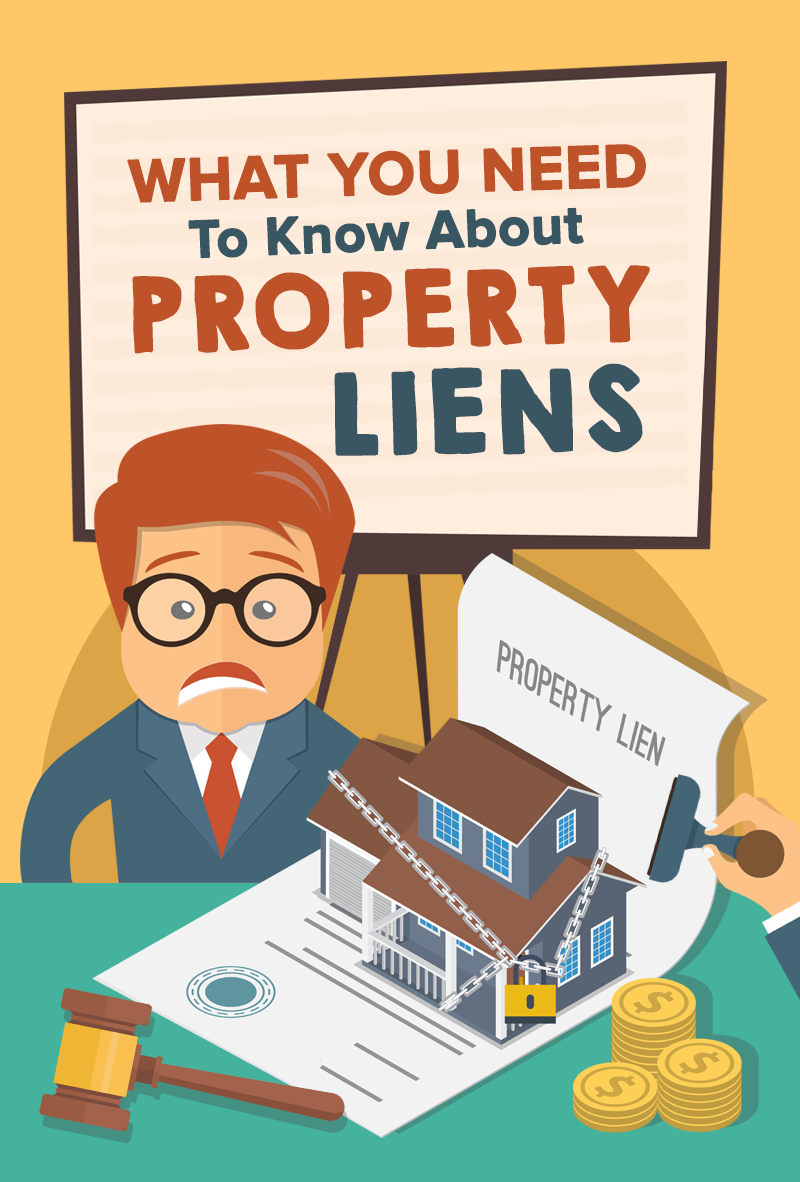
First things first: you need to have a clear idea of what a lien is. A property lien, in simplest terms, is a legal claim a creditor can put against your property as a consequence of an unpaid debt. It is the creditor’s way of collecting debts you owe to them by intending to fund the money owed through the sale of one of your biggest assets—your home.

Liens filed against a property usually come from unpaid taxes, missed mortgage payments, unpaid bills, or any payments owed to contractors for work done on the home.

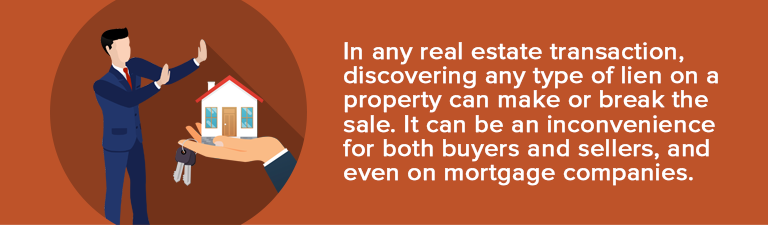
Property liens can slow down a real estate transaction because your title won’t be considered clear until you pay your debt. It can hinder your ability to refinance or sell your property until the lien is satisfied.

What are the common types of liens on houses?

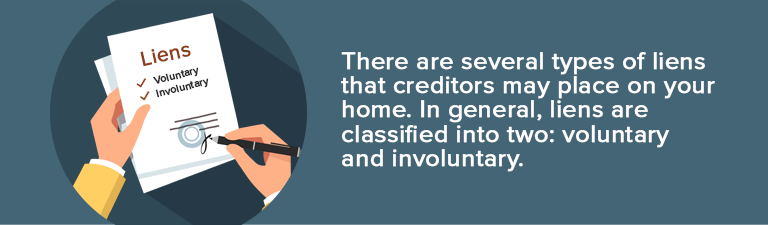
1. Voluntary liens

These are liens that are both agreed to by a creditor and a debtor. The best example of a voluntary lien is a mortgage, which a homeowner freely enters into in order to finance his/her property. In a mortgage, the bank holds the lien in the event of a foreclosure. A contract is usually involved to place the voluntary lien on the property. The best thing about this type of lien is that it does not negatively affect the property, its title, or the homeowner’s ability to convey or transfer title.

2. Involuntary liens

Involuntary liens are imposed by law and are placed on a property due to unpaid obligations. These liens can happen without notice depending on the situation. They are usually placed on a property when a debtor falls behind in tax payments, judgments, or home improvement invoices. Involuntary liens are detrimental as they can make refinancing or selling your home difficult. They can leave you without a clean title and a huge black spot on your public record.

  • Property tax lien – If you neglect to pay your federal, state, or county taxes, the government may file a tax lien on your property. This lien usually takes priority over all other mortgages and liens on your home, even if it was placed last. Through this lien, the government can have your home sold to pay the real estate taxes. Nonetheless, you may still have the opportunity to get your property back by paying your overdue taxes and other costs.

  • Judgment lien – This type of lien can be placed on your property after a creditor sues you and wins the case. The creditor can use a judgment lien on your home to ensure that they will receive money. The court can grant a creditor a certificate of judgment that can be given to a land records office in the county where the property is located. Judgment liens are most commonly used by unsecured creditors, such as the holders of credit card debt, medical bills, and personal loans. It can also be imposed by an attorney if you do not pay your bill for legal services.

  • Mechanic’s lien – A mechanic’s lien (often known as a contractor’s lien) is a claim for payment from any contractor in the home improvement business. General contractors, carpenters, plumbers, electricians, handymen, and other repair companies who worked on your home may file this lien on your property as insurance to make sure that they are paid. It is their legal recourse to force payments of overdue invoices, especially when the property will transfer ownership soon.

3 common ways liens can slow down a real estate transaction

  • Once the title company performs a search for any liens that have been filed against your property and they discover a lien, it will put the real estate transaction temporarily on hold and delay the closing.

  • A property lien that is discovered before closing can delay or even cancel a buyer’s mortgage approval. Strictly speaking, mortgage companies will not agree to finance a property until the lien is satisfied or paid off, usually by the seller.

  • If you’re the seller, it can be very difficult to sell your property because buyers won’t purchase a home without a clear title. As previously mentioned, lenders won’t approve the purchase nor agree to finance the property. Certainly, it is your responsibility to pay off the lien on your property before you may be able to sell.

Note:

Remember that the creditors’ primary objective is to get paid. A property lien will remain in effect until the debt is paid off or if the judgment expires. Once the lien on a house is paid off, the creditor will be satisfied and the sale will usually go through. Except for property tax liens, creditors can be lenient because they usually forego foreclosure and may choose to collect what’s owed to them when you sell the property.

If my property has a lien, what should I do?

Home Sellers:

If a property lien was found on your home, the first thing you should do is to determine if it actually belongs to you. Liens can be searched for by name, so it isn’t impossible that multiple matches will appear. The best way to determine the validity of a lien is by working with your real estate agent and title company to find out how you can verify the issue.

However, if it is discovered that the property lien genuinely belongs on your house, you need to start resolving the issue as soon as possible. In most cases, there’s no need for you to be deterred from putting your property on the market. In the case of a mechanic’s lien, review the claim and match it against invoices and payment receipts. As a homeowner, if you’ve obtained a signed receipt from the contractor showing that the bill is already paid in full, it will be enough proof to file a lien release form.

In other types of liens, you need to get in touch with the lien holder and arrange how to pay off your debt. You might just have to bear with the additional expenses tied to clearing the lien and the delay in title transfer. In such difficult cases where you refuse to pay or want to contest the validity of the lien, you may consider the title company’s advice on how to best handle the situation or even seek legal counsel. The bottom line is that the sale of your home will be temporarily delayed until a definitive outcome can be reached between you and the lien holder.

Home Buyers:

Usually, buyers will be apprehensive to purchase a property without a clear title. The lender or mortgage company won’t even approve the purchase or agree to finance the home, anyway. However, there are many instances where a buyer may be faced with the responsibility to pay off any lingering debts. There may be a lien against a previous owner, and now the debt is passed on to them. Such scenarios are possible especially if the buyer purchased a foreclosed home or a sale at auction, and if they skipped paying for a title insurance. It is crucial for buyers to know what they are getting into before bidding on such auctioned properties. They need to be aware of deals that are “too good to be true” because it can actually cost them much more than a traditional sale once they’ve become the new homeowner.

Buyer June 8, 2018

Important Factors That Affect Your Mortgage Application

Want to know what lenders look at when they evaluate your loan application? It’s a combination of things.

Banks evaluate your attitude towards debt, predict your future income based on past and current employment, and measure your seriousness to purchase a home by asking how much down payment you will be able to put down. They also look into factors such as market conditions and collateral which are typically out of your control. Not to worry, though, because there are still a number of things you can do to prepare for your application and find the right time to lodge it.

Here are the most important factors that affect your mortgage application:

1| Credit

Financial health is one of the most important considerations for mortgage qualification, and is mainly determined by your credit score. Typically, the higher your score, the lower your interest rates will be. When your credit score falls below 740, it may be challenging for you to qualify for a conventional mortgage. Lower credit scores may leave you with subprime options with high interest rates.

Be prepared!

Know your credit score before applying for a mortgage. To have a clear idea of your status, request a copy of your credit report from the three major reporting agencies (TransUnion, Experian, Equifax) and analyze where you stand. Identify all the problem areas in your report and take the necessary actions in order to improve them.

For example, if there are inaccurate, incomplete, or unverifiable items in your report, dispute them immediately by providing the credit bureau enough information to investigate. If you have small balances on several credit cards, start paying them off. Finally, pay your bills on time and avoid incurring any new debt. It may take a few months to make a significant impact on your score, but it will all be worth it once you’re ready to apply for a mortgage.

2| Employment

When applying for a mortgage, lenders consider your income just as much as your assets. Meaning–your readiness to buy a home is measured not just by how much money you’ve saved up for a down payment, but also by how much money you make on a monthly basis.

When it comes to loan eligibility in terms of income, lenders will consider your combined income from all sources, taking the following into account: alimony, child support payments, retirement benefits, investment returns, bonuses, and other regularly occurring payments. But for most applicants, their monthly paycheck makes up the bulk of their loan-eligible income.

Be prepared!

A strong employment history indicates stability and proves that you have the means to settle your monthly dues. If you’ve been with the same employer and in the same field for two years or more, lenders are more likely to consider your application. If you have these qualifications, avoid taking on a new job before closing, as this may negatively affect the status of your application. Remember, you will be asked for proof that you are currently employed, and the lender may even have to reach out to your employer for verification.

In other cases, you may need to have a different approach:

If you’ve already changed jobs, be sure to explain your reasons in detail. Mortgage professionals need to be sure that your new position won’t have a detrimental effect on your income, so prepare the necessary documents to prove that the change is actually a wise decision or a step up in your career. If you are staying in the same field (better if you’re accepting a pay raise or promotion), then it won’t really be a problem.

If you have variable income or employment gaps, you may need to provide detailed documentation of your cash flow over the past two years. It also pays to be aware that lenders may need to take a more conservative approach when calculating your total monthly income.

For self-employed workers, it is advisable to prepare two years’ worth of accounts and/or tax returns, a track record of regular work, bank statements that can show a consistent stream of healthy deposits, as well as a good credit report. Also, take our word for it and hire a certified accountant to do the work for you. It adds legitimacy to your claims and shows lenders that you’re serious about getting a loan you can afford.

However, if you don’t have a record of two years of accounts, don’t worry–not all hope is lost! Lenders will still consider your application as long as you have evidence of work lined up for you in the foreseeable future, especially if you have a history of working in the same field as a regular employee before venturing into full-time freelance work.

Important note for all mortgage applicants, whether you have a regular job or are self-employed: Be sure that you’re buying a property with combined monthly payments (which includes insurance and property taxes) that add up to 1/3 (or even less!) of your monthly income. Lenders are wary of approving loans that will result in borrowers using half of their income just to pay it off.

3| Down Payment

Once you’ve already established your capability to repay the loan on a monthly basis, the next thing you’ll have to be prepared to show is the money you can pay NOW. Lenders are most likely to approve a loan when the home buyer applying for it is able to pay at least a 20% down payment. Of course–the higher you can go, the better.

Be prepared!

While a 20% down payment is generally the standard of being a capable buyer, lenders are more likely to consider borrowers who can put down more than that. If you have a solid understanding of using an escrow account, this can also win you points as well.

Why should the lender care about how much down payment you can afford? Well, having a sizeable down payment for your new home reduces the risk for the lender as it gives you instant equity to the home. It also says a lot about your ability to save up a hefty amount of cash–which means that you have a better chance at making balloon payments to pay off the loan early.

If you don’t have 20% down payment saved up, this doesn’t mean you won’t get approved. However, you will likely be required to pay for private mortgage insurance (PMI) if your down payment is 10% or lower. The good news is that if you have good credit, you can get by with a small down payment (some lenders require only 3 or 5%).

Just remember: When applying for a loan, you can always work with what you have as long as you know how to leverage your strengths.

GeneralHomeowner June 8, 2018

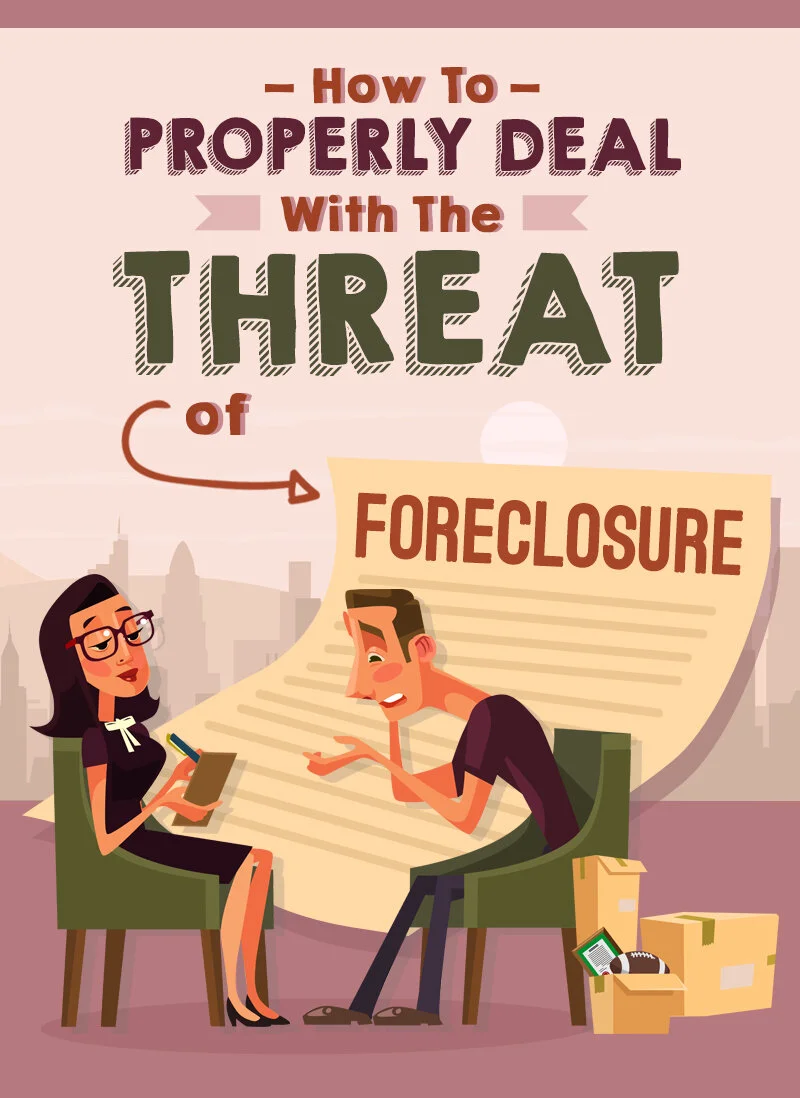
How To Properly Deal With The Threat Of Foreclosure

The prospect of losing your home to foreclosure can be heartbreaking, and dealing with it can be equally devastating for you and your family. After all, when the bank decides to foreclose on your home, your credit report may be permanently stained — leaving your financial future scarily uncertain. On top of this, you will be challenged to find a new home and make necessary lifestyle adjustments.

Given the overwhelming amount of work it entails, dealing with a foreclosure can be a grueling endeavor for a lot of homeowners. However, rising above this situation is perfectly possible if you have the right information.

Most people fall into the trap of believing that nothing can be done after your mortgage goes into default. But is important to note that a default status is not a death sentence. Reports show that a large number of homes are saved even after the dreaded default status, with very minimal damage done to the homeowners’ credit.

In short, THERE IS HOPE!

Here are few things you have to know before blindly surrendering to the proceedings:

1) Know your rights.

When your home is a candidate for foreclosure, a sufficient understanding of your rights will be a crucial tool in keeping your home, or at the very least limiting the damage done to your credit and overall financial health.

More often than not, you can negotiate with the bank for a modification in your loan. Assuming that your main goal is to keep your house, a small hit on your credit file should be acceptable.

Lenders are also required to follow state laws, and most states require a written notice of default given to the homeowner. The notice should stipulate a certain amount of time for the homeowner to make good on his or her late payments. This means coming up with a plan to gradually settle all amounts due, including interest, penalties, and any other charges allowed by the law or the mortgage.

2) Understand that the banks are not after your home.

It may appear that the banks are working against you in order to get a hold of your home, but this is definitely not the case. The opposite actually holds true, as most banks do not like dealing with such situations. Lenders are in the business of making money through lending–not by reselling foreclosures.

It is in their best interests to keep you in your house, as long as you are willing to remedy the situation within a certain amount of time. Foreclosure is their last resort as much as it is yours.

3) You have to pay for your entire mortgage in order to keep your home.

The default status notification is a tool to communicate urgency–and will most likely include a requirement along the lines of you having to pay your mortgage in full. It is important to be aware, though, that this “acceleration clause” does not imply that you are not allowed to negotiate. Again, when you are willing to cooperate as a homeowner to get your mortgage back in good standing, the lender is most likely to take you up on your offer as long as it is law-abiding and reasonable.


Important note:

If you firmly believe that there has been a mistake (i.e. the amount that the bank/lender is claiming is inaccurate), and that you shouldn’t be receiving a default notice, you are allowed to clearly explain in writing why you think the lender is mistaken. Back your claim with the necessary documents that can prove your stand. Even if the explanation is not accepted, you still have the right to go to court along with your evidence. When it comes to this, the documentation you sent to the lender will be a very useful tool.

Seller June 8, 2018

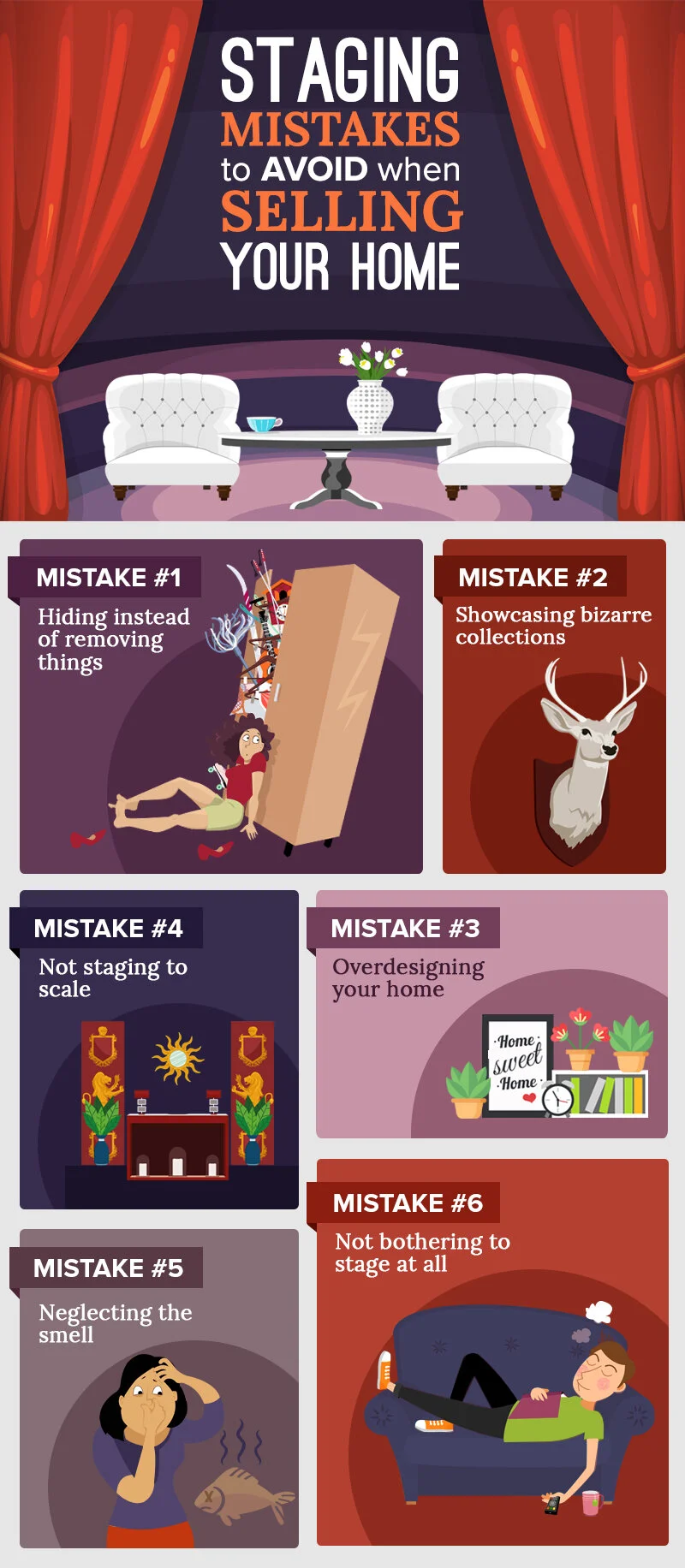
6 Staging Mistakes To Avoid When Selling Your Home

In the 2018 Home Staging Resource Survey of over 4,200 homes, 85% of the staged homes sold for 6-25% more than the unstaged homes. It’s proof that even if sellers might think it can cost them so much time, money, and effort to do home staging, it usually pays off in the end as it can give them more money in their home sale. And remember, staging your home doesn’t mean you have to spend thousands of dollars in designer furniture and newer accessories that can actually ruin your home’s best features. And while it’s completely understandable to make mistakes, here are some staging mistakes that every seller should avoid if they actually want to sell their place—at top dollar, that is.

Mistake #1: Hiding instead of removing things

It’s a common temptation for many of us to just hide and cram our clutter in a closet or guest room whenever we’re expecting guests to come over. However, that strategy won’t do you any good if you’re a seller who’s been preparing to stage your home for showing. Buyers today consider space and storage as a valuable factor in choosing their dream home. They will actually want to look through empty rooms and closets to evaluate how much storage there is, so the last thing you’d want is for them to see your personal belongings hidden in those valuable closets.

If decluttering isn’t the first step to preparing your home for showing, then we don’t know what else is. Use this time to organize your stuff—sell, donate, or throw out things that you no longer need. Aside from being clean, make sure that everything in your home is organized. The ultimate goal is to show potential buyers that your home ranks well when it comes to storage.

Mistake #2: Showcasing bizarre collections

We know how much you love your priceless collections and how they are a great source of pride and joy. However, most of them (especially those quirky and unusual collections) need to be packed away and put in storage as part of staging. It won’t be alluring for many buyers if you decide to put your taxidermy or gun collections at center stage. Aside from the fact that these things may consume valuable space, they can also distract buyers from seeing the strengths and features your home has to offer. Packing away your collections will let potential buyers envision their things, not yours, in the home.

Mistake #3: Overdesigning your home

While one of the goals of staging is to make the home as appealing as possible, it’s a big mistake to overdo it. Don’t cover every nook and cranny with too much design even if you think they’ll look amazing. There’s a good chance buyers wouldn’t be impressed, and it will also hinder them from visualizing what the house would look like once they settle in. Lesson learned: keep it simple but nice to make a lasting impression. Use simple but elegant furnishings and subtle home accessories that will complement the space. Also avoid using unnecessary props and fake decorations—fake plants, fruit bowl, flowers, or fake anything.

Mistake #4: Not staging to scale

One awful mistake that many sellers make is using furniture and accessories that don’t match the scale and proportion of the room. They assume that they can create the illusion of having more space by using smaller, lightweight items, but experts say otherwise. Great staging includes using furniture and decor with appropriate sizes and positioning them optimally for the best effect. A few examples where sellers have made a poor use of scale is when they put an oversized sofa in a small room or used a tiny coffee table in a huge living room. Likewise, avoid decorating with ornaments that are too small because it will just make the room feel visually cluttered.

Mistake #5: Neglecting the smell

Is the clutter all cleared out? Check. Are the collections all packed? Check. Is the furniture used in the right proportion? Check. But how about the smell of your home? Uh-oh. You might have forgotten to recognize the odors in your home because you were already used to it. Remember: no matter how beautiful your home looks like inside and out, one foul smell can turn off potential buyers. Some of the worst offenders include pet smells, cigarette smoke, and even strong food odors such as fish. Even using strong candles or artificial air fresheners won’t do the trick because it can offend some buyers.

The best way to complement a good staging is to have a pleasant but natural smell in your home. If you have pets, clear out their litter box and keep them out of the house for a while. It’s great to also consider a sniff test with a friend and/or your real estate agent to make sure that your home smells great and ready to entice its next owner.

Mistake #6: Not bothering to stage at all

According to The Balance, “staging is all about dressing the house for sale. It’s about adding the small details: the lipstick, mascara and, for simplicity, a stunning, single strand of Tahitian pearls.” Not bothering to stage at all is perhaps the worst decision anyone can ever make when selling a home. It can have more expensive consequences than spending some time and a few dollars to get your home ready. For a home that doesn’t sell, staging can turn things the other way around because it can help sell the home faster and at a better price. If you’re really on a budget and can’t hire a professional stager, talk to your real estate agent to get the best possible ideas. Don’t forget to also hit the books and heed pieces of advice like this to help you avoid making similar staging mistakes that may actually sabotage your home sale.

BuyerNew Homeowner June 8, 2018

Beware: These Features Can Drive Up The Cost Of Your Homeowner’s Insurance

What drives up my home insurance costs? Why is my insurance premiums so high? If you’re a new homeowner, this must be one of the many questions that have crossed your mind since you embarked on this new journey. Well, the location, construction, condition, and certain features of your home all play a significant part in how much your homeowner’s insurance costs will be. For buyers who are still house-hunting for their dream home, you need to be aware that some of the factors that will attract you to a particular home are also the ones that will make your premiums more expensive.

Here are some of the home’s features that may inevitably affect your homeowner’s insurance rates:

1. Age and construction of the home – One important factor that is being considered when insurers assess a home’s risks is its build and structure. Older homes, even if they’re well-maintained, are generally more expensive to insure especially if it’s made of wood. Homes with wooden frames are more likely to suffer from fire compared to concrete or brick homes, so the risk is definitely higher. This is also the reason why homeowner’s insurance on historic homes is often more expensive. Older homes also often pose many structural issues so insurance rates could be increased

2. Location – Aside from the general construction of your home, where you live has a big impact on your homeowner’s insurance costs. If you live in an area of the country that is more prone to experiencing natural disasters—hurricanes, tornadoes, earthquakes, you name it—the more expensive it will be to insure your dwelling. Specifically, those who live in hurricane-prone areas may also need to purchase additional flood insurance.

Likewise, you may also face more expensive insurance premiums if you live in a neighborhood that have more claims, particularly because of rampant theft, crime, and break-ins. You’ll also have higher premiums if you live in the country which is too far away from emergency services.

How to keep costs down: If you live in a risky area that has a greater chance of experiencing a natural disaster, you can minimize your insurance costs by purchasing a home built to withstand the elements. In Florida for example, residents prefer to live in a concrete block structure (CBS) home rather than a wood-frame home to reduce their insurance premiums.

The presence of home alarm systems and surveillance cameras can also make a difference if you live in a neighborhood with a high theft rate.

3. Swimming Pools and hot tubs – Swimming pools are a great way to relax and cool off especially during the summer season. However, they are also potentially dangerous, especially to children, because of the possibility of drowning and other related injuries. Insurance companies even consider pools to be “attractive nuisances” because of possible pool-related lawsuits. Pool owners will need to purchase additional liability protection so that they can protect themselves against possible pool-related lawsuits. This liability protection can lead to high insurance costs. Additional features like a diving board or a slide could even mean higher insurance premiums.

Similar to pools, hot tubs are also vulnerable to lawsuits so insurance companies will increase the coverage you need for your home, which would lead to higher premiums.

How to keep costs down: Installing door alarm systems, safety perimeter fences and locked gates around the pool might help keep the liability protection costs down.

4. Trampolines – This popular recreational feature can be found in thousands of backyards in the US. But the catch: it also means higher insurance premiums for homeowners. It is because injuries while using trampolines are very common, often involving children. A homeowner’s insurance policy could provide coverage for protection in any trampoline-related claims provided that certain safety precautions are in place, especially if there’s an enclosed safety net installed around the feature to protect anyone using it from falling off. Other recreational things that can be expensive to insure include large play structures, park equipment, and skate ramps.

5. Jewelry and other expensive items – Keeping a lot of expensive pieces of jewelry and other big-ticket items, including high-end watches, wine collections, and musical instruments, can lead to extra home insurance premiums.

6. Paintings and antiques – Your treasured collection of antiques, paintings, sculptures, and other forms of fine art can be very difficult to replace. These most-prized possessions actually make it hard for any insurance company to be willing to insure it.

7. Fireplace/wood stove – Are you one of those homeowners who still own a wood-burning stove? It can be a cost-efficient alternative to heating your home, but they are a big fire hazard. These stoves are more likely to start a fire than any other modern appliances, especially when left unattended. In the eyes of many insurance companies, the risk of fire damage is increased so they apply a surcharge. Having a wood-burning stove in your home means you may be saving money on heating, but definitely spending more on insurance.

How to keep costs down: Installing smoke alarms, purchasing fire extinguishers to be situated in strategic locations around the home, and hiring a licensed technician to perform routine maintenance on the wood stove can help you get the best possible price for your insurance.

8. Oil-based heating – An oil-based heating system, which is commonly found in many older homes, can mean a lot of trouble for many insurers. Having an oil tank on your property means having a large amount of highly flammable substance that can cause massive fire and environmental damage. Insurance companies mostly prefer electric heat pumps or forced-air furnaces. Converting to these safer types of heating may just be the key to lowering your insurance premiums.

9. Home-based business and keeping your business inventory – If you’re running an in-home business, such as a daycare, accounting, bed and breakfast, etc., you’ll have more at stake since extra people are coming in and out of your home. That means there’s a greater chance that someone could be injured. Likewise, you could face higher insurance premiums if you’re keeping your business inventory on your property. Both your personal possessions and business property are susceptible to being lost, damaged, or stolen if some thieves broke in. It’s applicable to those who own a craft store or an online selling business.

10. Condition of the home’s roof – Roofing is another big ticket item that can have a major impact on a homeowner’s insurance premiums. Wood shakes and shingles can be a stunning addition to the exterior of your home and can give it a unique look. However, they are also one of the least reliable types of roofs because they are more prone to damage from rot or mold, more vulnerable to weather hazards, and will not resist fire. If your home has this type of roof you can expect to pay more for your insurance. The older and more damaged your roof is, the more expensive your insurance can get. As much as possible, choose a house with a roof that best fits your geographical location, especially if you live in hurricane-prone areas.

11. Finished basement – Despite the fact that it adds more livable square footage to a home, a finished basement can also drive up costs because it has a higher chance of getting damaged in case of a flood, a burst pipe, or clogged and backed-up sewage.

Dogs – Well, they’re not necessarily a house feature, but your pet dog could also be the reason for your increased insurance premiums. If your dog attacks and bites someone on or near your property, the injured person may file a claim against your home insurance policy. Your premiums will likely increase because you are liable for the damages. It’s especially true if it’s from a breed that is considered aggressive, such as pit bulls or Rottweilers. Be prepared to give your dog(s) training classes to avoid unruly and aggressive dog behavior.

BuyerHomeowner June 1, 2018

What’s In A Mortgage? Breaking Down the Components of A Mortgage Payment

In simplest terms, a mortgage is a long-term loan designed to help borrowers purchase a house. It allows individuals to become homeowners without making a large down payment and thus, fulfilling The American Dream. Once you become a homeowner, a mortgage represents one of your life’s biggest financial commitments. So it’s important to understand the structure of your payments — what percentage goes to principal, interest, and taxes, and what you currently owe on your loan balance.

I’m a first-time home buyer. Once I closed on my new home, when will my mortgage payment start?

Mortgage payments usually start one full month after the last day of the month in which the home purchased closed. Unlike rent payments, which are usually paid in advance on the first day of the month, mortgage payments are paid in arrears. It means the payment is expected to be made at the end of the month. For an instance, after closing on your new home on March 28, the first full mortgage payment, which is for the month of April, is then due on May 1.


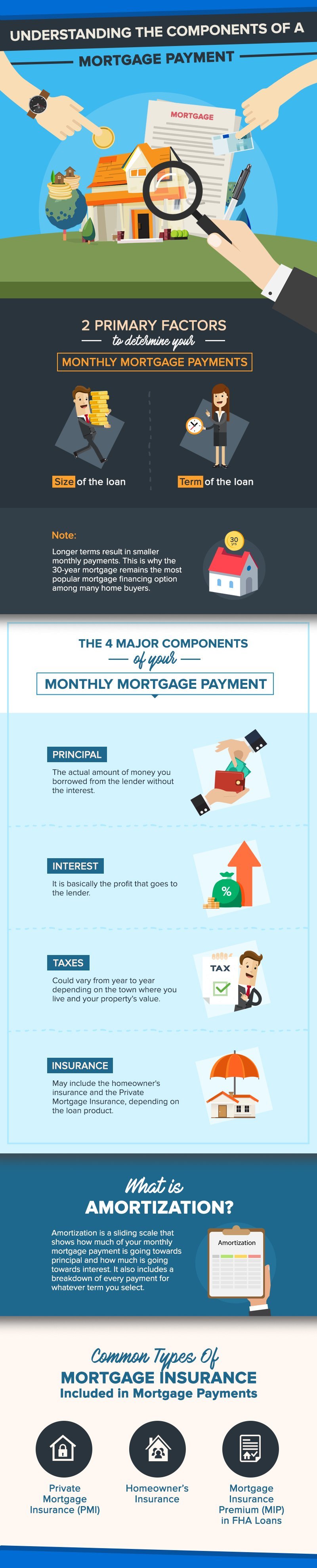
2 primary factors to determine your monthly mortgage payments

  • Size of the loan – refers to the amount of money borrowed.

  • Term of the loan – the length of time within which the loan must be fully paid back.

Remember: Longer terms result in smaller monthly payments. This is why the 30-year mortgage remains the most popular mortgage financing option among many home buyers.


Remember PITI: The 4 Major Components of a Mortgage Payment


PRINCIPAL

The actual amount of money you borrowed from the lender without the interest. It is the face value of your mortgage on the first day. For an instance, if your mortgage is $250,000 with a 4.5% interest rate, your principal remains at $250,000.

A portion of each mortgage payment goes to the repayment of the principal. If you take a mortgage with a fixed-interest rate, your principal repayment will be the same for the life of the loan. A greater amount of the principal is paid during the back half of the loan because the majority of the payment in the first few years goes primarily to interest.

To calculate your starting principal balance:

Principal Balance = Purchase Price + Fees Rolled into Mortgage – Down payment


INTEREST

The interest is another big part of your mortgage payment. It is basically the profit that goes to the lender. Think of it as the lender’s reward for taking a risk and lending money to a borrower. Lenders will want to earn their interest back in the first few years of the loan repayment before they start reducing principal. Meaning, the majority of your mortgage payment goes to the interest in those first few years, but every month you pay down a little bit of principal as well. This is the method banks use to protect themselves in the event of a default. But the more payments you make, the lesser amounts goto interest and a bit more goes to the principal. For a 30-year loan, the first seven years will go mostly towards the interest.   

Higher interest rates = higher mortgage payments

Interest is accrued annually regardless of whether you have a fixed-rate mortgage or an adjustable-rate mortgage. It’s important to note that the interest rate on a mortgage has a direct impact on the size of a mortgage payment. The average 30-year fixed-mortgage rate until March this year is 4.54%, which rose slightly higher since November 2017.

To calculate how much of your payment goes to interest:

Interest Portion = Current Principal Balance 𝒙 (APR ÷ 12)


Side Note: What is amortization?

Amortization is a sliding scale that shows how much of your monthly mortgage payment is going towards principal and how much is going towards interest. It also includes a breakdown of every payment for whatever term you select. To have an idea of where your monthly payment typically goes, visit your lender’s website and print off a copy of your amortization schedule. There are also free amortization schedule calculators online that you can use as a guide to estimate the monthly payment on your mortgage.
 

TAXES

Almost all lenders require you to include, or escrow, the taxes into your monthly payment. It is because property taxes take first priority over everything else. The tax portion of your payment could vary from year to year depending on the town where you live and your property’s value. Real estate taxes are assessed by governmental agencies and used to fund various public services, including the school district, road construction, the police and fire department services, and others.  

The amount that is due in taxes is divided by the total number of monthly mortgage payments in each year. If you escrow, you place the next tax payment in advance with your lender and they pay the taxes for you. If you have an extra amount in your escrow account at the end of the year, your lender may cut you a check and then simply roll it over to next year.


INSURANCE

Insurance payments, just like property taxes, are also part of each mortgage payment and held in escrow until the bill is due. This is done to ensure that you are always covered in the event of an emergency. The taxes and insurance typically don’t experience much fluctuation, unless there is a run on foreclosures or if your neighborhood was hit by weather issues, then it could change significantly.


Common Types Of Mortgage Insurance Included in Mortgage Payments


Private Mortgage Insurance (PMI)

This type of insurance is mandatory for homeowners who purchased a home with a down payment of less than 20% percent of the home’s purchase price. It protects the lender from financial loss in the event that a borrower defaults on the loan. The rates for PMI differ from loan to loan and depends on several factors, including the borrower’s credit and the amount of down payment. Typically, this insurance costs between 0.3% to 1.15% of the mortgage loan amount.

For most conventional loans, the payment for PMI is necessary until you have at least 20 percent equity in your property. A borrower also has the option to choose from different payment plans: annual, monthly, and upfront payment.


Homeowner’s Insurance

This is a form of property insurance that covers losses and damages to an individual’s house and assets in the home. It also provides liability coverage against accidents in the home or on the property. Homeowner’s insurance is often bundled with mortgage payments. It’s important that homeowners educate themselves on the amount of their homeowner’s insurance premium every month.


Mortgage Insurance Premium (MIP) in FHA Loans

The MIP is an insurance policy used in FHA Loans. It protects lenders against losses that result from defaults on home mortgages. In an FHA loan, both upfront and annual mortgage insurance are required for all borrowers, regardless of the amount of down payment. Borrowers can check the annual MIP rates on the FHA website.