Buyer May 30, 2018

The First-Time Home Buyer’s Guide To Earnest Money Deposits

Congratulations, you’re about to purchase your first home! We’re guessing you’ve already gone through the mortgage pre-approval phase, and now it’s time to do the exciting part: house hunting! While you can shop with confidence because of the pre-approval letter provided by your lender, you should also be aware of the importance of having enough cash for an earnest money deposit.

Where does the Earnest Money Deposit (EMD) come in?

When you decide to make an offer on a home, both you and the seller enter into an agreement that makes the sale contingent upon certain factors such as appraisal and inspection. The terms are stipulated in a contract, and the seller takes his or her property off the market while you perform due diligence on the home.

But before all of this can take place, you need to show the seller that you are truly capable and serious about purchasing the home. How? By making your money talk. This money, which is called an earnest money deposit, is a sizeable amount that buyers include in the offer as a proof of their sincerity or earnestness—if you will.

What are the basics of an Earnest Money Deposit (EMD)?

The EMD…

  • is not required—but very seldom do sellers entertain buyers who do not make a deposit in “good faith.”

  • may offer some peace of mind for the seller, but it is beneficial to you (the buyer) as well. This is because it helps fund your down payment, and allows you additional time to perform due diligence on the home and organize your financing.

  • is usually held by the seller’s broker using an escrow account. Once everything is in order and you’re all set to seal the deal, the deposit goes to funding a portion of your down payment.

  • typically amounts to 1 to 2 percent of the asking price. In hot markets, however, most buyers are compelled to offer a deposit that is equal to 5 or even 10 percent of the total sale price.

  • varies from city to city and is given immediately after the seller accepts your offer, or up to three days from said date.

  • may be a fixed amount required by the seller rather than a percentage of the sale price, e.g. $5,000 to $10,000. Of course, the larger the EMD, the more attractive it is to the seller and the more your offer will be taken seriously.

  • Cannot be a gift from a friend or family member, unless they are buying with an FHA loan (in which case the EMD may only be provided by a family member).

  • can be refunded in the event that any of the contingencies are not met. A small cancellation fee may be taken out, but the rest can be taken back as long as it falls under the purchase agreement.

Things to keep in mind:

Practice caution. Make sure that the purchase agreement specifies how a refund should be handled in case the deal falls through.

Make sure to offer enough, especially in a hot market. A seller dealing with multiple offers will entertain only the strongest offers. Make yours stand out by offering a competitive amount. If a high EMD intimidates you, think of it as a way of paying your down payment upfront, since the deposit ends up being part of your DP anyway.

Be 100% certain about the home you’re trying to buy. You risk losing your EMD if you back out of the deal without justifiable reason other than simply having a “change of heart.” Be absolutely serious about wanting the house before making an offer that includes a sizeable EMD.

Have the necessary contingencies in place. In a highly aggressive market, buyers are often pressured into removing contract contingencies. You may think that since you’ve already been pre-approved for a mortgage, deleting the loan contingency wouldn’t be an issue–but this is a mistake. Lenders can revoke a pre-approval based on a number of reasons, such as the house being appraised too low (which means that the buyer is paying more than what the house is actually worth). When this happens and there is no loan contingency in place, your EMD may be forfeited.

Keep track of important timelines. Know how much time you have left to terminate the contract in case you run into problems. To be on the safe side, anticipate the issues that may arise, and include the necessary contingencies in your purchase contract.

If you’re buying a foreclosure, be sure to analyze the risks involved. Most foreclosed properties stipulate that the EMD is nonrefundable—and since you’re buying the property “as-is,” it is crucial to be extra thorough on your research before making an offer with EMD.

Hold up your end of the bargain. This is a no-brainer, but make sure that you’re not backing out of the sale due to unfair reasons. If you default on the contract at the last minute because of cold feet, or you’re dealing with personal problems that are getting in the way of pushing through with the sale, be responsible enough to accept giving up your EMD as consolation for the seller’s wasted time.

Buyer May 30, 2018

What To Do When Your Offer Is Rejected: Tips On How To Become A Better Home Buyer

Once you finally decide to place an offer on a house, you have to be ready for what comes next. In a slow market, your offer has a high chance of getting accepted given that there is little to no competition. But in a hot market where bidding wars are won by people offering to pay all cash or significantly above the list price, and promising hefty down payments—you may have to come to terms with the possibility of your offer getting rejected.

We’d advise against taking it too personally, though. Rejections happen all the time, and it doesn’t have to be the end of the world! Here are different ways of dealing with a rejection, and how to move forward depending on your situation:

#1 If you haven’t given your best offer yet, consider pushing for the highest you can go—just make sure that it is a price you can still afford, with terms that feel comfortable to you. If you can’t stretch your budget any further, think of other ways you can make transactions easier for the seller. You can either offer less contingencies or agree to move in at the seller’s most convenient date.

It is not uncommon for home buyers to save their best offer for later, and many would leave the first offer with enough room to increase when needed. If that was your strategy, the logical next step would be to make your best and final offer, and patiently wait (again) for the seller to reconsider.

#2 If your offer was rejected for a better one, you can make an offer to be in the backup position. This means that you’ll be the next buyer in line should the first buyer walk away from the deal.

If the seller accepts your offer as a backup, just make sure to get it in writing. This way, the seller will have legal obligation to sell you the property if the first deal doesn’t push through —  and for the terms you originally submitted. You can also include a right-to-refuse clause which protects you from being bound to purchase the property, while still being the seller’s first option when the current deal falls through.

#3 If the rejection happened even with your best possible offer, it may be time to discuss further options with your agent.

Yes, that house could’ve been your dream home, but in a tight market, there are a lot of things beyond your control. The best thing you can do is to strategize with your agent so that you can be in a more competitive position for the next house you’ll be gunning for.

1. Don’t linger on your previous rejection. Thinking of “that home” as “The One That Got Away” will prevent you from giving other houses a fair chance. That being said, it is important to move on completely and accept that you’ll have to find a different dream home.

2. Don’t get emotionally attached to a house before you’ve even sealed the deal. Now that you know that you can’t get the house just because you really, really want it — always remind yourself to NOT get carried away on your first visit. Imagining how you’ll furnish the house and thinking of the best shade of paint for that lovely master’s bedroom — all these will lead to even more heartbreak when you don’t get your way.

However, this doesn’t mean that your should never get excited about viewing a home. Just keep your hopes at bay and don’t make any renovation plans just yet.

3. Take note of what made you love the first home. Instead of dwelling on the rejection, use the first home as basis for the next home you may choose. List down the features that made the first home desirable to you. Just because you didn’t get the house doesn’t mean that you’ll never find another one with similar qualities.

4. Learn from the experience. Again, it is important to communicate with your agent about how you can make your next offer stand a better chance at getting accepted. Maybe next time, you can start with a stronger offer, perhaps by agreeing to pay for your own title policy, or not making the seller too many requests. Whatever it is you think you can improve, discuss it with your agent and come up with a solid strategy.

BuyerSeller May 30, 2018

What Things Should You Disclose When Selling A Home?

Another complicated thing about selling a home is the issue of what you and your real estate agent need to disclose. You really want to sell your house and at the best possible price. But on the other hand, you don’t want to be a sneaky seller and feel like you are deceiving anyone. It can be quite confusing because you have to find the right balance between the two. It can also be quite scary to think that some of the home’s issues can be a deterrent to your prospective buyers.

There’s also this general rule in buying and selling real estate known as the “caveat emptor,” a Latin phrase which translates to the term “let the buyer beware.” It means the buyer assumes the risk of purchase. So depending on where you live, you may or may not be required to disclose unique issues about your home.

The key is to knowing the things that you are legally required to share to your potential buyers. Disclosure regulations vary by state, so be sure to coordinate well with your real estate agent about these matters. Failure to disclose certain issues in accordance with either government or state laws can leave you vulnerable to future hefty lawsuits. Here are some of the issues and information you need to tell buyers:

1. A stigmatized property

If you are selling what is known as a stigmatized property, which is a home or a dwelling where unfortunate events or issues happened, then you may or may not be required to disclose such issues to potential buyers. These events may include a suicide, murder, other deaths, criminal activities, well-known adulteries, and other misfortunes. It’s crucial that you seek help from your real estate agent on whether revealing these kinds of things is necessary before you make a sale.

  • Murder and/or deaths on the property

As a seller, you may have to disclose any murder or deaths that occurred on the property. This disclosure depends on where your home is located and whether the death took place in a certain number of years. In the state of California, for example, laws require sellers and real estate agents to disclose any deaths that occurred on the property in the last three years. Yet, in Florida, state laws don’t mandate such disclosure at all.

There may be a few buyers who will feel uncomfortable knowing that a death recently took place in their prospective home. So it’s a good idea to check the local laws about these matters.

  • Hauntings or any paranormal events

Another kind of stigma in a home is if it is considered “haunted” or if it’s known for “ghost sightings” and other paranormal activities. Again, laws vary from state to state as to whether sellers and real estate agents should disclose reported hauntings. But regardless, being upfront and telling potential buyers about mysterious things happening in your home is paramount. While some buyers don’t believe in ghosts, others may be quite uncomfortable and would not dare come near a haunted home. Likewise, if you have had an exorcism done to your home, you are also obligated to disclose that info on the buyer’s side. Anyway, it won’t prove to be a deterrent if potential buyers are skeptics and are not convinced about such paranormal activities, or if they are paranormal enthusiasts themselves. In some cases, sharing details of the hauntings in the home actually helped sell it. (However, one disadvantage of listing this kind of stigmatized property is that it might also lead to more phone calls from many thrill seekers or amateur ghost hunters instead of serious buyers.)


2. Pest infestations (e.g. termite damage)

While a house can look perfectly fine from the outside, hidden areas of the home could well be invaded by pests. Most states require sellers to disclose any sort of pest infestation or issue in a home, no matter how big or small the problem is. There could be termites, snakes, mice, raccoons, rats, bedbugs, and other dangerous pests crawling in the home without your knowledge. If your home has been treated for termites before you list it for sale, you still have to let your potential buyers know about it. It is also a good idea to disclose information about pest issues in your area even if yours isn’t specifically infested. That way, it won’t look like you were being sneaky and you can’t be accused of withholding crucial information in case problems arise. For buyers, it would also be wise to have a professional pest inspection performed on a house that you are interested in.


3. Lead-based paint

The use of lead-based paint is a mandatory disclosure in all states. It’s one issue that you must be upfront with about to all buyers because it is required by federal law. Under the government’s Residential Lead-Based Paint Hazard Reduction Act of 1992, anyone who is selling a home that was built before 1978 must disclose all known information about lead-based paint and hazards in the home. If you fail to comply with these disclosure requirements, the buyer can sue you for triple the amount of damages that they actually suffered because of the lead-based paint. Your real estate agent must also provide buyers a pamphlet prepared by the US Environmental Protection Agency (EPA) titled “Protect Your Family from Lead in Your Home.” This guide offers tips and reminders on how to keep their family and children safe from lead-based paint. Under this law, buyers also have 10 days to test the house for lead.

Even if you think the lead paint has been removed from your home, you still need to disclose it. You should also keep signed acknowledgments for a minimum of three years as proof of compliance. However, if you are not aware of a lead-based paint issue in your home, then you are not required to conduct testing as a home seller.


4. Other known toxic materials

Aside from lead-based paint, there are other materials that are considered hazardous to a person’s health. If a seller is aware of the existence of one of these issues in their home, they should disclose it to would-be buyers.

  • Asbestos

Asbestos is known to be an extremely toxic material that can cause lung cancer and other serious health problems if its fibers are inhaled. It is often found in older homes, usually as a thermal insulation on basement broilers and pipes, or even in vinyl floor tiles. Depending on your state, you might be required to disclose the presence of asbestos in your home. However, there can be an exception if it’s hidden away in areas in your home that can’t be easily accessed by inhabitants.

  • Radon

Radon is a toxic gas that rises from the ground and can seep through the home’s cracks, holes, foundation, and up through the basement. It can cause lung cancer after prolonged exposure and can also contaminate well water. Radon testing is commonly requested by potential buyers to be performed as part of the overall home inspection. The EPA also recommends that all houses be tested for radon at the point of sale.

If homeowners find they have high radon levels in the home, they may pay for professional mitigation services. Most states also require that the test result be disclosed as part of the house disclosure that sellers need to fill out with their realtor. It’s all the more necessary to disclose this information if you know your home has high radon levels, but haven’t paid for professionals to solve the problem.


5. Water damage and drainage issues

Yes, you need to disclose water damage and drainage issues when selling your home. There’s no point of keeping it a secret as it could lead to bigger problems for you later on. When water has entered a home, it can easily lead to mold, which is another issue that you need to inform your would-be buyers. Make sure that you disclose if you have a flooding basement, drainage issues, or standing water in the backyard.  


6. Mold

Mold problem is another big issue that sellers need to disclose. While in fact every home has mold, there are different types of mold. Most mold is harmless, like the common household mold. However, there are certain types that are toxic and can cause illness or respiratory problems, especially the toxic black mold, also known as Stachybotrys. Many states require sellers to disclose mold issues. And even if you have had mold remediation done in the past, you still need to disclose it or face a hefty lawsuit if you don’t.


7. Neighborly disputes or boundary issues

What may seem like a small neighborly dispute to you might escalate and become a major issue when the property gets passed along to a new owner. If you have had disputes with your neighbors about property lines, such as if your fence extends over your neighbor’s or your tree overhangs in their backyard, then you need to let buyers know. It isn’t something you should keep from the home’s prospective new owners. And while it may not be required, you should also inform them about any other issues you have with the neighbors, especially if they are those who keep blaring loud music and parties or have aggressive dogs barking loudly late at night.


8. Sex offenders

The laws on whether or not you have to disclose a sex offender living near your area vary by state. You should check with your local real estate agent or visit the police department to find out your area’s rules.


9. Noise pollution and other environmental hazards near the home

Any issues that could affect the marketability of the property need to be disclosed, including environmental hazards near the home and other off-site conditions. If there are waste plants and other contaminants near your area, you need to let buyers know. In some states, a disclosure is also required if the home is located in an earthquake zone, in a flood-prone area, or if the surrounding area is prone to wildfires, such as the case in California.  

Likewise, if you live in proximity to an airport or railways, you should also inform buyers that there could be times in the day where things get noisy. You need to disclose this information despite the fact that the loud noises could affect the buyer’s decision in purchasing the home.


10. Roof and foundation issues

Another issue that you need to disclose is if you have damaged or a leaky roof, especially if you haven’t repaired it. But most buyers will want to know the age and the condition of the roof anyway, so they will surely ask such important questions. An issue with the roof will also be discovered by the home inspector, so there’s really no reason to hide anything. It’s also a good idea to repair or replace a bad roof. Even if it proves to be expensive, you can save yourself from all kinds of headaches prior to closing your home sale.

You can also have the same scenario if you have major structural problems, such as a cracked, damaged or sinking foundation. Foundational problems can be time-consuming and costly to take care of, but those aren’t something you are legally allowed to keep from the buyer. Those issues will also be found in the home inspection and even in the home appraisal, so it’s better to disclose these problems from the beginning.


11. Square footage

The square footage of a home is typically published in the Multiple Listing Service when the home is listed for sale. However, the indicated square footage is often wrong. Both the seller and the real estate agent should take the necessary steps to validate the size of the home and provide accurate information. Listing the actual square footage is a controversial area of disclosure in real estate so it is something that sellers shouldn’t take too lightly.


12. The age of HVAC system and other appliances

It’s important for buyers to ask about the age of the heating and air conditioning units of the home. But even if they don’t, it is still the responsibility of the seller to disclose these things just in case there are major problems that future owners might encounter. Old and outdated appliances and HVAC systems can be less efficient and may not perform well anymore. On the other hand, it is also an advantage for you as a seller if you will highlight newer appliances and HVAC systems because they can be a major selling point of your home.


13. Repairs and improvements made to the home

Sellers should be aware that they should disclose any significant repairs they made to their home, especially those that required a permit. It is especially important just in case an issue resurfaces a few years after the buyer purchased the home. Some of these significant repairs include anything related to the roof, heating system and air conditioning, or even plumbing and electrical systems.

If you think you can get away with withholding important or mandatory information, think again! At the end of the day, it’s better to be transparent and be upfront to your potential buyers. If you fail to disclose, there’s a good chance that the buyer will find out about it later on—either before closing on the home or after they’ve become the new homeowner. Whenever it is, you will still face the repercussions of your actions. In a lawsuit against the seller, buyers are entitled to compensation for any necessary repairs and damages. You definitely don’t want to find yourself in a hot water later on just because you withheld crucial information to the home’s next owner.


GeneralRenter May 16, 2018

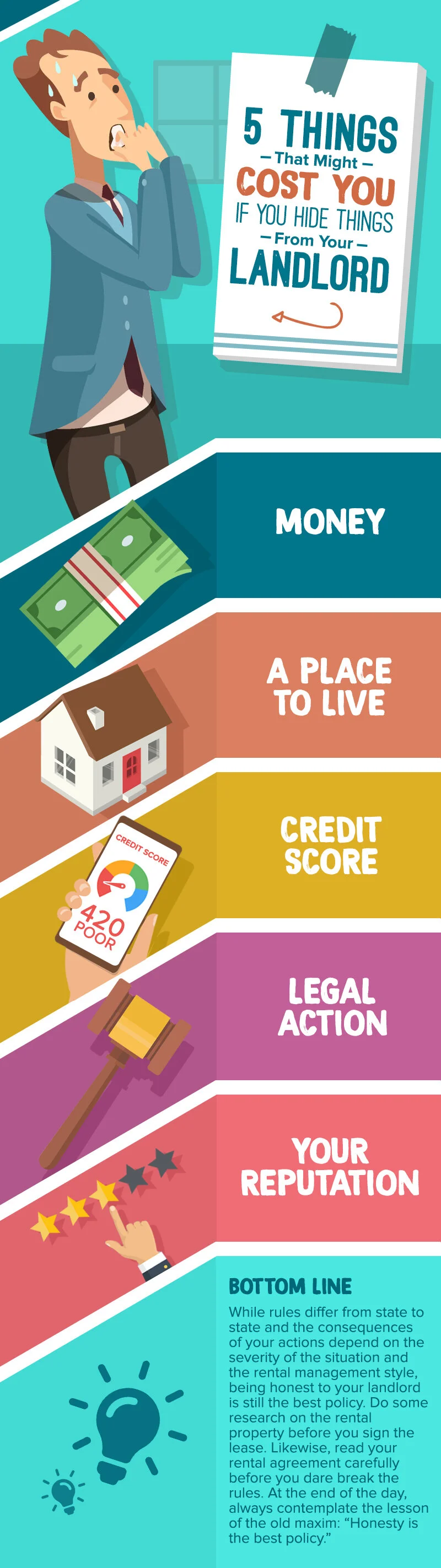
5 Things That Might Cost You If You Hide Things From Your Landlord

As a renter, there’s nothing more valuable than maintaining a good relationship with your landlord or property manager. One way you can keep a positive connection is by being honest and upfront right from the start. However, one surefire way to form a negative relationship is to lie or hide things from them. And because you will usually be found out anyway, you’ll have to deal with the consequences of your actions sooner or later. This could make your life more stressful in the long run.

Some of the most common things tenants hide from their landlord include pets, a roommate, damage or problems to the property, running a business, or even DIY repairs or improvements. While many of these things might not seem like a big deal to you as a renter, there are reasons why landlords choose to enforce these rules to their unit in the first place. Here are some of the things that might cost you if you’ve been dishonest to your landlord:

1. MONEY

Hiding things from your landlord can definitely cost you additional expenses. If you are

lucky enough, you will be simply charged with a fine and be required to pay extra rent or deposits as outlined in your lease. If your landlord discovers that you’re secretly keeping a furry friend—which could be against your apartment’s pet policy—the management company could slap you with a hefty fine or charge back pet rent and deposit. In one of the worst-case scenarios, they may even ask to remove your pet and may consider terminating your lease. And that security deposit you’re holding onto that you can put towards a new place may be forfeited.

2. A PLACE TO LIVE

More than a simple fine, you can also get evicted if you break rental contract rules.Landlords have their reasons when they say they don’t want a pet or an unlisted roommate in their rental property. Your pets may not be covered by their insurance, and unlisted people may not be held liable if they caused damage to the property. It is simply not worth it to skirt the rules and breach the terms of your lease if it would mean you’ll be out of place to live. To avoid a stressed out life brought about by the ramifications of breaking your rental contract, do some research before you sign the lease.

3. CREDIT SCORE

If you’re still hoping to own a house as part of your American Dream, this can be one of the most important things you don’t want to risk while you’re still a tenant. If your landlord decides to evict you for breaking the terms of your lease, it can seriously affect your credit rating. And having a good credit score is certainly crucial for finding a new rental place or getting approved for a mortgage loan. It plays a big role especially when time comes for you to buy a home. The eviction may cause a serious drop in your credit score and it will likely appear on future tenant screening reports.

4. LEGAL ACTION

We know it’s something we all want to avoid, but hiding things from your landlord could even be a cause for a lawsuit if things escalate further. Some states allow landlords to sue tenants for damages or repairs they caused during their occupancy. It’s even a more likely scenario if your pet accidentally bites someone or your additional roommate incurred damage to the unit. As the renter, you have the option to countersue, but just think of how much time and money it might cost you during the process. Your landlord may also choose to take legal action if you refuse to pay fines or bills to cover the damages to the property.

5. YOUR REPUTATION

Aside from paying for additional expenses, losing your place to live, and risking an attractive credit score, what about your reputation? And we’re talking here about you losing a good rental reference, which is necessary when it’s time for you to apply to a new apartment. Even if your landlord is kind enough to let you stay on his property and only charges you with a fine, he/she will still likely bring up the dishonesty with your prospective landlords. Or the property’s management company could give you a negative review every time they areasked about your performance and reputation as a tenant. Without strong references from past landlords, this could make it rather difficult to secure a nice place that you actually want to live in.

Bottom Line

While rules differ from state to state and the consequences of your actions depend on the severity of the situation and the rental management style, being honest to your landlord is still the best policy. Do some research on the rental property before you sign the lease. If you want to move in with your pet or have been planning to get one soon, choose a pet-friendly unit where you’ll need to pay the necessary pet deposit and extra charges. If you have a friend who wants to temporarily move in, get written permission beforehand to know if it’s even possible. Likewise, read your rental agreement carefully before you dare break the rules. At the end of the day, always contemplate the lesson of the old maxim: “Honesty is the best policy.”

Seller May 16, 2018

Home Sellers: Check This Easy Guide To Boost Your Home’s Curb Appeal

Like moths attracted to flames, potential buyers can get riveted to a home with an excellent curb appeal. Buyers who will be drawn to your home’s appearance will definitely want to discover more of what lies behind your front door. Fortunately, maximizing your home’s curb appeal doesn’t necessarily mean spending thousands of dollars on big improvements and upgrades. The trick is in knowing what you should address and focus on giving buyers a visual sense of your home.

If you still can’t figure out what you need to do to improve your curb appeal when trying to sell your home, we’ve come up with an easy guide to help you start.

CLEAN UP!

  • Clean the driveways and sidewalks. Sweep your driveway and sidewalks to remove dirt and unwanted debris. Look out for cracked concrete, asphalt, and pavers and consider repairing those areas. If there’s severe damage, resurfacing can also be beneficial to return your walkways to its pristine shape.

  • Spruce up the front door. There’s no doubt that your front door is the focal point of your home especially since all potential buyers will walk through it. If they will be greeted by the sight of hanging cobwebs and insects stuck in it, they will also be concerned on what lies ahead once they stepped in. Clean and polish your front door thoroughly to remove any unwanted dirt. You can also update it with a fresh coat of paint to improve its look without spending a lot. Many homeowners paint their front doors in colors contrasting to the house’s exterior, like a bright blue or a striking red on a white house, to make it stand out. Don’t forget to also paint the trim of the front door to complete its new and improved look.

  • Wash the windows and the outside of the house. Your windows help let the natural light flood into your rooms so don’t forget to clean them as well, especially those located in front of the house. Use soapy water and a squeegee to wash them, and then dry them off using newspapers or packing papers. Don’t forget to clean the window ledges as well.

Likewise, washing your home’s exterior can also increase its aesthetic value and make it visually appealing to buyers. Consider pressure washing to thoroughly remove any loose paint, grime, mold, mud, dust and other dirt.

  • Clean and replace exterior lighting fixtures if needed. You don’t want prospective buyers who will visit your home to be attracted to your front door, but be turned off when they see cobwebs covering your lighting fixtures, especially those situated on your front porch. Clean the fixtures and replace any burned out light bulbs. If you found they already have outdated or corroded parts, consider buying a replacement. You can find inexpensive light fixtures in home improvements stores like Home Depot or Lowe’s. Clean and strategically placed lighting is going to be useful in highlighting your home’s lovely curb appeal, especially if you will hold showings later in the afternoon.

  • Hide your garbage cans, recycling bins, and other eyesores. Part of maintaining a clean and clutter-free exterior is hiding your smelly garbage cans, recycling bins, garden hose, children’s toys, and other eyesores that could detract from your home’s beauty. Keep those things tucked away in your garage if you have extra space, camouflage them with fencing and plants, or just simply move them out of sight especially for showing periods. This way, buyers can focus more on your home’s features and other improvements you made.

KEEP THE WEEDS OUT

  • Maintain a greener lawn. Make sure to water your lawn and get your grass as green and lush as possible to make it more appealing. If you’ve got a few barren spots, instead of throwing down some seeds, simply buy a considerable amount of sod needed to cover up those bare spots.

  • Clean up and remove unwanted weeds. Clean up around the shrubs, trim the hedges and remove dead, overgrown plants, leaves, and fallen tree branches. Remove unwanted weeds growing out in the driveway, sidewalk, fence, and flower beds because they can be a real eyesore, which home buyers will surely be watching out for. Don’t forget to also remove spider webs and animal droppings.

  • Trim the trees. Especially if your yard is surrounded by trees, trim them of any dead branches. Likewise, remove any dead trees and clear out your yard wastes to achieve a clutter-free yard.

FIX IT AND ADD COLORS

  • Fix the fence. Inspect your fence and fix any part of it that needs to be repaired or painted. Also, trim any shrubs or plants nearby the fence to free it of any overgrown areas.


  • Upgrade the mailbox. Inspect your mailbox to see if there’s a need to repair or replace it, especially if its metal stand is already wobbly, dented, or has been corroded. If you still don’t want to replace it, consider giving it a new look by applying a fresh coat of paint that matches your home’s exterior. This way, it can add a bit of personality to your property and potential buyers will also see it as an attractive feature.

  • Don’t forget the garage door. Don’t neglect your garage door, especially if the garage is located at the front of your home and makes up a large portion of its exterior. Scrub the door to make it clean, fix any dents, and apply a fresh coat of paint if necessary to help improve your home’s appearance. In the 2017 Remodeling Impact Report by the National Association of REALTORS®, at least 65 percent of homeowners also chose to install a new garage door to replace worn-out surfaces, finishes, and materials.

  • Clean and repair the roof. A filthy and old roof can have a demeaning impact to the home, especially since it can be seen in aerial photos and videos that are commonly used in listings. The roof is also an integral part that needs to be taken care of to maximize your curb appeal since it is clearly visible from above and can also be seen from the street. Have the roof pressure cleaned and repair broken or missing shingles. Don’t forget to also clean out and repair any damaged gutters. A good cleaning and completing the needed repairs can be all you need to have your roof look like brand new.

  • Add potted plants and flowers. Especially during springtime and summertime, adding potted plants and colorful flowers to your garden and on the entrance to your home can provide a lovely and inviting feeling. Decorative potted plants can also be useful if you have limited space for flower beds and you can’t have front landscaping. You can freely add plants and flowers in staging your front porch (which will be discussed later), near the home’s entryway, and around your garage.

ACCESSORIZE

  • Replace your front door handle. Consider changing your front door handle especially if it’s already dull and aged. For many homeowners, replacing their front door handle is another way to incorporate their preferred style and colors, such as choosing a handle with an ornate decoration.

  • Update your address/house number. Replacing your old house number, especially if it’s already faded or missing, can also add character to your home. You can choose a style that will match the design and colors of the house, or just pick any of the latest trends to give your address number a makeover. As with flowers and lighting fixtures, it can also be a good investment that will definitely improve your curb appeal. House numbers can be purchased online or at local hardware and home improvement stores.

  • Place a new welcome mat. As simple as it may sound, replacing your shabby and worn out welcome mat with a fresh, new one is a cheap way to add new life to your front entryway. It can also get rid of unwanted dirt brought in by potential home buyers during showings.

  • Stage your front porch. By doing this, you’re setting up a very warm and inviting atmosphere, which is a powerful way to maximize your home’s curb appeal. Decorate the patio or front porch based on its size. As mentioned above, arrange freshly planted flowers in decorative pots or set up a colorful foliage around the area. You can also add attractive furnishings that will complement your home’s style, like a bench, coffee table, and an outdoor rug. After all the cleaning and repair work you’ve done, potential buyers will not only appreciate the cleanliness and tidiness of the home’s exterior, but also the welcoming vibe your front porch will give. It will let buyers imagine themselves relaxing in their front yard with a cup of coffee during mornings or a glass of beer during evenings.

Even the smallest repairs and updates can actually help enhance your home’s curb appeal. They will help create a welcoming environment that can attract buyers to check the home further. Just remember that before you start working on such improvements, do your research and planning first. List down the things you want to improve, what you will work on first, and most importantly, figure out your budget that will help set your priorities.

Seller May 16, 2018

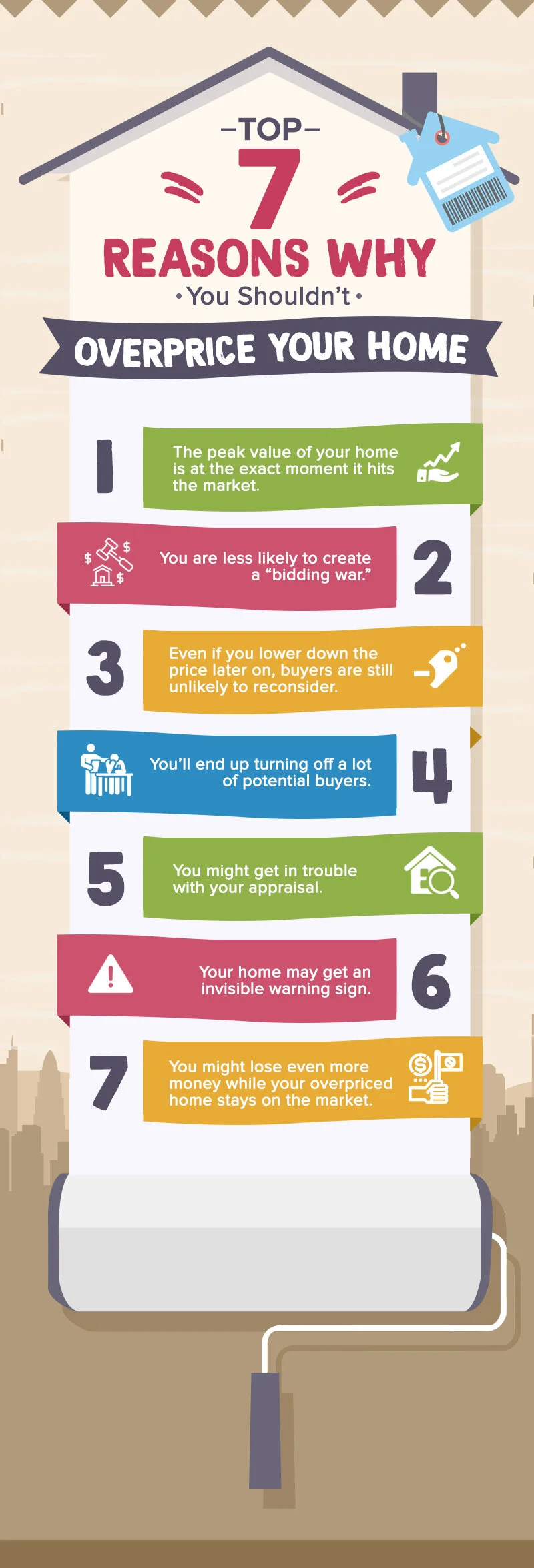
Top 7 Reasons Why You Shouldn’t Overprice Your Home

Tempting as it may seem, jacking up the listing price of your home to leave room for negotiations is a dangerous risk that a lot of sellers regret taking.If you are really serious about selling your home, it is best to take pricing seriously by listing your home at its fair market value. Otherwise, you may end up sabotaging your chances on a good deal.

Here are the top 6 reasons why you shouldn’t be in the business of overpricing your home:

1. The peak value of your home is at the exact moment it hits the market.

The first two weeks after your house is listed on the MLS are the most important, since this is when your home is going to generate a lot of activity. If you price your home too high, many buyers will overlook it since it would instantly be out of their range. With no offers on the table, your property will stay on the market for too long–leaving the next batch of buyers worried that something may be wrong with it.

You may also want to be wary of inexperienced listing agents who promise an unrealistically high asking price for your home. Experienced and trustworthy agents know that this is an unethical practice that will cost the seller a lot of time and money, since the home will eventually need a price drop after sitting on the market unnoticed for way too long.

When your house loses its “freshness” without seeing any offers, its value will drop even lower than the price you should have given it in the first place.

2. You are less likely to create a “bidding war.”

A competitively priced home will attract a lot of potential buyers, and is most likely to receive multiple offers in its first two weeks. This creates a bidding war that ultimately drives up the value of your home. On the other hand, an overpriced home won’t generate a lot of competition. Worse, it may not get any offers!

3. Even if you lower the price later on, buyers are still unlikely to reconsider.

In this market, most buyers won’t wait around for a house that they’ve already marked as out of their price range. Once they cross you out of their list, buyers will immediately move on to look at other houses they can actually afford.

In the event that a buyer really falls in love with your house, he or she will most likely wait for it to sit on the market long enough for you to accept a lowball offer. However, it is unlikely for them to make any kind of offer while your house still has that unreasonably hefty price tag. Also, a lot of buyers may have already found another house by the time you reduce your price to fair market value.

4. You’ll end up turning off a lot of potential buyers.

In this market, almost no one can pull off selling an overpriced home. Today’s buyers have 24/7 access to information via the internet, and are highly aware of market values. More often than not, they know when a house is grossly overpriced, and it reflects poorly on you (the seller) no matter what.

Even if the decision to list the home at such a high price is simply a miscalculation due to a lack of experience and research (and not because the seller is actually trying to get away with selling at the highest price possible), buyers wouldn’t want to deal with a seller who isn’t responsible enough to come up with a fair market price.

5. You might get in trouble with your appraisal.

If you do get that higher offer for your home, chances are the offer will be contingent on appraisal. If you priced it way beyond its appraised value based on comps in your area, you could get yourself into an appraisal problem. When this happens, you may be forced to lower down your price anyway or lose the deal altogether.

6. Your home may get an invisible warning sign.

If your home sits on the market for too long, neighbors and potential buyers will assume that there is a problem with it. The home will be stigmatized, and buyers will either be too turned off or too afraid to check it out.

No one wants to buy a house that nobody else seems to want. A house that sticks on the market for months often generate suspicions that some undisclosed feature or element is making it unsalable.

7. You might lose even more money while your overpriced home stays on the market.

By continuing to pay for the monthly expenses of your home while the selling period stretches on, any profit you may get from selling it at a higher price could simply offset your Principal, Interest, Taxes, and Insurance (PITI) expenses. If you’ve already moved, you might even have to pay for two mortgages for a long time, or maintain the property through another season.

BuyerSeller May 16, 2018

Understanding Contingencies: A Guide For Buyers and Sellers

When looking for homes online, home buyers might chance upon a property with a “contingent offer” status. This means that an offer has been made and accepted, but the sale is still conditional while both parties work on meeting certain criteria.

These criteria, or contingencies, are actions that must be met for a contract to become binding. Both the seller and the buyer must both agree to these terms, and it is made official by including a “contingency clause” in the real estate contract.

Whether you are a buyer or a seller, a solid understanding of contingencies is a must! Below are the 4 most common types, and what they mean for both buyers and sellers:

Mortgage Approval Contingency

In a lot of cases, a financing or mortgage contingency is worked into the contract to protect the buyer in case he or she is unable to obtain financing within a certain period of time. With this type of contingency, the buyer can reclaim his or her earnest money and legally walk away from the deal if the same terms and numbers stated in the contract cannot be met due to issues with financing.

The contingency clause typically states a specified number of days that the buyer can secure a mortgage loan, within which he or she has the freedom to terminate or follow through with the contract—depending on whether or not financing has been successfully obtained. Sometimes, the seller may agree to a request for an extension, but buyers must make sure to also have this in writing.

House Sale Contingency

Anyone who is in the process of buying or selling a house knows that timing and financing can be hard to align, and this is where the house sale contingency can benefit both buyers and sellers.

For buyers, this type of contingency allows buyers a specific amount of time to sell their current homes in order to finance the one they’re buying. A house sale contingency may also indicate how much the current home must sell for so that he or she can afford purchasing the new home. For example, if the buyer had to accept an offer below the minimum price indicated in the contingency clause, he or she can back out of the contract without legal consequences.

In a seller’s market, house sale contingencies may not be advisable, as sellers are in a privileged position to choose the strongest offer among multiple bidders. If a buyer offers to buy the house on a house sale contingency, the seller may be forced to pass up on better offers while waiting for the buyer’s house to sell.

However, if it is a slow market and the seller is willing to consider a house sale contingency offer, it is in his or her best interest to accept one in which the buyer’s current house is already under contract and just waiting to close.

While house sale contingencies are more commonly negotiated in the interest of the buyer, sellers who are timing a move from one house to another can make good use of this contingency as well. The clause will indicate a certain amount of time for the seller to find a new house and get that home under contract before finalizing the sale and turnover of the current house.

Inspection Contingency

With an inspection contingency, the buyer reserves the right to perform due diligence on a house before finalizing the sale. This is done with a comprehensive inspection of the home, which is performed by a professional on behalf of the buyer within a specified time period.

The terms may vary, and the buyer has several courses of action depending on the inspection report:

  • Approve the report and follow through with the purchase

  • Refuse to buy the home if certain agreed upon standards are not met, have earnest money returned

  • Perform a follow-up inspection if certain areas need to be examined further

  • Ask the seller to perform the necessary repairs before proceeding with the sale

  • Request a price reduction equivalent to the estimated cost of repairs

The seller may refuse to cover the repair costs, in which case the buyer may freely back out of the sale and refund his or her earnest money deposit.

Appraisal Contingency

An appraisal contingency helps make sure that the buyer will be paying for the fair-market value of the home. If the property’s appraised value turns out to be lower than the asking price, the buyer reserves the right to back out of the contract and have his or her earnest money returned. However, an appraisal contingency may also include terms that will allow the buyer to push through with the sale even if the appraised value comes in below the listing price. In some cases, sellers may offer the house at a lower price just to seal the deal.

It is common practice in hot markets for home buyers to waive this contingency in order to strengthen their offers. In such cases, buyers need to be prepared to pay for the difference in cash, since most lenders will only put up the amount for the appraised cost.

Here is a sample scenario from realtor.com:

“For example, let’s say you have a loan that covers 90% and you need to put 10% down for a home selling for $500,000. If the house is appraised at $475,000, the lender is only going to cover 90 percent of that appraised value, or $427,500. And instead of a $50,000 down payment, you would be expected to put down $72,500 to cover the difference. Waiving this contingency can be a gamble.”


At the beginning of any transaction in real estate, both buyers and sellers can propose almost any kind of contingency. This does not mean that all will be accepted, and there may be few negotiations to end up with a compromise. Contingencies must always be agreed to by both parties, and must always be put in writing. Negotiations can get tricky though, and it’s always best to have a professional real estate agent guiding you at all times.

Seller May 8, 2018

Getting Cold Feet? Here’s How You Can Prevent Seller’s Remorse

Buyer’s remorse (the feeling of regret after making a huge purchase) is a common sentiment that a lot of people understand and sympathize with, given that the average person makes huge purchases more often than he/she gets to sell anything of substantial value.

This is why the seller counterpart of this feeling is quite unheard of, because it isn’t something that happens very often. In fact, home sellers almost never anticipate it. They simply end up with a bad case of “seller’s remorse” simply because they have never experienced a similar kind of regret prior to selling their home.

A house is one of the biggest and most monumental purchases a person makes in his/her lifetime. Selling a house for the first time is an emotional experience, especially for those who have spent a large part of their lives calling it “home.” Sometimes it’s just cold feet (which is perfectly normal), in which case it is better to proceed with the sale as long as the timing and logistics of the transition have already been settled. However, some end up having valid concerns about the sale, which often happens when contracts have been signed and it’s already too late.

To make sure that you don’t face these feelings of regret, it is important to first examine the reasons that cause seller’s remorse. From there, you can follow a plan to prevent it from popping up when it’s too late.

Here are the common questions most sellers ask once they start to experience seller’s remorse:

1. Did I price my house right?

After the sale of their previous home, sellers may have second thoughts regarding the amount they sold it for. Some feel that they may have accepted an offer that was too low, especially if they did not get to entertain other offers.

How to prevent being in this situation: There is a fair amount of strategy that goes into pricing a home, and you want to make sure to find the perfect balance between the important factors that determine housing prices.

To set the right price that will get your house some steady action, it is crucial to seek the help of an experienced agent and a professional appraiser. While it is ultimately up to you to set the final asking price, you still have to make this decision within a suitable price range based on comparable sales or “comps” and several other assessments. Don’t rely on your “guesstimate” and don’t let your personal attachment to your home determine its selling price. Overpricing your home will only cause it to sit in the market for longer than is ideal (which would drive down its value), so it is very important that you get the price right before deciding to officially put it on the market.

When you think you’ve arrived at the correct price, list your house for sale but wait until you can choose among several offers before accepting one. This way, you won’t have to regret settling for the first offer that came along.

2. Was it really the right time to sell?

It’s not unusual for sellers to make an impulsive decision to sell their homes just because the current market promises good returns. Some people also decide to sell as a way of getting out of debt, but realize in the end that there could have been other ways to raise the money without having to give up their homes.

How to prevent being in this situation: Have a solid and acceptable reason for selling your home, and make sure that you’re ready to accept the implications of the sale. If you’re selling the house for financial reasons, make sure you have accepted the need to downsize. It would also help to ask yourself if selling your home really is the only way you can raise the money you need. This way, you won’t feel guilty about it in the end.

The market may be looking good at the moment, but don’t let this be the sole indicator of your desire to sell. When in doubt, hold off for a while and make the necessary assessments first.

3. Will I be able to find a home that appeals to me as much as the one I just sold?

Sellers who have loved their previous home so much often worry if they’ll ever find a worthy replacement.

How to prevent being in this situation: It’s normal to feel an attachment to the home you’re selling, but if you’re worried that you won’t find a house you’ll love just as much—don’t panic.

A logical solution to this is to sell on a contingent contract, which means that you–the seller–will be given a period of time to find a replacement home without being obligated to close escrow with the buyer in the event that you don’t find one.

It’s all about communicating with your agent about what you need, and finding a way to sell your home without experiencing unnecessary setbacks. It is your listing agent’s job to understand your unique situation and come up with a plan to make the the selling process as seamless as possible.

A note to sellers:

The bittersweet feeling of parting with your home is often inevitable, but a bad case of seller’s remorse is something you can avoid with careful planning. Just remember to hire an agent you can trust, and to be 100% sure of your decision to sell. The anxiety brought by having to sell a home you’ve loved for a long time will eventually be eased by having a positive outlook as you transition into this new phase in your life.

Buyer May 8, 2018

Opportunities And Risks Of An Interest-Only Mortgage: A Guide For Home Buyers

Opportunities

1. Lower monthly payments

The main and obvious advantage of an interest-only mortgage is its low monthly payments. This benefits buyers who are looking to buy a relatively expensive property, since an interest only loan allows you to buy a pricier house than you would be able to afford with a standard fixed-rate mortgage. Lenders calculate the amount you can borrow based on your debt-to-income ratio, and if your monthly loan payments are low, the amount you can get for a loan goes up.

2. More control over where you put your money

Lower monthly payments on your mortgage give you the freedom to invest some of your money elsewhere since you’ll be freeing up more of your expendable cash. With an interest-only loan, the money that you don’t have to spend on large monthly mortgage payments can be used to pay other financial obligations.

Also, if you’re juggling a few goals on top of owning a home (such as putting up a business or going to graduate school), you can really benefit from the increased cash flow that is made possible by an interest-only loan.

3. Greater flexibility with payment schedules

An interest-only loan allows more flexibility in terms of balloon payments. Which is a great thing, since the best way to manage an interest-only loan is to make principal payments whenever possible. For example, if you get an unexpected bonus or raise, you can choose to apply the extra money towards the principal. This way, any differences in your standard of living won’t be affected. Doing this will also decrease the risk of your monthly payments shooting up to an unaffordable amount. In any case, you can easily go back to just paying the interest amount in the event of sudden medical expenses or temporary unemployment.

4. Less pressure on first-time home buyers

For first-time home buyers, an interest-only loan provides them more time to increase income before the interest-only term expires.

Since you can defer large payments into future years when you expect your income to improve, there is less pressure on paying off your mortgage for the first 5 to 10 years. Take advantage of this by shifting your focus towards growing your finances.


Risks

1. Being unprepared for higher payments

Compelling data shows that up to a third of borrowers with interest-only loans may not realize that the loan will convert. UBS writes that approximately 3 out of 10 people who take out interest-only loans have little understanding of the product, and are unaware  that their repayments will jump by 30 to 60 percent at the end of the interest-only period. This can be very dangerous assuming that they cannot afford the higher payment when the “teaser rate” expires. If they decide to sell, they get nothing since they haven’t got any equity in the home.

However, even if you are aware of the terms of an interest-only loan, don’t make the mistake of being unprepared for when the loan converts to a traditional mortgage after the end of the interest-only term. Have a realistic foresight of what your income will be in a few years. Banking on unsure sources of income can be disastrous when higher payments on your loan begin. This means that you can’t solely rely on that promotion your boss keeps promising you, or on an investment that isn’t generating enough returns.

2. A rise in interest rates

Many homeowners will want to utilize refinancing as a way of lowering their monthly payments, but this will not be a good idea if interest rates rise. Some may even rely on refinancing to fund major purchases and get rid of debt, but a rise in interest rate will have a significant impact on monthly payments as well.

3. A decline in housing prices

What makes interest-only mortgages a high-risk choice is the possibility of housing prices going down. Homeowners who take this kind of mortgage may land a poor deal for the home if they plan to sell before the loan converts. When housing prices fall, some sellers are left with no choice but to default on the mortgage, which is likely to end up being worth more than the house.


Honesty is paramount to anyone who is interested in getting an interest-only mortgage. This means having an honest assessment of your capability to use the loan properly and as part of a strategy, and not just to take advantage of low monthly payments (without having a long term plan to afford it when the loan eventually converts).

If you do have a plan, be sure that you have every intention to follow through. Otherwise, you may end up with large monthly payments that you cannot afford. If your income is irregular like the majority of people who take interest-only loans, it is advisable to keep your monthly obligations low and make lump-sum payments when you have the extra cash.

With low monthly payments during the interest-only period, you’ll definitely be able to free up a substantial amount of expendable cash. The key is to make use of this money wisely, and to not spend it on things that won’t serve you well into the future. Instead, choose to invest the extra money in repayment vehicles that are proven to give superior returns, or use it to pay off any other debt you may have.

This way, you can expect a bigger return and then when the loan is due, and you won’t have to worry about not having enough money to pay it off.

Buyer May 8, 2018

In Love With Historic Homes? Here Are The Pros And Cons Of Buying One

Owning a historic home certainly comes with its own set of benefits and challenges. You need to make sure that you are ready for the challenges and responsibilities—financially, emotionally and even physically. Beyond its unique and charming characteristics, it is also important to determine whether the home meets your lifestyle and certain life choices.

Historic homes often close at higher sale prices because of their historical value, and many of these are in high demand in certain regions in the US. Once listings for historic homes become available, which only happens once in a while, you can be sure that there will be no shortage of buyers.

What’s the difference between an old house and a historic home?

The National Register of Historic Places, which is maintained by the National Park Service, gives historic homes their specific designation. Historic homes are included in an official list that differentiates them from an ordinary old home. These homes must also be at least 50 years old. They received their designation because of age, architectural style and value, cultural significance, or if they were once the residence of a historically significant person. There are now over 90,000 listed historic properties in the National Register since its inception in 1966. Another organization that lists historical homes and celebrates their diverse history is the National Trust for Historic Preservation.

One of the most famous historic homes that is privately-owned is The Painted Ladies in San Francisco, California, which features an iconic row of historical Victorian homes. Meanwhile, the French Quarter in New Orleans remains as one of the most popular historic neighborhoods. Likewise, many famous historic homes now serve as museums and provide daily or weekly guided tours for locals and tourists alike.

Here are the pros and cons you need to weigh out before buying a historic home:

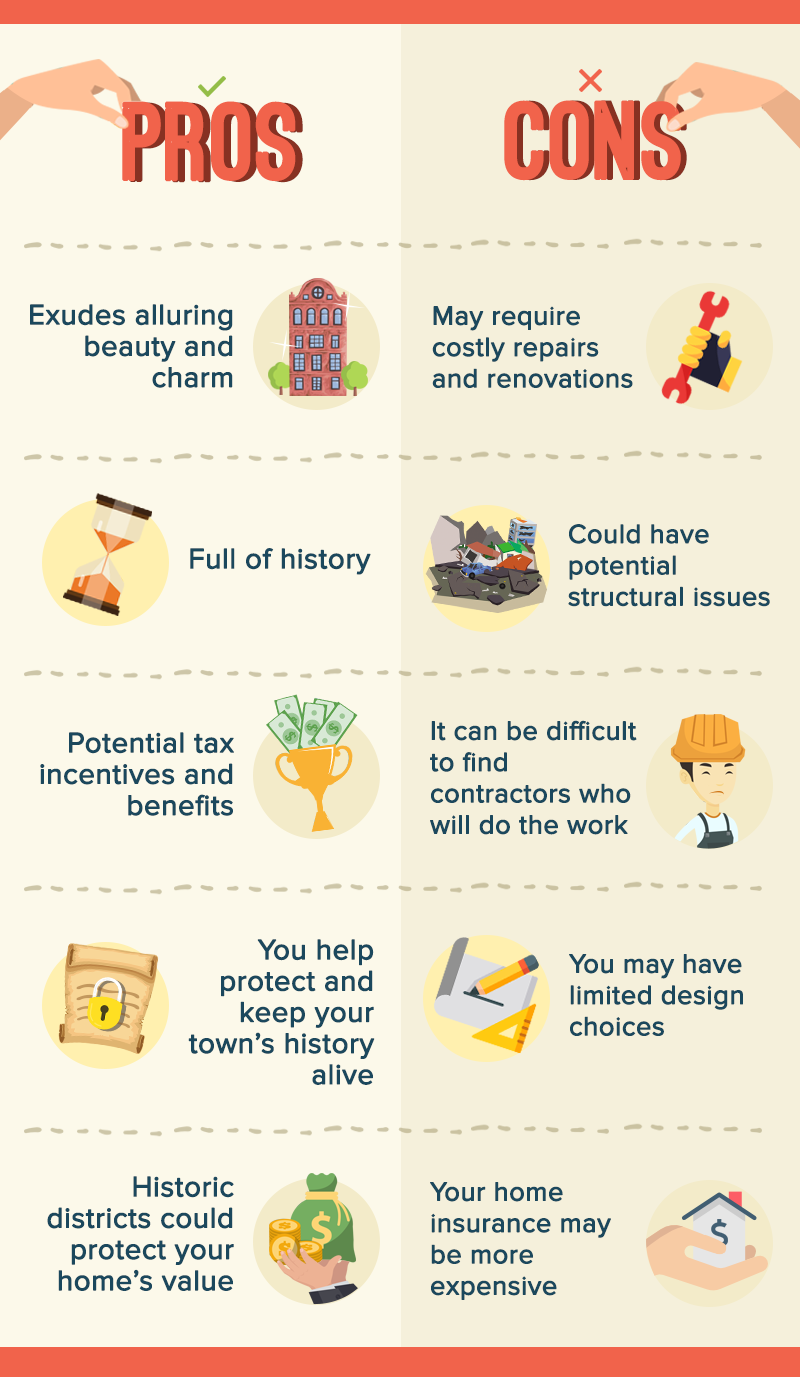
PROS

1. Exudes alluring beauty and charm

Have you always loved the feeling of going back in time? Historic homes will certainly transport you to a certain period or era through their stunning architectural styles and outstanding beauty and charm. This is true regardless of whatever style you love—Victorian, Colonial, a Queen Anne, or even a Gothic Revival.

From ornate stone fireplaces, balustrades, bay windows, vintage door knockers, and even arched doorways, to sturdy gables, turrets, and towers, there are so many intricate details to love in a historic home. They are unlike many contemporary homes, which are less distinctive. Their unique charm simply can’t be found in these modern properties. For many homeowners and enthusiasts, it may even take months or years before they notice all of the home’s striking features. Many historic homes also represent the best of a particular architectural style.

Historic homes maintain their charm and durability despite enduring years of hardships. This is one of the reasons why these dwellings still exist today and haven’t lost their appeal. Those intricate details, as well as the high level of craftsmanship, are often enough for aspiring buyers to seriously consider owning a historic home.


2. Overwhelming with history

Historic homes boast not only of charming characteristics but also their own interesting history. Aspiring historians, history buffs, or any “old soul” will love living in a historic home because it will let you connect with the town’s past and the unique stories of the people who lived there. These houses play an integral part in their town’s history and heritage.


3. Potential tax incentives and benefits

There are certain tax incentives or tax deductions available to owners of historic homes. The Federal Historic Preservation Tax Incentives Program, for an instance, offers a 20 percent federal tax credit specifically for the historic preservation and rehabilitation of properties listed in the National Register and used for income-producing purposes. Aside from federal programs, many states and local governments also offer financial incentives in the form of tax credits to those who want to purchase and preserve them. Lower interest loans are also be available for renovation and preservation of historic homes that are otherwise not available to other homeowners.

Our modern tip: Do your research to find out if you are eligible for any of these tax abatements and loans. While these incentives won’t make you rich, they can significantly improve your financial standing after owning a historic home. Check into all the possibilities for a local or regional grant. Similarly, don’t be afraid to reach out to current owners of historic homes in your area to understand the local tax situation and potential financial grants.  


4. You help protect and keep your town’s history alive

By purchasing a historic home and becoming an owner of a piece of history, you are helping to keep history alive. Even if you make the home your own by renovating its interior and keeping up with the necessary repairs and updates, you are preserving it while giving it a new life at the same time.

Many homeowners believe that restoring these historic treasures brings more value that can’t be measured in money. It is because they are also helping other people, past owners and locals alike, to retain their connection to the home and its history. You are encouraging them to continue loving and honoring their heritage. Think of it as a humble and exemplary contribution to the preservation of an important aspect of history. For many history buffs, it can be a dream come true and accomplishing one of their life’s missions as well.


5. Historic districts can protect your home’s value

If you’re the type of homeowner who has always been disappointed by your neighbor’s decision to paint his/her house in hideous colors or make any unsightly additions, then you must have longed for a law that would protect you from their bad choices. Well, you’ll probably be interested in owning a home located in a historic district. They have strict rules and standards on what renovations or additions can be made to the external appearance of the homes to protect the surrounding property values. Your home’s value will be worth more in a historic district.

Similarly, well-maintained historic homes are likely to hold on to their values even if an economic downturn hits the region. These dwellings are desirable since anyone can be assured that no more of them are being made. Many people also look to buy a historic home because the possibility of a financial windfall is strong when the owner is ready to sell.

CONS

1. May require costly repairs and renovations

One of the biggest challenges of owning a historic home is that it requires a lot of upkeep and repairs. Well, it may already be a given since most historic homes are at least 50 years old. If you decide to buy a historic home and take on this kind of responsibility, make sure that you have the finances to maintain and restore the property. There may be a need to replace the roof and plumbing or perform necessary electrical repairs. It’s especially crucial for historic homes that haven’t been properly preserved.

Our modern tip: Many homeowners start with a regular bank loan to fund most of the immediate repairs. Then they save up for additional costs for any custom-made renovations they want and can incorporate in parts of the home.


2. Could have potential structural issues

Old homes could present structural issues and damage often caused by rot and old age, damp problems, and even termites. These homes could also have cracked walls and sloping floors. For homes that are built before 1978, there’s the possible presence of lead paint or high level of asbestos.

Our modern tip: Get a formal home inspection conducted by a qualified home inspector or a structural engineer, especially those who have experience in dealing with issues of historic or older homes. Make sure that regardless of its charm, the house still meets safety and health standards especially if you will make it your primary residence.

However, if your dream house suffers from major structural problems, then perhaps it’s time to look at other historic homes on your list. The list of headaches the house could potentially bring you can surely outweigh all emotional attachment you may have.


3. It can be difficult to find contractors who will do the work

There may be plenty of trusted contractors in your area, but not all of them have the skills and expertise needed to help you with the necessary repairs for your historic home. Homeowners should seek out the help of a contractor who specializes in historic restorations because they can better assess the damage and the repairs required on certain features, rather than just replacing them with newer and substandard versions.

Our modern tip: Visit reliable historic home forums and websites to gain information on contractors and specialists that may be able to assist you better. After that, get a price estimate for all the necessary repair work from each contractor you’re considering.


4. You may have limited design choices

When you own a historic home there will be a constant need for upkeep and repairs. However, not all renovations can be done and you must adhere to certain rules and guidelines strictly imposed by local and state laws. Homeowners may not be able to do any changes, renovations or alterations without special permits from the town or city. Some of the typical restrictions include home additions like adding extra footage or stories; replacing the windows, shutters or roofs using a material different from their original architectural design and style, and even landscaping that may not match the property’s character.

These restrictions are frequently imposed to preserve the home’s true nature and original construction, as well as to protect the character of the property and the designated historic district. This is one of the main reasons why many choose not to live in a historic home. It is not for those who already have their dream renovations in mind like having a fully-equipped kitchen or painting the home in their personal color palette. If such renovations already exist in the home and sacrificed its integrity, or if you plan to make your own additions without consulting with your city development office, they can devalue your home.

Our modern tip: Your city’s local preservation commission will be responsible for issuing a Certificate of Appropriateness (COA) to approve work on buildings in a historic district. While some districts are more lenient in issuing COAs, it’s good to research which restoration projects will require you to apply for one. Likewise, study the Standards for Rehabilitation of Historic Buildings that are imposed by your local/state laws so that you can carefully plot out and fulfill your remodeling plans after necessary adjustments.


5. Your home insurance can be more expensive

The homeowners’ insurance on historic homes is often more expensive because of certain factors, such as their size, age, and even their distinct architectural features that might be difficult to replace. Many personal insurance companies don’t offer the type of coverage needed to insure these types of homes, so homeowners will have to obtain historic property insurance, which is definitely more expensive. Likewise, older homes often pose many structural issues so insurance rates could be increased.

Aside from that, because homes in local historic districts tend to have higher property values, it can also bring higher property taxes. It will be another burden if you decide to purchase a historic home without a good financial standing.

Bonus Tips:

Seek help from a real estate agent – When house hunting, it’s advisable to seek help from a realtor who has experience with historic homes. Ask him or her on whether or not you’re looking in a designated historic neighborhood. Your real estate agent can also educate you in advance regarding the costs and responsibilities associated with owning a historic home.

Contact your city’s development office – Before purchasing your own piece of history, do as much research as you can so that you’ll know exactly your duties and responsibilities as a homeowner. Just think that you’re studying for a particular homework assignment in History 101, so reach out to as many resources as possible. Contact your city’s development office and join online historic forums, reviews, and websites to help prepare yourself emotionally and financially.

You will learn a lot – Remember that it is not only the history of the home that you may unveil afterward, but you’ll also discover other skills and treasured life lessons along the way. The whole experience may bless you with the necessary patience, strength, perseverance, and courage, especially on taking on a restoration project that you thought you couldn’t do.

Are you in love with a historic home but not quite ready for it?

If you really want to purchase something similar to a historic home but your bank account can’t afford it, it is advisable to search for a non-historic home with similar features located outside the historical preservation area in a nearby neighborhood. Look for homes that are of the same age and have the architectural style that you love, but have not received official designation from the city or local government. That way, you can avoid the costs associated with higher property values, but that also means you won’t get tax credits and other preservation incentives available only to owners of designated historic homes.