Buyer December 5, 2017

To Rent Or To Buy: Top Things You Should Know

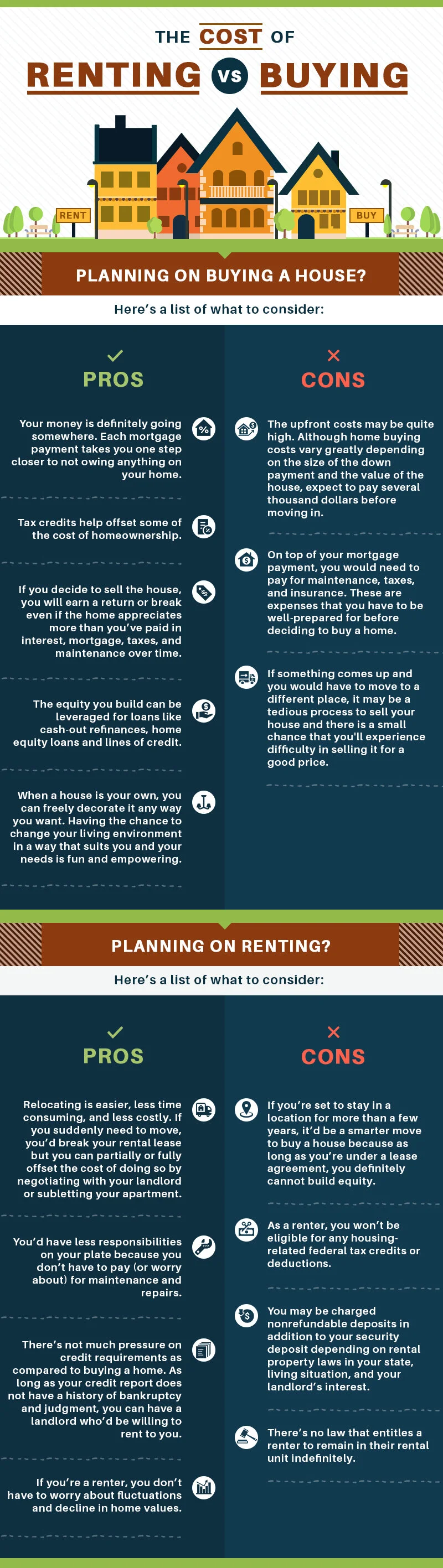
Buying your own home seems like the fulfillment of the American dream, but as housing prices are increasing, we all know that that dream will definitely cost you a hefty amount. According to an article on Economists’ Outlook, the median price of homes for a single-family home sold in August 2017 is $255,500, which is a 5.6% spike from last year. Many people would resort to renting, but is that move really cheaper than buying a house? 

Let’s first weigh the pros and cons of buying a house and renting one.

Take note that renting prices have also gone up and buying a house would generally be cheaper than renting in states belonging to the Northeast, South, and Midwest regions. But it’s good to remember that there are multiple factors to consider other than just price.

Seller December 4, 2017

Top 5 Reasons To Sell Your Home NOW

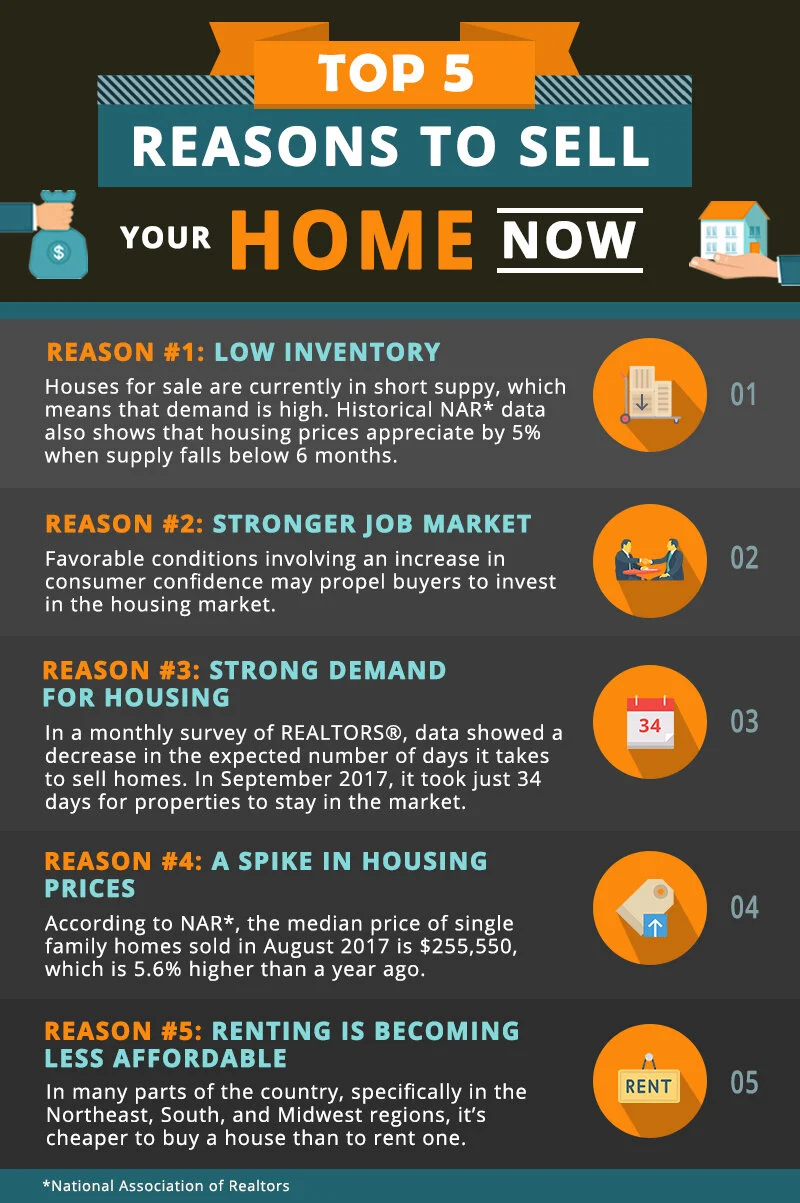
If you have been wanting to sell your house for a while but just couldn’t get into favorable conditions, 2018 is an opportune time to sell it. Here are the top 5 reasons why:

Reason #1: Low inventory

If you know about the concept of supply and demand, you’d know that when something is in short supply, its value tends to increase. The REALTORS® Confidence Index Survey showed that low inventory in the homes for sale has been a major issue affecting transactions. This puts sellers in a position of advantage because as the number of homes for sale is low, the value of those that you could put up for sale will swell. You could also take note that Historical NAR data shows that housing prices appreciate by 5% when supply falls below 6 months. That means that you could expect the median prices for housing to be higher.

Reason #2: Stronger job market

It’s the American dream to own a house, and there’s a list of gains that a homeowner has such as tax credits, equity building, and just the simple but joyful experience of finally having a house that they can call their own and customize to their heart’s desires. These advantages will be more appealing now that consumer confidence has risen. This is caused by a decrease in unemployment and an increase in wages.  These favorable conditions may propel buyers to invest in the housing market.

Reason #3: Strong demand for housing

Based on the responses reported in the September 2017 REALTORS® Confidence Index Survey, buyer conditions were rated “stable” to “very strong” in all states. In the midst of low interest rates, rental appreciation, improving job market, and the general confidence in the economy, the demand for buying houses is strong in this time. There has also been a reported decrease in the expected number of days it takes to sell homes. In September 2017, it took just 34 days for properties to stay in the market.

Reason #4: A spike in housing prices

As mentioned in the previous passages, short supply tends to result in an increase in value. Homeowners are now seeing a return to positive equity as real estate values have increased over the last two years. According to NAR, the median price of single-family homes sold in August 2017 is $255,550, which is 5.6% higher than a year ago. If you’re a seller whose property value dropped during the recession, you could benefit from these high housing prices.

Reason #5: Renting is becoming less affordable

Another thing that could benefit you as a seller is the rising rent prices. According to NAR, over the years, and in many parts of the country, specifically in the Northeast, South, and Midwest regions, it’s cheaper to buy a house than to rent one. This drives buyers to opt for owning a property rather than to have their money put into something that would not build their equity.

Seller November 28, 2017

12 Home Staging Tips That Are Designed to Sell

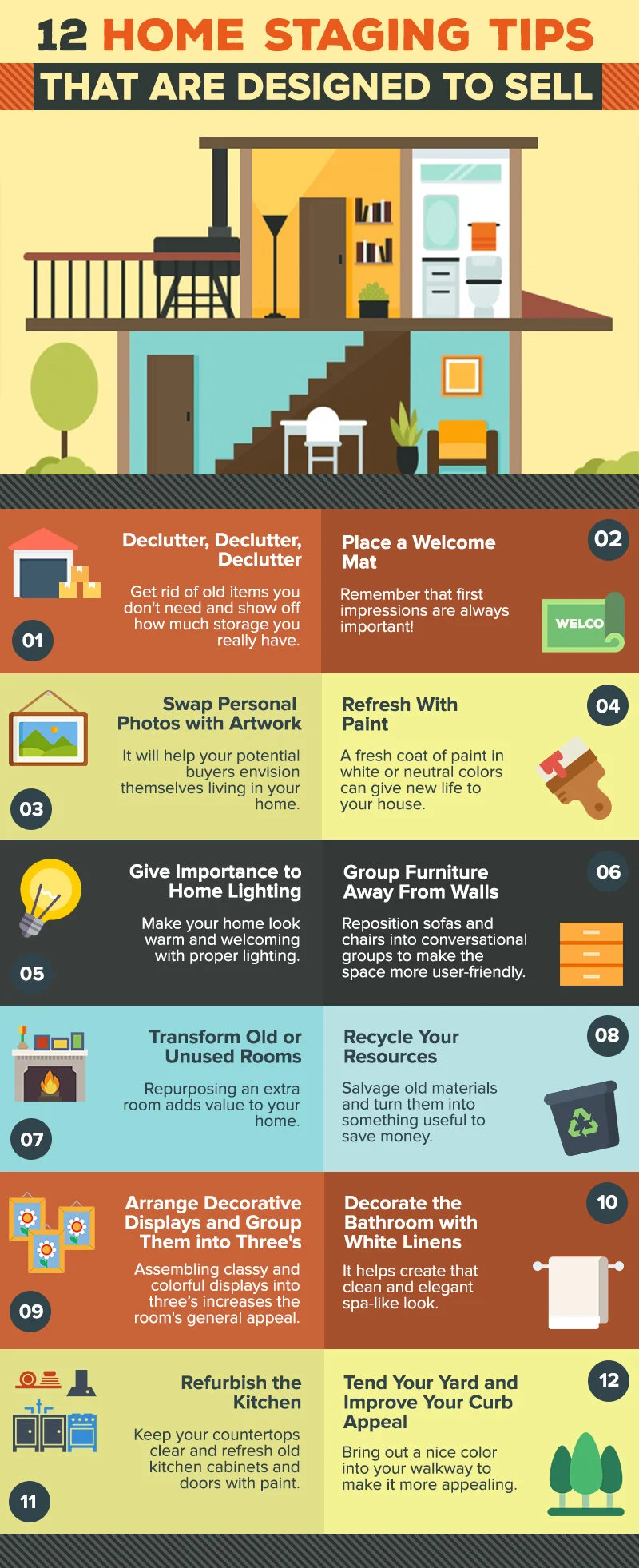
Staging your home helps you build that memorable first impression for potential buyers. You have to showcase your home’s strength and downplay its weaknesses. Staging is also especially important in slow markets with high inventory and many competing homes. Heed these simple yet effective staging tips that may just help you close the sale.

1. Declutter, Declutter, Declutter

Get rid of your old items and things you don’t necessarily need. Give yourself a rule that when a new thing comes, the old one must go. Organize your shelves to show off how much storage you really have, as prospective buyers love homes with lots of storage spaces. Clearing away your clutter will definitely help make the house look tidier and bigger.

2. Place a Welcome Mat

An enticing entrance is key when you’re luring prospective buyers. A new welcome mat that complements the style of your home can easily convince them to see more. Remember, first impressions are always important. So adding fresh potted plants to an entry area could also create a relaxing atmosphere on the way in.

3. Swap Personal Photos with Artwork

Replacing those personal pictures of yours and your family with pieces of artwork will help your potential buyers envision themselves living in your home. You can opt to buy paintings of landscape scenes, modern shapes or floral motifs at thrift shops to create a focal point for your home. You can also print out inspirational travel images to display a certain lifestyle.  

4. Refresh With Paint

Put a fresh coat of paint in white or neutral colors to give new life to outdated doors, walls, and casing. It will make the house look cleaner and more contemporary.

5. Give Importance to Home Lighting

The secret to a great staged home that looks warm and welcoming is great lighting. Nobody wants to go in a house that projects a dim vibe just because it is improperly lighted. Increase the wattage in your lamps or fixtures and put them in key areas. Also open up windows and curtains to let the sunshine in and naturally brighten up the whole room.

6. Group Furniture Away From Walls

Move away from the common idea that rooms will feel larger and be easier to use if all the furniture is pushed against the walls. Instead, reposition sofas and chairs into conversational groups and place pieces of furniture away from the walls. It will help make the space more user-friendly and make the room seem bigger.

7. Transform Old or Unused Rooms

Repurpose an extra room into a space that will certainly add value to your home. You can turn that old junk room into a mini library with a comfortable reading spot by placing a bookshelf, a comfortable armchair and a small table. Or turn it into a yoga room or a mini entertainment hub. Either way, it will help the potential buyers envision the room with a special purpose that will suit their lifestyle.

8. Recycle Your Resources

Look for ways to salvage old materials to save money. Repurpose old junk and turn them into something new and useful, like making headboards out of old doors or turning strips of hardwood flooring into new fences.

9. Arrange Decorative Displays and Group Them into Three’s

Assembling classy and colorful displays, such as vases, lanterns, books and other decorative items, atop dressers and counters could give your house a cozy and relaxing look. It will also increase the room’s general appeal. Arrange them in odd numbers, preferably in three’s, and in varying heights and shapes, while keeping them in the same color family.  You can also try to mix and match items from craft stores to create a unique but modern look.

10. Decorate the Bathroom with White Linens

Tidy up your washroom by using white towels, bath mats and shower curtains for that clean and elegant look. Take it a bit further by creating spa-like displays, such as adding candles, fresheners and special soaps. Stack hand towels neatly near the sink and complement it with other accessories.

11. Refurbish the Kitchen

The first thing to do when staging your kitchen for homebuyers is to keep the countertops nice and clear. Put only a few items as displays, or center a bowl of fresh fruits or a vase with flowers to add a touch of color. If you can’t afford new doors or cabinets, refresh the old ones with paint that match your kitchen walls.

12. Tend Your Yard and Improve Your Curb Appeal

Curb appeal is important when attracting buyers, so bring out a nice color into your walkway that will make it more appealing. You can also grace your yard with potted plants and flowers in bloom, depending on the season.

Seller November 28, 2017

6 Of The Best Ways to Manage Stress When Selling Your Home

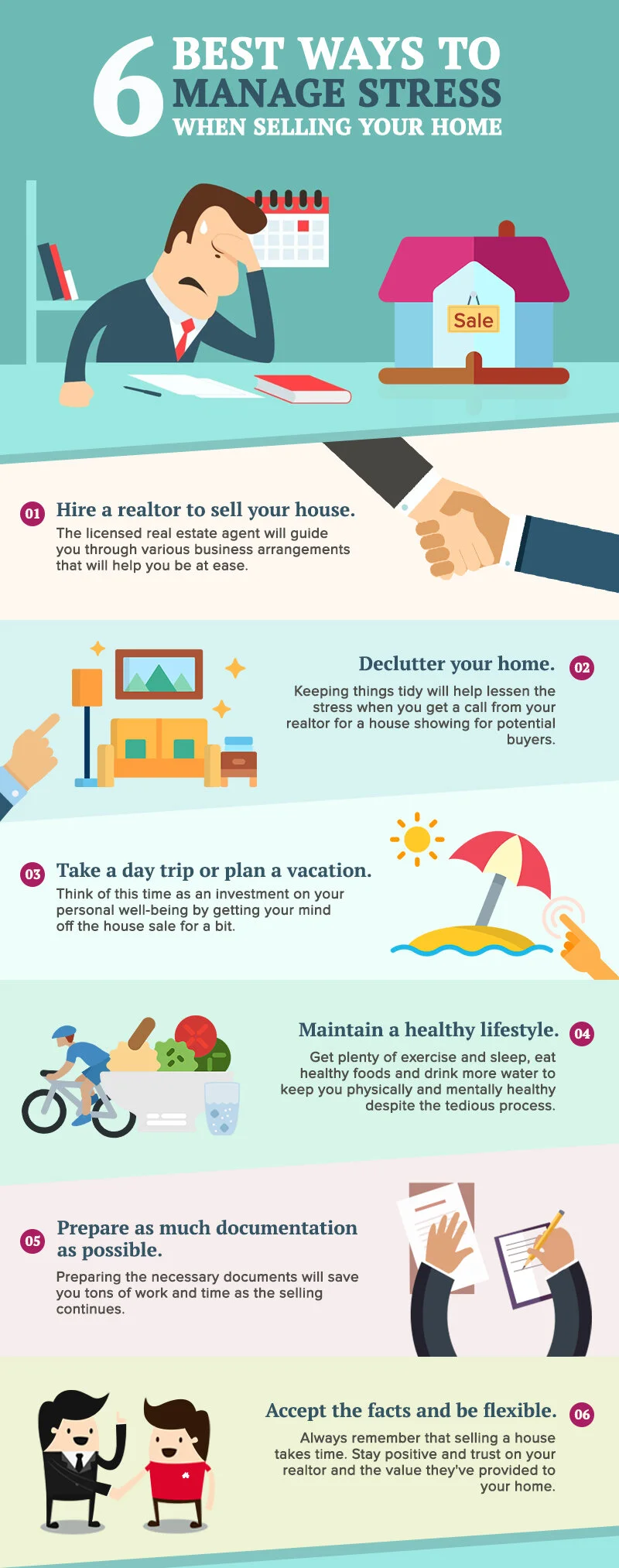
Whether it is your starter house or you’ve done it before, selling your home is one of the most stressful events in life. In fact, surveys found that selling a property is seen as more stressful than buying one. You can expect a lot of pain, anxiety and frustration as you go through the process. You may be dealing with solicitors and paperwork that seem to have no end. However, staying focused and positive as you navigate through this challenging phase is important. Take a deep breath and consider these simple yet useful ways to help you deal with the stress of selling your property.

1. Hire a realtor to sell your house.

When you hire a licensed real estate agent in your area, you have every right to certain expectations and requirements. The realtor will guide you through various business arrangements that will help you be at ease. Avoid hiring a relative or a friend to list your home at all costs, as it may add more tension in between. The process of listing and closing is tough enough without you worrying about any personal relations being affected.

2. Declutter your home.

Even before listing your house, get rid of the things you don’t necessarily want to keep once you move. It will eventually help you clean and tidy your place. Never leave the dishes in the kitchen, keep up with the laundry and vacuuming, and clean the bathrooms thoroughly. If this is too much of a task for you, you may consider hiring cleaning help during this transition period. Keeping things tidy will help lessen the stress when you get a quick call from your realtor for a house showing for potential buyers.

3. Take a day trip or plan a vacation.

You may not consider it at first, but planning that vacation as soon as you list your house will work wonders. It is because the first few weekends your house is on the market is typically when it is going to get the most action. Plan a day trip or an all-day activity, such as a visit to a museum or a weekend getaway. If you are not living there, your realtor can schedule open houses and showings at any time of the day. You don’t have to drop everything to get out of the house for an unexpected showing. Think of this time as an investment on your personal well-being by getting your mind off the house sale for a bit.

4. Maintain a healthy lifestyle.

One of the best ways to manage stress when selling your home is adapting and maintaining a healthy lifestyle. Get plenty of exercise and sleep, eat healthy foods and drink more water. Walk for an hour every day or take your kids to the park and have a valuable time together. Those extra efforts will keep you physically and mentally healthy despite this tedious process.

5. Prepare as much documentation as possible.

Selling a house definitely involves a great deal of paperwork. Sometimes you’ll need to be ready to present all those documents at a very short notice. Preparing the necessary documents will save you tons of work and time as the selling continues. Get in contact with your solicitor, find your mortgage documents, and be certain you have copies of title deeds and other necessary papers, including energy performance certificates, planning permission documents, gas safety inspection certifications, and others.

6. Accept the facts and be flexible.

According to HealthStatus, any disruption of your routine causes stress. Moving disrupts the entire family, and you also have to deal with the packing. The longer your house is on the market, the more pain and frustration you will need endure. Even after all the cleaning and preparations you’ve done, always remember that selling a house takes time. There’s a strong chance that your home won’t sell on the first open house so remember to have realistic expectations. This could help alleviate the stress you’re already experiencing. Stay positive and trust on your realtor and the value they’ve provided to your home.

BuyerSeller November 21, 2017

The Top 5 Realtor Review Websites That Most Successful Agents Use

As much as personal recommendations from friends and family are revered when it comes to real estate recommendations, people nowadays turn to the Internet for reviews including real estate agent prospects. Consumers have become more critical, and they want to get as much bang for their buck, so that means getting a good review on your service will upgrade your chances of scoring clients. Here’s a list of websites you can use:

Zillow is specifically made for real estate agents, and you get to have separate star ratings for several aspects like your negotiation skills, process expertise, local knowledge and responsiveness.  Take note that the site gets a whooping 124 million visits per month! If you take this into account, it’s safe to say that getting your share of leads through this site will be high. Included in the Zillow group websites that advertise realtors are Trulia and StreetEasy.

Why it’s good for you: The site has a feature that lets you be a Zillow Premiere Agent through which you can promote your listings, generate buyer and sellers leads, and even advertise on Facebook. This comes with a fee, but it gives you the benefit of exclusivity – you’re the only agent promoted on the page when you submit your listing, as opposed to not getting signed up as a Zillow Premiere Agent wherein other agents will appear on your listing – and wider reach, because even if you don’t have a listing of your own yet, you get to advertise on the local listings by non-Zillow Premiere Agents.

What to watch out for: If you ask your clients to give a review, they would have to make an account in Zillow which might prove to be a hassle. Also, they do not have a clear description of how they filter reviews so it is likely that you might get a bogus review for your work. Another problem that clients encountered with Zillow is that home prices listed on the website are not always accurate.


Yelp is a broad review platform which allows its users to give their take on restaurants, schools, and even realtors. The site has been around for a while, and it’s been re-designed as a social networking site where reviewers can connect with fellow reviewers.

Why it’s good for you: Yelp is easy to use and navigate; you won’t need to stress over learning how to use a specialized website. Another great aspect of the site is that they try to ensure the integrity of their reviews through screening it first before posting it. It filters the bogus reviewers, and if one does come up in your page, you can request to have the review moved.

What to watch out for: The robot that they’ve created for the website to filter reviews works on its downside too – their faulty algorithm could have half of legitimate and helpful reviews buried.


Trulia helps its users not only find their home but it also helps them find real estate professionals such as brokers, agents, mortgage brokers and lenders, appraisers, and property managers through its extensive agent directory.  

Why it’s good for you: Now that it’s owned by Zillow, you can have a wider reach. It also allows you to send a client listing report so that your clients can know how you’re featuring their home on Trulia.

What to watch out for:  There were complaints by realtors mentioning how Trulia promised them with leads from zip codes where the housing market was “hot,” but the site failed to deliver them this promise even after they have purchased leads.  


Realtor a site dedicated to real estate which enables their users to look for listings, to know details about mortgage, and to find realtors.

Why it’s good for you: Realtor.com has real estate articles popping out of google searches for when someone wants to know more about buying and selling property. And they almost always have a link on those articles leading to finding a realtor on their website. They also have rating categories for real estate agent’s attributes such as market expertise, communication, professionalism, negotiation skills, and responsiveness.

What to watch out for: Some buyers may veer away from properties posted on this site because of the lack of information that could be featured on the site such as crime rates within the area. They also don’t feature photos of the property as much as other websites do.


You can say that Facebook is oversaturated with all sorts of things, or that it can distract people away from your property. This is true to some extent, but it’s also the first thing people check when they open their phones so the market is assuredly big.

Why it’s good for you: You can make your page as easily as you can have it noticed since everyone is on Facebook. You can pay to have your page advertised (it’s actually cheaper than you think!) or you can opt to have your friends and family share your page and have you easily connected to a web of people who could be potential clients.  

What to watch out for: If you do use Facebook as a website for getting clients, it’s advisable to have other websites in tow – specifically websites which are mainly used for selling property – since Facebook may cause limitations in terms of presenting the full range of what realtors have to offer.

Buyer September 1, 2017

From Renter To Owner: 8 Important Reminders Before Making The Transition

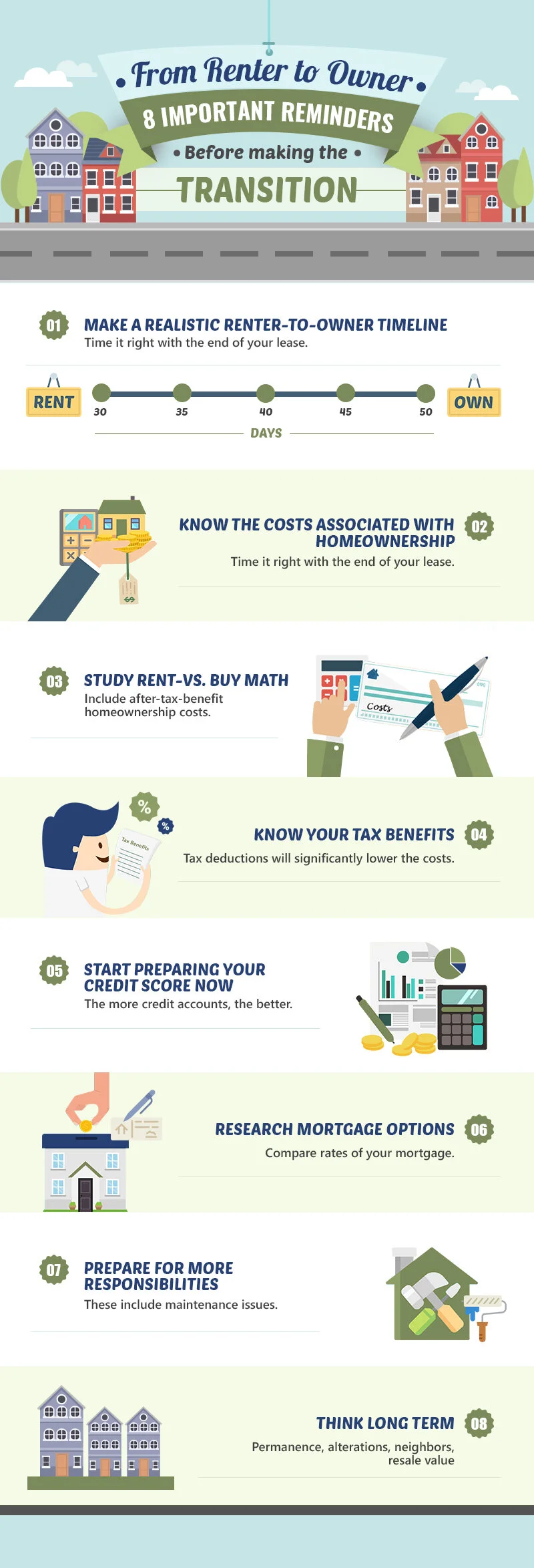
If you’re renting now, you most probably dream of having your own house one day. In fact, you’re probably already looking into buying a property to your name right now. So aside from finding that perfect dream home, what else do you have to prepare for in buying your own place of residence? Here are 8 important reminders before making that renter-owner transition:

1. Make a Realistic Renter-to-Owner Timeline

After the tedious task of searching and even after your seller accepts your offer, you may think that the job is done. You’re move-in ready! Not just yet. Be reminded that it may take around 30-50 days to close a home. You have to make sure that you time it right with the end of your lease. You don’t want it to be a renter-homeless-owner story!

2. Know the costs associated with homeownership

Costs, costs, costs! There’s a lot more to pay for upfront than just a security deposit as a renter—from deposits, home loan origination, title insurance, land surveys, home inspection, insurance escrow, appraisal, among others. Then, of course, you have to consider mortgages, home association dues, etc. in the long run.

3. Study Rent-vs. Buy Math

More costs mean more math. This will be more than just rental payment vs. P.I.T.I. A more accurate comparison will also include after-tax-benefit homeownership costs and rent costs.

4. Know Your Tax Benefits

With all these costs, don’t worry, your tax deductions will significantly lower the costs of homeownership. Mortgage interest and property taxes will be deductible in filing annual tax returns, and reduce your taxable income.

5. Start preparing your credit score now

In getting the best mortgages, credit scores are very important. Those who lend want reliable and on-time payers, after all. If you only have one credit card, start getting more now, while you have time to grow your credit score. More credit accounts are seen as better.

6. Research mortgage options

You can’t only shop for the best-fitting home for you, but also the best-fitting lender too. Compare rates of your mortgage based on your loan type, location, purchase price, down payment, and as mentioned earlier, credit history.

7. Prepare for more responsibilities

These include maintenance issues from the roof of your home down to its very foundation. Set up insurance and even an emergency fund for these responsibilities.

8. Think long term

Consider the fixed features of the home such as location, think of the things you may want to alter in the long run, even take note that the neighbors you will have in this new home may be your neighbors for life, and if need be, think about the property’s resale value.

Seller September 1, 2017

How To Deal With Low Ball Offers On Your Home

You might have expected that your house would sell for exactly what you set the price for, and a buyer making an offer for much less could be pretty frustrating. So what exactly makes for a lowball offer? Typically its 25 percent or less below list. But with all things being unequal, what makes an offer a lowball may vary from market to market and price range to price range.

You could know off the bat when an offer is just downright ridiculous, but it’s still best to not let your emotions get the better of you and consult with your agent because they might have a better gauge and understanding as to how offers go. It’s tempting to block off further negotiation with buyers who make such offers but remember to keep your calm because after all, you are engaging in business. It could be that your buyer may have just gotten bad advice from people around them on how they should price their offer, so it’s still advisable to keep communication lines open. The offer may have not started on the right foot, but tables can be turned if you just know how to negotiate.

Don’t waste your time thinking how you might be perceived. Consider all offers with a cool head and you might end up with a good deal. You can have your agent ask the buyer’s end on their reasons for making an offer lower than the asking price. Knowing their answer could actually be beneficial to you; you could view your property using a different lens. Are there parts in the house that needs fixing? Has the house been for sale for longer than the ideal time? Knowing the answers to questions such as those would help you evaluate just what you need to improve on it so that it could look more appealing to the market.

A trusty and experienced agent could spot when a buyer – despite making a low offer – is smitten with the house and are willing to raise their offer.

If you’re going to make a counter offer, it’s best to present it with data such as a market’s list-to-sales price ratio. Also, you can have your agent make a written document containing the best comparable homes to yours. Include the following statistics from two months ago to the same measurements today:

a.) Number of similar homes on the market.

b.) Number of similar homes sold and closed since the listing’s inception.

c.) Number of listings that expired unsold.

d.) Number of pending transactions.

e.) Number of new similar listings (your competition) with the data sheets and pricing

By knowing all these information, you would have an wise estimate on the lowest and highest price you can expect.

Seller September 1, 2017

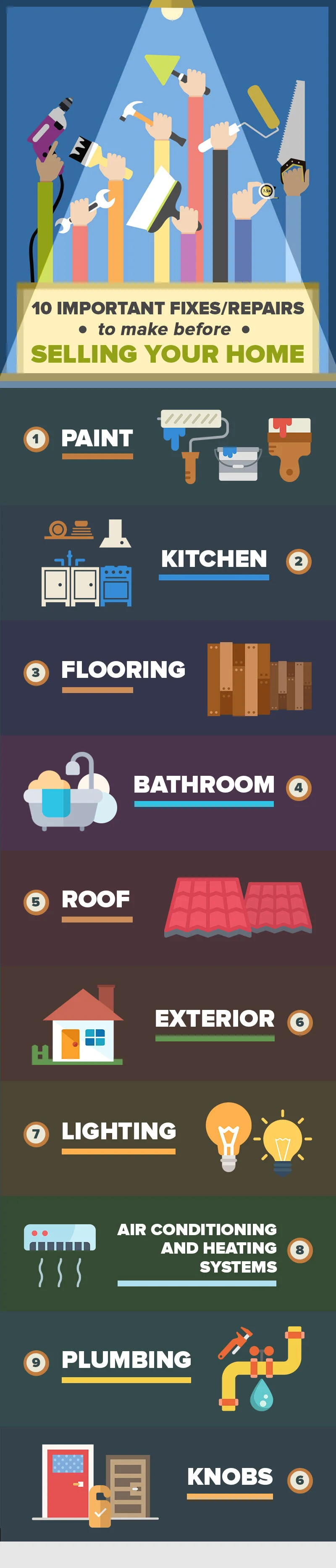
10 Important Fixes/Repairs To Make Before Selling Your Home

If you’re about to sell your home, having it in top shape will definitely up your chances of getting it sold quickly. It shouldn’t just be about making it look beautiful; you have to consider functionality as a major aspect in a buyer’s decision. A buyer will most likely have a professional home inspector check for faults in your home, so it’s advisable for you (with the help of your agent) to address problems beforehand.

1. Paint – Doing this will instantly revamp your home, and it’s one of the most cost-effective methods into making your house look appealing to buyers. Light-colored, neutral tones make your rooms look more spacious and it also makes it look as if it’s blank canvas, where your buyers can help picture how they want it to look once they move in.

2. Kitchen – The kitchen is one of the most functional spaces in a home. You don’t have to stuff it with new appliances to make it look like a dream kitchen, but just make sure to address problems regarding usability. Leaking faucets and old sinks must be repaired, and the dishwasher or range that is out of shape should be replaced. Also check if hinges or tracking in your drawers and cupboards need fixing.

3. Flooring – No one wants to live in a home with sub-par flooring. Buyers prefer hardwood floors, so if your house has that and it’s in good condition, make sure to make it known by removing carpeting. But if you don’t, there are a number of low-cost options such wood plank tiles or highly upgraded laminated flooring.

4. Bathroom – Just like the kitchen, the bathroom is a very functional space in a home. Check for leaky faucets and if necessary, replace caulking in the areas like shower, sink, and toilet to help in keeping the moisture out. Also keep in mind that making it clean goes a long way. Have the toilet as white as possible, and have your grouts steam-cleaned.

5. Roof – If your roof is in bad shape, it’s advisable to cater to this before you set your house up for sale so that renegotiation and price reduction won’t be on the table once a buyer makes an offer.

6. Exterior – Your curb is where buyers get a first impression of your home. Include fences in your paint job, patch up cement cracks in sidewalks, and resurface asphalt driveways if necessary. If you have extra cash to spare, add in bright flowers and plants to spruce up your curb.

7. Lighting – The lights sets the atmosphere of the home – the brighter they are, the more enticing and welcoming your rooms will look. Make sure that lights are working properly both on the exterior and interior of your home. Don’t forget to check if your switches work, too!

8. Air conditioning and heating systems – As mentioned previously, your home may most likely be subject to a house inspection so it’s good to get ahead of them and take care of minor repairs. Having this in top shape will definitely give you an advantage over other sellers.

9. Plumbing – Your house may look good in terms of its aesthetics but if there’s problems in the practical aspects of the home, buyers might step back. You can tend to minor fixtures yourself but if you want to be assured that the plumbing is in a good condition, hire an expert to inspect and fix.

10 . Knobs – They may seem trivial but buyers could be critical of everything. If something as basic as a door knob is not working, buyers might think that the more important parts of the house are not working too.

Buyer September 1, 2017

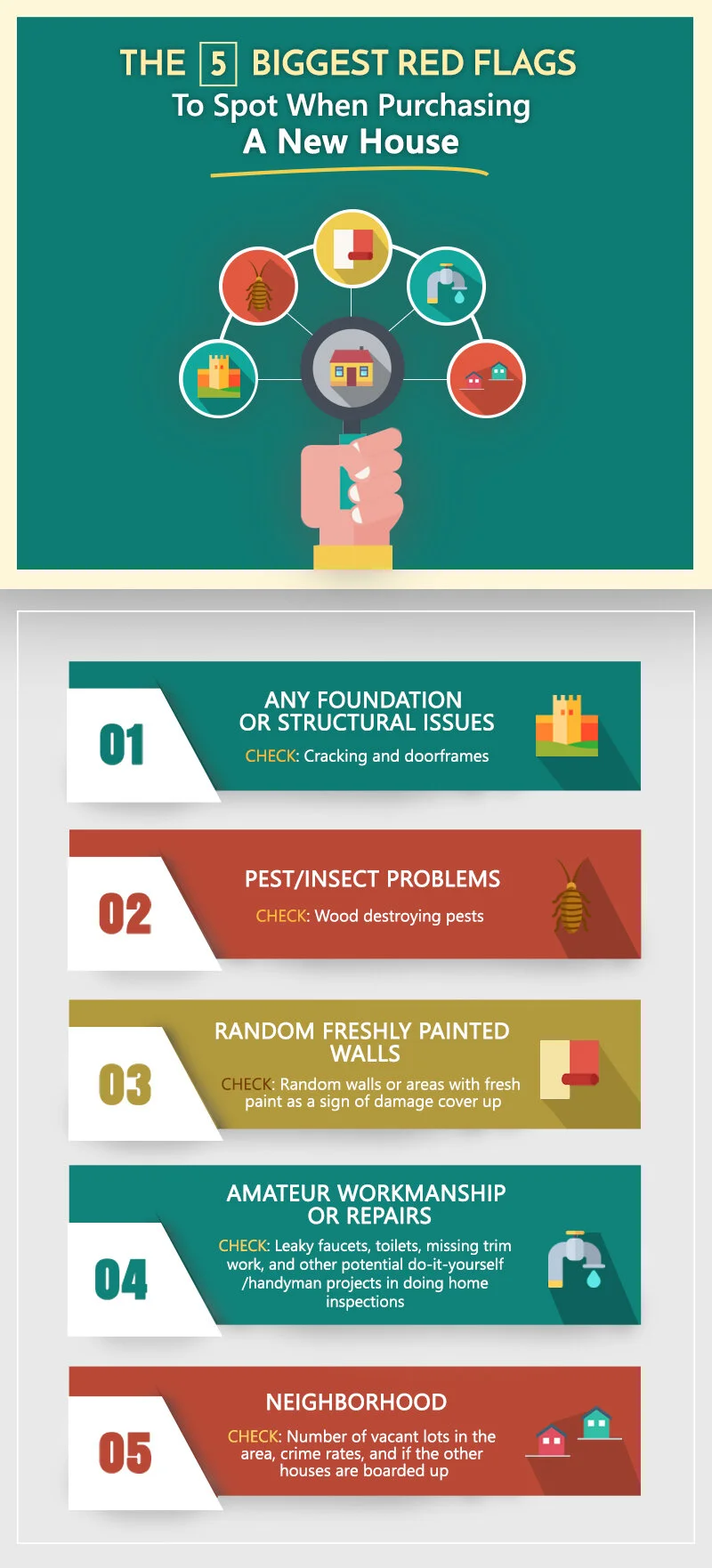
The 5 Biggest Red Flags To Spot When Purchasing A New House

Whether it’s your first time buying a home or have had experience in purchasing properties, it’s very important to be reminded of what can be a problem after the sale has been made. After all, we want to minimize costs and get the best deals. How can this be done? Home inspections are crucial in the process of house hunting. Sure, the house is charming and homey, but there might be some cracks and rotting that are signs of major damage. Here are five of the biggest red flags to spot:

1. Any Foundation or Structural Issues

Cracking is one of the biggest signs to watch out for in terms of foundation problems. Cement settling, for example, may be indicated by small cracks in the basement. Larger cracks on the other hand, may be a symptom of structural integrity issues of the home. You may also take note of unfit doors. If you have a hard time closing and open doors in the house, this may mean a larger structural issue. Specifically, check if the door fits squarely in its doorframe.

2. Pest/Insect Problems

Aside from sending shivers down your spine, having pests in your home may also mean wood destruction. The most common pests you should look out for are termites, powder post beetles, and carpenter ants which may damage your home.

3. Random Freshly Painted Walls

Freshly painted rooms are normal because this makes the property feel clean and fresh. But if only one wall or area of a room looks freshly painted, this may be a sign of the seller trying to cover up a problem. This is automatically a cause of concern, and you should ask about it right away.

4. Amateur Workmanship or Repairs

The older the home, or the longer a family has stayed in it, the more repair work the previous homeowner or another amateur may have done. You will most commonly see this in areas of plumbing, carpentry, and electrical work. It is best to watch out for leaky faucets, toilets, missing trim work, and other potential do-it-yourself/handyman projects in doing home inspections.

5. Neighborhood

Remember, in purchasing a home, you are not only going to live in the specific lot, you will also be living in the neighborhood. If a house seems perfect, and do not have the above red flags, make sure that it also has a neighborhood with an overall good condition. How do you know this? Take note if there are a lot of vacant lots in the area, and if the other houses are boarded up. If you can, also check the crime rate in that particular area—is it increasing or decreasing? This may not only affect your stay in the home, but also the property’s resale value in the future.

Seller August 1, 2017

The Complete Home Sellers Checklist (Exterior Preparation)

Before putting your house on the market, make sure that the exterior of your home has the best chance of passing the standards of even the most meticulous visitors.

It may seem like a daunting task, but don’t be overwhelmed. We made this complete checklist to help you get the job done.