Buyer January 6, 2018

10 Things You Need To Know Before Buying A House Remotely

There are several reasons why you are looking at a property outside of your state – you want or need to relocate, you want a vacation home, you’re looking for an investment, or you’re buying for children. As you might know, buying a house isn’t really an easy task, and maybe even more so if it’s not within your local area. The whole process would double your need for time and money resources if you want to be more hands on it. But if that mode can’t fit into your busy schedule and tight budget, here are some tips to help you with buying a house remotely.
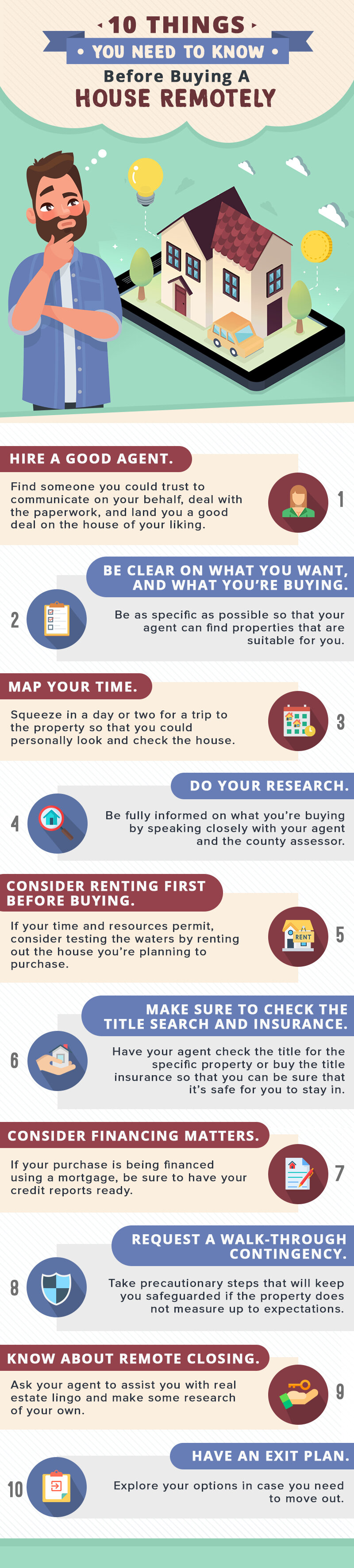
  1. Hire a good agent.

    It’s always important to hire a good agent when you’re buying property because they’re the ones who would communicate in behalf of you to the sellers, would deal with most of the paperwork, have you in the know on some real estate jargon, and optimally, put you up with a good deal on the house of your liking. And if you’re buying outside of your state, they would act as your proxy which means that your agent would have to deal with nearly the entire home-buying process. Do your homework; research and ask for suggestions from trusted friends so that you can make sure that you find an agent that you could communicate well with. You could have a pool of choices and conduct and interview. If you want to know the right questions to ask during an interview, see How To Choose The Right Real Estate Broker.
     

  2. Be clear on what you want, and what you’re buying.

    It’s good that you are clear on what you want on your house so that your agent can find properties that are suitable for you. Make a list and give him or her examples of houses with features that fit your needs and liking. But don’t just settle in giving them details about the aesthetics and layout! Also give your agent details about your preferences in the neighborhood, whether you want it close to schools and hospitals or if you want it to be in a tranquil, secluded area. Also, list down things that you want to be sure of will be included in the sale such as fencing and fencing posts, benches, feeders, shelters and livestock pens, existing farm or hunting leases that give other people the right to be on – farm, graze, hunt, or camp on.
     

  3. Map your time.

    Consider your schedule. If you could squeeze in a day or two for a trip to the property, that would be good so that you could personally look and check the house. But if your busy life doesn’t permit it, still give it ample time in your schedule to have meetings with your agent and your lawyer so that you can be assured that things are doing well and even if you’re not firsthand dealing with the transaction.
     

  4. Do your research.

    Buying a house is a serious task that involves a hefty amount of resources such as time and money, so be sure to be well-informed on what you’re buying. First thing to consider is that you might want to select a property in an area that features healthy housing markets and a strong economy so that your financing doesn’t fall through. Also, if you want to be sure of what you’re buying and will be taxed on, you (or your agent) will need to visit the county assessor’s office. Compare the information on the property from the office with that from what the seller is listing. If you find any discrepancies, talk to the assessor to find out why. Another important matter to consider, especially now that you want to purchase in a rural area is to check their rural resources. Acquaint yourself with the County USDA Farm Service (FSA) office so that you could be familiarized with conservation issues such as erosion control, wildlife habitat, pond construction and other challenges that you may not be ready for as a city dweller. They can tell you about the resources you may need and answer your questions about rural living.
     

  5. Consider renting first before buying.

    Moving from the chaos of the city to the peace and quiet of the rural seems like a good and refreshing idea. But sometimes, ideas just look good in your head. If you have the luxury of time and money to test the waters and rent out the house before you buy it, consider doing so. According to Paula Pant from AffordAnything.com, an expert on buy-and-hold real estate investing, it’s worth a try to rent first since housing is an investment that cannot easily be liquidated. She suggests spending at least 6 months in the place. This could brace you and your family for life away from the city. You could also have the chance to familiarize yourself with the area and the house to see if it suits your lifestyle or if it’s worth making a switch in your lifestyle to.
     

  6. Make sure to check the title search and insurance.

    If you’re buying a rural property, it’s possible that the land has been listed as a dump-site or a hazardous waste site. Have your agent check the title for the specific property or buy the title insurance so that you can be sure that it’s safe for you to stay in. Another issue that could be addressed by checking into the title is for avoiding liens or encumbrances. This will make sure that the property is really owned by the seller, if there are any tax liens or legal actions against the property.
     

  7. Consider financing matters.

    You know that a real estate purchase can be financed using a mortgage. If you want to purchase through this way, have your credit reports ready. The leveraging offered by financing is a huge advantage to you as a buyer, but there are some caveats to consider if you’re buying the house as an investment. According to Bankrate, mortage insurance doesn’t cover investment properties, which means that you have to pay more than 20% of the total purchase price to gain financing.
     

  8. Request a walk-through contingency.

    If you haven’t had the time to physically see the property, it’s advisable to negotiate in the contract a walk-through contingency so that if the property does not measure up to expectations in person, you will be safeguarded. Do take note though that sellers are not required to agree to it and may ask for a higher purchase price in order to comply.
     

  9. Know about remote closing.

    When you’re about to close the deal, remember that purchase paperwork is full of a lot of lingo that you may not understand as a buyer. Have your agent assist you with those and make some research of your own. Also remember that remote closings hinge on the ability to locate a mobile notary, so you’ll need to ask your lender, agent, or title company for recommendations early on in the process.
     

  10. Have an exit plan.

    In case you need to move out for some reason, assess what’s the best option for you to make and consider the time and costs involved. Would it be better to rent the place out or sell it? Have yourself and your trusted agent assess what option could be a better return for your investment.

Buyer December 29, 2017

An Expert Guide On Buying A House You Can Actually Afford

Purchasing your first home can be the largest financial decision of your life, but it can also be an exciting financial milestone. However, while a trusted realtor will offer you invaluable advice, you will still need to do a lot of work to have a good sense of a realistic budget. Only you can determine how much you can really afford, and the biggest mistake you can make will be to overlook some important details of your financial situation. Strive to be very careful, and let this list guide you towards making the right decisions.

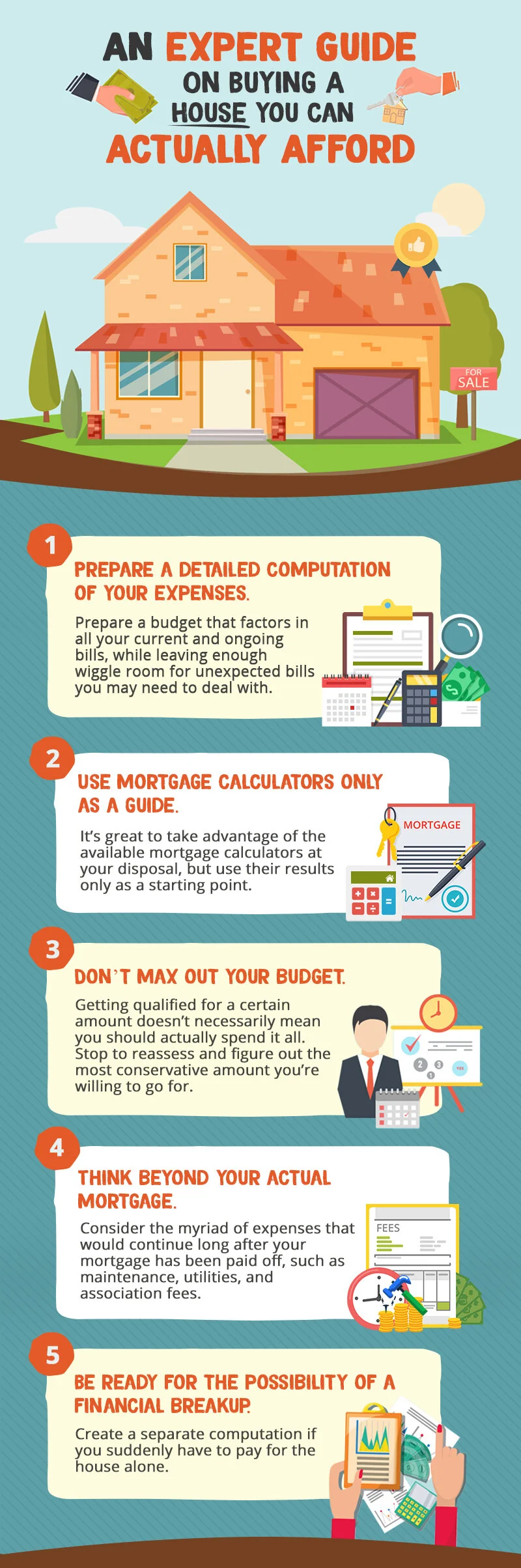
1. Prepare a detailed computation of your expenses.
 
Prepare a budget that factors in all your current and ongoing bills, while leaving enough wiggle room for unexpected bills you may need to deal with. An old rule you’ll be unwise to follow still is allowing yourself to buy a home that is priced two to three times your gross income. This computation doesn’t take into account your debts and monthly family expenses. Make a list of everything you pay for on a monthly basis, including credit cards, student loans, car amortizations, savings, and even date nights with your spouse. Allot a fixed budget for each so that you can have a precise idea of exactly how much would be left to spend on homeownership costs.
 
2. Use mortgage calculators only as a guide.
 
It’s great to take advantage of the available mortgage calculators at your disposal, but use these only as a starting point. Take a closer look at the results and make further computations based on the stability of your income and how personal choices in the future may affect your cash flow. Are you planning to have a baby in the next two to three years? Are you thinking of going to graduate school? These kinds of plans will have a major impact on your finances, so make accurate predictions and think as far ahead as you possibly can.
 
Also note that very few calculators will be thorough enough to allow a holistic look at your current financial situation, so be careful with the ones you choose to use as you may end up overestimating your financial capacity. Try slashing a good 20% off the affordability results shown by the typical online calculator, and you’ll see that this figure is a more realistic or practical amount.
 
3. Don’t max out your budget.
 
Getting qualified for a certain amount doesn’t necessarily mean you should spend it all. The costs of homeownership are highly variable since property taxes and insurance costs change every year. However, most lenders will qualify you for a mortgage payment based on your dues for the current year and will leave no room for adjustments should your expenses go up in the following years. This is why it is essential to figure out the most practical way to spend the amount you’ve been approved for.
 
4. Think beyond your actual mortgage.
 
Consider the myriad of expenses that would continue long after your mortgage has been paid off, such as maintenance, utilities, and association fees. Some of these fees are even likely to increase over time, so it’s best to do the math and figure out if you’ll be comfortable handling all these simultaneous expenses.
 
5. Be ready for the possibility of a financial breakup.
 
While the possibility of a breakup between you and your spouse sounds impossible at the moment, it is still advisable to cover all your bases and be comfortable with the idea of paying for the house alone. This doesn’t mean that you’re preparing for an inevitable separation – this can simply help determine whether you’ll be able to shoulder your monthly dues if your spouse suddenly loses his/her job, or if he/she cannot contribute for a particular stretch of time. This will also help you avoid taking such a risky loan.

Buyer December 29, 2017

5 Ways To Be A Wise Home Buyer By Balancing Logic And Emotion

Buying a home is a big decision that could both be exciting as it is daunting. There would definitely be a lot of emotions involved in every scenario – whether you’re moving from an old house with your family, or making your first buy and just starting to build your own family, your emotions will play a part in your decision making. Be wary though that deciding on that alone can make much room for mistakes like lure you into sketchy deals and overpay for perfection.

It’s important to strike that balance between emotional and logical thinking. For instance, you can list down the qualities that you want in a home or if you’re more visual, make a dream board of your dream home. Now that you have that in tow, make your research – check for homes that fit the bill within the area of your liking and which best suits you and your family’s needs, etc. And of course, don’t forget to check your finances. This mindset can get you both the house of your dreams and a good deal.

Here are ways you can be a wise homebuyer:

1. Hire a good agent you can trust. Getting a professional on your side can hook you on the house of your liking since they know the local market the best, and they could also minimize risks in buying a home because they know how to deal with sellers without you getting on the losing end. For example, there are marketing buzzwords such as “short sale” and “real estate owned” which are designed to entice buyers into thinking they are buying way below market value when they’re actually overpaying.

2. Don’t think that there would always be a better deal. It’s true that mortgage rates might decline and prices could drop further, but playing odds won’t be the best of moves because no one can surely predict what happens in the market. Remember that fluctuations are always an element in real estate transactions, and the only way to get around this is to do your homework, know the value of the area and home you are buying, and discuss them with your agent.

3. Maybe the first stop isn’t the best stop. This somehow goes against the previous item but don’t make the mistake of falling in love at first sight for a house and thinking that it’s the best that you could get based solely on what meets the eye. There are a lot of things to consider such as your finances, and some parts in the home that could need major fixing that you may not be aware of at first sight. Try to look around the houses in the local market with your agent so that you could get a good grasp of your choices.

4. Have an eye out for functionality. A buyer that allows her emotions to cater to her decision making would intuitively assess the layout and features of the house in terms of its functionality. She could envision life in the home and how each space can be made to meet the demands and caprices of everyday living. Sometimes the most important information are not in numbers — if you’re too logical and are stuck with hard numbers of square footage, you might miss the value of how the layout and features of a house could cater to you and your family’s needs.

5. Envision the memories that you and your family can make in your future home. This is also in the realm of using emotions to the advantage of your decision making as a home buyer. If the house has a feature of a playground, you can imagine your kids spending their afternoons there with their friends while you make them snacks in your spacious kitchen. These may seem like simple things, but remember that you will spend years in this future home and this is where you will make memories with your loved ones so it’s a good thing to consider that. You CAN be a little bit sentimental and still maintain your sense of objectivity.

BuyerVacation Home December 28, 2017

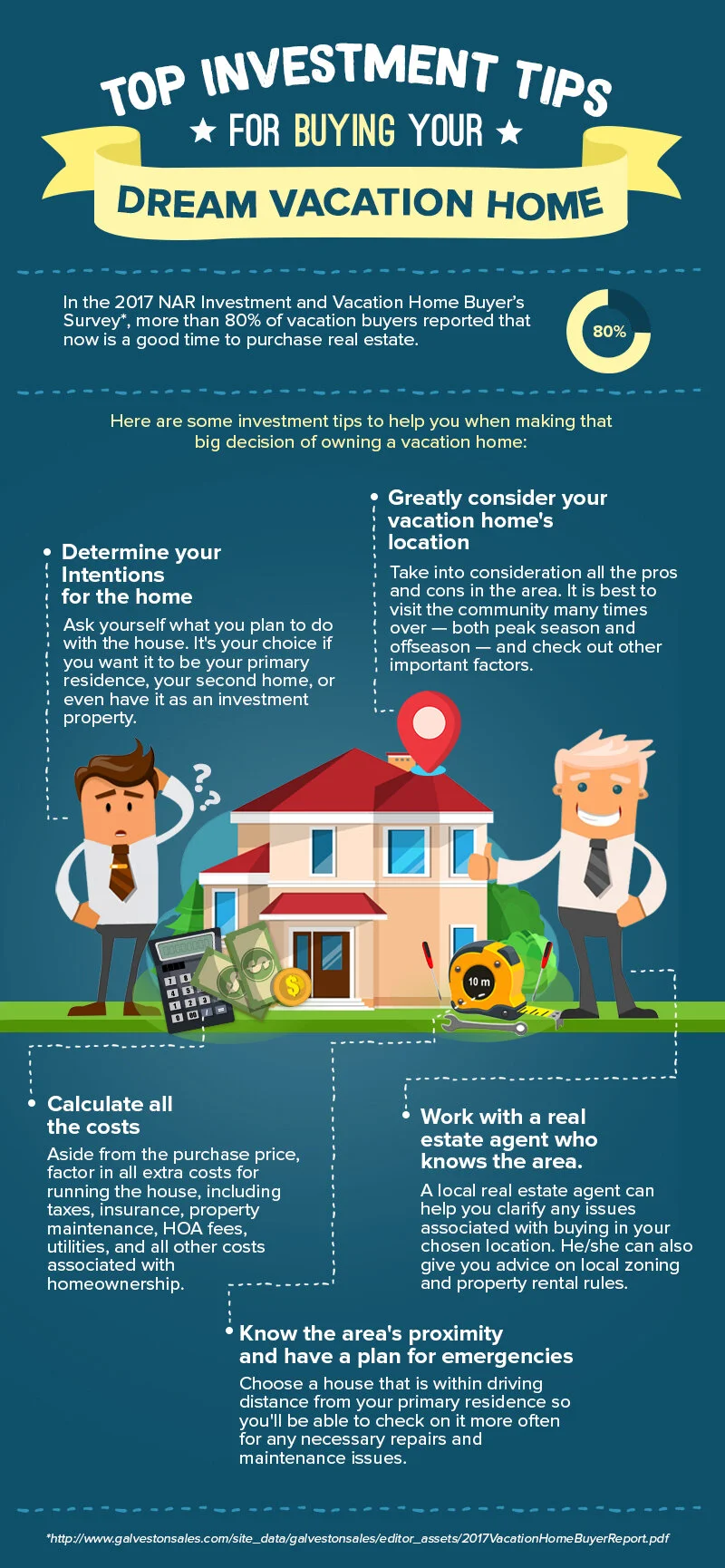
Top Investment Tips for Buying Your Dream Vacation Home


If you’re the adventurous type who’s always itching to get on a holiday weekend on your favorite beach, or you want to experience living in the countryside more often, chances are you have been thinking how nice it would be to have your own vacation home.

And although owning a vacation home is a decision that shouldn’t be taken too lightly, it can also be profitable (and enjoyable) in the logistical and financial sense. In the 2017 NAR Investment and Vacation Home Buyer’s Survey, more than 80 percent of vacation buyers reported that now is a good time to purchase real estate. For some people, it is a matter of money and responsibility, and the process could be too intimidating. But for some, it might be a matter of experience and recreation, especially for those who are looking to have a retirement place in the future.

Here are our investment tips to help you with your decision:


Determine your intentions for the home

Ask yourself what you plan to do with the house. Aside from enjoying it over the holidays, would you like to rent it out during the off-peak season? You need to consider how you want to use and own your property for financing and tax issues. It’s your choice if you want it to be your primary residence, your second home, or even have it as an investment property. According to NAR*, at least 42 percent of vacation home buyers plan to use their property for vacations or as a family retreat, while 18 percent plan to convert their vacation home into their primary residence in the future for retirement.

Meanwhile, 37 percent of investment property buyers purchased the home to generate income through renting the property. You can rent the home and even use it when it’s not rented. Tax treatment is less beneficial if you’ll use it as an investment, but the extra rental income can help you with the costs.


Greatly consider your vacation home’s location

Even if you’re lucky enough to have found your “magical place,” you still need to take into consideration all the pros and cons in the area. It is best to visit the community many times over — both peak season and offseason — and check out other important factors such as the condition of roads in any time of the year, neighborhood safety, access to nearby shops and public transportation, and others. Spend more than a few weekends there and talk to the locals about any day-to-day hassles they may be encountering.


Calculate all the costs

The purchase price of your vacation home isn’t the only thing that needs to be taken care of. You need to factor in all extra costs for running the house — from taxes, insurance, property maintenance, HOA fees, utilities, and all other costs associated with homeownership. You might also want to consider the travel costs to your vacation home. It is also advisable to plan for personal budget items that lenders don’t use in their qualifying calculations, such as furniture and housewares. You’ll also need a budget for special equipment needed for properties near the beach or resort.


Work with a real estate agent who knows the area

Your chosen country town may look great; picturesque even. But you might want to consider the state of roads leading into the area during winter. You will also need advice on local zoning and property rental rules. A local real estate agent who knows the area by heart can help you clarify any issues associated with buying in your chosen location. The agent can also help you envision your dream vacation home in any season, and is a great resource for any information related to the community.


Know the area’s proximity and have a plan for emergencies

They say the best vacation homes are easy to get to and have alternate routes to avoid traffic. It is also smart to choose a house that is within driving distance from your primary residence so you’ll be able to check on it more often for any necessary repairs and maintenance issues.

*2017 NAR Investment and Vacation Home Buyer’s Survey

Empty Nester December 26, 2017

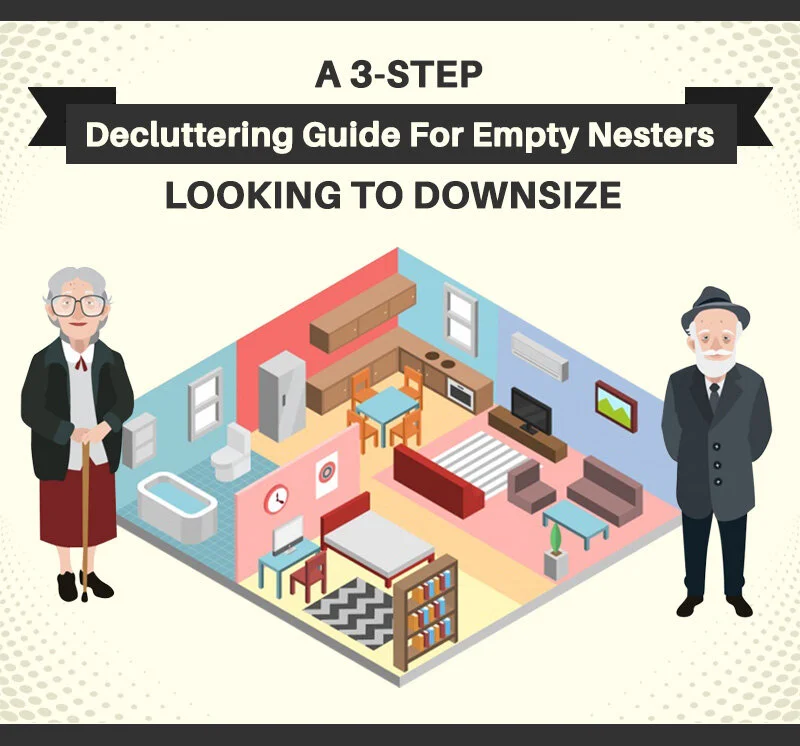
A 3-Step Decluttering Guide For Empty Nesters Looking To Downsize

Before even planning to move to a more size appropriate home, serious decluttering should be your utmost priority.

Deciding which items to give up is a time-intensive process because of everything you want to keep – be it for sentimental reasons, or the belief that you’ll still be able to use them someday. It may take weeks of discussion before you and your spouse agree on keeping an old coffee table or donating some of your favorite kitchen appliances – so it’s best to start early.

Remember that you don’t need to declutter your entire home all in one day. Start with the easiest room to declutter, and work your way through your house carefully. Here’s a simplified guide on how to tackle this seemingly daunting task.

When decluttering, it’s best to keep your process simple: Label everything with Discard, Donate, or Sell. Everything that doesn’t fall into these categories are the items worth keeping.

1. Discard the things that can no longer serve their purpose to anyone.

Most empty nesters find it hard to dispose of things that have been in the family home for a long time, even if they no longer serve their function and simply just take up space in a room. However, this will not serve you when you downsize, since you’ll be needing to use up space wisely.

2. Donate the things that you no longer use but can still be used by people who need them more.

Rummage through your things for spare clothes, kitchen supplies, and other usable items that no longer get used in your home. As a general rule, if you haven’t used an item for more than a year, it’s probably not important to you anymore. If you’re not comfortable selling them, give them away to friends or to relatives who may need them more.

3. Sell the things that you can’t just throw or give away.

Some of your stuff is just too expensive to give away, but keep in mind that not all of your antique furniture and large appliances may fit in your new home. Reassess the value of these items, or have an expert do it for you. Once you all agree on the prices, you can then put them up for sale. In this age, you’ll be surprised how quickly you can sell something online. The money you raise by selling some of your things can also be used to buy more appropriate replacements that can fit inside your new home.

Dealing with a newly-empty nest can be quite emotional and stressful, but getting rid of unnecessary clutter is a great way to be more positive about moving into this next phase of your life. Letting go of a few old things simply mean making room for new and better things.

BuyerLuxury Home December 22, 2017

7 Expert Tips For Buying Your Dream Luxury Home

Planning to buy your first luxury home? Best be prepared by following these seven expert tips!

1. Build your dream team of experts.

When buying a luxury house, it is highly recommended that you employ the help of an excellent real estate agent, a trusted financial advisor and accountant, and a lawyer who will be ready to walk you through local tax and property law.

Choose a real estate agent that has a solid track record in the luxury housing market. While it is fine to call your trusted agent, your first luxury home purchase may need the expertise of someone who has already had success in dealing with this unique sector. The right real estate agent will have gleaming testimonials and reviews from satisfied luxury home buyers, preferably from the area where you are planning to purchase your luxury home.

Look for a trusted financial advisor and accountant who will truly have your best interests at heart. Hiring a lawyer who is familiar with local tax and property law will also save you a lot of time and headache down the line.

When you successfully put together a great team that will guide you through this luxury home-buying process, you can expect to have the keys to your dream luxury home in the quickest possible time.


2. Make sure your dream luxury home is also in a dream location.

Research the entire vicinity of the home you are eyeing. If you’re planning to purchase a luxury home to retire in, you may want to choose one that is located in a sparsely populated area, or one that will offer you a stunning view of the city that surrounds it.

Since location has a significant impact on taxes, travel time, schooling, and other areas of your lifestyle – you may want to take your time researching which luxury home location suits your purposes best. If you’re planning to add more features to your home such as a large veranda, pool, or a massive garden, you have to make sure that the house you’re going to buy is not in a densely populated area. Which is to say that you can’t rely on online listings alone; getting a feel of the house itself, as well as its surrounding community is the best way to gauge the quality of a home’s location.


3. Familiarize yourself with the pre-approval process.

The process of applying for a mortgage to buy a luxury home is entirely different from getting a conventional mortgage. Lenders may require a credit score of 680 or better – and the better your credit score is, the lower your interest rate will be. Your team of experts will know about this so do not hesitate to talk to them about your concerns. Being knowledgeable of the differences between getting standard mortgages and luxury home mortgages will better prepare you for the home buying process.


4. Keep an eye on “pocket listings”

A lot of high net worth individuals do not market their listings publicly. Their listings are only shown to pre-screened, qualified buyers who can show proof of financial capacity to make a multi-million dollar purchase. As you won’t find their homes listed in the MLS, it is best to make sure that your realtor is in contact with other luxury agents who can help show you pocket listings that may suit your standards.


5. Take note of the resale value of the luxury home you’re planning to buy.

While your decision to purchase a luxury home must align with your unique tastes, you must always consider how a particular home will appeal to future buyers should you decide to resell. If you think you’ll be having resale challenges due to the unique nature of a luxury home, it is best to negotiate an excellent price to offset said challenges.


6. Have a checklist of your priority features.

When looking for the perfect luxury home, it is best to know exactly what you want. Having a checklist of features you want to have in a home will keep your priorities in check, and will prevent you from making an emotional purchase (i.e., when you get lured into buying a house with a massive pool that you don’t need). Is your privacy the most valuable thing to you? Make sure your potential home isn’t located in an area where passersby can’t easily take a peek into your home. Do you spend most of your free time cooking? You may want a house with a beautiful, Tuscan-style kitchen. Knowing what you want from the get-go will make it easier for you to narrow down your options.


7. Consider foreclosure listings.

If you want to purchase a luxury home that is being sold considerably below its actual value, checking out foreclosed properties can be your best bet. Roughly 60% of foreclosed homes can be financed through your lender of choice, so you don’t have to worry about buying with cash. Consult with a home mortgage consultant to determine whether it would serve you better to use financing or to buy with cash.

Keep in mind though, that buying foreclosed homes means that you’re buying it at its current state, and no upgrades will be made available to you before the big purchase. While you’ll be able to save money by buying a foreclosed home, you have to factor in the amount you’ll be spending on repairs and upgrades. Hire a trusted home inspector to check whether you’re overspending by purchasing a foreclosure.


BuyerMilitary December 22, 2017

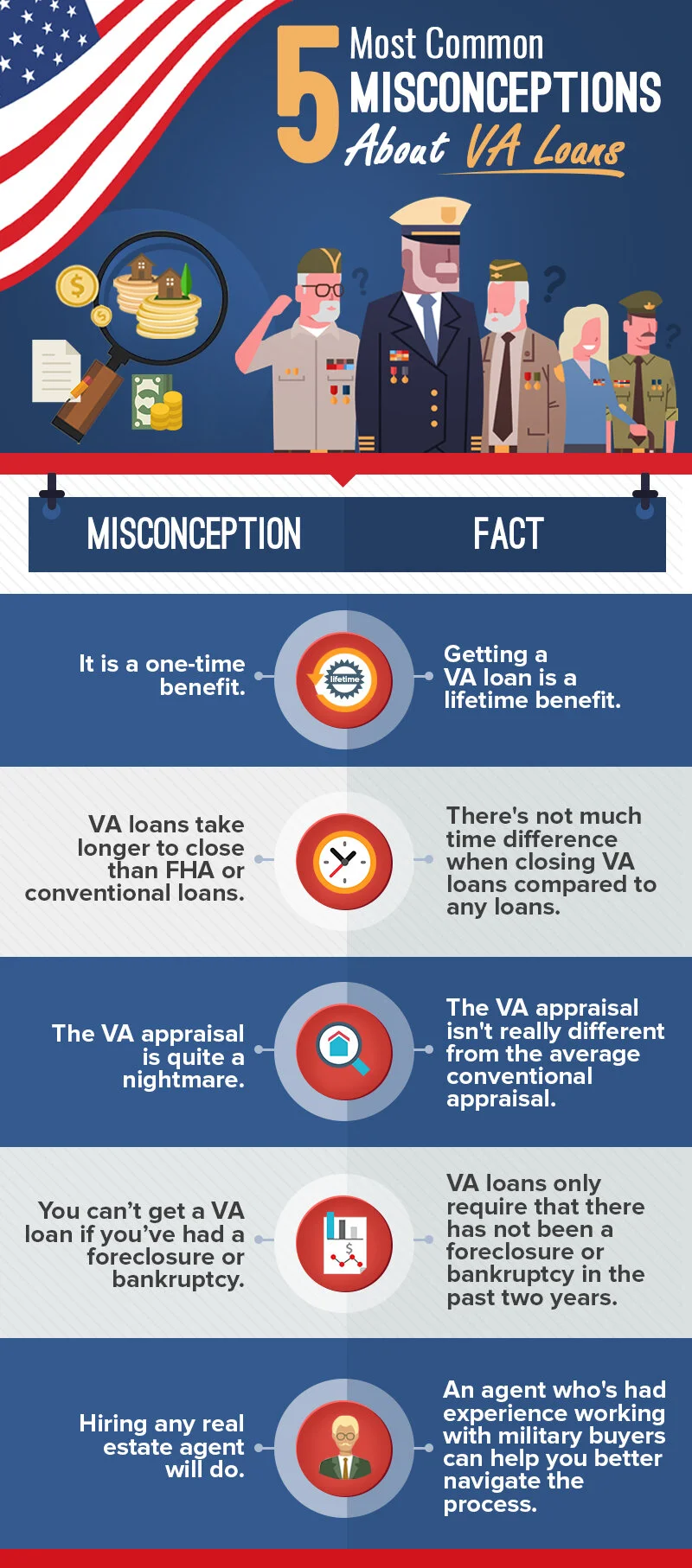
5 Most Common Misconceptions About VA Loans

The Veterans Affairs home loans are unique mortgage options that allow current and former members of the military to own a piece of the American dream by potentially qualifying for homes that they might have thought to be out of reach.

Veterans, active-duty service personnel, and select Reservists or National Guard members are among those who can qualify for VA loans. These flexible loans come with outstanding benefits like no down payment, no mortgage insurance, more lenient credit requirements, and also have the lowest average interest rates on the market.

The National Association of Realtors (NAR) 2017 Profile of Home Buyers and Sellers showed that 18 percent of recent home buyers are veterans, while three percent are active-duty service members.

However, misinformation and misconceptions about VA loans continue to hinder many veterans from actually benefiting from this program, which is a tangible way of showing gratitude towards their service to the people and the nation.

#1 Misconception: It is a one-time benefit.

FACT: Getting a VA loan is a lifetime benefit.

Some veterans think that they must use the benefit immediately or lose it, or that if they used it once, they can’t use it again. The reality is that it is a lifetime benefit. You can use it again to purchase another property, as long as you have paid off your previous VA loan.


#2 Misconception: VA loans take longer to close than FHA or conventional loans.

FACT: There’s not much time difference when closing VA loans compared to any loans.

Many home buyers think that VA loans take more than 60 days to close, but it certainly isn’t true. The process has become much more automated and efficient with the Guaranty Program, and it can now be closed in 30 days or less.

Similarly, the average VA mortgage closes in 45 days, according to mortgage industry analysts Ellie Mae. While the average closing time for all loans is 42 days, which only has a three-day difference.


#3 Misconception: The VA appraisal is quite a nightmare.

FACT: The VA appraisal isn’t really different from the average conventional appraisal.

Unless the buyer pursues a home in a very poor condition, then the appraisal process could really be terrible. The truth is that only VA-approved appraisers inspect the homes to make sure they meet minimum property requirements, and to make sure that they are “safe, sound and sanitary.” VA appraisers also tend to have stricter standards than a typical home appraiser. Otherwise, if the service member chooses a home that is in good condition, then the VA appraisal will be a breeze.


#4 Misconception: You can’t get a VA loan if you’ve had a foreclosure or bankruptcy.

FACT: VA loans only require that there has not been a foreclosure or bankruptcy in the past two years.

VA loans are more lenient than other loan products when it comes to bankruptcy and foreclosure. In some cases, it is also possible to get a loan within a year. This is a much shorter period compared to what FHA loans and conventional mortgages require, which includes a 3-year waiting period.


#5 Misconception: Hiring any real estate agent will do.

FACT: An agent who’s had experience working with military buyers can help you better navigate the process.

While any realtor can technically help you, finding a military-friendly real estate agent who particularly had experienced working with military buyers before — and have the time to focus on your needs — can make a world of difference. For many veterans, housing needs go far beyond the usual housing criteria, such as the number of bedrooms, price range and location. An agent who specializes in VA loans can help save you an awful lot of headaches as they better understand the loan process, the VA appraisal, and has a special eye and heart towards your specific situation.

Empty Nester December 16, 2017

EMPTY NESTERS: Top 5 Reasons Why It Could Be Wiser To Sell Than To Renovate

It may seem like a daunting task to sell your home rather than to renovate – the process looks tedious, and you and your family may have emotional attachments to your home. But there are a lot of pros that side with selling your home that you may not know or may not have considered.

1. Home renovation actually costs a lot more than you think! If your home has been sitting for too long, it could actually cost less monthly when you purchase a new home. Also take into account the amount of equity you hold and the types of renovations you’re considering. 

According to Rob Caulfield, director of Archicentre, the building design and advisory service of the Australian Institute of Architects, renovating more than 50% of a home has to be made to comply with current building regulations. This could possibly mean getting new wiring, plumbing, and new energy rating – so basically a whole part of the house may need to be insulated and the cost can be quite hefty. Take note that you may also need to hire professionals and that a contingency fund for cost and time overruns are necessary. If you intend on financing renovation costs, use a mortgage calculator to determine just how much your existing mortgage and a renovation loan/ home equity loan or line of credit would cost versus a new home mortgage.

2. There are little returns to renovating your home. No matter how good you think your renovations will upgrade your home, keep in mind that no renovation will produce a 100% return.

Based on a recent study, you will recoup only 64.4% of a remodeling project’s investment dollars if you do sell in the future. So if you do plan to sell, just prioritize the important parts of the home that need fixing such as the roof, the kitchen, and plumbing.

3. A new home environment entails a fresh start at life. If you’ve stayed in a single area in a long while, you may be feeling burnt out with seeing the same spaces every day. Sure, the familiar is comfortable, but moving to a new place may give you and your family a refreshed perspective because you’re now located in a different living space. 

Another noteworthy benefit of selling and buying somewhere new is you can accommodate the current, and future, needs of your family without going through the mess of renovating.

4. Renovating can be a major hassle. Take inventory of your skill set and ability to manage and deal with contractors, as well as renovation costs for major renovations. If you haven’t done all these before, there may be a lot of room for budget overruns and unexpected complications.  

5. You might just come across your dream home. If you get an agent that can help you sell your house and hook you up with ones that fit your family’s wants and needs, you might just get a hold of your dream home without all the hassle and hefty costs of renovation.

Sure, renovation can be a good idea, too. But don’t dismiss the chances of you getting a better deal by selling your house instead. Talk it over with a professional baefore making your final decision.

Empty Nester December 8, 2017

Tips for Empty Nesters and Why Downsizing Your Home Could Mean “Living The Dream”

While owning a home remains the American Dream, “aging in place” or staying in one’s own home as you age is also considered part of it.  However, staying at your bigger home isn’t always the best option. And as you get older, downsizing or settling into a smaller home could also be one definition of “living the dream” and aging in place.

Older Americans, more of whom are homeowners, are now more likely to downsize. At least 37 percent of baby boomers said they plan to move at some point in their life, and 42 percent of that number said they would prefer to live in a smaller home, according to a 2016 study released by the Demand Institute, which is jointly operated by the Conference Board and Nielsen.

In an article by Time Magazine, the current US housing market is said to have more good news towards the empty nesters and homeowners who are looking to downsize, so many are calling it the “empty nester’s housing market.” Builders and developers are now catering to the 55+ crowd or the Baby Boomer market, creating more age-restricted communities, compact townhouses, and even high-service luxury condominiums.

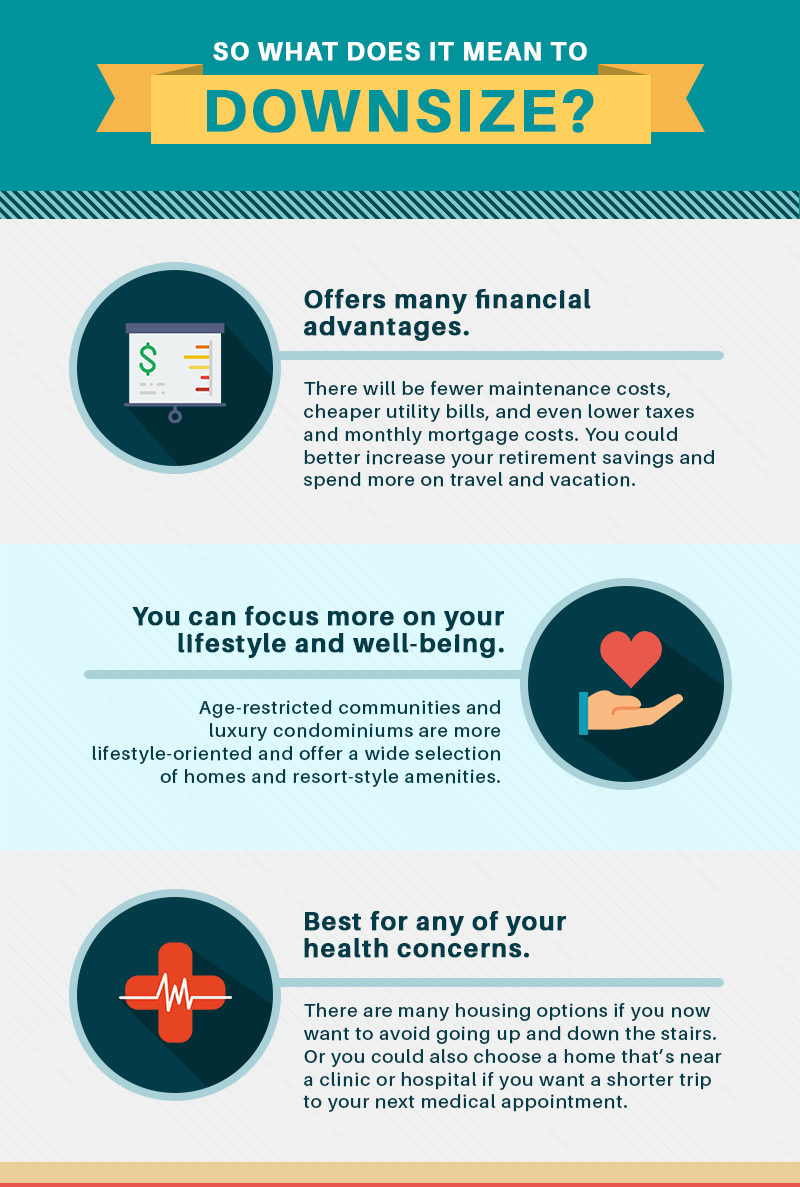
SO WHAT DOES IT MEAN TO DOWNSIZE?

While downsizing may be daunting at first, it offers many financial and emotional benefits in the longer run. People who are taking the proactive approach see and do it out of necessity, choosing to downsize before they get older and it becomes more difficult to do so.

Offers many financial advantages. While your six-bedroom farmhouse with a spacious garden holds so many memories of your children, maintaining it now takes time and has larger costs compared to living in a two-bedroom flat. Downsizing means there are fewer maintenance costs, cheaper utility bills, or even lower taxes and monthly mortgage costs. A smaller house also undoubtedly has fewer rooms to clean. This is a great chance to increase your retirement savings and allocate this fund for other better investment options, or you can even spend more time in travel and vacation.

You can focus more on your lifestyle and well-being. Especially in age-restricted communities and luxury condominiums, the focus is not only on the accessibility of the place to main city places and attractions, but it’s more lifestyle-oriented as well. These communities offer a wide selection of homes and resort-style amenities and better accommodate active retirees, making them ideal retirement destinations. You can focus more on engaging yourself in new activities and hobbies you’d always been dreaming to do.

Best for any of your health concerns. While we always say that we’re “as young as we feel,” we may encounter some health problems as we age. There are many housing options if you want to avoid going up and down the stairs because of arthritis or fear of falling when doing your own cleaning. You could also choose a home that’s near a clinic or hospital if you want a shorter trip to your next medical appointment.

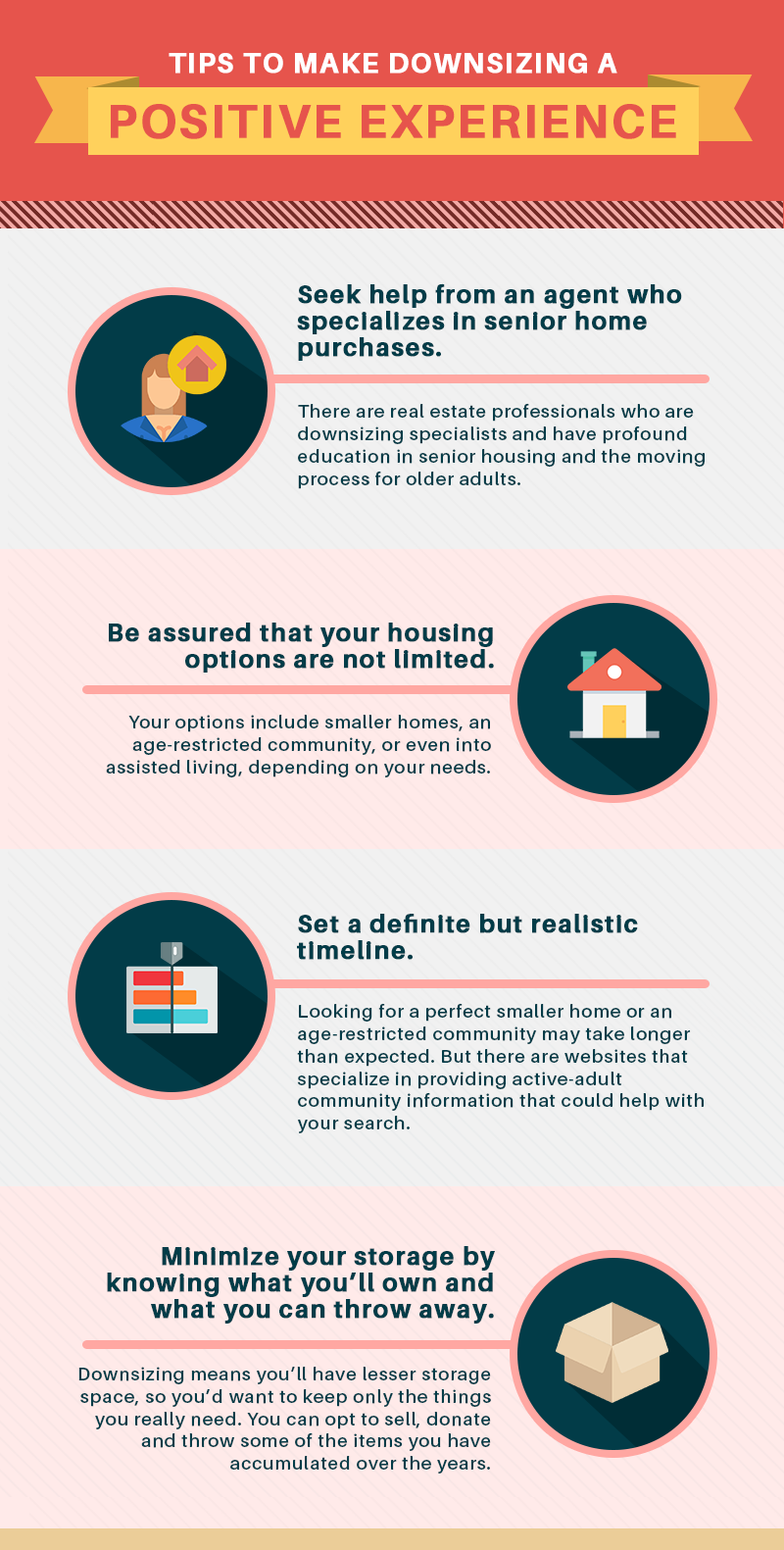
Here are some tips to make downsizing “rightsize” and a positive experience:

Seek help from an agent who specializes in senior home purchases. The purchase process itself for this kind of communities is not much different from any home purchase, except that there’s a level of detail in selecting a home that allows you to live exactly as you want. There are real estate professionals who are downsizing specialists and have profound education in senior housing and the moving process for older adults.

Be assured that your housing options are not limited. Whether you’re looking into moving to a smaller home, an age-restricted community, or even into assisted living, remember to choose a home that meets your needs and current lifestyle, where you’ll be more comfortable and happy.

Set a definite but realistic timeline. Unlike when buying your first house, looking for a perfect smaller home or an age-restricted community may take longer than expected. There are websites that specialize in providing active-adult community information to help with your search. Many people are also starting to look for these areas two or three years before making a purchase. Just remember that you are now looking for the perfect location and community that suits your needs.

Minimize your storage by knowing what you’ll own and what you can throw away. Downsizing also means you’ll have lesser storage space, so you’d want to keep only the things you need. You can opt to sell, donate and throw some items you have accumulated over the years, and just keep those that you deem valuable or those things that have increased their value over time. Experts also recommend doing an estate sale once you’ve sorted out your items, so you’ll be able to collect money as well. If you’re having a hard time to let go, just remember that the true memories and experiences you’ve had are indefinitely stored in your mind and heart and not in these physical items.

Empty Nester December 8, 2017

Tips for Empty Nesters and Why Downsizing Your Home Could Mean “Living The Dream”

While owning a home remains the American Dream, “aging in place” or staying in one’s own home as you age is also considered part of it.  However, staying at your bigger home isn’t always the best option. And as you get older, downsizing or settling into a smaller home could also be one definition of “living the dream” and aging in place.

Older Americans, more of whom are homeowners, are now more likely to downsize. At least 37 percent of baby boomers said they plan to move at some point in their life, and 42 percent of that number said they would prefer to live in a smaller home, according to a 2016 study released by the Demand Institute, which is jointly operated by the Conference Board and Nielsen.

In an article by Time Magazine, the current US housing market is said to have more good news towards the empty nesters and homeowners who are looking to downsize, so many are calling it the “empty nester’s housing market.” Builders and developers are now catering to the 55+ crowd or the Baby Boomer market, creating more age-restricted communities, compact townhouses, and even high-service luxury condominiums.

SO WHAT DOES IT MEAN TO DOWNSIZE?

While downsizing may be daunting at first, it offers many financial and emotional benefits in the longer run. People who are taking the proactive approach see and do it out of necessity, choosing to downsize before they get older and it becomes more difficult to do so.

Offers many financial advantages. While your six-bedroom farmhouse with a spacious garden holds so many memories of your children, maintaining it now takes time and has larger costs compared to living in a two-bedroom flat. Downsizing means there are fewer maintenance costs, cheaper utility bills, or even lower taxes and monthly mortgage costs. A smaller house also undoubtedly has fewer rooms to clean. This is a great chance to increase your retirement savings and allocate this fund for other better investment options, or you can even spend more time in travel and vacation.

You can focus more on your lifestyle and well-being. Especially in age-restricted communities and luxury condominiums, the focus is not only on the accessibility of the place to main city places and attractions, but it’s more lifestyle-oriented as well. These communities offer a wide selection of homes and resort-style amenities and better accommodate active retirees, making them ideal retirement destinations. You can focus more on engaging yourself in new activities and hobbies you’d always been dreaming to do.

Best for any of your health concerns. While we always say that we’re “as young as we feel,” we may encounter some health problems as we age. There are many housing options if you want to avoid going up and down the stairs because of arthritis or fear of falling when doing your own cleaning. You could also choose a home that’s near a clinic or hospital if you want a shorter trip to your next medical appointment.

Here are some tips to make downsizing “rightsize” and a positive experience:

Seek help from an agent who specializes in senior home purchases. The purchase process itself for this kind of communities is not much different from any home purchase, except that there’s a level of detail in selecting a home that allows you to live exactly as you want. There are real estate professionals who are downsizing specialists and have profound education in senior housing and the moving process for older adults.

Be assured that your housing options are not limited. Whether you’re looking into moving to a smaller home, an age-restricted community, or even into assisted living, remember to choose a home that meets your needs and current lifestyle, where you’ll be more comfortable and happy.

Set a definite but realistic timeline. Unlike when buying your first house, looking for a perfect smaller home or an age-restricted community may take longer than expected. There are websites that specialize in providing active-adult community information to help with your search. Many people are also starting to look for these areas two or three years before making a purchase. Just remember that you are now looking for the perfect location and community that suits your needs.

Minimize your storage by knowing what you’ll own and what you can throw away. Downsizing also means you’ll have lesser storage space, so you’d want to keep only the things you need. You can opt to sell, donate and throw some items you have accumulated over the years, and just keep those that you deem valuable or those things that have increased their value over time. Experts also recommend doing an estate sale once you’ve sorted out your items, so you’ll be able to collect money as well. If you’re having a hard time to let go, just remember that the true memories and experiences you’ve had are indefinitely stored in your mind and heart and not in these physical items.