BuyerNew HomeownerRenter July 2, 2025

Why Big Investors Aren’t a Threat to Today’s Homebuyer in the Richmond, VA Market

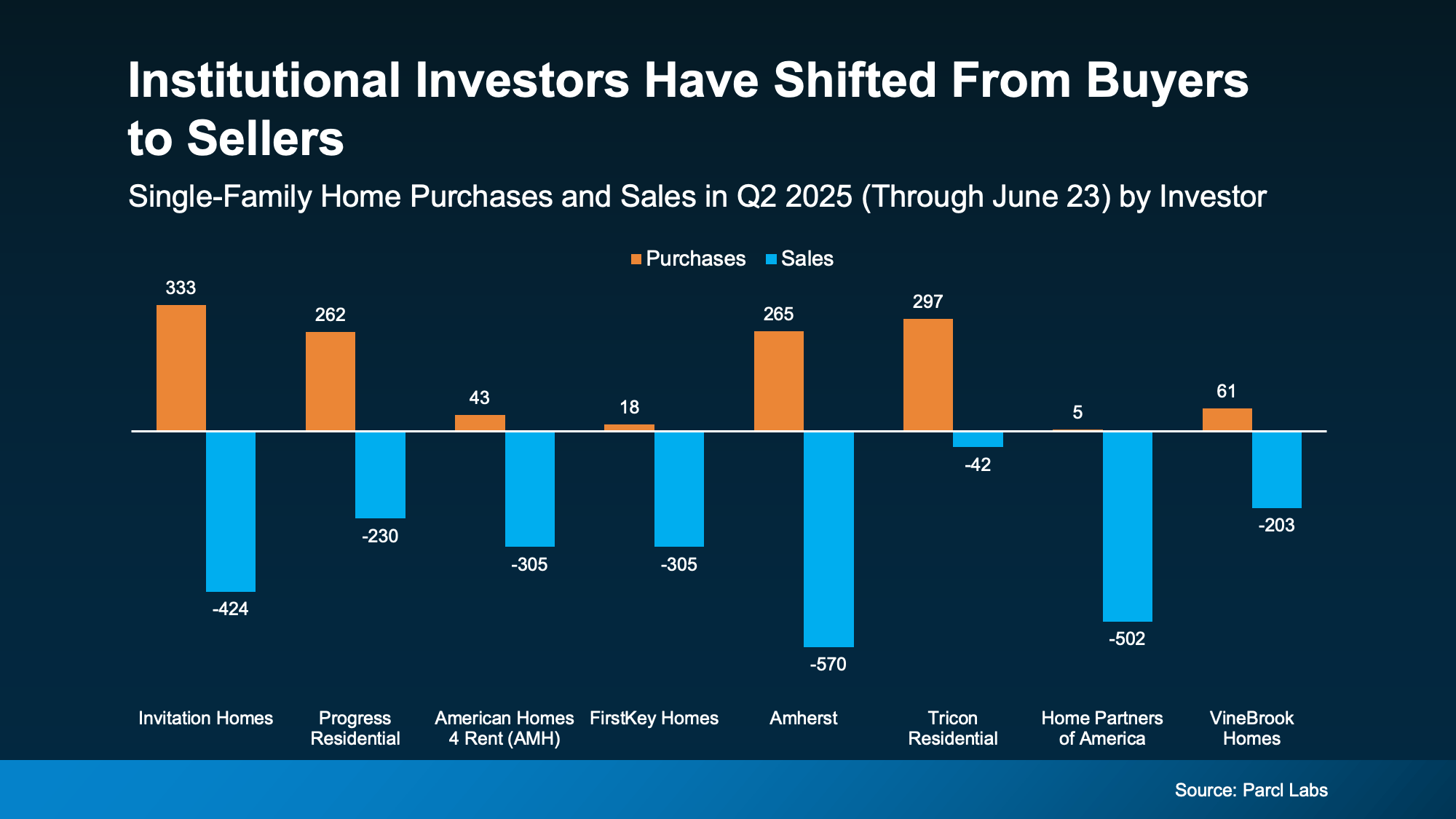
If you’re a buyer in today’s housing market, you’ve likely heard about large institutional investors—Wall Street firms buying up homes across the country. It sounds intimidating, right? But here’s the truth: big investors are not dominating the market, especially here in Central Virginia.

At Don Reid Properties, we want to set the record straight. Despite headlines about corporate investors scooping up homes, they’re only a small piece of the puzzle, and they are not outbidding the average Greater Richmond Area homebuyer.

📉 Institutional Investors Own a Tiny Slice of U.S. Housing

A recent report from the Wall Street Journal highlights that, as of late 2023, institutional investors (those owning 1,000+ homes) only own about 0.4% of all single-family homes in the U.S. That’s right—less than half of 1%.

This means the overwhelming majority of homes in your neighborhood are owned by individuals and families—not corporations. Whether you’re shopping for a first home in Chesterfield County or upgrading in Midlothian, you’re likely competing with other regular buyers just like you.

🏡 Real Estate in Richmond VA Is Still Personal and Local

In Central Virginia, real estate remains a people-first business. Local homeowners, investors, and first-time buyers make up the bulk of activity. National data backs this up:

  • Most homes are bought by owner-occupants—people planning to live in them, not rent them out.

  • Small investors—think mom-and-pop landlords—own a far greater share than large Wall Street firms.

  • In the Greater Richmond area, big institutional purchases are rare, especially compared to cities like Atlanta or Phoenix.

So if you’re house hunting and worried you’ll be outbid by a major investor, you can breathe easy. You’re still the main player in today’s market.

💼 What This Means for Homebuyers in the Richmond Area

Here’s what you should know if you’re actively looking for a home in Richmond, Midlothian, or surrounding areas:

You still have buying power – With fewer competing institutional buyers, your offer matters.
Local insight wins – Working with a local expert like Don Reid Properties gives you a real edge in negotiations and home selection.
Timing is everything – Our team can help you act quickly when the right home hits the market.

💬 Final Thought: Don’t Let Investor Headlines Hold You Back

The media can make the market sound scarier than it is—but here in Richmond, VA, the market is still full of opportunity for everyday buyers. If you’re looking to make a move, know that you’re not competing with corporate giants—you’re competing with neighbors.

📞 Ready to Find the Right Home?

Don Reid Properties is here to help you buy with confidence, not fear. Whether you’re buying your first home, relocating, or moving up, we know the Richmond market—from Chesterfield to Midlothian and beyond.

👉 Let’s connect today to start your home search the smart way:
Schedule a Buyer Consultation

Uncategorized July 2, 2025

Don Reid presents to Dana Hoffman

Buyer June 27, 2025

5 Reflective Questions To Ask Yourself Before Deciding To Buy A House

The moment you decide to become a first-time home buyer is a huge feat on its own. After all, buying a home is both a momentous financial and emotional commitment. And just like any critical decision, you need to be sure it’s right for you, no matter what anybody else says.

Asking the right questions is crucial, especially when plunging into homeownership. There’s always been a long checklist of questions for you to know and understand every part of the real estate transaction—from your home search, inspection, up until closing or even beyond. There are also many insightful questions geared towards your mortgage broker, real estate agent, home inspector, and other professionals that are part of the homebuying process. 

But how about “soul searching” questions you should be asking yourself first? Many times, these questions are often overlooked simply because they can make you feel uncomfortable. But the decision to purchase a home, despite being influenced by different factors, is deeply personal and subjective. Hence, it should be taken only after checking everything carefully. And that includes checking within yourself.

So, even before starting your home search and hiring a local real estate agent, here are five crucial questions to ask yourself before deciding to buy your first home:

1. Why do I want to own a home?

The first question to ask yourself is this: What’s my real reason for wanting to buy? Even though homeownership might make more sense in many aspects, understanding your own motivation can provide clarity and help align your decisions. 

Remember that there’s no right or wrong answer—just something that truly resonates with you and your goals. Are you buying your first home out of practicality, insecurity, or societal expectations? Do you see it as an investment? Or are you just trying to sell yourself the idea of owning a home? Do you see it as a symbol of your freedom and independence? Are you itching to redesign your rooms with some Pinterest-inspired ideas?

Some reasons might be better than others, so it is crucial to recognize your desire to purchase. After all, homeownership is a big life decision, and you need to be fully aware of the commitment it requires before you sign on the dotted line.


2. Have I recently gone through a loss?

Have you recently gone through a painful breakup, the death of a loved one, lost your job, or suffered any negative event in your life? Emotionally speaking, we feel like the best way to cope during a time of loss is to start over. And there’s nothing wrong with wanting a reset, to aim for a fresh, new beginning.

However, a time of loss is truly a challenging, high-stress moment, which means it might not be the best time to take on a huge responsibility such as having a mortgage. Moving is probably for the best, yes, but buying a new home is an entirely different situation. Will you be able to handle taking out a home loan when you’re still not stable emotionally? 

Stability is key when it comes to buying a home, and the last thing you’d want is to be in a situation where you purchase a home and then find yourself faced with the need to change things up because you subconsciously make housing decisions out of stress, frustrations, or fear. It’s better to wait until you’re past a negative phase in your life to potentially avoid major headaches and only make things worse.


3. Am I okay with staying put?

Are you ready to commit to living in one place for a considerably longer time? When thinking about these questions, also take into consideration the following:

  • Will I be changing jobs anytime soon?

  • Is getting married part of my long-term plan?

  • Am I going to start a family (in the near future)?

  • Will I need to move back home to take care of aging or sick parents?

    While there’s no way to predict what exactly will happen in your life in the next five to ten years, it’s good to have a general idea of where you’ll be. If you’re thinking about purchasing your first home but in the back of your mind, you’d like to try living in another city or country sometime soon, you might want to reconsider your decision. 

Buying a home takes time, and it’s considered a long-term investment for this reason. Moving also takes time, and so does settling down and enjoying your new home. It’s better to stay put for at least five years to gain enough equity from your home and make it a sound financial investment. Otherwise, if you sell earlier, you may end up taking a loss on the deal.


4. Am I ready for a mortgage?

There’s no denying that getting a mortgage is complicated. But unless you pay for your house in cash, you’ll have to prepare yourself for having monthly mortgage payments. In this case, it might be helpful to find yourself: Am I okay with owing money to the bank?

Your payments will stretch out over the years—may it be a 15- or 30-year mortgage. You will have to pay the interest on the loan as well. It can also be difficult to pay down your principal when you’re constantly trying to cover other costs, such as insurance, property taxes, and other related expenses. It’s a huge challenge that is not for the faint of heart. This is why it’s critical to assess what your monthly mortgage payments will look like after buying a house and how it will affect your household expenses and overall budget.


5. Am I prepared to be a homeowner?

If you’re going from being a renter to a homeowner, don’t miss this important question. Can you tolerate the not-so-pleasant parts of homeownership? While there are many benefits of owning a home, there are also responsibilities, which is why you must ask yourself if you’re ready to be a homeowner.

Responsibilities such as upkeep, general maintenance, and unexpected repairs are things you have to keep in mind.  Are you ready for these things? Do you have the time, interest, and the right skills to handle basic maintenance tasks around the home? If not, will you have enough funds or be able to save up enough to hire professional help for advanced repairs? 

After all, as a homeowner, you are your landlord! So if you can’t imagine having a home maintenance issue without a landlord to call to solve it, you might want to put off buying for now or at least consider a low-maintenance option, such as a condo or new construction.


Final Thoughts

Owning a home is like being in a “long-term relationship” with no easy way out. You should not only be financially ready, but you should be emotionally prepared as well before deciding to purchase. If your heart isn’t in it and you’re not yet ready for the long-term commitment, it’s best to reconsider before taking the plunge.

BuyerGeneralHomeownerNew HomeownerRenterSeller June 26, 2025

Should You Wait for a Recession Before You Buy or Sell a Home? Think Again.

If you’re keeping an eye on the housing market in Central Virginia and thinking, “Maybe I should wait for a recession before I buy or sell,” you’re not alone. A lot of people believe a downturn might bring lower home prices or better deals. But history—and market data—tells a different story.

As the One of the Top Real Estate Agents in Greater Richmond Area, Don Reid Properties is here to help you navigate the facts, not just the fear. Let’s explore why waiting for a recession could actually cost you more in the long run.

📉 Recession Doesn’t Always Equal Housing Crash

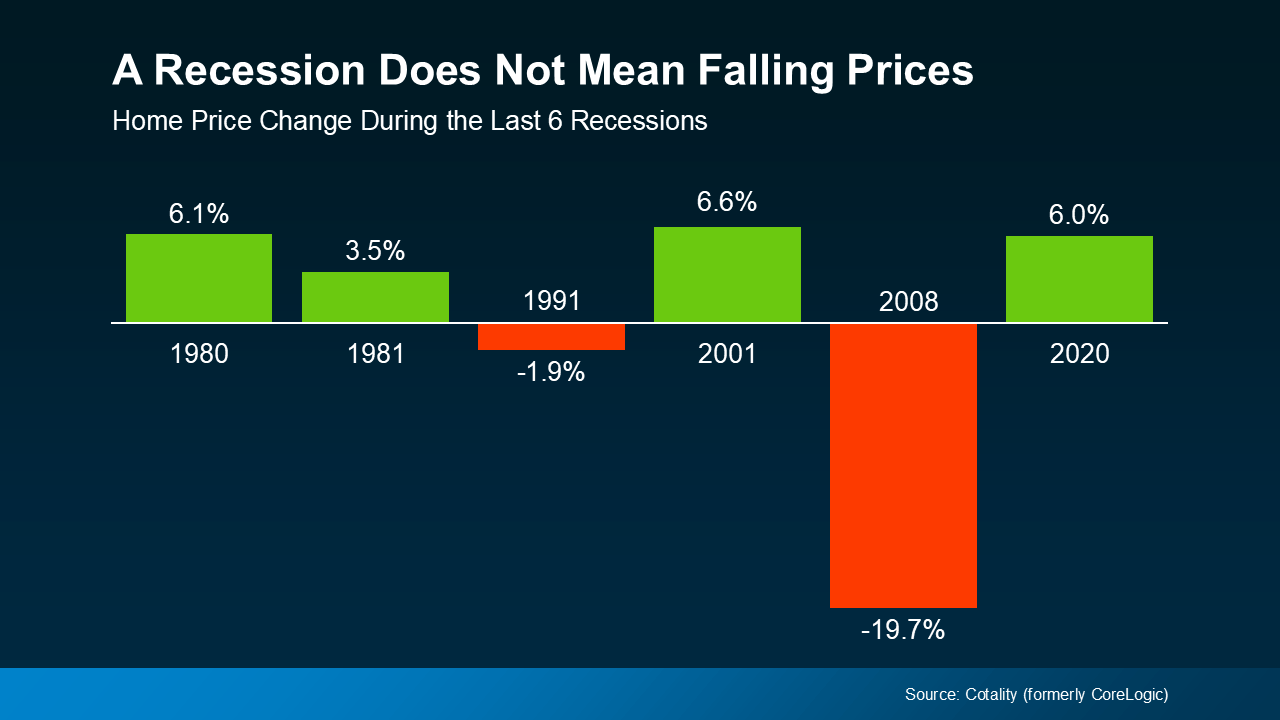
Many people still have the 2008 housing crash burned into memory, and understandably so. But the truth is, not every recession leads to a real estate meltdown. In fact, home prices have remained stable—or even increased—during many past recessions.

(See graph below: Home Price Changes During Recessions)

This shows us that recessions don’t necessarily lead to lower home values. In fact, the housing market often weathers recessions better than other sectors.

🏠 Home Prices Are Not Expected To Drop

Today’s housing market is driven by low inventory, strong buyer demand, and stable lending standards—very different from what we saw in the mid-2000s. So even if a mild recession were to occur, the current conditions suggest prices aren’t going to plunge.

Real estate experts and economists project that home prices will continue to rise moderately in most markets, including here in Chesterfield County, Henrico County, and surrounding Richmond areas.

(See graph below: Forecasted Home Price Trends)

Waiting for a big drop that may never come could leave you behind in a market that’s still moving forward.

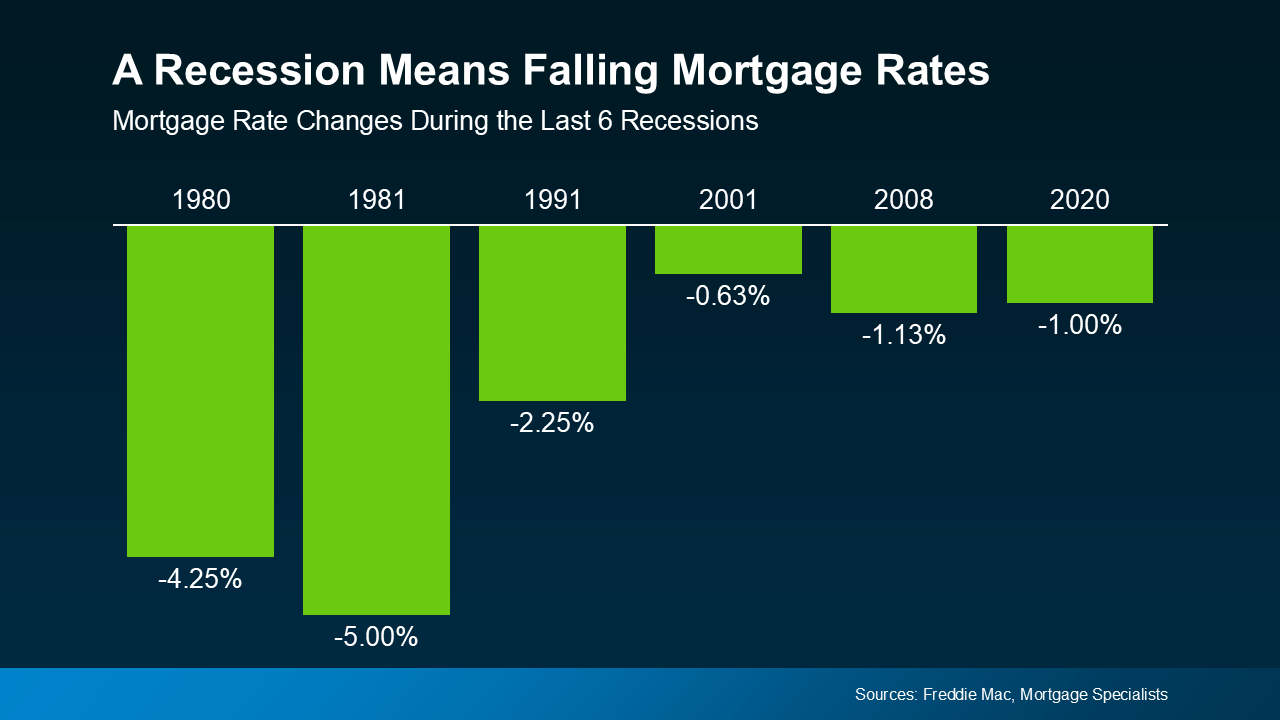
🏦 Mortgage Rates Matter More Than Timing the Market

If you’re waiting for a recession because you expect mortgage rates to fall—think twice.

Mortgage rates are notoriously hard to predict. While they may shift during economic slowdowns, they’re also influenced by inflation, Federal Reserve policy, and global markets.

(See graph below: Mortgage Rate Trends During Recessions)

Even if rates drop slightly, the overall cost of waiting—especially if home prices rise—can outweigh any potential benefit. And if rates go up? That delay could become very expensive.

🕒 Time Is Money in Real Estate

Let’s break it down: Every month you wait is another month of rising prices, missed equity, and higher borrowing costs.

For sellers, this means potentially missing out on the peak pricing window in your neighborhood. For buyers, it could mean paying more later for the same home you could afford today.

Here’s the Bottom Line:

Waiting for a recession might seem like a smart move—but real estate doesn’t wait. The market is always evolving, and trying to time it perfectly rarely works out. History shows that even in uncertain times, real estate remains one of the most resilient investments.

At Don Reid Properties, we keep a pulse on the market so you don’t have to guess. Whether you’re buying your first home, upgrading, or getting ready to list—we’re here to guide you every step of the way.

📲 Ready to stop waiting and start moving?

Contact Don Reid Properties today for a free market consultation. Let’s make your real estate goals happen—on your timeline, not the market’s.

BuyerNew HomeownerRenter June 19, 2025

Why This Summer Is the Smartest Time To Buy a Home

If you’ve been thinking about buying a home but aren’t sure whether now is the right time, you’re not alone. With interest rates fluctuating and constant buzz about the housing market, it’s easy to feel hesitant. Many buyers are asking the same questions: Should I wait for rates to drop? Will home prices fall? Is it worth jumping in now?

Here’s the truth that many savvy buyers—and clients of Don Reid Properties, the Top Realtor in Midlothian and all of Virginia—are starting to realize:

Summer 2025 may be the best opportunity we’ve seen in years to buy a home.

We’re entering a sweet spot where supply, negotiation power, and pricing flexibility are all favoring buyers more than they have in recent memory. Whether you’re a first-time buyer or looking to upgrade, this could be your moment.

Below are three compelling reasons why this summer is your opportunity to get ahead of the market—and why waiting may cause you to miss out.

1. There Are More Homes on the Market Than We’ve Seen in Years

One of the most important changes in the housing market this year is the rise in inventory. The number of active home listings is growing, and that means you have a greater chance of finding a home that fits your lifestyle, budget, and future goals.

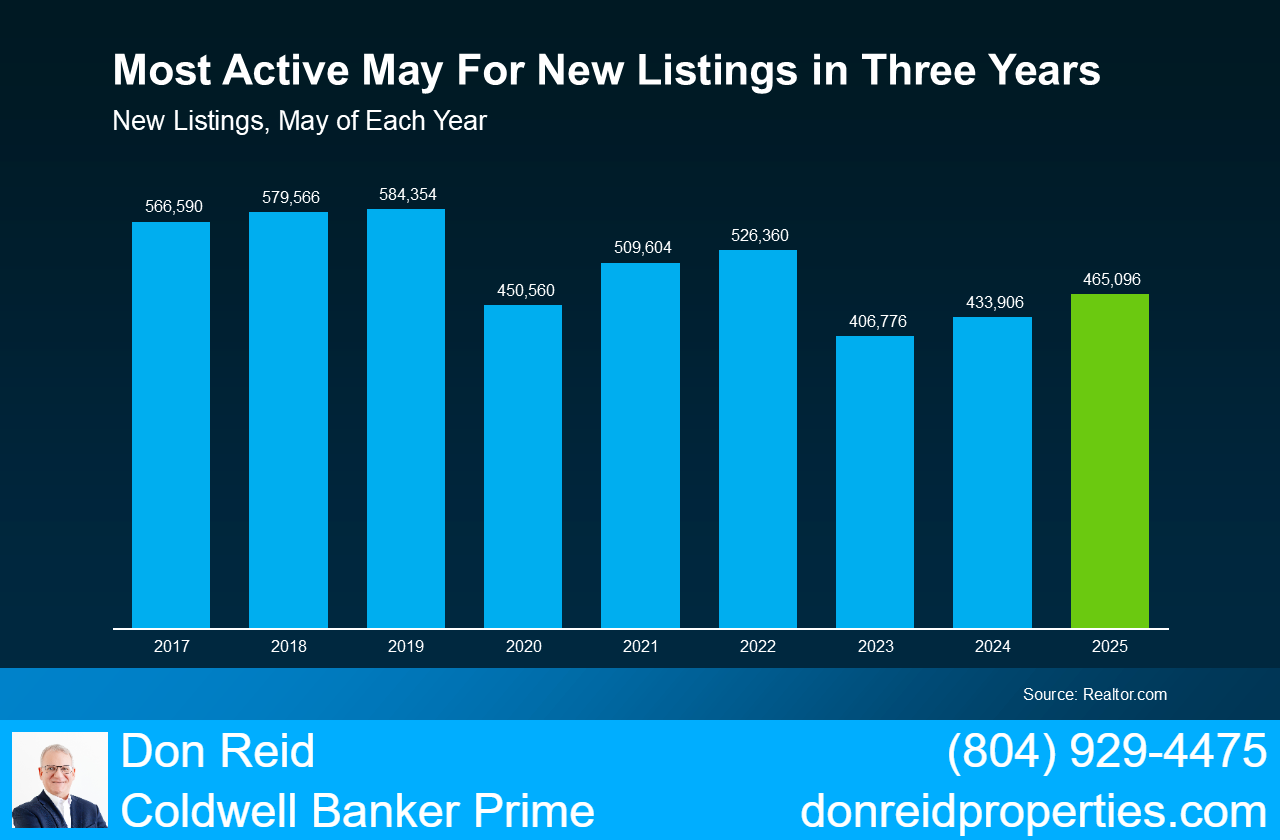
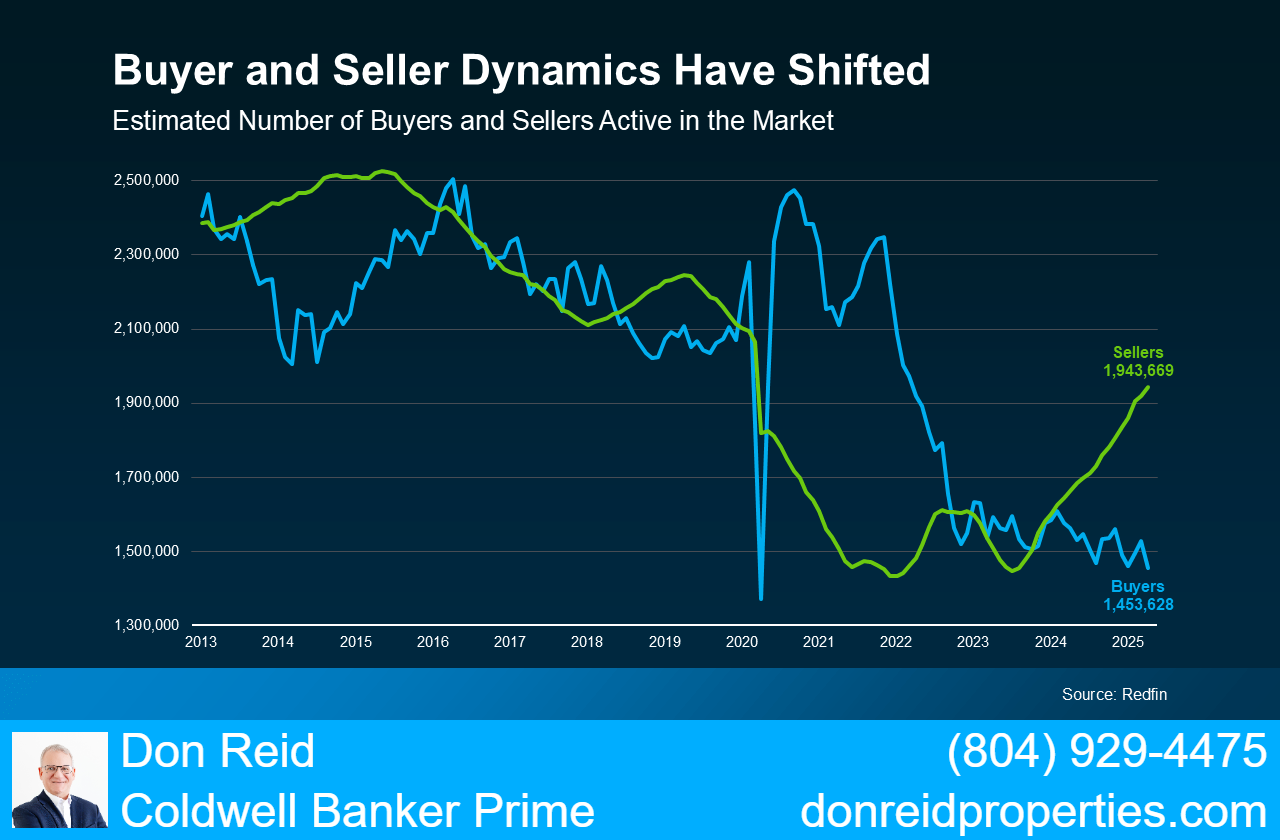
   This graph will show how inventory has grown significantly compared to last summer and 2023.

This graph will show how inventory has grown significantly compared to last summer and 2023.

This increase in available homes gives buyers much-needed breathing room. You’re no longer forced to rush into offers after a single showing. You can compare, evaluate, and choose wisely—which is exactly how a major purchase like this should be made.

As Jake Krimmel, an economist at Realtor.com, recently shared:

“With more fresh inventory hitting the market, buyers have better opportunities to find a home that fits their needs.”

If you’ve been holding off because you didn’t see the right house pop up, it’s time to look again. Inventory across Virginia, including high-demand areas like Midlothian, Chesterfield County, and the greater Richmond region, is expanding. This could be your best chance to find “the one.”

💪 2. Buyers Have Gained Negotiation Power — and That’s a Big Deal

Over the last few years, the real estate market heavily favored sellers. Homes were getting multiple offers within days, buyers were waiving contingencies, and properties were selling well over asking price. But the tide has turned.

Today, with more listings and a balanced pace of buyer activity, the market is shifting into a healthier, more negotiable space. And that’s great news for you as a buyer.

You now have leverage—something that was rare not long ago. Sellers are increasingly willing to consider offers that include:

  • Seller-paid closing costs

  • Repair credits or home warranties

  • Price adjustments for outdated features or cosmetic repairs

  • Flexible move-in or possession dates

As Lawrence Yun, Chief Economist at the National Association of Realtors, puts it:

“With housing inventory levels reaching five-year highs, homebuyers in nearly every region of the country are in a better position to negotiate more favorable terms.”

If you’re working with Don Reid, the Top Realtor in Virginia, you’ll benefit from expert-level negotiation strategies designed to help you save thousands—both upfront and over time.

💸 3. Sellers Are More Willing To Adjust Their Prices

The third key advantage for buyers this summer? Price flexibility. Sellers are recognizing that today’s market is different from 2021 or early 2022. Homes are taking longer to sell, and that’s prompting some sellers to get more realistic with their pricing.

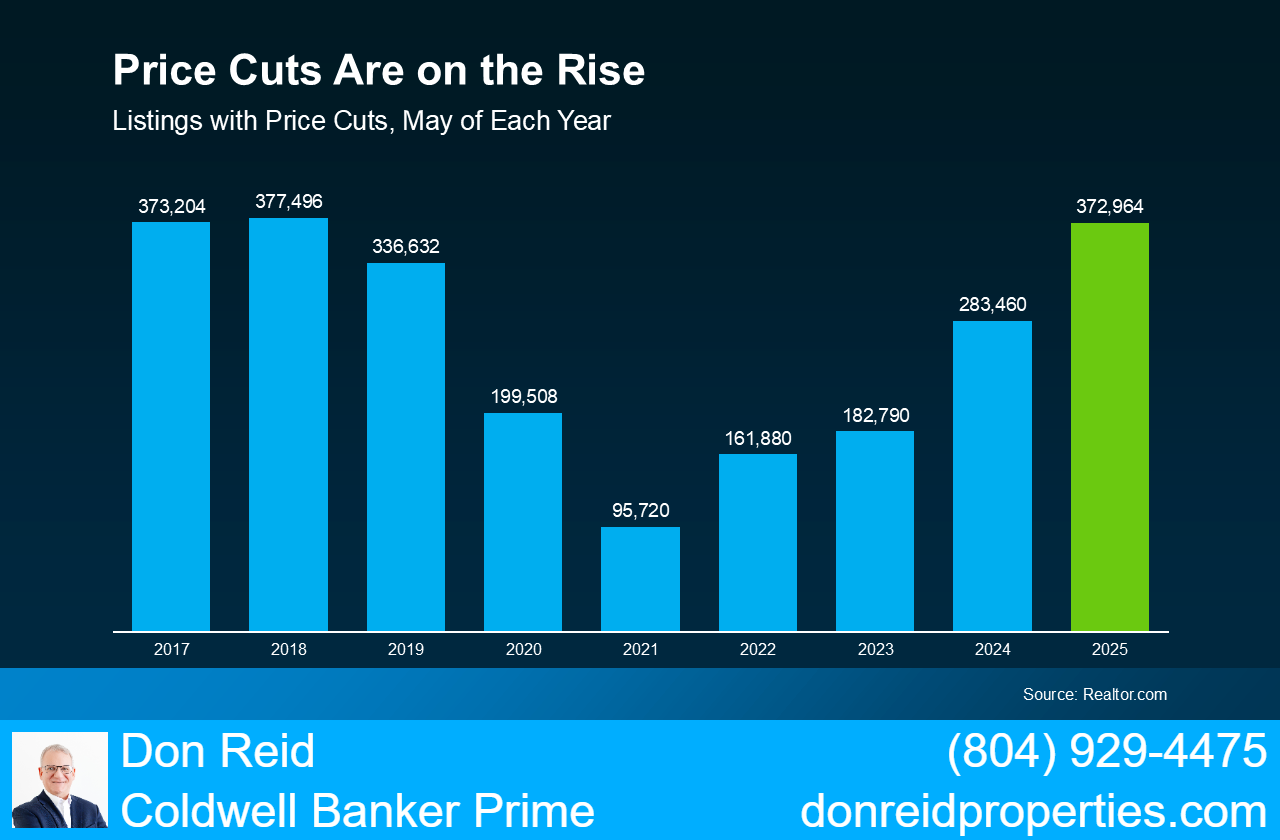
According to Realtor.com, 19.1% of active home listings had a price cut in May 2025—marking the fifth consecutive month of widespread price reductions. This isn’t a sign of a housing crash. Instead, it reflects sellers adjusting expectations in a market where buyers have more choices and aren’t willing to overpay.

As reported by The Street:

“Although sellers have had the upper hand in the housing market over the past few years, houses are now staying on the market for longer, shifting negotiating power back to homebuyers.”

That means if a home you love is slightly above your price range, there may still be room to make it work—especially with the help of a strategic, data-driven real estate professional.

Don Reid, known as the Top Realtor in Midlothian and surrounding areas, has a reputation for helping buyers identify overpriced homes and successfully negotiate better deals. You’ll know when to act and how to structure the right offer.

🏡 Bottom Line: This Summer Is a Unique Opportunity for Serious Homebuyers

Let’s review what makes Summer 2025 such a smart time to buy:

Inventory is growing – giving you more selection and breathing room
Negotiation power is back in your hands – let’s use it to your advantage
Sellers are showing more flexibility – whether in price or terms

This perfect alignment won’t last forever. As more buyers re-enter the market and interest rate trends shift, competition could heat up again by fall.

At Don Reid Properties, our mission is to empower you with knowledge, guidance, and a proven plan to help you succeed. Whether you’re a first-time homebuyer, relocating to Virginia, or upsizing into your forever home, we’re here to make the process seamless and successful.

💬 Let’s Start the Conversation

What could finding the right home this summer mean for your next chapter?

📞 Let’s talk about your goals, your ideal timeline, and how we can make this happen together. We’ll give you the latest market insights, schedule private showings, and walk you through financing options step-by-step.

Don Reid Properties
🔑 Top Realtor in Midlothian, Virginia | Trusted Real Estate Experts Across Central VA
🏡 Helping Homebuyers Navigate the Market With Confidence

📍 Visit: www.donreidproperties.com
📅 Book your personalized buyer consultation: https://calendly.com/donreidproperties/buyerconsultation

GeneralHomeowner June 5, 2025

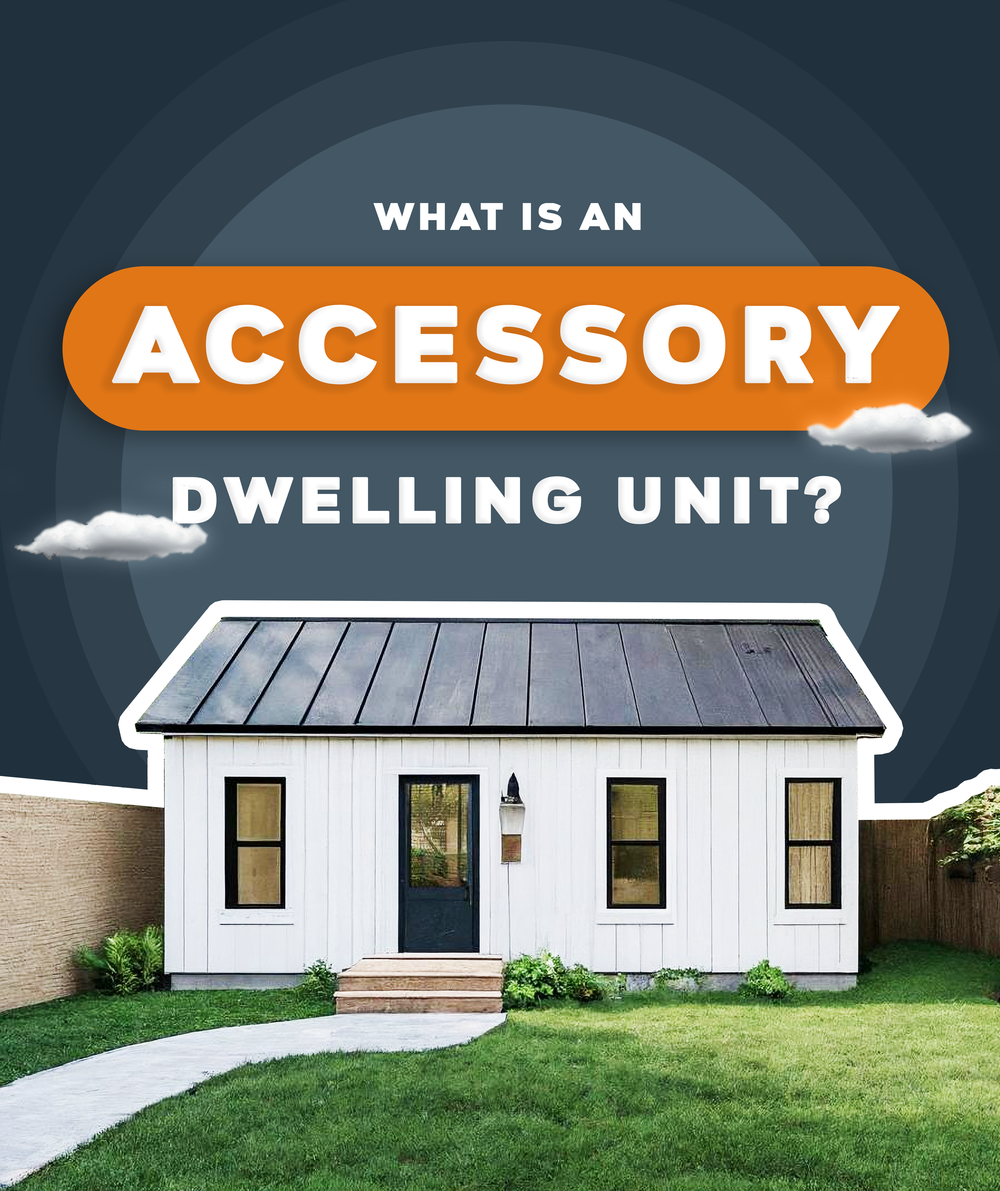
What is an Accessory Dwelling Unit?

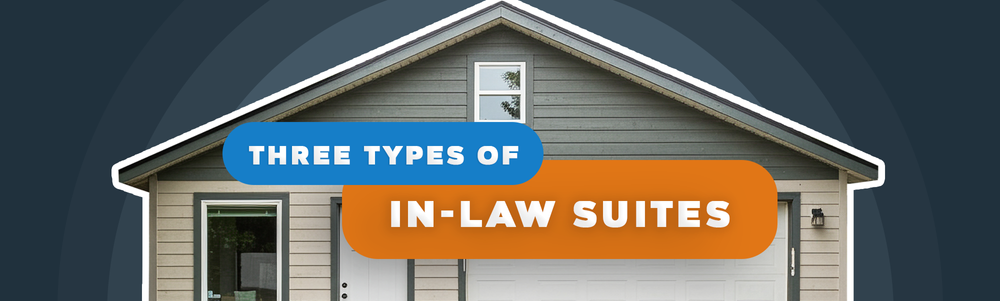
They go by different names depending on the region: accessory apartment, in-law suite or in-law apartment, granny flat, second unit or secondary suite, and are also known as ohana units in Hawaii and casitas in the Southwest.

Regardless of what they’re called, an accessory dwelling unit, also known as an ADU, is an additional living quarters on single-family lots that is independent of the primary dwelling unit, according to the U.S. Department of Housing and Urban Development. The separate living spaces are equipped with kitchen and bathroom facilities, and can be either attached or detached from the main residence.

ADUs have been steadily gaining popularity due to their flexibility. They’re originally designed to provide convenient and private housing to family members as they age. But these suites have evolved outside of this more traditional purpose and are now being used to provide housing for younger family members as they save for their place, or to help the homeowner generate passive rental income.

Read on to know more about accessory dwelling units, see their variety of uses, and key considerations if you’re looking to add one to your property.


The classic ADU or in-law suite is a self-contained space that offers both proximity and privacy. At the very least, it includes:

  • A separate entrance

  • A bedroom or sleeping area

  • A full bathroom

  • Others may also include a kitchenette or even a full kitchen, and a living room


  • Attached – An ADU that is connected to the main house or part of the primary residence but is designed to be an independent living space. This unit usually has a separate entrance on the side or back of the house. Attached additions typically require less space than their freestanding counterparts and are less expensive to build.

  • Detached – A detached in-law suite is often a smaller, standalone structure built on the same property as the primary residence. It offers more privacy than an attached suite so it’s more desirable for a rental unit.

  • Interior ADU or a converted existing space – This type of ADU is a separate unit located inside the main house. It can be an existing area that’s been converted or modified to create a separate living space, such as a basement or an attic, but may feature a separate entrance.


An ADU is a versatile feature that can serve many purposes. Here are some uses to consider:

Home office – It could be the perfect place if you’re looking to work from home or want to have a dedicated office for your small business.

Guest quarters – Suitable accommodation for out-of-town guests or relatives, so you both can have a little privacy even while staying within your property.

Residence for adult children or aging parents – Multigenerational living is on the rise due to the rising costs of homeownership. Since ADUs are flexible living spaces, it’s a great way for families to function together as a whole unit while maintaining each other’s independence and privacy. Adult children who are still establishing themselves financially can use it as a tiny home. Likewise, it can also be a permanent and practical dwelling for aging parents or relatives, especially for young families who want a home-share situation.

Rental unit – Since many ADUs can be considered as fully equipped apartments, they make ideal rentals. Renting it out for an extended period, or even for shorter terms through apps like Airbnb or VRBO, can help you recover the expense of building the unit and could potentially help you pay your mortgage. 


1. Local building codes and zoning laws

Before dreaming about having an in-law suite, research local zoning laws first, as every locality has different rules regarding lot size, accessory dwelling units, and parking, among others. To find the laws specific to your property, go to the zoning office with your lot and block number to find out if having such a suite on your property is permitted. Even homeowners’ associations may have stipulations when it comes to an in-law suite and its use.

If you’re looking to have an ADU for income generation, there may be additional permits or inspection requirements for rental compliance, and it’s important to look into that before you start the process.

2. Purpose

Determine who will use it and what the purpose of your in-law suite is, so you can decide on which features are most important. If the space is to be used by aging parents, you may want accessibility features like wider doorways, ramps, or grab bars. If it’s for your small business or home office, you may need to think about the layout that will work best for you and your needs.

3. Utilities and infrastructure

ADUs often use the same utilities as the primary residence, which is why it’s crucial to ensure the existing gas and water lines and electric lines can handle the additional living space.

4. Budget and financing

While in-law suites are generally smaller and can be less of an undertaking than other living spaces, don’t forget that it may still be a significant financial investment. Make sure to explore your budget and financing options ahead of the project. There are several options you can consider, such as home equity loans, construction financing, and cash-out financing.


The Bottom Line

With its flexibility and multiple benefits, in-law suites or ADUs have the potential to meet the wants and needs of anyone who needs a little extra space.

BuyerHomeowner June 5, 2025

Warren Buffett’s Housing Forecast: Why Multigenerational Living is the Future—and a Smart Move in Midlothian VA

Imagine this: You come home after a long day. Your dad’s teaching your daughter how to make his signature pasta sauce in the kitchen. Your mom’s watering the garden just off the patio. Upstairs, your brother is finishing a Zoom meeting in his tucked-away office.

It might sound like a full house—but for more and more families, this is everyday life. And according to Berkshire Hathaway HomeServices, this growing lifestyle trend is reshaping the real estate market as we move through 2025.

At Don Reid Properties, we’re seeing it happen right here in Midlothian, Chesterfield, and the greater Richmond area. Families are choosing to live together again—and for many, it’s not just working… it’s thriving.

Let’s explore why multigenerational homes are in high demand, what to look for, and how you can take advantage—whether you’re buying, selling, or investing.

📈 Why More Families Are Living Together in 2025

Back in 2010, around 5.1 million U.S. households were multigenerational. Today? That number has jumped to over 59 million Americans sharing homes across multiple generations—and it’s not slowing down.

What’s driving this change?

✅ Housing Affordability Solutions

With home prices and interest rates on the rise, many Millennials and Gen Z buyers simply can’t afford to purchase solo. Factor in inflation-adjusted income being $10,000 less than their parents’ generation, and living with family becomes a practical (and smart) financial choice.

✅ Elder Care at Home

The cost of long-term care and assisted living continues to rise. For many families, inviting aging parents to move in—whether temporarily or permanently—is a more personal, cost-effective solution.

✅ Help with Childcare

Working parents are turning to grandparents for daily childcare help, saving thousands each year. Living under one roof not only lightens the load—it builds stronger family bonds.

✅ The Remote Work Revolution

With more adults working from home, families have greater flexibility to live wherever—and however—they want. Multigenerational living is more doable than ever, especially in home-friendly communities like Midlothian VA.

🏡 What to Look for in a Multigenerational Home

If you’re thinking about buying a home in Midlothian that supports multigenerational living, there are a few key features to prioritize:

  • Separate living areas (like in-law suites, finished basements, or detached units)

  • Dual kitchens or kitchenettes to support semi-independent living

  • Main-floor bedrooms & wider doorways for aging in place

  • Multiple entrances for added privacy and flexibility

  • Dedicated home office space for remote work needs

Even existing homes can be retrofitted to support this lifestyle—like converting a bonus room, upgrading a garage, or building an accessory dwelling unit (ADU). At Don Reid Properties, we can help you spot homes with hidden potential for multigenerational layouts.

💡 Selling a Home in Midlothian? Think Multigenerational

If you’re considering selling your home in Midlothian, this trend presents an exciting opportunity.

Homes with flexible layouts that accommodate extended families are in high demand. As Top Real Estate Agents in Midlothian, we help sellers highlight:

  • Flexible floor plans that support dual living

  • Finished basement or guest suite potential

  • Accessibility-friendly features

  • Outdoor spaces for shared enjoyment

Even if your home wasn’t originally built for multigenerational living, we’ll help you stage and market it to speak to today’s buyers. Smart updates and thoughtful presentation can mean faster sales—and better offers.

💼 A Golden Opportunity for Investors

Multigenerational living isn’t just a personal lifestyle choice—it’s an emerging real estate investment strategy.

Berkshire Hathaway HomeServices has called it a “goldmine for remodelers,” and they’re absolutely right. The demand for homes with dual-living options is rapidly increasing, especially in family-friendly communities like Midlothian, Brandermill, and Woodlake.

Here’s how investors are winning:

  • Buying homes with conversion potential (basements, garages, bonus spaces)

  • Renovating with accessibility and privacy in mind

  • Developing ADU-friendly properties

  • Catering to long-term tenants seeking family-style flexibility

If you’re an investor or thinking of becoming one, Don Reid Properties offers expert insights into which Midlothian neighborhoods are ripe for this strategy.

🏘️ The New Standard: How Builders Are Catching On

Across the country—and even right here in Central Virginia—builders are responding to the demand for smarter family-focused living.

New construction homes are starting to offer:

  • First-floor bedroom suites for aging parents

  • Open-concept shared spaces that still allow for separation

  • Private entrances and attached suites for young adults or caregivers

  • Universal design elements that reduce future renovation costs

It’s clear: Multigenerational homes aren’t just about affordability—they’re about longevity, flexibility, and connection.

🤝 Your Next Step Starts Here

Whether you’re looking to buy, sell, or invest in a multigenerational-friendly home in Midlothian, we’re here to guide you every step of the way.

Don Reid Properties is proud to be one of the Top Real Estate Teams in Midlothian VA, with a deep understanding of where the housing market is headed—and how to help you stay ahead of the curve.

✔️ Buying? Let us help you find a flexible floor plan that fits every generation.
✔️ Selling? We’ll position your home to attract the right buyer—fast.
✔️ Investing? We’ll help you identify the properties with long-term potential.

📅 Schedule your personalized consultation today and let’s talk strategy.

🔑 Final Thoughts: The Future Is Family

This isn’t just a trend—it’s a transformation. Multigenerational living is changing how we design, buy, and sell homes. It’s building stronger families, saving money, and creating opportunities for smart investment.

As trusted advisors and real estate experts in Midlothian and greater Richmond, Don Reid Properties is here to help you navigate this shift with confidence, compassion, and clear market insight.

Let’s build a home that works for your whole family.

BuyerRenter May 29, 2025

Renting vs. Buying a Home: What’s the Smarter Move in Today’s Market?

Are you asking yourself, “Is it even worth trying to buy a home right now?” You’re not alone.

With home prices still elevated and mortgage rates holding firm, many people in Richmond and Chesterfield County are questioning whether it’s smarter to keep renting—or if owning a home is even possible.

At Don Reid Properties, we understand the market feels uncertain. But we also know that looking at the long-term picture is just as important as analyzing today’s conditions.

Let’s break down the true cost of renting versus buying—and what steps you can take now to prepare for homeownership.

💰 Renting Feels Easier Now—But It’s More Costly Over Time

Renting often feels like the easier path—lower upfront costs, fewer responsibilities, and more flexibility.

But here’s the truth: while renting might seem like the simpler or more affordable option today, it doesn’t build anything. Your rent goes to your landlord, and that money is gone for good.

In fact, a Bank of America survey revealed that 70% of aspiring homeowners worry about the long-term impact of renting on their future. And with good reason.

Renting may offer short-term convenience, but it can become more expensive over time—and limit your ability to build wealth (see graph below).

🏡 Buying a Home Builds Long-Term Wealth

If building wealth and financial security is important to you, owning a home is one of the strongest strategies available.

Why?

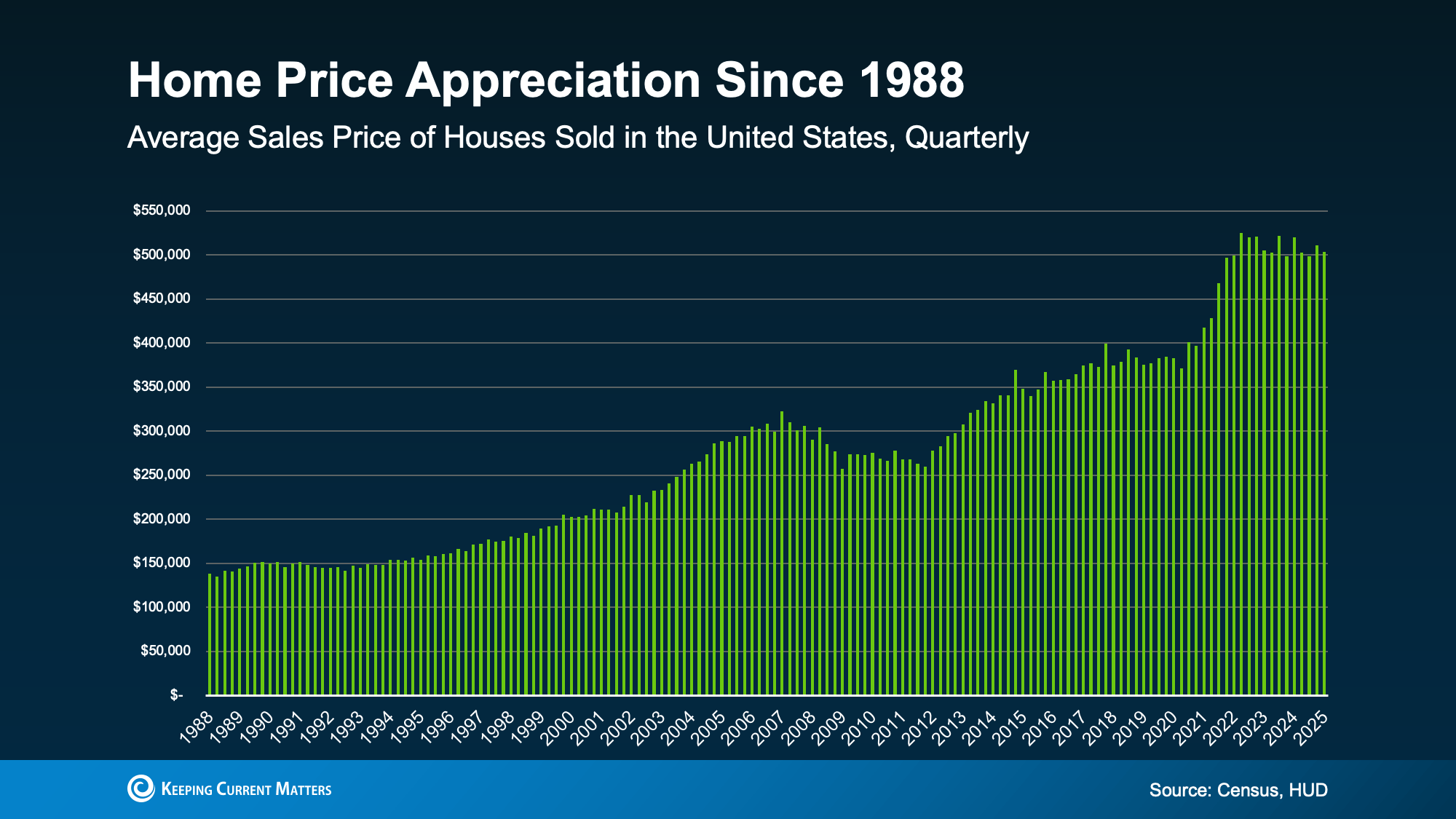
  • Home values usually increase over time, especially in high-demand markets like Richmond, Midlothian, and Chesterfield County (see graph below).

  • As your home’s value rises, so does your home equity—the difference between what you owe and what the home is worth.

  • That equity contributes to your net worth, which can later be used for investments, education, or retirement.

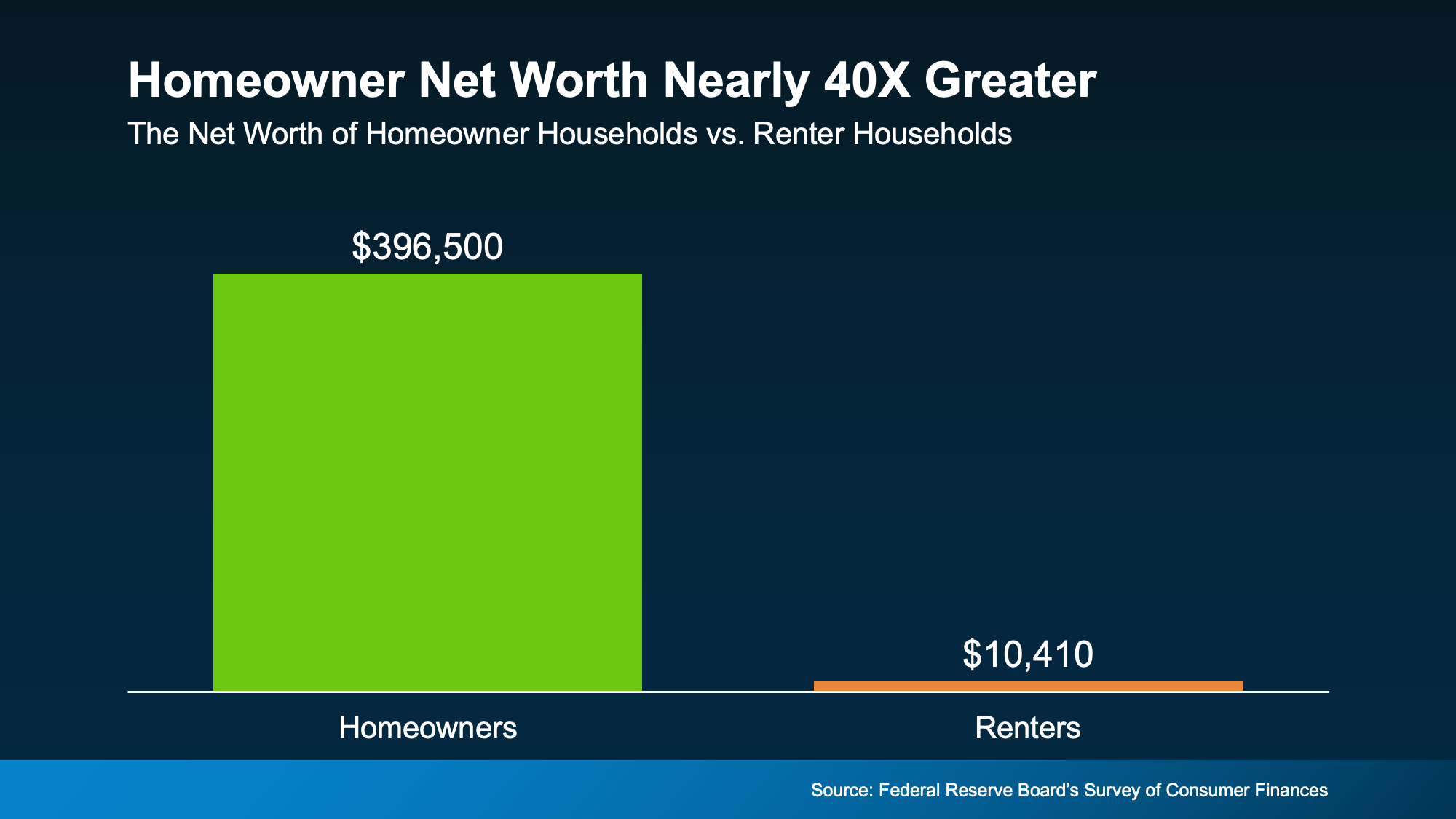
📊 The numbers speak for themselves: the average homeowner’s net worth is nearly 40 times greater than a renter’s (see graph below).

📈 Rents Are Rising—And That Affects Your Future

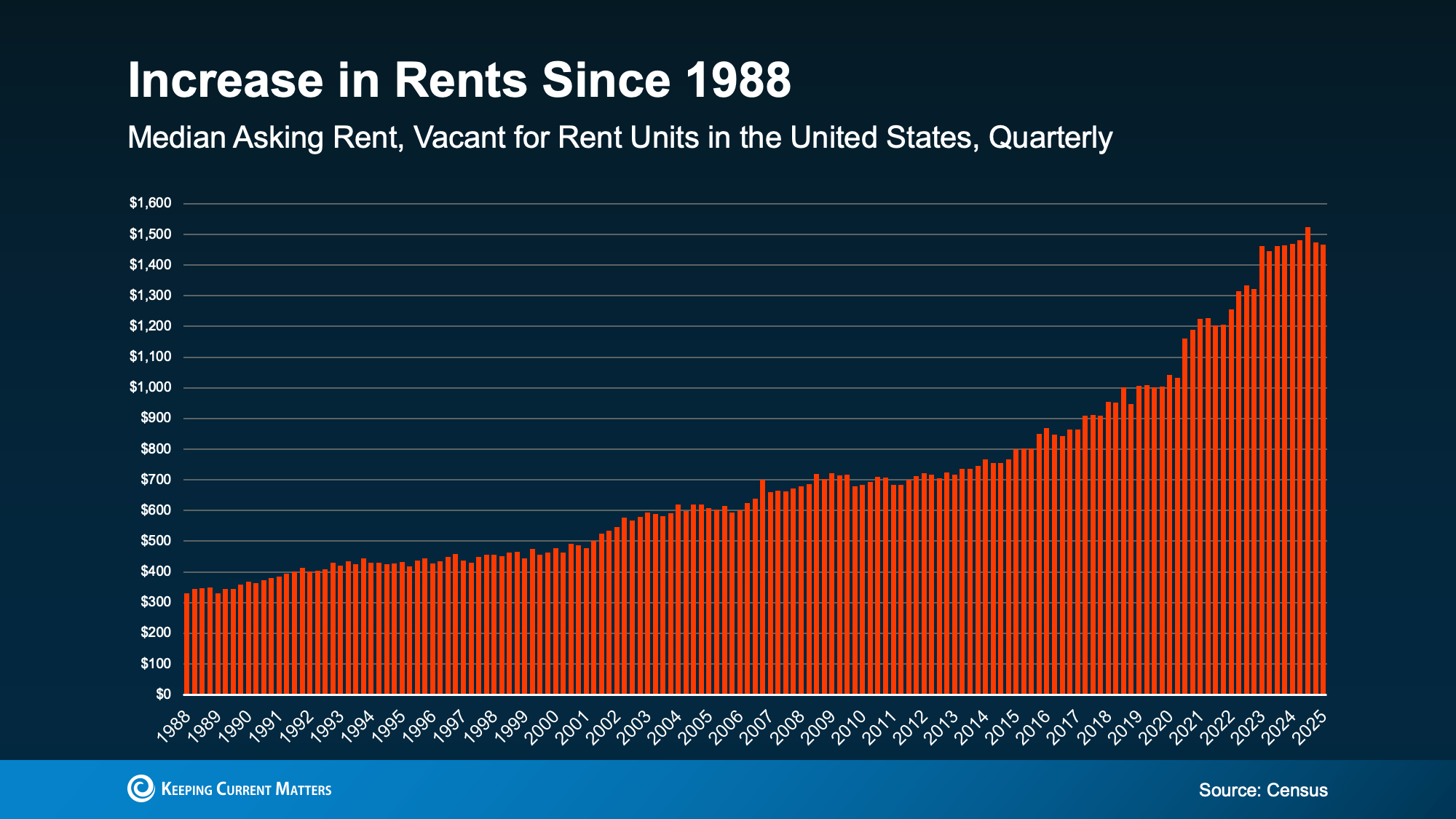
Over the past few decades, rent prices have steadily increased—and Richmond is no exception. While rents may flatten occasionally, the long-term trend is upward (see graph below).

This constant increase makes it harder to save for a future down payment and limits financial flexibility. Meanwhile, homeowners with fixed-rate mortgages enjoy payment stability and long-term equity gains.

And here’s something to consider: whether you’re renting or buying, you’re still paying a mortgage. The only question is—whose mortgage are you paying? (see graph below)

🧠 What Should You Really Consider?

It’s understandable to feel hesitant about buying right now. The upfront costs and responsibilities are real. But so is the long-term return on investment.

Here’s the difference:

  • Renting: Once you pay, it’s gone—no equity, no return.

  • Buying: Each payment builds equity—a form of forced savings that contributes to your net worth over time.

As Joel Berner, Senior Economist at Realtor.com, says:

“Households working on their budget will find it much easier to continue to rent than to go through the expenses of homeownership. However, they need to consider the equity and generational wealth they can build up by owning a home that they can’t by renting it. In the long run, buying a home may be a better investment even if the short-run costs seem prohibitive.”

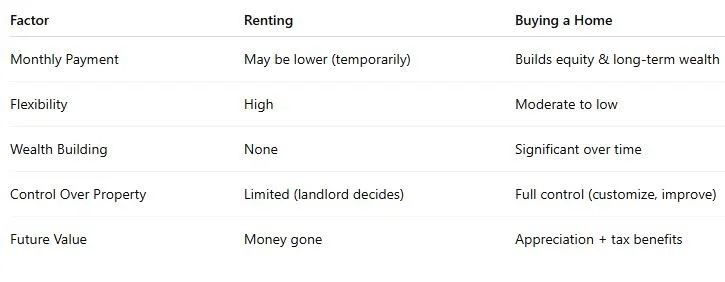
✅ Rent vs. Buy in Richmond VA: A Side-by-Side Comparison

🔑 Bottom Line: Let’s Build a Plan That Works for You

At Don Reid Properties, we’re committed to helping you make smart real estate decisions—whether you’re ready to buy today or just starting to plan.

Yes, renting may feel more manageable today. But over time, it could cost you far more without building anything for your future.

Even if you’re not ready to buy yet, we’ll help you create a strategy that gets you there when the timing is right.

👉 Let’s talk about your goals and create a custom plan together:
📅 Schedule a Free Buyer Consultation

BuyerHomeowner May 23, 2025

Don’t Overlook These Signs of Foundation Problems on A House

A house is only as stable as its base. It can have luxurious finishes and modern appliances, but without a strong foundation, it can pose safety concerns that can potentially put you and your family at risk. 

Foundation problems are dangerous since they can lead to significant issues throughout the rest of the home, including structural damage, mold, water damage, and even pest problems.

For homeowners, it’s crucial to know that foundation problems can come with all sorts of warning signs. The earlier you address these issues and have them fixed, the more likely you are to reduce repair costs and avoid serious damage to the rest of your house.

For buyers searching for their dream home, know that issues with the foundation can only be revealed after a home inspection. Many homeowners are often unaware of foundation problems, or else they should’ve disclosed that information to you when you first viewed the home. It’s important to know whether these foundation issues are minor speed bumps or major dealbreakers on your road to homeownership.

Common warning signs of foundation problems on a home:

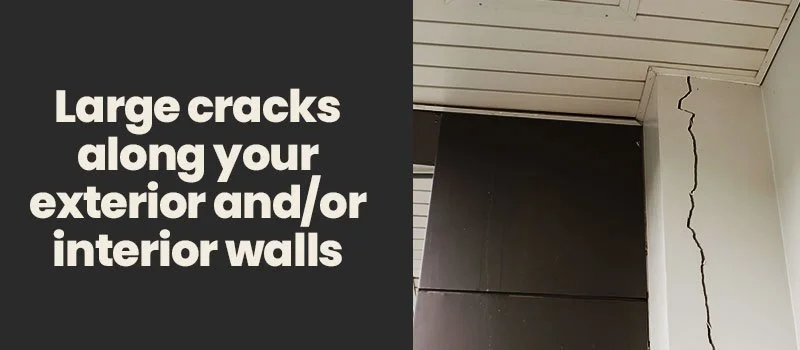
Small hairline cracks on the foundation and along interior walls are relatively common and are nothing to worry about. They’re often just indicators that the property has undergone a period of normal, minor settling. However, if you notice any horizontal cracks, or those that are wider than a quarter of an inch and continue to widen or lengthen over time, this often indicates a more serious issue with the foundation. Worsening cracks can lead to severe structural damage, especially since water or insects can work their way inside the home.


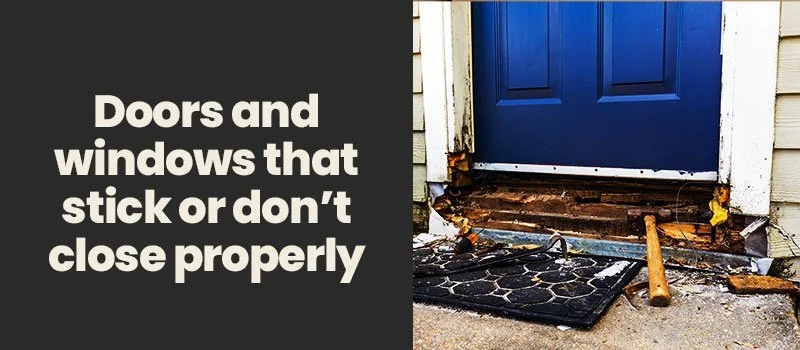
Moisture and excess humidity, especially during summer, often cause wood to swell. This results in doors and windows that stick when you try to open or close them, or they may not close or latch properly. But if you notice there haven’t been any drastic changes in heat or humidity lately and your doors and windows continue to stick year-round, then a foundation problem is more likely the cause. When the foundation settles, shifts, or sinks, it creates an imbalance in the home’s structure. This imbalance causes the framing around the doors and windows to shift or bulge slightly. You may also notice the window frames starting to pull away from the surrounding brick.


Aside from cracks, if you see warped, buckled, or bulged spots in the home’s siding, it’s a common indicator that there’s something wrong with the home’s foundation. Any visible gaps between the siding planks or bricks are also a dead giveaway that there’s a problem.


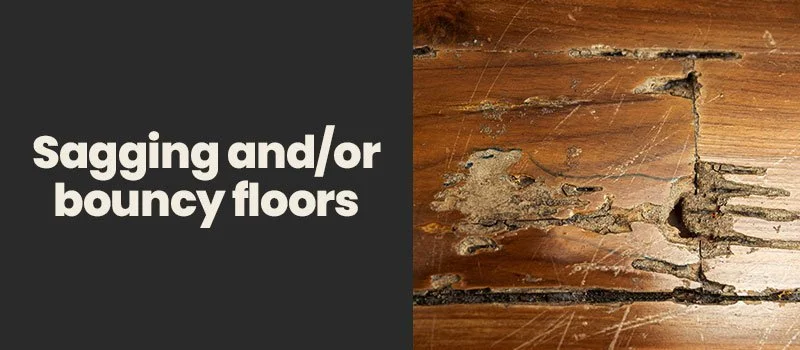
Sagging or uneven floors are not only unsightly but can also pose safety concerns. This happens when the home’s foundation shifts or settles, causing the support beams to separate and the walls to become compressed. Likewise, bouncy or spongy floors, particularly if accompanied by popping or creaking, are usual indicators of foundation settlement or moisture-related concerns in the crawl space.


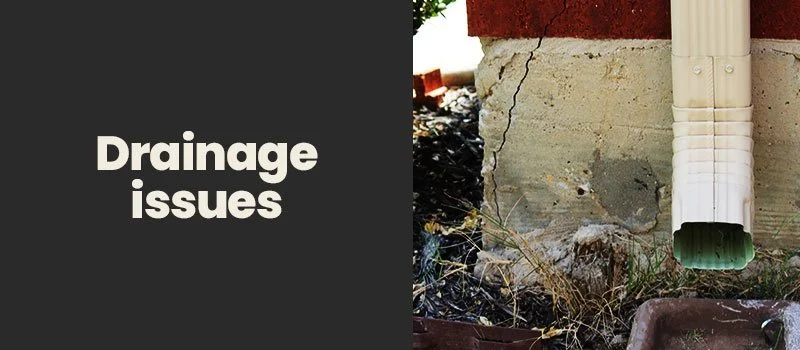
Water can cause serious problems with your home’s foundation, so assessing your property for drainage issues is a great way to identify problems early. After it rains, walk the perimeter of your house to see how the ground drains water. If you notice pooling, you likely have problems with drainage, which can cause major issues for your home’s foundation.


Bottom line

For homeowners, the best course of action is to seek professional help

Foundation issues, no matter how minor, are serious and should never be ignored. Even if you think of yourself as a skilled DIYer, there’s not much you can do with these kinds of issues beyond noting the affected areas and providing the necessary information to a foundation repair specialist. These professionals will then assess the damage to the home and determine if the foundation is at risk of collapse or if it can be repaired.

For buyers, should you buy a home with foundation issues?

Once the home inspection reveals problems with the foundation, it will likely cause a delay with closing. Lenders are generally cautious about homes with foundation issues, so your mortgage application and approval status could also be at risk. Your first call should be to seek advice from your trusted real estate agent on how to proceed. You can be in a good position to negotiate with the seller to pay for repairs. But if the damage is too extensive or the seller refuses to pay out of pocket, the best way to deal with it is to simply walk away and start your home search again.

Buyer May 22, 2025

Why Barbara Corcoran Says Uncertain Markets Are the Best Time to Buy a Home

Why Barbara Corcoran Says Uncertain Markets Are the Best Time to Buy a Home

(Especially in Richmond, Virginia)

When the real estate market feels uncertain—with mortgage rates fluctuating, inflation in the headlines, and buyers unsure of their next move—it’s natural to hesitate. But real estate mogul Barbara Corcoran, best known from Shark Tank, says that’s exactly when savvy buyers should take action.

Corcoran believes the best real estate deals happen when others are too nervous to make a move. And her track record proves it. This advice is particularly timely for Richmond buyers, where shifting market dynamics are creating fresh opportunities—especially for those partnered with the Top Real Estate Agent in Richmond.

At Don Reid Properties, we know that smart buying isn’t about waiting for a “perfect” market. It’s about recognizing signals, staying ready, and making confident moves when others are standing still. Here’s how Barbara Corcoran spots opportunity—and how you can do the same right here in Richmond.

1. You Can Buy Below Market Value

Everyone loves a deal, but in real estate, the best values often show up when competition thins out. That’s exactly what’s happening in Richmond right now.

📉 According to the April 2025 Realtor.com® Housing Report:

  • National inventory is up 30.6% year-over-year, the highest since 2020.

  • Pending sales are down 3.2%, meaning more homes are sitting unsold.

  • More sellers are dropping their prices or becoming open to negotiation.

Right here in Richmond, listings are lingering longer on the market. According to Zillow, the average time on market has increased compared to last year, giving buyers more leverage. Sellers are increasingly open to price reductions, repairs, and concessions.

As Corcoran puts it:

“Anything bought below market will prove a good investment, and you’ll make money on it when you sell it later.”

This isn’t about timing the bottom. It’s about taking advantage of current conditions—and in Richmond, they’re leaning in buyers’ favor. A knowledgeable local expert, like the top real estate team at Don Reid Properties, can help you spot those under-the-radar opportunities before others do.

2. Sellers Are Coming Back to the Table

In hot markets, sellers call the shots. But when things cool down—even slightly—those dynamics shift fast. Corcoran recently shared:

“I’m happy to report that sellers who turned me away four months ago are calling me back.”

We’re seeing that here in Richmond, too. Sellers who were firm just a few months ago are now revisiting old offers and showing more willingness to work with qualified buyers. If you’ve been watching a home, this could be the moment to re-engage.

When sellers get motivated, you might find:

  • Sellers willing to pay closing costs

  • Flexibility on repairs or move-in dates

  • Opportunities to negotiate credits or price reductions

This gives buyers space to breathe and options to negotiate. Don’t wait for permission—if you see a home you love, make an offer. With the top real estate agent in Richmond on your side, you can structure the deal to work in your favor.

3. The Market Feels “Spooky” (And That’s a Good Thing)

When the market “feels off”—rates are high, political tensions are everywhere, and news headlines scream uncertainty—it’s easy to stay frozen. But Barbara Corcoran says that’s when she leans in:

“When the market is uncertain, as it is now, I realize that’s a signal that I should be out there buying property, and that’s exactly what I do.”

In her words, spooky times are prime time for great deals—because most people are sitting on the sidelines.

If you’re planning to live in the home for a few years, even “overpaying” a little now could pay off in equity growth. Take Richmond for example: According to Redfin, home values in Richmond increased over 7% year-over-year, with most neighborhoods showing steady long-term appreciation.

“I’ve overpaid for almost every piece of property I’ve bought. If I like it, I buy it, and I don’t live to regret it!” – Barbara Corcoran

At Don Reid Properties, we tell our clients the same: If a home checks your boxes and fits your lifestyle, don’t let fear hold you back. We’ll help you make a strong, smart offer—and protect your long-term investment.

Final Thoughts: Don’t Wait for “Perfect”

Richmond buyers waiting for rates to drop or prices to fall even further may miss the exact moment that real estate icons like Corcoran capitalize on. The best time to buy often isn’t when everything looks great—it’s when others are unsure.

Uncertainty doesn’t mean “don’t buy.” It means look closer. Opportunity is hiding in plain sight.

Partner with the Top Real Estate Agent in Richmond at Don Reid Properties, and we’ll help you navigate this market with confidence—finding the hidden gems and negotiating the right deal.

Thinking about buying in Richmond, VA?

Let’s talk strategy. Schedule your free buyer consultation today:
👉 https://calendly.com/donreidproperties/buyerconsultation