Buyer March 24, 2025

Don’t Know How Much To Offer on A House? Let These Questions Guide You

Throughout your home-buying journey, there’s nothing more exhilarating than finding the home of your dreams. You can’t wait to try new tasty recipes in that spacious kitchen or relax in your cozy nook with a book in hand. Once you think you’ve found The One and the daydreaming is over, the next thrilling part is making an offer. 

It’s tempting to rush into writing an offer and seal the deal before another buyer gets their hand on it. But not so fast! Before making an offer on a home, you need to do your research to ensure that you get the best deal possible and avoid potential headaches down the road. 

Here are some guide questions to help you make an educated and appropriate offer that the seller will gladly accept.
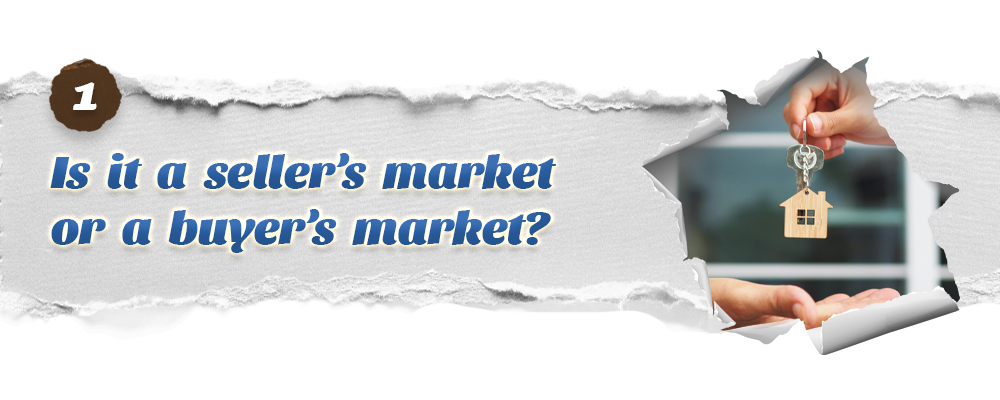

Before making any real estate purchase offer, you must determine your current local market conditions. Traditionally, in a buyer’s market where available inventory is high and houses tend to sit on the market for longer, you can have more flexibility on price. Home sellers might be more willing to negotiate with you since offers are usually fewer. You might be able to submit an offer that’s below the asking price and have the upper hand in negotiations.

In a seller’s market, however, it’s typically much harder to go below the asking price because inventory is low and multiple buyers are interested in the same properties. Since sellers usually get multiple offers, you might find it difficult to negotiate. If you want the property, it’s best to offer the list price or even go above the asking price if you can. Knowing the current inventory in your area is an absolute help when deciding how much to offer.


Once you’ve determined how much wiggle room there is to work with, it’s time to research recent sales in your desired neighborhood. With the help of your local real estate agent, ask them to work up a comparative market analysis, commonly known as comps, which will show recent sales prices for similar homes that have sold in the past few months. This information is the key to knowing whether the seller’s asking price is fair and reasonable or if they’re asking too much or too little for their home. You can use it as a reasonable baseline in terms of a starting offer.

If a property’s listing price is already noticeably higher than comparable homes, don’t be afraid to submit a low offer. Your agent is your best partner when it comes to breaking down recent sales and justification for your offer, giving more room for a productive negotiation.
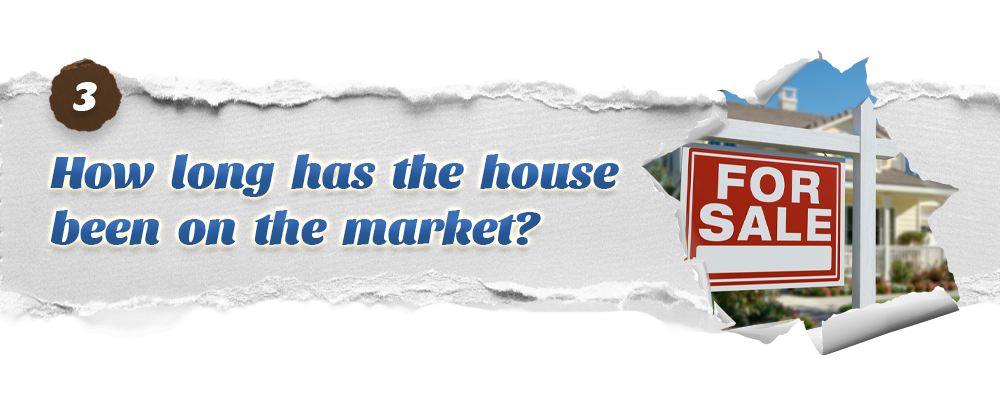

If the house has been available on the market for a long time (also considered a stale listing), the seller is probably extra motivated, which can mean flexibility on price. The homeowner may be more willing to negotiate or accept a lower offer. On the other hand, if the property has only been up for a few days, it might be best to match the asking price and be prepared for a bidding war if the home draws a lot of interest.

Information on how long a house has been on the market can easily be found on most real estate listings. If not, your trusted real estate agent will have access to this information through the multiple listing service. You can ask them to pull this data for you, and then use it as a reference as you write your offer.


Before making an offer, take the time to know the condition of the property, as it directly impacts its market value. Is it in need of repair or is it move-in ready? A house that requires significant repair or renovation will have a lower price than the one that is move-in ready. This is why you’d want to have a thorough inspection of the property. You can gather insights into its condition and market value, which will give you concrete evidence that can support your offer.

If you’ve found a fixer-upper that’s attracted little to no buyer interest, you might feel confident making a lower offer. It’s an investment risk, so you’d want to make sure you’re expecting a deal. Moreover, if the roof, furnace, windows, central heating and air conditioning unit, and other major home systems are nearing the end of their lifespan, know that they’re the most expensive to replace. Remember to keep those things in mind when determining your offer.


Homeownership is a huge financial commitment. And while everyone’s goal is to own their dream home, the reality is that we all need to work within our budget. In this sense, you’ll need to make an offer you can afford. You should understand your budget and consider several factors, such as the amount you are pre-approved for, how much you’ve saved for the down payment, your closing costs, and other additional expenses associated with buying and owning a home. 

Your mortgage pre-approval provided by your lender, in particular, will give you a ballpark figure that you can keep in mind as you write a purchase offer for a home. This is so you won’t make an offer that is above your budget or what you are qualified to borrow, which can lead to financial strain.


Last but not least, and you’re the only one who can answer this: How badly do you want the home? 

Maybe you’ve been house-hunting for a while now, and you’ve finally found what you think is the perfect home for you. This property meets your needs and the asking price is well within your budget. It might be worth it to consider offering exactly what the seller is asking for, or even a bit more—an offer that the seller can’t refuse, to show that you’re a serious buyer and you want the property more than anything else.


Don’t Know How Much To Offer On A Home? Consult With A Knowledgeable Real Estate Agent

Crafting an offer isn’t just about how much you can afford to pay, but also about how to be competitive and get the best deal possible. If you want to employ a strategic approach to secure your dream home, leverage the extensive experience of your trusted local real estate agent. 

Aside from guiding you through the offer process, they can discuss your options and recommendations based on current market conditions, the home’s conditions and features, and comparable sales, all while considering your preferences and budget. You can easily take the guesswork out of the process and negotiate successfully when you find a knowledgeable and dependable agent.
BuyerGeneralHomeownerNew HomeownerRenterSeller March 20, 2025

How Buying or Selling a Home Boosts Your Local Economy

How Buying or Selling a Home Boosts Your Local Economy

When you think about buying or selling a home, your focus is likely on personal goals—finding the perfect house, upgrading to a bigger space, or selling to start a new chapter. But what many people don’t realize is that every real estate transaction has a significant impact on the local economy.

From creating jobs to stimulating small businesses, the decision to buy or sell a home fuels economic growth in your community. Whether you’re purchasing a new construction home or selling an existing property, your move plays a key role in supporting local businesses, real estate professionals, and the housing market as a whole.

Real Estate’s Financial Impact on Your Community

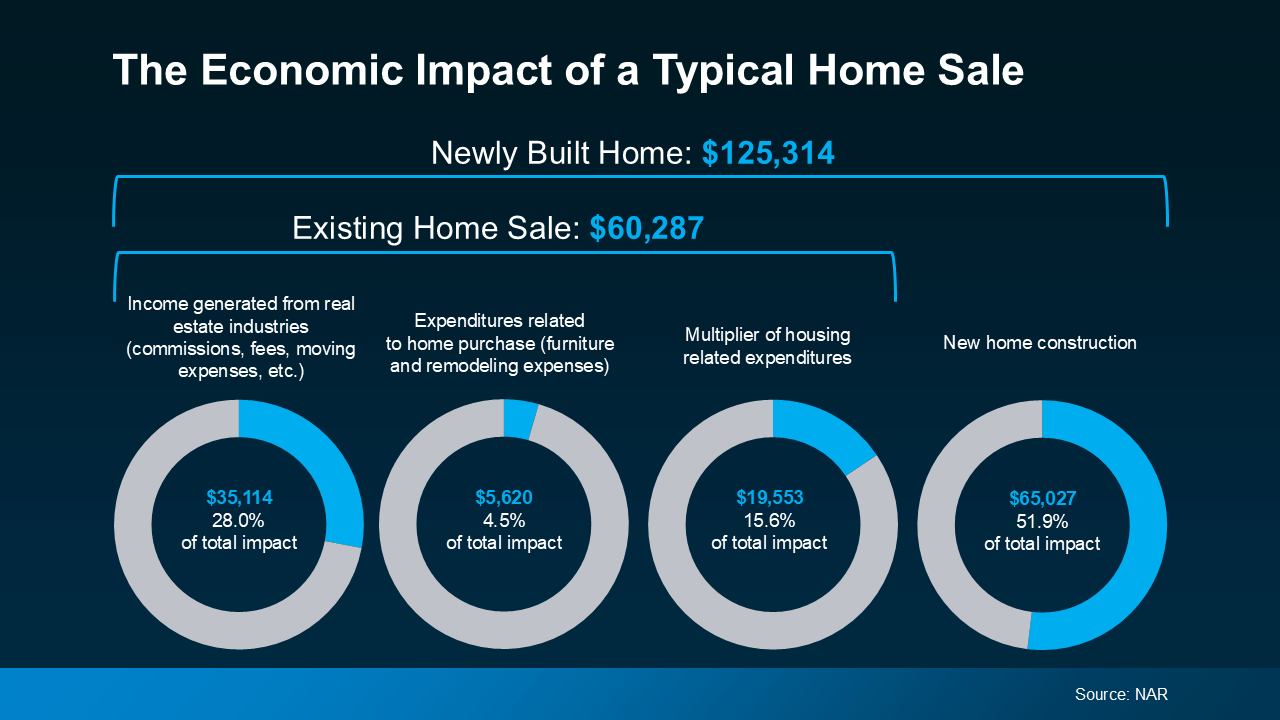
Each year, the National Association of Realtors (NAR) releases data that highlights the financial impact of real estate transactions. The findings show that:

  • Buying an existing home (previously owned) generates over $60,000 in local economic activity.

  • Purchasing a newly built home contributes more than $125,000 to the economy.

This economic boost comes from all the industries involved in home construction, remodeling, home improvement, and real estate services. Whether it’s hiring contractors, paying for home inspections, or working with mortgage lenders, every home sale triggers a series of transactions that benefit local professionals and businesses.

Who Benefits from Your Home Purchase or Sale?

A real estate transaction is more than just a buyer and a seller. A large network of professionals plays a role in ensuring a successful home sale. When you buy or sell a home, you help sustain jobs for:

Real Estate Agents & Brokers – Experts who market homes, negotiate deals, and help buyers and sellers navigate the process.
Mortgage Lenders & Loan Officers – Professionals who facilitate home loans, making homeownership possible.
Contractors & Builders – Those responsible for constructing new homes, renovating existing homes, and making necessary repairs.
Home Inspectors & Appraisers – Ensuring that homes are safe, structurally sound, and valued correctly.
Interior Designers & Home Stagers – Helping homes look their best to attract buyers and increase property value.
Local Businesses – Home improvement stores, furniture retailers, moving companies, landscapers, and service providers that benefit from home sales.
Attorneys & Title Companies – Handling legal documents and ensuring smooth property transfers.

According to Robert Dietz, Chief Economist at the National Association of Home Builders (NAHB):

“. . . housing is a significant job creator. In fact, for every single-family home built, enough economic activity is generated to sustain three full-time jobs for a year . . .”

That means every home bought or sold keeps local workers employed, strengthens businesses, and helps maintain a thriving real estate market.

Why Your Move Matters to the Community

Imagine walking through the front door of your next home, knowing that your purchase contributed to your neighborhood’s economic growth. Your decision isn’t just about finding a new place to live—it’s about:

🏡 Supporting Local Jobs – Ensuring that professionals in construction, lending, real estate, and home improvement continue working.
🏡 Strengthening Small Businesses – Helping local stores, landscapers, and service providers thrive.
🏡 Increasing Home Values – A strong real estate market leads to property value appreciation, benefiting homeowners.
🏡 Building a Better Community – When people invest in real estate, they invest in their town’s future.

Real estate is a driving force behind economic development. When homes are bought and sold, communities grow, schools receive funding, infrastructure improves, and businesses flourish.

Thinking About Buying or Selling a Home? Let’s Connect!

If you’re considering making a move, know that your decision is more than just personal—it’s a way to give back to your community. At Don Reid Properties, we’re committed to helping buyers and sellers navigate the real estate market with confidence.

Whether you’re buying your first home, upgrading to a larger space, downsizing, or selling your property, we’re here to provide expert guidance and support. Let’s work together to achieve your goals while making a lasting impact on our community.

📩 Contact Us | 📞 804-929-4475 | 🌎 Visit Our Website

Uncategorized March 14, 2025

Buying Your First Home? It’s Okay To Feel Nervous

Are you thinking about buying your first home? It’s an exciting milestone, but let’s be real – it can also feel overwhelming. The homebuying process comes with a lot of questions: Am I making the right decision? Can I afford this right now? What if unexpected repairs come up? These concerns are completely normal for first-time homebuyers.

At Don Reid Properties, we understand that buying your first home is a big step. That’s why we’re here to guide you through every part of the process, ensuring you feel confident and informed.

Focus on What You Can Control

One of the biggest stressors for first-time buyers is budgeting. Homeownership comes with new financial responsibilities like a mortgage, home insurance, and maintenance costs. It can be daunting, but you don’t have to navigate it alone.

By working with a trusted local real estate agent and an experienced lender, you can determine how much you can afford, understand your loan options, and get a clear picture of your monthly payments.

Pro Tip: Use our mortgage calculator to estimate your monthly costs and see what fits your budget.

Don’t Stress About Repairs

Worried about maintenance and unexpected repairs? That’s why home inspections are a key part of the buying process. An inspection will give you a detailed look at the condition of the property, helping you plan for any necessary repairs.

If repairs are a concern, talk to your agent about negotiating a home warranty from the seller. A home warranty can cover major systems like HVAC and plumbing, giving you peace of mind.

It’s Okay to Stretch – But Not Too Far

Many first-time buyers find that money is a little tight at first, and that’s normal. You may need to adjust your spending habits while you get used to your new financial responsibilities.

However, if buying a home leaves you with no room for necessities like groceries, gas, or savings, it may be a sign you’re stretching too far. A little financial adjustment is normal, but make sure you’re still comfortable with your overall budget.

Need help finding a home within your budget? Browse our latest home listings to find the perfect fit for you.

Your Job & Income Will Likely Grow

If you’re worried about making ends meet, remember that your financial situation will likely improve over time. As your career progresses, your income will likely increase, making your mortgage payments feel more manageable.

And if you ever face unexpected financial hardship, options like mortgage forbearance can help you temporarily pause payments until you get back on your feet.

Bottom Line

Buying your first home is a big step, and it’s okay to feel a little nervous. But if you’re financially ready, don’t let fear hold you back. At Don Reid Properties, we specialize in helping first-time homebuyers navigate the process with ease and confidence.

Ready to Take the Next Step?

Let’s chat! Schedule a free consultation today to get personalized guidance and expert advice. Click here to book a call.

What worries you most about buying your first home? Drop a comment below or send us a message – we’re here to help!

HomeownerSeller March 5, 2025

Unlocking the Secrets to Successful FSBO: Your Ultimate Guide to Selling Your Richmond, VA Home Without an Agent

Selling your home in Richmond, VA, without a real estate agent—commonly known as For Sale By Owner (FSBO)—can be both rewarding and challenging. While this approach offers potential savings on commission fees, it requires a comprehensive understanding of the real estate market and the selling process. To ensure a successful FSBO experience, it’s essential to be well-prepared and informed.

Understanding FSBO

FSBO empowers homeowners to take full control of the selling process, from setting the price to negotiating directly with buyers. While this approach can save on agent commissions, it demands a thorough understanding of the real estate market and the intricacies of property transactions.

Essential Steps for a Successful FSBO Sale

Successfully selling your home as a For Sale By Owner (FSBO) requires meticulous planning and execution. Here are the essential steps to guide you through the process:

  1. Accurate Pricing: Determining your property’s market value is crucial. Research comparable homes in your area to set a competitive price. Overpricing can deter potential buyers, while underpricing may lead to financial loss.

  2. Home Preparation: Enhance your home’s appeal by decluttering, making necessary repairs, and staging. First impressions matter, so ensure both the interior and exterior are inviting.

  3. Professional Photography: High-quality photos are crucial for online listings. Consider hiring a professional photographer to showcase your home’s best features.

  4. Legal Requirements: Familiarize yourself with Virginia’s disclosure laws and consider hiring a real estate attorney to ensure all paperwork is correctly handled.

  5. Marketing Strategy: Utilize various platforms, including social media, FSBO websites, and local classifieds, to reach potential buyers.

Common Questions FSBO Sellers Encounter

When selling your home as a For Sale By Owner (FSBO), it’s crucial to anticipate and prepare for common questions that potential buyers may ask. Addressing these inquiries effectively can build trust and facilitate a smoother transaction.

  • Are you willing to pay a commission if an agent brings you a buyer? Some buyers work with agents, and offering a commission can widen your buyer pool.

  • How did you determine your listing price? Be prepared to explain your pricing strategy based on market research and property evaluations.

  • What is included in the sale? Clarify which appliances, fixtures, or furnishings are part of the sale to avoid misunderstandings.

Pros and Cons of FSBO

While FSBO can save on commission fees, it also means taking on responsibilities typically handled by agents, such as marketing, negotiations, and legal paperwork. It’s essential to weigh these factors carefully before deciding.

Conclusion

Embarking on the FSBO journey in Greater Richmond, VA, requires diligence, research, and preparation. By understanding the process, addressing common buyer questions, and utilizing various marketing tools, you can position your property for a successful sale.

For personalized guidance and support, consider reaching out to Don Reid Properties. Our expertise in the Richmond real estate market can provide you with the insights and assistance needed to navigate your FSBO experience effectively.

Seller March 3, 2025

7 Huge Signs It’s Time To Sell Your House

Your home isn’t simply one of your biggest investments. More than just a physical shelter, it’s a space where precious memories are made. But as much as you love your home, there will always come a time when you feel like it’s time to move.

According to the National Association of Realtors® 2024 Profile of Home Buyers and Sellers, the median number of years a seller owned their home was ten. Some of the most commonly cited reasons for selling are that the house is either too small or too large or that the neighborhood is becoming less desirable.

While there are a variety of reasons, selling a home is undoubtedly a huge decision — one that will make you reassess your current situation. Maybe it’s something you’ve been considering for a long time as you scrutinize the most recent property listings and daydream about a new house. If you’re still on the fence about selling, here’s a look at seven telltale signs that it’s time to sell your house.


Financial reasons:

Home equity, in simpler terms, is the difference between how much your home is worth and the amount you owe on your mortgage. Knowing how much equity you have in your home is usually the first step if you are considering selling, as sufficient equity may increase your chances of leaving the sale with a decent profit. 

The best way to calculate home equity is to subtract the value of your home from the loan balance. So, how much equity should you have before you sell your house? You want to at least have enough equity to pay off your current mortgage. And if you can make enough profit to cover the 20 percent down payment on your next home so you can avoid paying private mortgage insurance, plus enough to cover closing costs and other moving expenses, then even better.

Aside from your monthly mortgage costs, if you find that rising property taxes, homeowners insurance, and maintenance costs are starting to become unmanageable and have been straining your budget, the next resource may be to sell and find a more affordable home. Selling your home to ease your mortgage burden is a better route than risking foreclosure, especially if you underestimated your housing costs.


Lifestyle changes:

Changes in your needs and lifestyle can make you rethink your space. If you have a growing family, what might have been a good size when you first moved into the house might no longer be the case. Outgrowing your home is an indicator that you need to upsize, especially if you’re already in a situation where your kids are crammed into a bedroom or your aging parents need to move in with you. The next logical step is to consider selling your home and buying a bigger one to accommodate this new chapter in your life.

On the other hand, you might need to downsize if your children have all grown up and moved out. It’s a simple solution that will not only lessen your maintenance and upkeep costs but also help you save money that can be used for retirement or other investments.

Certain life events, such as death, illness, divorce, or relocation for a new job, can also be significant factors that may warrant a need for a change.

Maintenance is one of the most significant responsibilities associated with homeownership. However, scheduled services such as landscaping, house cleaning, pest prevention, trash removal and recycling, septic service, and even tree or snow removal often come with a hefty price tag, particularly when getting the help of a professional. According to Homeguide, in 2024, the average home maintenance costs range from $4,000 to $22,000 per year, although the cost depends on the home’s age, size, location, features, and condition.

If the energy or expenses of keeping up with your home’s maintenance is starting to feel more trouble than it’s worth, you may want to consider selling and instead buying a lower-maintenance real estate, such as a condo or new construction.


Neighborhood and market factors:

Seeing your beloved neighborhood change as time passes by can have its pros and cons. While changes are to be expected, it can be saddening if your neighborhood changes so much that it already affects your quality of life or displeases you, especially if you’ve lived in it for a long time. Issues like rising crime rates, unwanted construction, or increased traffic congestion can make you want to relocate. It can also be disheartening to see your closest neighbors move out one by one. These factors are good enough reasons to sell your home and find another neighborhood that will best suit your needs and lifestyle.


When deciding whether it’s time to list your home for sale, the state of the property market can also be part of the equation. In a strong seller’s market, homes generally sell faster for a higher price since the housing demand exceeds supply. Competition among buyers might be higher when your home goes on the market, which means you can probably sell your house for more money and have plenty of offers to choose from.

While it goes without saying that you’d prefer to sell your home when the market is good, ‘timing the market’ shouldn’t be your top priority and should only be one factor.


Personal readiness:

Last but not least on this list, you’d want to ensure that you are emotionally ready to sell. The process of selling can be an emotional roller coaster. Are you ready to let go of your personal attachment to the home? Aside from the need to declutter and prepare the home for sale, you also need to prepare yourself for any kind of adverse feedback you may receive from potential buyers. Even if the numbers are all saying that it’s time to sell, your psychological preparedness matters as much, so give yourself time.

On the flip side, maybe you already have the next logical step and have the means to do so. Having a solid plan of what comes next makes you ready to move out and leave your beloved place to venture into something new.


Bottom line

Don’t get us wrong—the decision to sell your house is still up to you, so take your time deciding if you should sell. Then, study the local housing market and find a trusted and knowledgeable real estate agent in your area so you can be completely ready when you do decide to move.

BuyerGeneralHomeownerNew HomeownerRenter February 27, 2025

Is an Accessory Dwelling Unit (ADU) Right for You? Here’s What You Need to Know

Are you struggling to find a home within your budget? Or maybe you already own a home but want to generate extra income or create a private living space for aging parents or guests. In today’s competitive real estate market, an Accessory Dwelling Unit (ADU) might be the perfect solution.

What Is an ADU?

An Accessory Dwelling Unit (ADU) is a self-contained living space on the same lot as a single-family home. According to Fannie Mae, an ADU must include its own designated space for living, sleeping, cooking, and a bathroom—independent of the main house. ADUs come in different forms, including:

  • Attached ADUs – Built as an extension of the main home, such as an apartment over a garage.

  • Detached ADUs – A separate unit on the property, like a guesthouse or tiny home.

  • Interior ADUs – A converted space within the main home, such as a basement apartment.

Why Are ADUs Gaining Popularity?

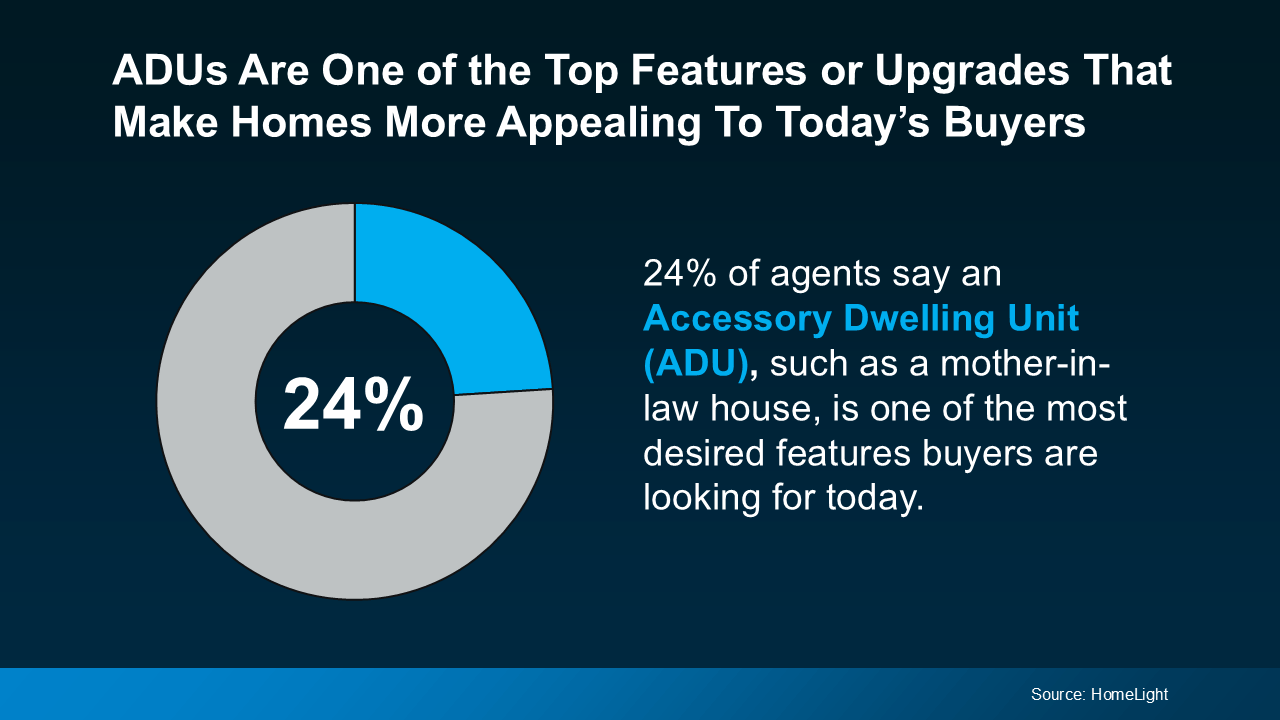
The demand for ADUs is rising, with a recent survey revealing that 24% of homebuyers consider an ADU one of the most desirable features in a home. Here’s why:

1. Extra Income Potential

Renting out an ADU can provide additional income, helping homeowners offset mortgage payments, property taxes, or maintenance costs. With the rise of Airbnb and short-term rentals, ADUs offer a flexible investment opportunity.

2. Multigenerational Living Made Easy

Many families today are looking for ways to accommodate aging parents while maintaining independence. An ADU allows loved ones to stay close without sacrificing privacy, making it an ideal solution for multigenerational living.

3. Built-In Childcare & Family Support

Having grandparents or extended family members living in an ADU can be a game-changer for working parents. With built-in childcare, families save on daycare costs while strengthening family bonds.

4. Increased Home Value

ADUs are an attractive selling feature, boosting property value and making homes more appealing to future buyers. Freddie Mac and AARP report that homes with ADUs often sell for higher prices due to their versatility and rental income potential.

What to Consider Before Adding an ADU

Before investing in an ADU, homeowners should check local zoning laws and building codes. Regulations vary by location, and while some areas allow ADUs as separate rental units, others may have restrictions on occupancy or resale.

Bottom Line

An ADU can be a smart investment—whether you’re looking for extra income, a private space for family, or a way to boost your property value. If you’re interested in buying a home with an ADU or adding one to your existing property, our team at Don Reid Properties can guide you through the process.

📩 Contact us today for expert advice on ADUs, home values, and the Richmond real estate market!

Buyer February 12, 2025

Down Payment Assistance Programs: How Do They Work To Help You Become A Homeowner

Buying a home is no easy feat. You usually have to put money down equal to a percentage of the final purchase price, or your down payment. Having this upfront cash on hand may not be easy for everyone. In fact, it’s one of the major hurdles when buying a home. This is why down payment assistance programs are available to qualifying home buyers. 

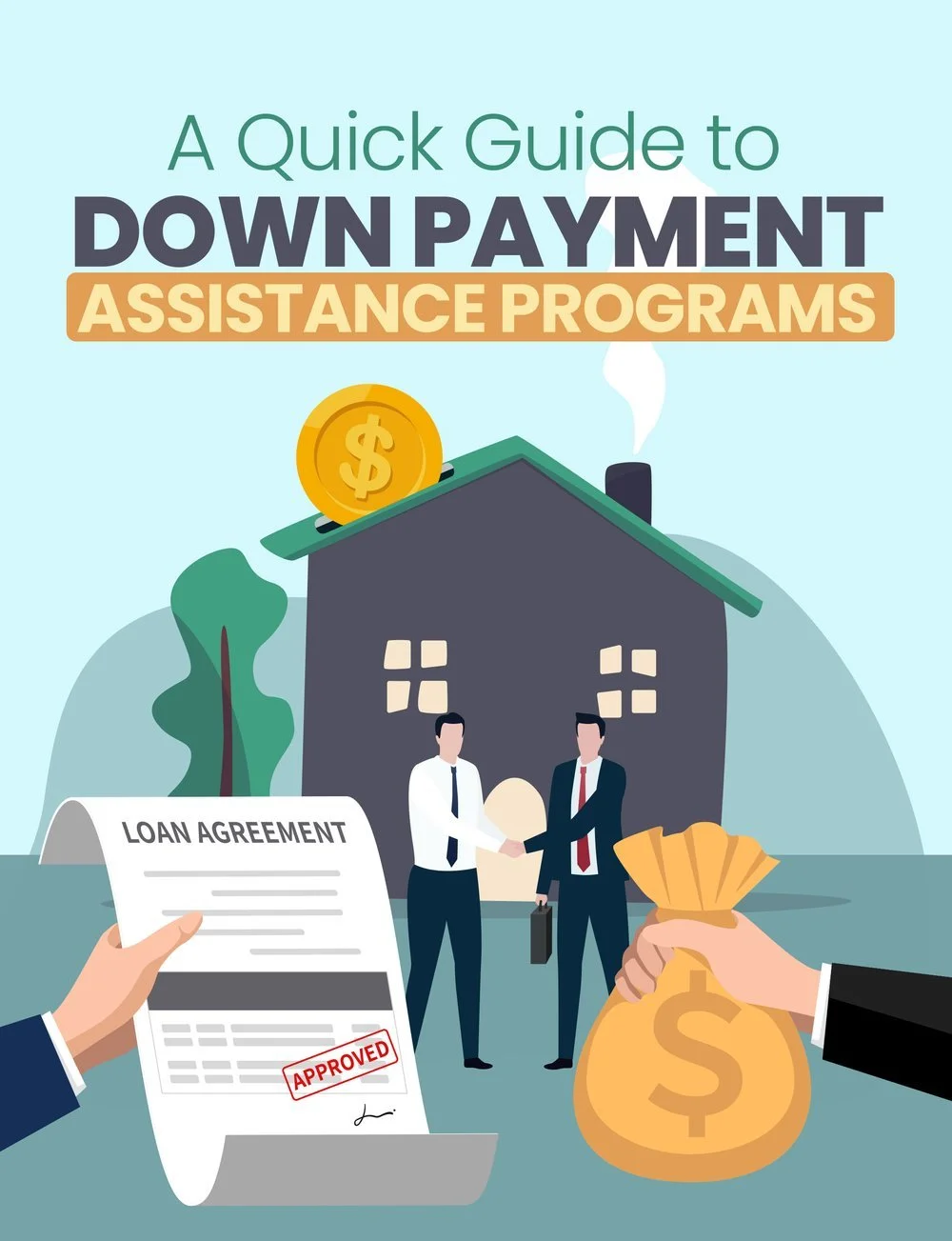
Here’s a quick guide that will explain what a down payment assistance program is, how it works, and what are the different options that exist to help you reach your goal of owning a home.

Down payment assistance (DPA) is any type of program designed to help home buyers afford a down payment. Some programs also help lower or cover your closing costs. There are thousands of DPA programs available across the country, and the majority of them are offered at state, county, and city levels, and even through some banks and lenders. Down payment assistance is typically geared toward first-time home buyers, but there can also be assistance available for repeat home buyers. 

These programs typically have eligibility requirements and borrowers usually have to take out a mortgage with a participating lender to take advantage of their assistance program. The funds often come from the U.S. Department of Housing and Urban Development, or HUD, as well as employers, community organizations, and state and local governments.


Any type of down payment assistance is likely to have certain qualifications. The majority of these programs are geared toward first-time home buyers. A first-time homebuyer is someone who hasn’t ever owned a home or hasn’t owned a home in the past three years.

Beyond that, other typical requirements include a minimum credit score of 620, a low-to-moderate household income, and a debt-to-income ratio. Do take note that these requirements vary from program to program. Likewise, many DPA programs also require the following:

  • You must live in a certain city or county

  • You must purchase a primary residence, not an investment or rental property

  • You must attend a first-time home buyer class or financial literacy classes

  • Purchase a single-family home, condo, or a townhouse

  • You must be in a public service profession, such as a teacher, firefighter, police officer, emergency responder, active-duty service member, or other public servant.

  • Qualify for a 30-year, fixed-rate first mortgage to buy the home.


Down payment assistance comes in three main types: loans, grants, and credits, each with its pros and cons. Here are some of the most common:

  • Grants

Home buyer grants are the most popular and most valuable form of down payment assistance. This is because it provides homeowners the money that they never have to repay since it’s considered a gift. If you qualify, you can use the cash sum to cover all or part of the down payment or closing costs. 

However, most grant programs are often more difficult to qualify for due to challenging requirements, such as that you need to live in the home as your primary residence for a certain number of years after your purchase. It’s also important to keep in mind that some programs labeled as grants by the organization providing the funding may create a second lien on your home. Just make sure that you know what you’re getting into and that your lender is aware of the grant. 

  • Forgivable loans

A forgivable loan is technically a second mortgage large enough to cover the down payment, but it acts as a grant since you don’t have to repay the loan if you meet certain requirements. For example, a program might forgive the loan if you live in the home and pay the primary mortgage for a set amount of time, typically anywhere from three to 10 years. However, if you move, refinance your mortgage, or sell your home before the loan is forgiven, you’ll need to pay it back. Forgivable loans have an interest rate of 0%.

  • Deferred payment loans

A deferred payment loan most often takes the form of a no-interest second mortgage that typically covers the cost of the down payment. But unlike forgivable loans, you will have to pay back the loan at some point. This happens when you sell the home, refinance your mortgage, or pay off your first mortgage.

  • Low-interest loans

This type of down payment assistance also functions as a second mortgage but with a lower or more affordable interest rate than your first loan. Along with making monthly payments for your primary mortgage, you’ll likely need to repay this loan in installments, typically over a few years. This means you’ll be making two monthly mortgage payments.

  • Individual Development Accounts or matched savings programs

Also called a matched savings program, an Individual Development Account (IDA) is a unique type of down payment assistance. It’s a special savings account that home buyers deposit money into, which is matched by either a bank, government agency, or community organization. For example, if you put $5,000 into the account, the agency you’re working with would match that amount, making it $10,000. The total funds can then be used to help cover their down payment or other qualifying costs. These programs often have strict requirements to qualify, such as income restrictions, and employment requirements, and participants usually need to complete financial literacy training.


There are many ways to find down payment assistance. Here’s where to start:

  • You can check the HUD website for local home-buying programs at the state level. You can also check for HUD-approved housing counselors in your area.

  • Contact your state’s HFA or visit its website to learn about your own DPA options, as every state runs an HFA that helps homeowners and renters.

  • Check your city or county website to see if they offer any grants or loan programs.

  • States and some larger cities have housing finance agencies, which can be great resources for state-supported programs.

  • Municipalities often have housing support programs in one form or another, regardless of whether they do so through a housing finance agency or otherwise.

  • Nonprofits focused on housing also are good places to look for grants and other forms of down payment assistance.

  • Look for down payment assistance programs for specific groups. There are programs for people who work in particular occupations, such as the Teacher Next Door program. There are also programs available for other public service professionals.

  • Your real estate agent and mortgage lender can also be great resources when looking for an assistance program. Just don’t forget to find out if your lender works with the specific down payment assistance program.

  • Private company Down Payment Resource also provides various resources for homebuyers, real estate agents, and lenders, including an eligibility and assistance lookup tool.


Understand that down payment assistance varies from state to local levels, so the amount of time it takes to get one mainly depends on the program and the type of assistance. While the timeline varies, you can expect that it will be a relatively long process.

If you’re considering applying for a down payment assistance program, you may want to start looking for your options before you start your home search. This is so you can give yourself plenty of time. If you’re required to take a first-time home buyer course or a financial literacy course, you can still complete it within the dedicated timeframe.

Seller February 12, 2025

A Record Number of Buyers Are Planning To Move in 2025 – Is Your Home Ready?

A Record Number of Buyers Are Planning To Move in 2025 – Is Your Home Ready?

If you’ve been thinking about selling your home, 2025 might be the perfect time to make your move. According to a recent NerdWallet survey, a record 15% of people are planning to buy a home this year—the highest percentage ever recorded in this survey.

What This Means for Home Sellers

For the past few years, buyer demand has hovered between 9-11%. This sudden increase signals pent-up demand that’s making a comeback. While we may not see the same frenzy as in previous years, this uptick in homebuyers means a more active real estate market in 2025.

Many of these buyers have been waiting for the right time to purchase, and now they’re jumping back in. Whether they’ve saved enough, feel more confident about the market, or simply need a change, this is the year they’re ready to buy.

Buyers Are Already Looking – Will They Find Your Home?

One key takeaway from the NerdWallet survey: 54% of potential buyers are already searching for homes online. That means listing your home strategically—with expert pricing, staging, and digital marketing—can ensure it stands out when buyers are actively looking.

📢 That’s where Don Reid Properties comes in. We know how to position your home for maximum exposure, leveraging tools like:
✔️ Social media marketing to get your home in front of the right buyers
✔️ High-quality listing photos and videos to make your home shine
✔️ Targeted email campaigns to engage serious buyers
✔️ Expert pricing and negotiation strategies to get you top dollar

The Bottom Line

With buyer demand reaching new heights, selling in 2025 could mean a faster sale and the best possible price for your home. But success in this market requires strategy and expertise.

💬 Ready to explore your options? Let’s chat about getting your home in front of motivated buyers. Call us today or send us a message!

📲 Follow Don Reid Properties on social media for the latest market insights, home-selling tips, and exclusive listings! Stay ahead of the game and get the expert advice you need.

  Selling Made Simple:      Receive a Cash Offer for Your Home Now!

Selling Made Simple: Receive a Cash Offer for Your Home Now!

#HomeSelling #RealEstate2025 #SellerTips #DonReidProperties #HousingMarket #TimeToSell

GeneralHomeowner January 29, 2025

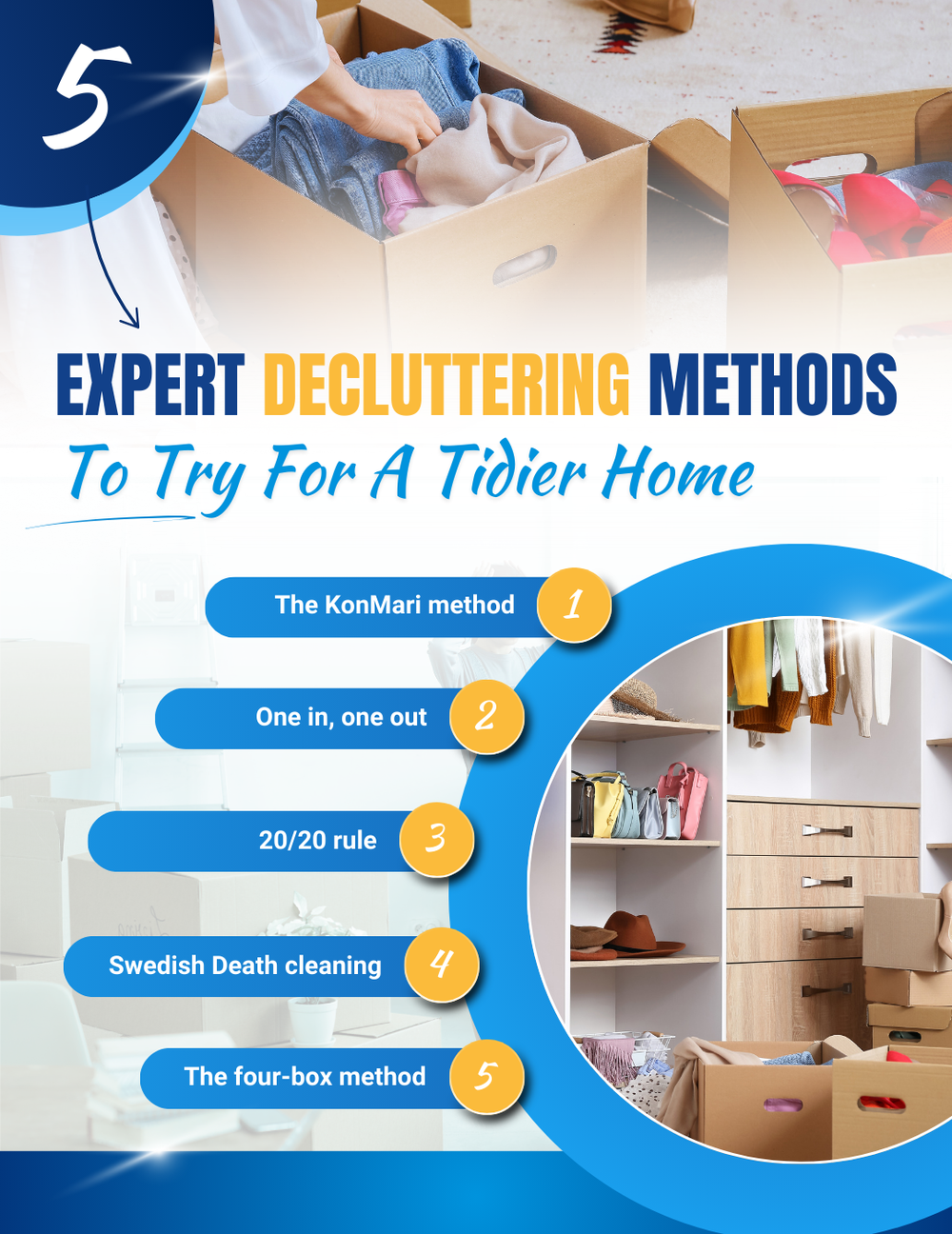
From KonMari To 20/20: 5 Expert Decluttering Methods To Try For A Tidier Home

For many, the start of the year is a wonderful opportunity to refresh their living spaces. Aside from cleaning your home, tidying and decluttering might also be at the top of your list. 

Decluttering, albeit a daunting task, can be very rewarding. Letting go of items you no longer need or no longer serve their purpose frees up space in your home and your mind, leaving you feeling lighter and happier. 

If you feel like decluttering is such a chore, it might be because you haven’t found a method that works well for you. Understand that there isn’t a “one-size-fits-all” decluttering solution. Tidying up your space will always depend on your time, energy, or interest, so you don’t have to follow only one rule. Here we’ve rounded up five of the most popular and expert decluttering approaches to owning less, hopefully to make the task a little easier for you. 

Whether you want to experiment with these methods to see what works best for you, or you already have a favorite approach but want to try a new one, the results will remain the same: your remaining items will have more meaning and you’ll also have the chance to help others when you donate the ones you no longer need.


What is the KonMari Method™?

The KonMari Method™ is probably one of the most famous decluttering methods, introduced by Japanese organizing consultant Marie Kondo in her 2014 bestselling book “The Life-Changing Magic of Tidying Up.” She also starred in her own Netflix show, “Tidying Up With Marie Kondo.”

The core principle of the KonMari method is simple — choosing what sparks joy. Instead of choosing what to discard, you are choosing to keep only the items that speak to your heart. Kondo recommends tidying by category and not by location, starting with clothes, then moving on to books, papers, komono (miscellaneous items), and, finally, sentimental items. To get started, collect every single item you own in a particular category and put them in a big pile. Gather all your clothes, for example, and then start the process of deciding what to keep. As you go through your belongings, Kondo suggests that you thank your items for their service before throwing or donating them.

This method is also an effective way to make a lot of progress decluttering in specific categories across multiple areas of the house at once.

Who is it for?

  • People who love mindfulness and intentional living can greatly identify with this approach. 

Any drawbacks?

The KonMari method can be time-consuming since you will be sorting through your entire stuff instead of focusing on a particular room or space. Additionally, this is not entirely a minimalist method as it can also encourage hoarders and pack rats to continue keeping things they don’t need, just because they think these items still spark joy in their lives.


What is the one-in, one-out technique?

This simple rule means that in each category, you can’t add another item until you remove or donate one you already have. This can apply to books, clothes, shoes, sets of glassware, cutlery, and kitchen tools, among others. If you follow this method properly, you’ll never accumulate more than you should and can keep the volume of your belongings constant.

Who is it for?

  • Perfect for impulsive buyers, especially those who always love to shop for clothes and other personal items. Keeping this in mind can help you avoid unnecessary purchases and teach you how to be less materialistic. Before buying an item, it will make you stop and think first: “Do I really need this item?” “Do I have a similar item that serves the same purpose?” “Is there something I am willing to let go of in return?” 

  • Homeowners who want to try a strict approach this year can follow this one, especially if you’ve just finished decluttering or are in the process of it.

Any drawbacks?

Things can get out of hand when you use this rule as an excuse to purchase new items and bring more things into your home. If you continue to buy and just tell yourself that you’ll get rid of something in its place, it can eventually lead to a never-ending cycle of buying and decluttering.


What is the 20/20 rule?

This rule is simple: If you are unsure about an item but it costs under $20 and could be replaced within 20 minutes, you can declutter it.

Who is it for?

  • For those who need a low-commitment push to get started on their decluttering journey, especially if they have a nice pile of things that haven’t been used for months or years.

  • Perfect for those “I-could-use-it-one-day” or “just in case” items, such as when purging your kitchen or junk drawers

Any drawbacks?

You may not be able to apply this tactic to a lot of sentimental items, since if they are really sentimental, then they can’t be replaced for less than $20 in 20 minutes.


What is the Swedish Death Cleaning method?

While this decluttering idea sounds morbid, the intention is important and meaningful. Swedish Death Cleaning was first introduced by Margareta Magnusson in her book Dostadning: The Gentle Art of Swedish Death Cleaning. Dostadning, or the art of death cleaning, is a Swedish phenomenon by which the elderly and their families set their affairs in order. 

This method of decluttering is designed for those later in life and involves removing all non-essential items to ease the process for your loved ones once you’ve passed on. It’s a wide-scale method to declutter your home, with suggestions that include dealing with larger items then moving down to smaller items (junk drawer, wardrobe), and then saving sentimental things for last. It allows you to keep the more precious items since you might decide to give them away to the special people in your life. Fans of this method see it as a gift to your loved ones, especially if you don’t want to end up leaving your mess for them to deal with for months or even years.

Who is it for?

  • While the original intention is for the elderly or those who are in their later years of life, Magnusson points out that people of any age can use Swedish Death Cleaning to help them declutter and organize. This is especially true when you realize that you can hardly close your drawers or cabinets. 

Any drawbacks?

It’s worth noting that the Swedish Death Cleaning is designed to be slow, so expect that it can be a long and thorough process.


What is the four-box method?

As the name suggests, all you need here are four empty boxes that you will label with their purpose. While there are some variations, most experts include the following: keep, trash or throw away, donate, and sell. Other variations also include ‘rehome’ and ‘undecided.’

This is quite an easy, straightforward, and flexible way to deal with your clutter as you can do it for however long and whatever frequency you prefer. You can also use the ‘Undecided’ box if you are still unsure about any particular item. If you have several family members, they can have their boxes and even have them customized to the categories they need.

Who is it for?

  • Highly recommended for those who are just starting their decluttering journey because of its simplicity and effectiveness.

  • Those who are decluttering small, dedicated spaces can also benefit from this method.

  • Go for this if you like putting things in fixed categories.

Any drawbacks?

While this strategy is pretty straightforward, the problem comes when you become indecisive on a lot of items and everything ends up in the ‘undecided’ box. If you don’t have the time or confidence to address them later, you might end up with piles of miscellaneous items that will either just stay in the box or clutter up other areas of your home. The key is to follow through with what you’re supposed to do with your stuff according to the category they fall under. Also, you may need a little guidance when it comes to deciding on things that fall into one or more categories.

Uncategorized January 24, 2025

Planning To Sell This Year? Don’t Forget To Factor in These Closing Costs

If you’re thinking about selling your home this year, you’ve probably been monitoring its value for a while so you can sell and still get a substantial profit. But before you start counting how much money you’ll make, don’t forget to factor in seller closing costs into the sale price. 

Let’s take a closer look at closing costs and an overview of the fees that will be deducted from your overall profit.

“Closing costs” is a catchall term for the various fees and expenses you must pay upon closing or completing a real estate transaction. These can include various fees, expenses, and charges, which are split between the home’s buyer and seller. These fees do not include realtor commissions.

The exact fees can vary depending on your location and the house’s cost. But in total, closing fees can add up to around 2 to 5 percent of the home’s sale price, according to Freddie Mac. Sellers usually take these costs out of their sale proceeds (unless you specifically ask to pay them separately), while buyers need to pay them upfront.


  • Transfer tax

Most states or local governments charge some form of transfer tax. According to Bankrate, a real estate transfer tax, also sometimes called a deed transfer tax or documentary stamp tax, is a one-time tax or fee imposed by a state or local jurisdiction upon the transfer of real property. In other words, it’s a fee that you’ll pay when the title for the home passes from you to your buyer upon closing. The cost varies widely by location but is typically dependent on the home’s sale price. Also, take note that not every state has this tax.

  • Title-related fees

In most markets, it is the seller who pays for the owner’s title insurance, which protects against potential ownership issues. It’s a one-time payment that protects the future owner from the financial burden of sorting out title issues in court, whether they arise at closing or years down the road. Costs can vary from a few hundred dollars to $1,500 or more.

  • Attorney fees

In some states, home sellers are required to have a real estate attorney to help them with the transaction. The transaction cannot legally close without one. And even when it isn’t mandatory, many choose to hire one to ensure their interests are protected. This is especially true when dealing with complex transactions, distressed properties, or inherited homes. 

Since markets also vary, in some areas both the buyers and sellers have their attorneys, while in others, it’s common to have one settlement attorney for the real estate transaction. Their fees range significantly — anywhere from $150 to $350 per hour, or it could be a flat fee depending on what they do for you.

  • Escrow or settlement fees

Funds are usually held in escrow during the course of a real estate transaction, which means there will likely be fees owed to cover the services of the escrow company. This independent third party not only handles the money that’s being exchanged between the seller and buyer but also manages the signing and recording of the closing documents. As with other fees, the amount varies by state but can range from $300 to $700, or sometimes more. This can also include extra line items related to documentation (drafting, notarization, recordation) and money movement (wire transfers).

  • Prorated property taxes

One of the costs of homeownership is property taxes. And these must be up to date before you hand over the keys to the buyer. All states have some form of property tax, although the rate can vary widely. When you sell your house, you’ll be responsible for prorated property taxes due up to the date of the sale, at which point the buyer will take over. Depending on your timing, you may have to pay money at closing to bring yourself up to date.

  • Mortgage payoff

If you still have a mortgage on the property you’re selling, which is common, the remainder of that loan will need to be paid off before the sale is finalized. In some cases, your lender may require you to pay a prepayment penalty for paying off your mortgage before the end of the term. To get an accurate picture of this closing cost, make sure to talk to your lender about what will be required to pay off the home loan.

  • HOA fees

Just like with property taxes, if you’re living in a community that is subject to a homeowner’s association, HOA fees will also need to be paid up-to-date as of closing day. Some HOAs also charge a transfer fee to transfer your property to the new owner. Best to check with your HOA’s rules and regulations so you won’t be surprised by any charges.

  • Seller concessions

In a buyer’s market or just to make the deal go through, it’s a common practice for a seller to offer to pay some of the buyer’s closing costs. This is also referred to as seller contribution or seller credit, which can help sweeten the deal and make your home more attractive to potential buyers. One of the most common seller concessions is agreeing to cover the cost of necessary repairs, especially after the home inspection. 

The total amount of seller concessions may be limited by the type of home loan the buyer is using. For example, loans backed by government agencies, such as the Federal Housing Administration (FHA), have their limits on seller concessions. If you’ve offered any seller concessions as part of your deal, expect that these funds are also due at closing.


Closing costs are due when you finalize the sale of your home. After meeting with the closing agent, title company, and/or attorneys to sign the documents and disburse funds, these costs are deducted from your proceeds. Unless your property is underwater (where you owe more than it’s worth) or you choose to pay separately, you won’t need to bring cash to closing.

👉 Unfortunately, you won’t know the exact amount of your closing costs until about three business days before closing day. At that time, you’ll receive a closing or settlement statement with an itemized list of fees.

💡 That’s why having a trusted agent is essential. At Don Reid Properties, we’ll go the extra mile to prepare a seller’s net sheet—a detailed, unofficial breakdown of your estimated closing costs and the amount you’ll take home.

📲 Want clarity on closing costs and your bottom line? Let’s connect today to ensure you’re fully informed and ready to sell with confidence!