Seller October 31, 2023

5 Tips To Help Sell Your Home in The Fall

Sure, the spring season is the peak time to put a house on the market. But with the cooler weather, vibrant-colored trees and falling leaves, picking apples, carving pumpkins, and enjoying turkey dinners, there’s plenty to look forward to when fall comes. One of them could be a successful home sale if you plan to put your home on the market this season. 

Housing inventory during fall tends to be lower than it is in the spring and summer months, so sellers might be more likely to attract serious autumn buyers. But to successfully sell your home, you might as well need to consider a few different approaches. Keep on reading to get a list of worthy tips that take your house from “For Sale” to “Sold” before the last leaf falls.


Boost your home’s curb appeal.

Nothing screams autumn more than the gorgeous leaves falling, spreading warm colors in your backyard. However, keeping on top of yard cleanup is also one of the biggest challenges home sellers face in the fall. Because no matter how beautiful fall leaves are, they can make your whole house look untidy if not cleaned up regularly. So don’t forget to cross off these items on your to-do list:

  • Rake up dead leaves and plants, tree branches, and other debris from your lawn daily. Trim hedges and tree limbs that could pose hazards to guests. Likewise, give special attention to any overgrown vegetation that could block the windows or any paths.

  • Clean the gutters. The last thing you’d want is for dead leaves to cause a bunch of damage to your home’s gutter system. If there are piles of leaves in the gutters, it is time to clean them out.

  • Add some popular fall flowers, such as chrysanthemums and marigolds. You can also add other colorful, seasonal planters on the steps and along the sidewalk.

Other simple projects, such as washing the driveway and sidewalks, or giving your front door a fresh coat of paint, can go a long way in boosting curb appeal so buyers will be drawn the second they see your home.

Embrace the season, but don’t go overboard with the decor.

Feel free to incorporate the colors and spirit of fall in your living spaces. Add a quilt or throw pillows in bright red, orange, and/or golden yellow hues over your sofa or an entry bench. Use seasonal decor — think apples, pumpkins, wreaths of fall leaves and pine cones, cinnamon, and unscented candles — to create a warm, cozy, and inviting atmosphere

The one thing you should never do: is overdoing your decor. Skip the scary Halloween decorations if you’re having an open house or showing around that time since they can appear messy and distracting. The last thing you want is for a potential buyer to walk in your front door to be greeted by a bloody skeleton or sticky cobwebs hanging from your entryway ceiling fan. Try to be tactful and subtle with your decorations to appeal to as many potential buyers as possible.

Let there be more light.

Fall months mean shorter days, which means you can’t depend on natural lighting to showcase your home’s best features. Plenty of potential buyers will want to look at homes when they get out from work, and nobody wants to walk into a dark and gloomy home when it’s already dark and chilly outside.

The key is to maximize light to make your home look warmer and more inviting. It’s also important to brighten up your house so that buyers can see your home’s best features. To accomplish this, consider bringing in extra tables and floor lamps to rooms with dark corners. You can also place spotlights throughout your home behind your furniture. You may also install under cabinet lights in the kitchen and bathroom, as well as additional lighting around staircases and walkways. Another popular tip is to refresh interior paint with warm neutral tones, which will reflect more light.

If your home’s exterior lighting currently feels lackluster, consider these creative but inexpensive lighting solutions to amplify your home’s appeal:

  • Add solar lights along walkways

  • Illuminate outdoor lounge spaces, including your porch or deck, with cafe or bistro lights to create a cozy ambiance.

Aim for spotless and well-maintained windows.

Summer thunderstorms can make your windows dusty and streaked, with layers of dirt covering the exterior window trim, by the time fall rolls around. You might not give it much attention, but buyers will definitely spot any smudges. Before you start showing your house, your windows have to sparkle to make a good impression. This will also help let in as much light as possible.

Wash your windows and any glass panels in your doors inside and out. Remove the screens and spray them down to get rid of any accumulated dust and dirt. Don’t forget to clean the exterior window frames. While you’re at it, check window seals and doors for drafts, and make extra efforts to insulate when needed since drafts are more noticeable in the fall.

Give your HVAC some TLC.

Depending on the region, fall months might feel damp and cold. When potential buyers walk through your home, it should feel warm and welcoming. This is why it’s more important than ever to ensure that your HVAC systems are in good shape. Having your furnace inspected and cleaned by an HVAC specialist before selling your home can be beneficial as you can provide the receipt as proof it has already been completed. Also, remember to replace the furnace filter to help reduce any odors or fall allergens in the home and keep it smelling fresh.


Uncategorized October 24, 2023

Understanding the Benefits of Owning Your First Home

Are you considering buying your first home? If so, it can be helpful to know what led other people to make that decision. According to a recent survey of first-time homebuyers by PulteGroup:

“When asked why they purchased their first home recently, the answer was simple: because they wanted to. Either the desire to stop renting or recognition that homeownership is a smart financial investment was the main motivator for 72% of respondents.”

While that survey looked specifically at first-time homebuyers buying newly built homes, the same sentiment is true for just about anyone buying their first home. Here’s a bit more information to help you think about those two benefits of homeownership to see if they’re a key factor for you too.

When You Buy a Home, You Have More Stability than When You Rent

You might want to stop renting because rents keep going up. If you’re a renter, that means there’s a chance your payment will increase each time you sign a new rental agreement or renew your current one.

On the other hand, when you buy your home with a fixed-rate mortgage, your monthly housing payment is predictable over the length of that loan. This stability can give you a peace of mind that renting just can’t provide. Jeff Ostrowski, real estate journalist, breaks it down:

“With a fixed-rate mortgage, your monthly principal and interest payment is set for as long as you keep the loan. Sign a rental lease, however, and you could see your rent rise the following year, the year after that and so on.”

When You Buy a Home, You Grow Your Wealth as Home Values Climb

Beyond that, owning a home can also be a great long-term investment. While renting may be the more affordable option right now, it doesn’t provide an avenue for you to grow your wealth over time. Mark Fleming, Chief Economist at First American, explains that’s an important distinction to consider:

“Given current dynamics, more young households may choose to rent in the near term as the cost to own, excluding house price appreciation, has unequivocally increased. Yet, accounting for house price appreciation in that cost of homeownership, whether to rent or buy will depend on where, and if, a home is likely to cost more or less in the near future.”

Basically, renting doesn’t allow you to build equity. In contrast, homeownership can help you grow your net worth as your home’s value appreciates. That’s a significant perk you can’t get if you keep renting.

When you take that into account, it may make better financial sense to buy. Most experts project home prices will continue to appreciate over the next few years at a pace that’s more normal for the market. That means when you buy a home, not only are you investing in a place to live, but you’re also investing in your financial future. 

Bottom Line

If you’re ready, it can be a smart move to buy your first home instead of renting. Connect with a real estate professional so you can stabilize your housing payment and start building wealth for your future.

BuyerHomeowner October 24, 2023

Unpacking the Long-Term Benefits of Homeownership

If you’re thinking about buying a home soon, higher mortgage rates, rising home prices, and ongoing affordability concerns may make you wonder if it still makes sense to buy a home right now. While those market factors are important, there’s more to consider. You should think about the long-term benefits of homeownership too.

Think about this: if you know people who bought a home 5, 10, or even 30 years ago, you’re probably going to have a hard time finding someone who regrets their decision. Why is that? The reason is tied to how home values grow with time and how, by extension, that grows your own wealth. That may be why, in a recent Fannie Mae survey, 76% of respondents say they believe buying a home is a safe investment.

Here’s a look at how just the home price appreciation piece can really add up over the years.

Home Price Growth over Time

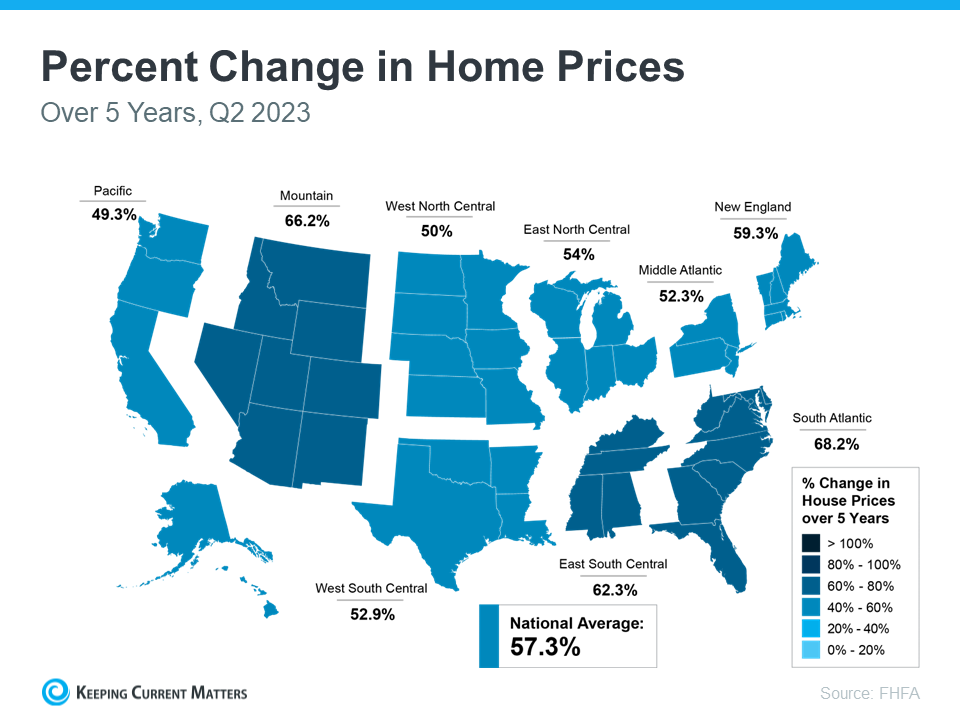
The map below uses data from the Federal Housing Finance Agency (FHFA) to show just how noteworthy price gains have been over the last five years. And, since home prices vary by area, the map is broken out regionally to help convey larger market trends:

If you look at the percent change in home prices, you can see home prices grew on average by just over 57% nationwide over a five-year period.

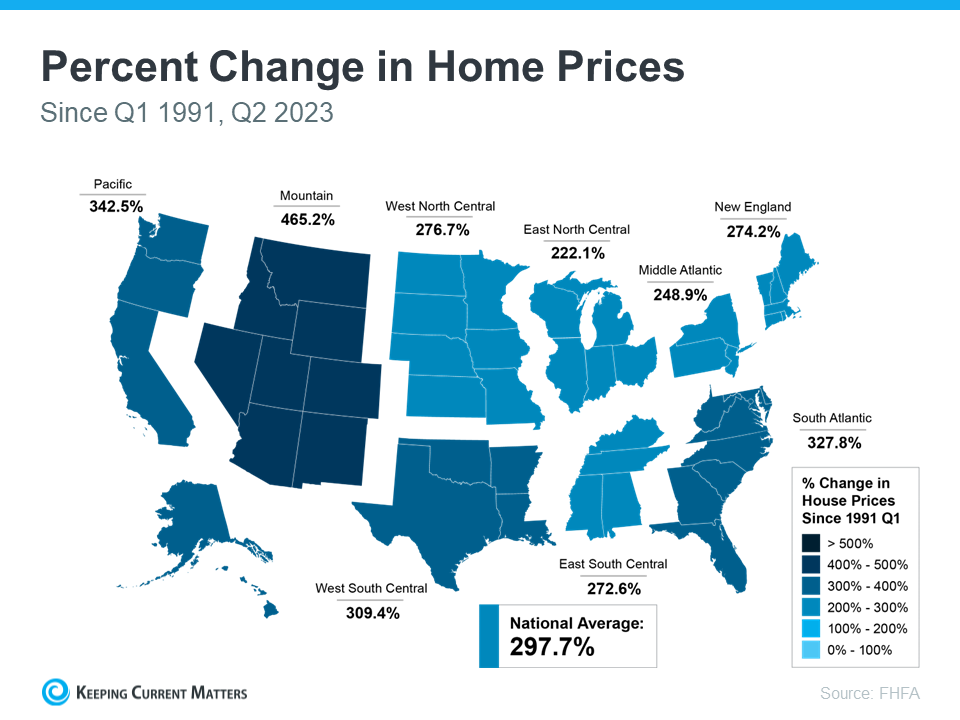
Some regions are slightly above or below that average, but overall, home prices gained solid ground in a short time. And if you expand that time frame even more, the benefit of homeownership and the drastic gains homeowners made over the years become even clearer (see map below):

The second map shows, nationwide, home prices appreciated by an average of over 297% over a roughly 30-year span.

This nationwide average tells you the typical homeowner who bought a house 30 years ago saw their home almost triple in value over that time. That’s a key factor in why so many homeowners who bought their homes years ago are still happy with their decision.

And while you may have heard talk throughout the year that home prices would crash, it hasn’t happened. In fact, experts project home prices will continue to rise for years to come. 

Bottom Line

If you’re wondering if it still makes sense to buy a home today, it’s important to focus on the long-term advantages that come with homeownership. When you’re ready to start your homebuying journey, reach out to a local real estate professional.

HomeownerNew Homeowner October 23, 2023

Home Prices Are Not Falling

During the fourth quarter of last year, some housing experts projected home prices were going to crash in 2023. The media ran with those forecasts and put out headlines calling for doom and gloom in the housing market. All of this negative news coverage made a lot of people have doubts about the strength of the residential real estate market.

If it made you question if you should delay your own plans to move, here’s what you really need to know.

Home Prices Never Crashed

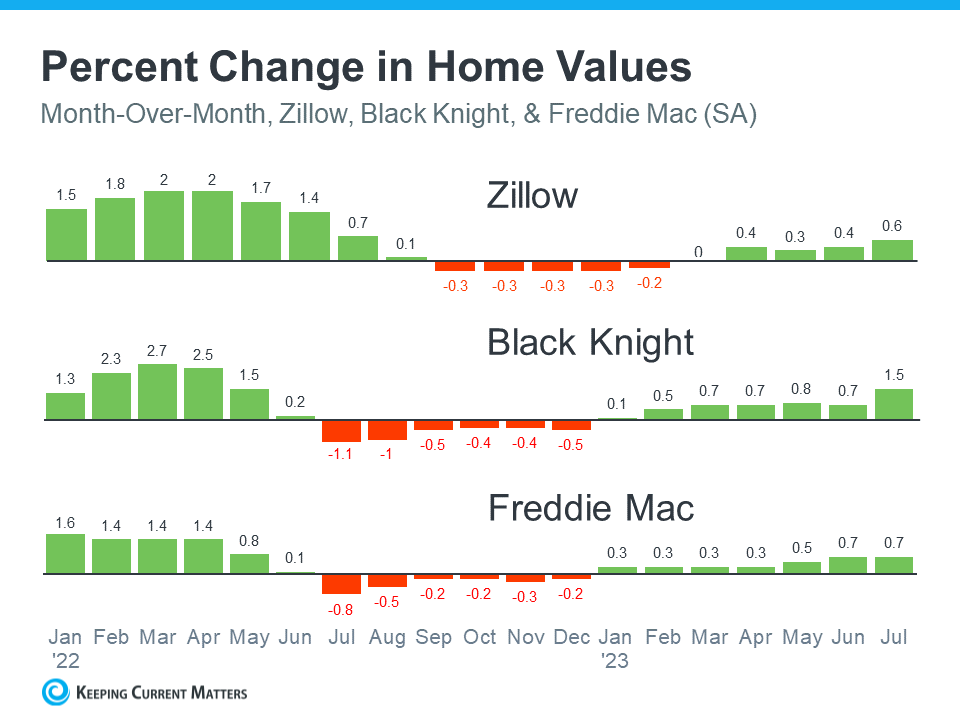
Disregard what you saw in the headlines. The actual data shows home prices were remarkably resilient and performed far better than the media would have you believe (see graph below):

This graph uses reports from three trusted sources to clearly illustrate prices have already rebounded after experiencing only slight declines nationally. That’s a far cry from the crash so many articles called for.

The declines that did happen (shown in red), weren’t drastic but were short-lived. As Nicole Friedman, a reporter at the Wall Street Journal (WSJ), says:

“Home prices aren’t falling anymore. . . The surprisingly quick recovery suggests that the residential real-estate downturn is turning out to be shorter and shallower than many housing economists expected . . .”

Even though some media coverage made a big deal about home prices pulling back, the slight correction that happened is already in the rearview mirror. Basically, this data shows you home prices aren’t falling anymore – they’re actually going back up.

What’s Next for Home Prices?

The consensus from experts is that home price growth will continue in the years ahead and is returning to normal levels for the market. That means we’ll still see home prices appreciating, just at a slower pace than the last few years – and that’s a good thing.

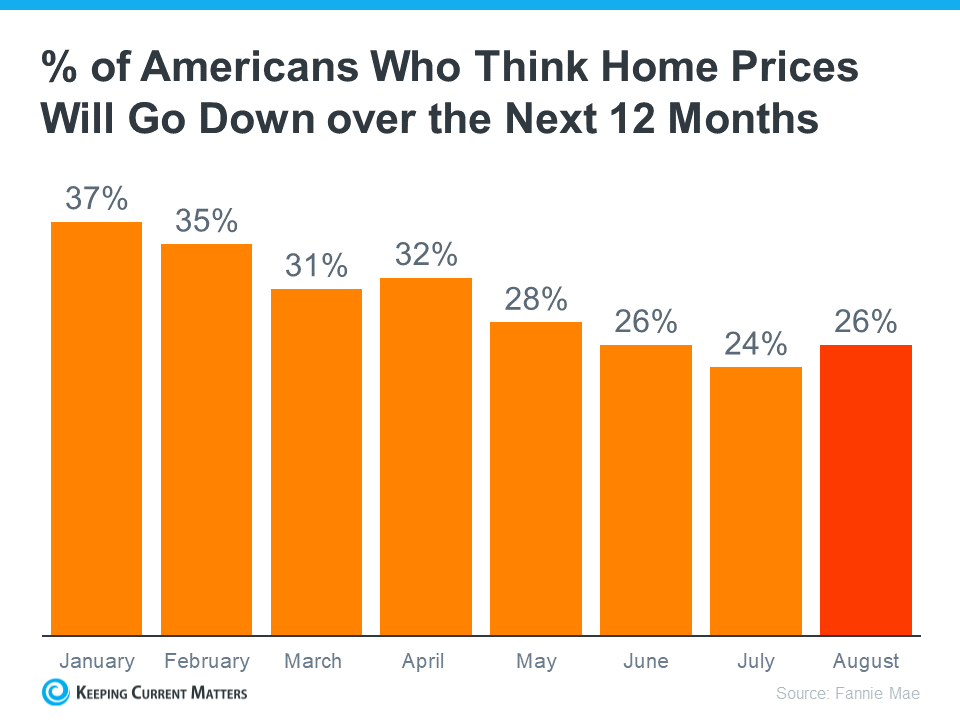
Some news sources will see home price growth slowing and put out stories that make you think prices are falling again. The return of misleading headlines like those is already having an impact on how homebuyers are feeling again. You can see how this affects general opinion in the Consumer Confidence Survey from Fannie Mae (see graph below):

While the percentage of Americans who think prices will fall has been slowly declining this year, the latest Consumer Confidence data indicates that’s ticked back up recently (shown in red). This change is surprising especially since the home price data shows prices are going up, not down. It tells you the impact the media still has on public opinion.

Don’t fall for the negative headlines and become part of this statistic. Remember, data from a number of sources shows home prices aren’t falling anymore.

Bottom Line

Even though the media may make things sound doom and gloom, the data shows home prices aren’t falling anymore. So, don’t let the headlines scare you or delay your plans. Lean on a real estate professional so you have a trusted resource to cut through the noise and tell you what’s really happening in your area.

BuyerHomeowner October 23, 2023

How Homeowner Net Worth Grows with Time [INFOGRAPHIC]

Some Highlights

  • If you’re thinking about buying a home this year, be sure to consider the long-term financial advantages of homeownership, like home equity.

  • On average, people who bought homes 32 years ago have seen their home’s value nearly triple over that time.

  • If you’re wondering if buying a home is a good idea, remember rising home values could grow your net worth with time. When you’re ready to start your homebuying journey, let’s talk.

BuyerNew Homeowner October 20, 2023

Are You a Homebuyer Worried About Climate Risks?

The increasing effects of natural disasters are leading to new obstacles in residential real estate. As a recent article from CoreLogic explains:

 “As the specter of climate change looms large, the world braces for unprecedented challenges. In the world of real estate, one of those challenges will be the effects of natural catastrophes on property portfolios, homeowners, and communities.”

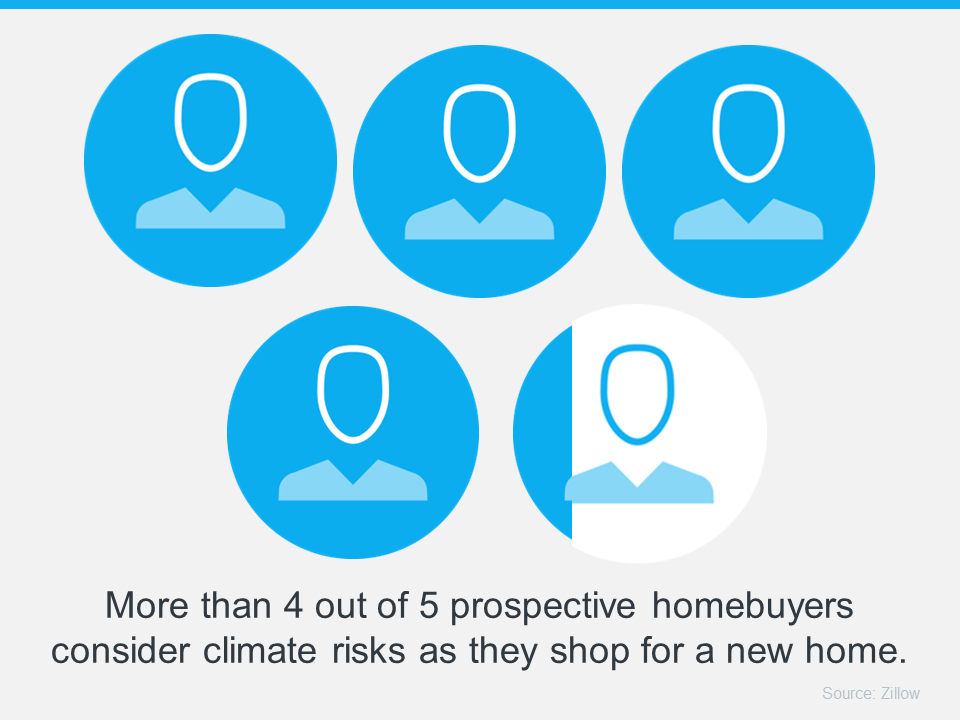
 That may be why, according to Zillow, more and more Americans now consider how climate risks and natural disasters can impact their homeownership plans (see below):

This study goes on to explain that climate risks affect where many people look for a home. That’s because homebuyers are interested in finding out if the house they want will be exposed to things like floods, extreme heat, and wildfires.

 If you’re in the same situation and are thinking about what to do next, here’s some important information to consider as you start looking for a home.

 Expert Advice for Homebuyers To Reduce Climate Risks

 The first thing to do is understand how to go about buying a home while thinking about climate risks. With the right help and resources, you can simplify the process.

 The Mortgage Reports provides these tips for buying your next home:

  •  Evaluate climate risks: Before buying a home, it’s important to check if it’s in a flood-prone area using the FEMA website, review the seller’s property disclosure for any past damage, and get an inspection for issues like cracks and mold to make sure it’s a safe investment.

  • Consider future preventative maintenance costs: For areas that get tropical storms, you may need to purchase hurricane shutters and sandbags to protect the home. In wildfire-prone areas, you may want to clear plants five feet from the house, consider rooftop sprinklers, or possibly buy gutter guards to prevent fire hazards. Factor these future expenses in when touring homes that may need them.

  • Take steps to avoid losing your assets: Getting the right insurance for a home in a high-risk climate area is crucial. You should shop around and talk to multiple insurance agents to compare prices and options before deciding to bid on a home.

 Above all else, your most valuable resource during this process is a trusted real estate expert. They’ll always focus on your goals while keeping your concerns top of mind. Even if they don’t have all the answers about how your home can handle natural disasters, they can connect you with the right experts and information.

Bottom Line

If you want to buy a home, but you’re also thinking about climate risks, you’re not alone. Your home is a big investment, and if anything can impact that, you want to know. Let’s connect so you have someone you can trust to guide you as you find your next home.

Uncategorized September 29, 2023

Beware of These 5 Hidden Costs When Selling Your Home

If you’ve been thinking about listing your property for sale, you probably already know about the obvious costs associated with selling, such as real estate commissions and closing costs. 

However, there are also such things as “hidden” costs, which include a variety of smaller expenses that you need to factor in to avoid unsettling surprises and help ensure that you get top dollar for your biggest investment. Read on to get a brief overview of these hidden costs of selling a home.

Unless you’re selling as-is, you’ll likely need to spruce up your home before it hits the market. Preparing your property for sale typically includes general deep cleaning, doing minor repairs, and even some simple landscaping to help boost your home’s curb appeal. 

The costs can vary greatly depending on the state of your property before selling and whether you hire out. Are you considering hiring a house cleaner? Do you have carpets that need to be professionally cleaned? And if you’ve neglected your home’s maintenance, you may have to hire a handyman to handle minor fixes, especially if you can’t do it yourself or don’t want to cut corners. Likewise, remember that even if you do the work yourself, you still have to consider the cost of supplies to make some upgrades.

Great staging can help buyers to visualize what it will be like living in the home. This creates a connection between them and the home that may lead to a higher offer. According to 2022 data from HomeAdvisor, staging costs between $786 and $2,812, with an average cost of $1,774. The price tag for this service can vary widely depending on the size of your home, your location, and other factors.

While it might be tempting to forgo this expense, it’s imperative, especially in a tough market or if you’re selling a vacant home. Staging a vacant home can be more expensive, considering the cost of furniture rentals and other services. If you want to save some money, you can stage your house on your own or with the help of your real estate agent. While you won’t likely achieve the same design quality that a professional home stager can bring, you can make an impact by making sure you remove as much clutter as possible and designate a clear purpose for every room in the house. Adding little touches such as fresh flowers, a new doormat, a bowl of fruit on the kitchen counter, and scented candles can go a long way too.

According to the 2022 Profile of Home Buyers and Sellers by the National Association of REALTORS®, 47 percent of buyers say that the first step they took in the home buying process was to look online at properties for sale. Since photos are being viewed first, you have to ensure that the pictures you use in your home’s listing are done well. They must showcase your home’s best features so that potential buyers will be enticed to see the property in person. 

However, professional real estate photographs don’t come cheap. While the cost varies by area and the size of your home, you can expect to pay anywhere from $100 to $500 for photos. Rates go higher for other services and packages that may include twilight photos, aerial drone photographs, real estate videos, and virtual tours. Since having professional real estate photos is a powerful way to market your property, don’t forget about this expense when listing your home for sale.

You might think your home was already in tip-top shape when it entered the market. However, when you accept a buyer’s offer and they have the home inspected, the inspection report rarely comes back perfect. You’ll be made aware of your property’s minor issues, such as loose toilets or leaky faucets, as well as major issues like water damage, mold problems, or even faults in the foundation. 

These unforeseen repairs can be one of the worst hidden expenses when selling a home since the buyer will often request for the seller to address at least a handful of them. Depending on your trusted real estate agent’s advice, you can always negotiate the issues and split the cost of repairs with the buyer to a predetermined amount. You can also flat-out refuse the requests and just lower the sale price so the buyer can make the repairs themselves. If you want the deal to go through and ensure a smooth closing, you’ll need to cover the total repair costs yourself, which could be thousands of dollars. This proves that regular maintenance can seriously pay off when it comes time to sell. 

Since a lot of negotiating goes on in a real estate transaction, buyers often make conditional requests to be included in the purchase price. These are called seller concessions, which are costs that the seller has agreed to pay. A potential buyer may ask you to pay a share of their closing costs as a part of the deal. Or they may ask you to leave certain household appliances. Likewise, as stated above, you may agree to pay, to reduce the overall sale price to account for the cost of handling any major repairs instead of doing the work yourself. If you’re in a situation where you might want to sell your property as soon as possible, offering seller concessions can help move your property faster. 

Bottom line

Here’s a reality check: selling a home costs money. Before putting your property on the market, it’s best to familiarize yourself with the hidden expenses associated with selling to avoid being taken by surprise. With strategic thinking, careful planning, and the help of an experienced real estate agent, you can prepare for these costs and effectively allocate your resources so you can pocket your target profits at closing.

HomeownerNew Homeowner September 18, 2023

Four Ways You Can Use Your Home Equity

If you’re a homeowner, odds are your equity has grown significantly over the last few years. Equity builds over time as home values grow and as you pay down your home loan. And, since home prices skyrocketed during the ‘unicorn’ years, you’ve likely gained more than you think.

According to the latest Equity Insights Report from CoreLogic, the average homeowner has more than $274,000 in equity right now. That much equity can help you achieve certain goals. In a recent article, Bankrate elaborates: 

“While the pandemic created serious challenges, the silver lining for anyone who owned a home was the sizable equity gain. Understanding how home equity works, and how to leverage it, is important for any homeowner.”

Here are a few examples of how you can put your home equity to work for you.

1. Buy a Home That Fits Your Needs

If your current space no longer meets your needs, it might be time to think about moving to a bigger home. And if you’ve got too much space, downsizing to a smaller home could be just right. Either way, you can put your equity toward a down payment on a home that fits your changing lifestyle. A real estate agent can help you figure out how much equity you’ve got and how to use it when buying your next home.

2. Reinvest in Your Current Home

Renovations are a great option if you want to change your living space, but you aren’t yet ready to make a move. Home improvement projects give you the freedom to tailor your home to match your needs and personal style. But it’s important to consider the long-term benefits certain upgrades can bring to your home’s value. Lean on a real estate professional for the best advice on which improvement projects to prioritize in order to get the greatest return on your investment when you sell later on.

3. Pursue Personal Ambitions

Home equity can also serve as a catalyst for realizing your life-long dreams. That could mean investing in a new business venture, retirement, or funding an education. While you shouldn’t use your equity for unnecessary spending, using it responsibly for something meaningful and impactful can really make a difference in your life.

4. Understand Your Options to Avoid Foreclosure

Today the number of foreclosure filings remains below the norm, so there’s no need to fear a wave of foreclosed homes flooding the market. But unfortunately, there are still some homeowners who experience the foreclosure process each year. If you’re facing financial difficulties, having a clear understanding of your options and how your equity can help is crucial. Equity can act as a financial cushion that can be used in times of unexpected challenges or unforeseen circumstances that may disrupt your ability to make mortgage payments on time.

In an article, Freddie Mac explains it this way:

“If exiting your home is the best option for you, selling with equity may be a good option. When selling with equity, you are using the proceeds from selling your home at a higher price than the amount you owe on your mortgage to pay off your remaining mortgage debt.”

Bottom Line

Your equity can be a game changer in reinvesting in your needs, pursuing your goals, and even helping you avoid foreclosure during difficult times. If you’re unsure how much equity you have in your home, let’s connect so you can start planning your next move.

BuyerHomeowner September 18, 2023

Why Is Housing Inventory So Low?

One question that’s top of mind if you’re thinking about making a move today is: Why is it so hard to find a house to buy? And while it may be tempting to wait it out until you have more options, that’s probably not the best strategy. Here’s why.

There aren’t enough homes available for sale, but that shortage isn’t just a today problem. It’s been a challenge for years. Let’s take a look at some of the long-term and short-term factors that have contributed to this limited supply.

Underbuilding Is a Long-Standing Problem

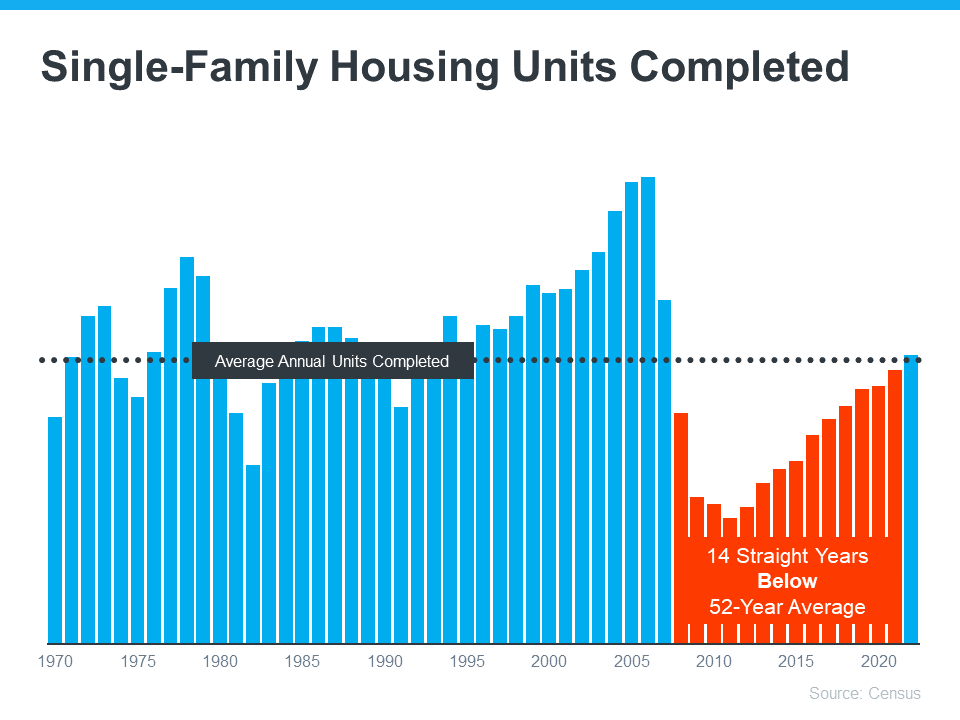
One of the big reasons inventory is low is because builders haven’t been building enough homes in recent years. The graph below shows new construction for single-family homes over the past five decades, including the long-term average for housing units completed:

For 14 straight years, builders didn’t construct enough homes to meet the historical average (shown in red). That underbuilding created a significant inventory deficit. And while new home construction is back on track and meeting the historical average right now, the long-term inventory problem isn’t going to be solved overnight. 

Today’s Mortgage Rates Create a Lock-In Effect

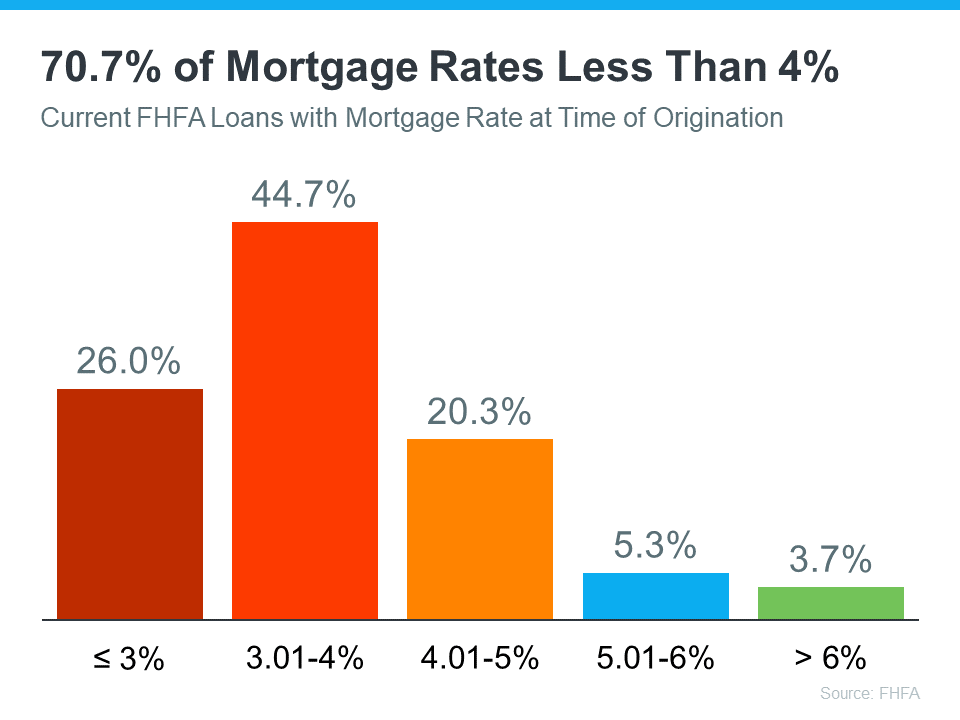
There are also a few factors at play in today’s market adding to the inventory challenge. The first is the mortgage rate lock-in effect. Basically, some homeowners are reluctant to sell because of where mortgage rates are right now. They don’t want to move and take on a rate that’s higher than the one they have on their current home. The chart below helps illustrate just how many homeowners may find themselves in this situation:

Misinformation in the Media Is Creating Unnecessary Fear

Another thing that’s limiting inventory right now is the fear that’s been created by the media. You’ve likely seen the negative headlines calling for a housing crash, or the ones saying home prices would fall by 20%. While neither of those things happened, the stories may have dinged your confidence enough for you to think it’s better to hold off and wait for things to calm down. As Jason Lewris, Co-Founder and Chief Data Officer at Parcl, says:

“In the absence of trustworthy, up-to-date information, real estate decisions are increasingly being driven by fear, uncertainty, and doubt.”

That’s further limiting inventory because people who would make a move otherwise now feel hesitant to do so. But the market isn’t doom and gloom, even if the headlines are. An agent can help you separate fact from fiction

How This Impacts You

If you’re wondering how today’s low inventory affects you, it depends on if you’re selling or buying a home, or both.

  • For buyers: A limited number of homes for sale means you’ll want to seriously consider all of your options, including various areas and housing types. A skilled professional will help you explore all of what’s available and find the home that best fits your needs. They can even coach you through casting a broader net if you need to expand your search.

  • For sellers: Today’s low inventory actually offers incredible benefits because your house will stand out. A real estate agent can walk you through why it’s especially worthwhile to sell with these conditions. And since many sellers are also buyers, that agent is also an essential resource to help you stay up to date on the latest homes available for sale in your area so you can find your next dream home. 

Bottom Line

The low supply of homes for sale isn’t a new challenge. There are a number of long-term and short-term factors leading to the current inventory deficit. If you’re looking to make a move, let’s connect. That way you’ll have an expert on your side to explain how this impacts you and what’s happening with housing inventory in our area.

Uncategorized September 15, 2023

5 Questions Your Real Estate Agent Cannot Answer, and Why

Buying a home, especially if it’s your first one, is a truly remarkable feat. You’ve probably got a thousand things to consider and a million questions in mind. Where am I gonna live? What type of house should I buy? Which neighborhood is the best for my lifestyle? How much should I put as a down payment? How much mortgage can I afford? And the list goes on and on. 

This is why it’s best to hire a trusted and knowledgeable real estate agent to help you in your house-hunting journey. Expect them to be your go-to person for almost all the advice you’ll need regarding the complicated, and often stressful, homebuying process. 

And yet, if you ask them certain questions, you might be puzzled to find them feeling tongue-tied. Be aware that there are some queries that your realtor couldn’t answer legally. This is because some things are off-limits under the Fair Housing Act (FHA), a federal law enacted in 1968 that prohibits discrimination in the purchase, sale, rental, or financing of housing based on race, religion, sex, skin, color, nationality, or family/economic status.

Real estate agents may be accused of “steering” clients to specific neighborhoods when they answer certain questions or even give out selective information. While these inquiries may be asked innocently or out of curiosity (maybe in the hopes of getting an inside scoop), housing professionals who respond to them can face fines, consequences, and other penalties in court. Here are a couple of such questions—and what you can do to find the answers yourself.

Don’t be surprised if your trusted real estate agent refrains from answering any questions related to the family status of an area. And no matter how much you ask, your agent wouldn’t find you a neighborhood based on any particular family makeup. 

Families are a protected class under the FHA. So for agents, answering any inquiries about them can be risky, even if a buyer’s asking out of curiosity. This may include questions such as, “Do families with children live in this area?”, “Is this a good place to raise kids?”, or “Is this a good place for me as a single?” and other similar ones. If an agent says a certain neighborhood is not all that family-friendly, it could imply that families with children aren’t welcome. Similarly, saying that an area is a good place for kids could make buyers without children feel uncomfortable, which can be treated as a form of discrimination.

As a home buyer, it’s best to do your research by visiting the neighborhood at different times of the day to observe the comings and goings of most residents and make your own judgment. If you have a family or are planning to start one in the near future, it’s also best to look into nearby playgrounds, recreational centers, and other things that you may enjoy. 

Are you looking to live in a melting pot? Or maybe you want to live near others who have a similar background (e.g. Italian/Spanish/Chinese/Asian) as you? You may be able to ask a friend or anyone living in the neighborhood about the specific nationalities and races that mostly make up a community, but not a real estate agent. Similar to the family-related question, such discussions can come uncomfortably close to “redlining”, which is a form of discrimination in which buyers are steered toward or away from neighborhoods based on the color of their skin. 

Instead, a good and cautious agent will tell you to do some legwork by looking at the U.S. Census and other government data to get information about the demographics of a community. They will also urge you to invest some time in the neighborhood and make an assessment of your own. After doing your research, you can then direct your agent to show you homes in a specific geographic location.

Requesting your realtor to find you a “mostly Catholic neighborhood” or a “Mormon neighborhood” because you are one is also impossible because sharing any information concerning religion could also put them in hot water. If you want to know the religious makeup of a community or it’s a concern to you, your realtor can provide you with a complete list of nearby places of worship. You can also do your own research to find out the places of worship around the area, which you can then visit to get a feel of the community.

Agents must always remember that real estate is color-blind and neutral. Whether it be about faith, lifestyle, race, ethnicity, or language, a realtor cannot influence this part of the potential buyer’s decision-making process without running afoul of fair housing laws.

The word “safe” is highly subjective. Besides, there’s no guarantee that there won’t be any crime tomorrow, next month, or anytime in the future in what is considered a “safe” neighborhood. Everyone’s tolerance for crime is also different, so an agent cannot determine what will make someone feel safe and protected, or unsafe and uncomfortable. 

Crime statistics can also be interpreted as references to race or ethnicity, which is why prudent realtors will choose their words wisely and direct buyers to reach their own conclusions. Fortunately, crime statistics are a public record and you can certainly look into them on your own. You may visit the nearest local police precinct and check its website, or search online for recent crime reports and any other information related to the safety of the area.

Another question where your agent will keep their lips zipped? Anything regarding a certain school or district, as well as the quality of schools in the area. The racial divide can also run deep in U.S. schools, which is why a realtor has to be very careful. Because similar to the word “safe”, talking about “good” schools can be rightly or wrongly construed as discrimination. 

As a buyer, you may have a different concept of what a “good” school is. Do you care more about test scores? Maybe the sports team rankings are important to you? If you want to know more about the schools in the area, your trusted realtor can help you by introducing you to one of many websites that rank schools, such as GreatSchools.org. They may also refer you to school information websites to help with your research. Spend some time perusing their newspapers or reading about the schools in local publications. You may also talk to local teachers and administrators. Best of all, tour the school and see for yourself whether a school is good and appropriate for your children’s education.

Bottom line

As a home buyer, you should know what questions you can expect to not have answered even by your experienced real estate agent, especially when it comes to things that have nothing to do with the house itself. Understand that it’s a good thing when they give you an awkward silence as a response. This also means it’s an opportunity for you to research, explore, and make your assessments before getting your dream home.