Buyer February 23, 2022

Expert Questions to Ask When House-Hunting with Pets in Mind

Just how much do we love our pets? Several surveys showed how much pets are affecting the homebuying process. Pets influence many buyers on the types of homes and neighborhoods they search for, becoming the biggest reason their favorite humans decide to become homeowners.

A 2021 homes.com survey of 1,600 homeowners who are also pet owners showed that 68 percent of respondents who weren’t already living in a pet-friendly home said they have moved for the sole purpose of accommodating their pets.

Another joint survey from Rover and Zillow found that 62 percent of pet parents consider moving to a new home to accommodate their dog. Likewise, listings that mentioned dog-friendly features such as fenced backyards, dog runs, and dog houses sold faster.

House-hunting is no easy task. And with your pets and their needs in mind, it might be even more challenging. While there might not be what you can call a ‘perfect’ place, asking these five questions will hopefully get you close to finding the best home for your family and pets.

Every state, county, town, city, and even some neighborhoods, have specific laws and ordinances regarding pets. By reading up about local regulations before committing to a neighborhood and a home, you’ll be aware of important information such as:

  • Pet type and breed restrictions

  • Pet licensing and registration

  • Types of fences or other structures that you can install in your yard

  • The number of pets allowed per residence

  • Leash requirements

  • Vaccinations

  • Loose dogs

  • Spay and neuter guidelines

  • When local authorities can impound or euthanize your pet

If you are looking to move to a condo or community with a homeowners association, pet restrictions may be a bit tighter. Research the local rules beforehand so you won’t be caught off guard by unexpected regulations or expenses when you move in. Don’t forget to consult with your local real estate agent or the HOA to further your knowledge of the rules.

We treat our pets like family and want only the best for them. So when looking for a new home, you must check for the nearest veterinarian and the proximity of other pet services, including supply stores and animal hospitals. This may depend on how far you’re moving, so don’t be afraid to ask for recommendations from your current veterinarian. It’s especially crucial if you have a young or senior pet prone to emergencies.

Your real estate agent is your tour guide who can point you in the direction of the local hotspots, including pet-friendly cafes or restaurants, and dozens of other services catered to your pet’s needs.

Speaking of your pet’s welfare, you may want to consider moving to a community with plenty of sidewalks and good walking routes. Even the most obedient dogs or cats can sneak out and wander about, so you may want to steer clear of busy streets and be aware of how heavy the traffic gets in your neighborhood.

Dog parks are another great amenity to search for when house-hunting with your pets in mind, especially if they need more room to play and exercise. It’s also a must not only for your pet but for you as well, so you’ll both be motivated to walk and exercise more often, especially during leisurely weekends.

After considering the location and making sure your potential neighborhood is pet-friendly, the yard, or lack thereof, is the second thing to look out for in your potential home. Is the backyard big enough for you and your pet? It’s important for dog and cat owners because even if you prefer to keep them indoors, it’s still a good idea to have a yard with room to roam.

A fenced-in yard is your best option to provide safety and security for your pets when they’re enjoying the outdoors. If there is already a fence, inspect it to ensure that it’s still in good condition and that it’s high enough that your dog can’t jump over it. But if a fence is lacking, you may need to factor that cost into your budget. As long as you’ve done your research on local restrictions, it might be easier for you to consider the size, type, and material of the fence that’s allowed and works for your family’s needs.

The inside matters just as much as the outside when finding a new place for you and your pets here are some of the pet-friendly features to consider:

  • Durable and pet-appropriate flooring

Carpet isn’t the ideal flooring choice as they trap pet hair and can be difficult to keep clean. You may need the appropriate cleaning supplies to remove pet stains and odors, and they tend to wear out quickly. Hardwood floors usually fare better with pets, as they’re easier to clean and restrain. However, you may want to consider large rugs and runners to minimize damage.

While it all boils down to what fits your lifestyle and tastes best, some of the floorings most recommended by experts are vinyl plank and tile. They’re mostly durable, cost-effective, easy to clean, and scratch- and water-resistant, so they can withstand water bowl spills, accidents, or even skidding paws.

  • Adequate space

Always consider the size and number of your pets when touring homes. Extra space is a huge bonus, especially if you have indoor-only pets that need space to run and play safely. You also want to have a designated space where you can keep their bed, toys, crate, as well as food and water. This ensures they have a space of their own while making it easier to keep your home organized. 

  • Washing station or space for clean-ups

Spaces that can be dedicated to pet cleanup have been gaining popularity. Doggie showers or washing stations located in entryways and mudrooms are just some ideal features that will make it easier for you to clean up your pets after playing outdoors. Other pet-approved upgrades, like doggie doors or built-in feeding stations, are beneficial to have included instead of having to add yourself.

  • Pet-friendly layout and design

Lastly, keep your pet’s age and breed in mind. Common features like stairs can become a problem when your pet’s mobility decreases as they age, or if they have certain health conditions. If a multi-level home is what you’re looking for, features like ground-level entryways and fenced-in areas may be beneficial to ensure that your pet doesn’t wander without supervision.
BuyerHomeowner February 11, 2022

How Long Do Home Systems and Appliances Last? A Homeowner’s Guide on the Average Life Expectancy of Major Appliances

Every homeowner is faced with a huge truth: their home’s systems and appliances don’t last forever. Every major appliance has an average life expectancy, although it depends greatly on its usage and maintenance. And with many of us spending more time at home in recent years due to the pandemic, extra use may shorten their lifespan even more. Once their parts stop working, they’re bound to require some costly repairs and replacements, which could be agonizing to any homeowner.

Contractors and builders calculate an average lifespan for each appliance, based on experiences on when systems and appliances failed in the past. The majority of the data included here is from the Study of Life Expectancy of Home Components by the National Association of Home Builders. They provide a decent guesstimate by compiling life-cycle data from scores of product manufacturers and testing labs.

However, it’s important to note that the lifespans for most major appliances have decreased significantly over the last few years, mainly because of the complexity of many smart models. Also, many appliances are often replaced long before they are worn out by newer products that are more desirable in terms of style and technology.

Knowing the age of your household systems and appliances, along with their expected life spans, is an excellent way for you to plan for routine maintenance and prepare against hefty replacement bills that could make a huge dent in your budget. 

For home buyers, it’s also a good idea to factor the age of appliances and home systems into your decision making. Outdated appliances are very costly to deal with, the last thing you’d want is to be stuck with an expensive appliance repair or system replacement bill after you complete the sale and just moved in.

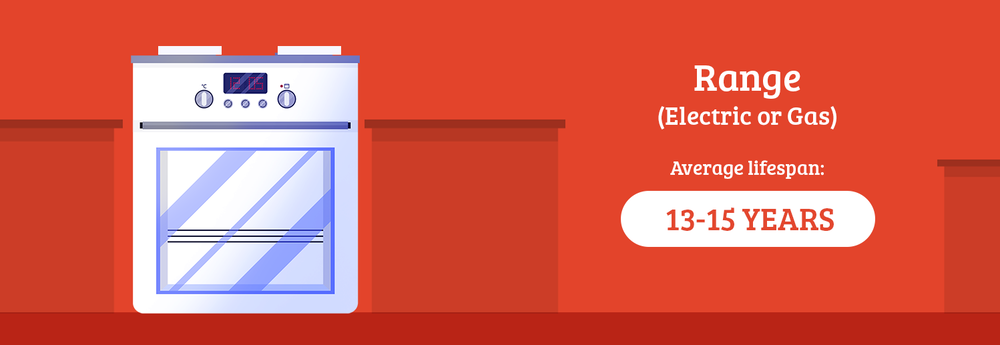
Ranges, whether gas or electric, are generally one of the more durable appliances in your kitchen, which is why these can last somewhere around 13 to 15 years. It’s often the body or the electric control unit that goes bad before the cooking units. Or the style becomes dated, triggering the desire for a new appliance.

Although these appliances are being used often in preparing delicious meals, therefore subjected to a lot of heat and grease, many homeowners still forget to do regular maintenance on them. This could lead to more expenses and fire hazards when they only have simple maintenance schedules.

Tips to make it last longer: 

  • Regularly clean the stovetop and grates using a mild soap/detergent, warm water, and sponge. Avoid using abrasives and inserting sharp objects.

  • Clean the oven once or twice a year. Just be careful when cleaning underneath oven knobs by removing the knobs first.


Your refrigerator is one of the most expensive but hardest working appliances in your home. And even though they constantly operate for 24 hours a day, they can still be expected to run for 10 to 15 years or more, depending on type and brand. Compact fridges have a relatively shorter lifespan, averaging for only 8 years. Freezers, on the other hand, will last anywhere from 12 to 20 years.

Tips to make it last longer: 

  • Clean your refrigerator’s condenser coils and check the door seals regularly.

  • Wipe down handles and dispenser controls daily to remove bacteria. 

  • Provide enough space for proper airflow and to avoid overworking the appliance.


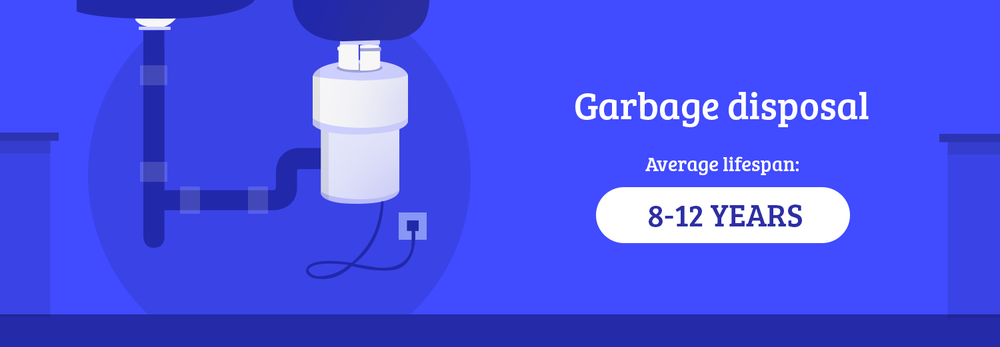
Due to its intense work of grinding food matter into particles small enough to flush down the drain pipes, garbage disposals have a relatively short lifespan. It might last as little as 8 years, but regular maintenance can last as much as 12 years. 

And while it’s difficult to see when is the time to replace it, watch out for signs including weird metal clanging noises, frequent clogging, unpleasant odors, and water leakage. Have it checked as soon as you can to help you prepare for any possible repairs.

Tips to make it last longer: 

  • Regularly clearing debris from the bottom of the disposal will help keep odors at bay. Just make sure that the disposal is unplugged or turned off before doing anything.

  • Avoid putting things like coffee grounds, eggshells, animal bones, any kind of fat, grease, or oil, or any hard and fibrous foods down the garbage disposal.


Microwaves have one of the shortest life expectancies among major kitchen appliances, which can easily be attributed to most homes getting a lot of mileage out of a single unit. Most brands on average need an upgrade every nine years or less. 

Look out for some surefire signs that a microwave oven is nearing the end of its life, including unpleasant odors, faulty keypads, and chipped or damaged parts. And even if it remains functional after using it for almost a decade, it’s recommended that you upgrade it for a newer, more energy-efficient model to save you money in the long run.

Tips to make it last longer: 

  • Since microwaves are easy to clean, do it frequently by wiping down the inside to clean it of food splatter. Remove the carousel tray and clean it in the sink. Also, clean the area underneath the carousel to ensure smooth rotation.

  • Run the microwave only when food or liquids are inside; never run the microwave when it is empty.

  • Use the appliance only for its intended purpose, such as quick-heating tasks, and leave the heavy work for your conventional oven instead.


Your oven is typically one of the longest lasting appliances in your kitchen. A gas oven will generally last around 15 years, while an electric oven will last around 13 years. As with most household appliances, regular checks and simple maintenance can keep your oven looking and working its best.

Tips to make it last longer: 

  • Clean your oven seasonally, especially after using it on any big holiday cooking marathon (aka Thanksgiving or Christmas). Follow the manufacturer’s directions for cleaning. You can also rely on a paste of baking soda and water to be used as a mild abrasive, or clean using a commercial oven cleaner following its instructions.


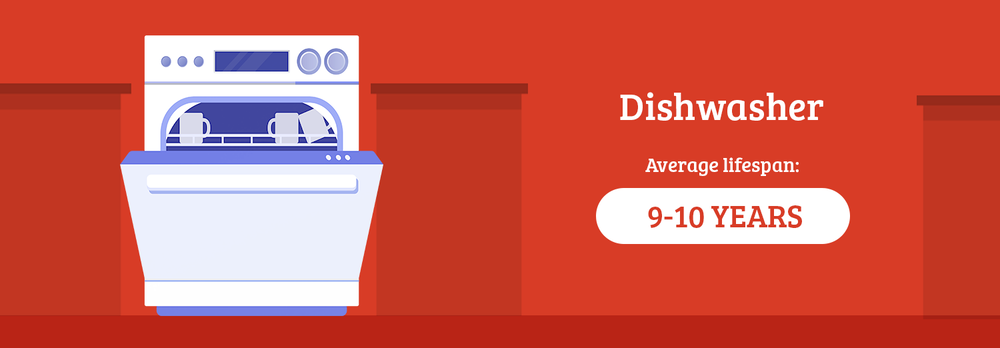
Dishwashers have a life expectancy of about 9 years but can last longer with proper maintenance and less usage. Obviously, the more you use it, the sooner it will wear out, especially if build-up occurs due to improper cleaning. And once a dishwasher breaks down, it’s wiser to replace than repair even if it hasn’t been with you for around its average lifespan.

Tips to make it last longer: 

  • Clean its filter regularly. Keep an eye on the bottom of the appliance to make sure that it is properly draining.

  • Remove food scraps, plastic bits, bones, or anything else that could clog the filter or drain lines.

  • Don the rubber gloves and wash the dishes by hand once in a while to avoid wearing out your dishwasher.


Water heaters typically last about a decade or more with proper maintenance. Tankless water heaters last more than 20 years, while an electric or gas tank water heater has a life expectancy of about 10-11 years.

How can you know how old your water heater is? You can tell just by looking at the serial number on the tank to know exactly when it was created. If your tank is older than a decade, and you haven’t flushed the sediment out of the bottom and live in a state with hard water (i.e., water with lots of minerals), you could be looking at a replacement. Likewise, any signs of rust in the water or of moisture around the heater show different issues that might require replacing the unit.

Tips to make it last longer: 

  • To reach its average life expectancy, water heaters need annual descaling to prevent sediment buildups, especially if your area uses hard water. Failing to do so can cause damage to the heat exchanger, which isn’t usually covered by a manufacturer’s warranty.

  • A so-called sacrificial anode rod, a corrosion-control device in your water heater, should be replaced every three to five years to significantly extend its lifespan.


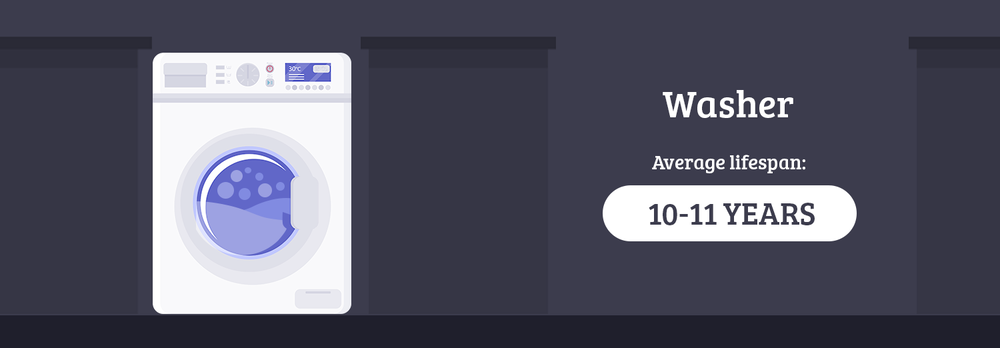
You can expect your washing machine to last up to 10 years, although this time frame depends on the machine’s design and how well it’s been maintained. If it starts to work less efficiently and you’ve had it for almost a decade, sometimes repairing it only to last you a few more years could be more costly than replacing it with a new model. 

Tips to make it last longer: 

  • Both front load and top load washers should be cleaned monthly to remove detergent residue that traps soil and bacteria.

  • Similar to the dishwasher, excessive soap is the leading cause of washer issues. Use the right type and amount of detergent to avoid build-ups in the machine, which can cause the tub to smell musty and damage the gaskets, seals, and bearings. 

  • Check the water hoses regularly to assure that there are no kinks or rips.

  • Avoid overloading the machine.


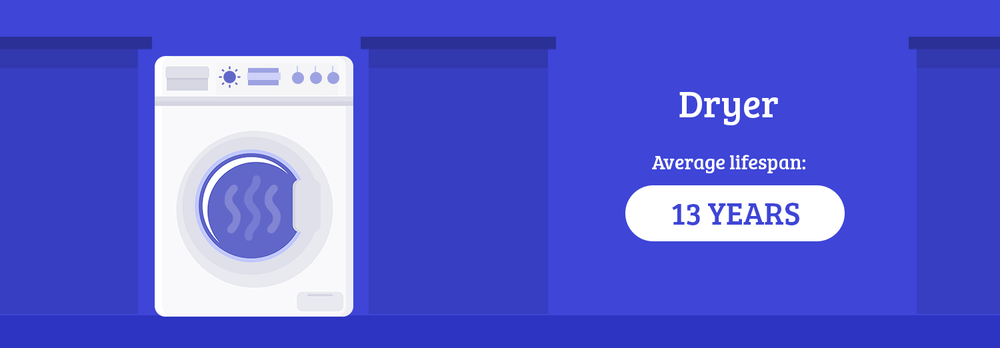
Whether electric or gas, most dryers will last around 13 years, longer than the life expectancy of washers. 

Tips to make it last longer: 

  • Remember that a clogged trap is the top reason for stress on your dryer. So no matter how tempting it is to skip cleaning the lint trap between loads, clean it after every use.

  • Remove and clean debris from both the screen and the vent leading to the outside. The buildup in there will impair the operation of your dryer. Cleaning out your exhaust vent every year or two can go a long way toward extending the dryer’s life span.

  • Never put soiled clothes in the dryer.

  • Make sure to wash the dryer ducts annually.


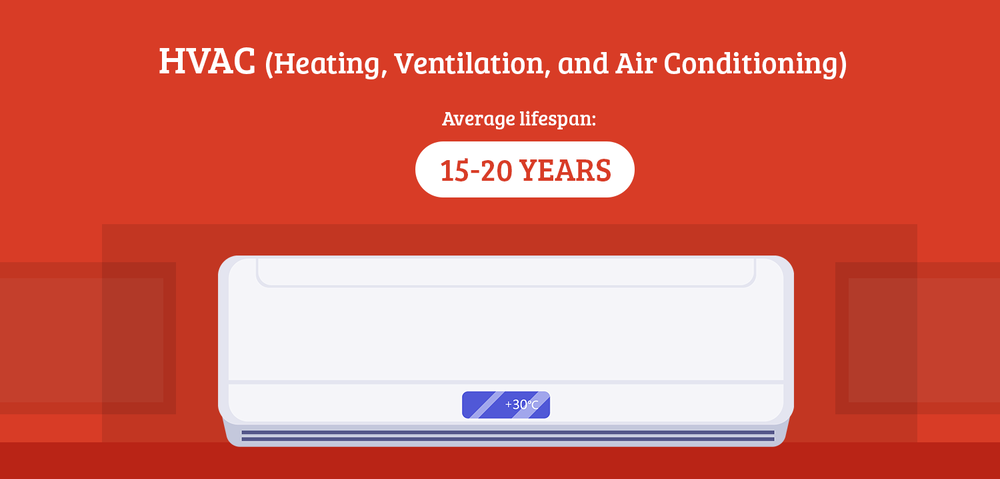
One of the largest systems in your home, and one of the most important for your comfort all year round, is your heating and cooling system. If you have a typical HVAC system, your air conditioner and furnace will both last an average of 15 to 20 years. Most thermostats generally last about a decade, but can last longer depending on the make, model, and type.

Tips to make it last longer: 

  • Aside from proper maintenance, cleaning and replacing air filters regularly can help keep your HVAC system running smoothly for as long as possible.

  • Avoid overworking your air conditioning units.

Seller February 3, 2022

5 Risky Moves Homeowners Usually Make When Selling Their House

Selling a home is a serious venture for any homeowner. The process could be both time-consuming and emotionally challenging, more so if you’ve never done it before. You’d get anxious just thinking about all the steps it takes to list and sell your home. Or be overwhelmed by the fact that you have to remove most of your personal belongings to make your home ready for showings. The process is unlike any other financial transaction in your lifetime, which is why it’s easier to make risky decisions that could sabotage your home sale.

Remember that many of these blunders are easily avoidable with little know-how and the right mindset and attitude. Hopefully, after reading this article, you’ll be able to avoid them so you can be well on your way to a smooth sale.

Even with the wealth of knowledge and resources available out there and the current high demand for homes, there’s still no substitute for the experience of a local real estate agent. 

While it’s tempting to sell on your own, For Sale by Owner (FSBO), you’ll miss out on an agent’s professional insight and guidance. This is key to a successful and less stressful home sale. According to the National Association of Realtors 2021 Profile of Home Buyers and Sellers, FSBOs sold at a median price of $260,000 last year, which is significantly lower than the median of agent-assisted homes at $318,000. 

A good agent has your best interests at heart, especially in setting a competitive selling price and negotiating offers so you can get more money on the table. If you decide to skip an agent, be prepared to do more legwork yourself, including handling all the paperwork and pitfalls involved in the real estate deal.

Better-looking properties undoubtedly attract more buyer interest. This is why many home sellers fall into the trap of over-improving their homes. They make improvements that have little return on their investment, especially only cosmetic ones.  

Before you spend a lot of money renovating your house, consult your real estate agent to make sure you are spending your money wisely. Remember that the amount you’ll make from your renovating efforts isn’t always more than the amount you invest. Aside from the price of improvements, you need to consider the disruption to the household, unexpected costs, and the general headache of dealing with the remodeling process. Furthermore, buyer preferences and needs vary, so a feature that might look good to one buyer may seem superficial to another. 

Your agent should be able to provide a list of repairs or suggestions to better prepare your home for sale, including easy but low-cost improvements like adding a fresh coat of paint and improving your home’s curb appeal.

You may think your home is worth more after you made significant repairs and improvements. This is why setting a high list price sounds like a great plan for a successful sale. After all, you can bring down the price later on or when the situation calls for it, right?

But this type of strategy involves a lot of risks. For starters, setting your list price too high may cause you to lose a ton of money on potential buyers who cannot afford such a property. And since most buyers are well educated in today’s market, they might steer clear of your home knowing that it’s overvalued. Once a home has sat on the market for too long, depending on average days on the local market, buyers and agents will start to assume there are problems with the house. And these assumptions will continue even after the price has been reduced. 

With the help of your agent, you can set a reasonable list price by looking at the value and selling price of comparable homes in and around your area, called a comparative market analysis. Underpricing your home has more potential to attract multiple queries and offers, which will make room for you to increase the asking price. As a result, you might end up making a greater profit than you initially anticipated.

While many closing costs are the buyer’s responsibility, there are closing costs sellers need to cover as well. Some of these costs may include homeowners association fees, property taxes, attorney fees, transfer taxes, and title insurance. You also may be asked to pay an escrow fee, a brokerage fee, and a courier fee. You may also need to budget for a title policy, which ensures that the title is free and clear. 

Your potential buyer may use closing costs as a bargaining ticket. Especially if you’re eager to sell or in a hurry to move and don’t want to risk losing the buyer. Many of these fees are negotiable but still, it pays to be prepared. So don’t forget to inquire about these costs so you’ll have a clear idea of how much money you’ll get after the sale.

When it comes time to say goodbye, keeping your emotions in check is always the hardest part. Especially when it’s time to sell your first house, where you’ve spent time and effort turning it into a home filled with memories. 

But when you decide to sell, you need to start thinking of yourself as a businessperson rather than a homeowner so you can look at the transaction from a purely financial perspective. Your home is a product that needs to be sold, and the market isn’t a place that is reflective of your circumstances, but a place where you as a seller and the buyer agree upon terms to successfully sell the product. 

Understanding this will help you distance yourself from the emotional aspects of selling the property. So that when you get a low offer, you won’t see it as an insult to your home’s condition and value. Instead, you see it as a good start for negotiations and something you can easily decline. If there’ve been comments about parts of the home that buyers want to renovate or remodel, don’t take it as a personal attack to your taste, but rather a difference in preferences.

Buyer January 19, 2022

Your Top 5 Priorities If You Want To Buy Your First Home in 2022

If you’re looking to make buying your first home your biggest goal this year, it’s crucial that you lay the groundwork as early as you can. And it’s important, especially in today’s competitive housing market.

Fortunately, there are some pretty simple but huge steps you can take to get into the home-buying game on a strong footing. By understanding the ins and outs of the process and doing as much preparation, you’ll be empowered to make the best decisions to be able to purchase your dream home.

1. Educate yourself about the home buying process.

There are many avenues where buyers, especially first-time buyers, can educate themselves about home buying and homeownership. You can start with various credible online articles, real estate blogs, and enroll in homebuyer education programs and courses usually offered by the government and other housing counseling agencies.

Educating yourself will help you become confident in your decision-making, especially in competitive markets where buyers need to make quick but smart decisions. It’s also critical that you understand each step of the mortgage process since a home might be your biggest investment. Homebuyer education can also qualify you for programs that make it easier for first-time buyers to afford a home.

2. Figure out how much you can afford.

Think you’re ready to buy your first home? You must know how much money you’re working with. Sometimes, what a lender will give you and what you’re truly comfortable with are two different numbers. By setting a realistic budget, you’re less likely to get carried away and shop outside your price range or stretch too far when making offers, especially when there’s a lot of competition.

Aside from your monthly mortgage payments, there are other things you need to cover as a homeowner. Do your homework and carefully factor in other expenses like property taxes, utility costs, HOA fees, homeowners insurance, among others, so you can determine what you can afford and how much your all-in costs will be.

3. Work on your credit.

The better your credit history, the better the chances you’ll have of securing financing with the best terms and rates. A good, healthy credit score will not only help you qualify for most mortgage loans. It can also earn you a more affordable interest rate, which could save you thousands of dollars over the life of the loan.

How to get started: You can get your credit report and score from each of the three major credit bureaus (TransUnion, Equifax, and Experian). The Fair Credit Reporting Act entitles you to one free copy of your credit report from each of the three major credit bureaus every 12 months. You can order them online at annualcreditreport.com. Since errors are common and can drag down your score, getting a copy and reviewing them will help ensure that the information on all of your credit reports is correct and up to date. You’ll also have plenty of time to make the necessary adjustments if needed.

4. Build your homeownership dream team.

Buying a home can be complicated and intimidating. This is why finding the right team of professionals by your side is crucial. They will help you navigate through the entire process and reach your goals.

Consider having on your team a local and experienced real estate agent, whose expertise is vital to your home search and will ensure that you get the best deal possible. A trusted mortgage lender or home lending advisor can help you understand how much you can afford, what financing options are available and best for you, and where you can get assistance suited to your situation. Your agent can also refer you to other professionals that will be part of your homeownership dream team, including a real estate attorney, home inspector, contractors, appraiser, title company, home insurance agent, among others.

5. Secure your down payment and closing costs.

One of the biggest challenges facing first-time home-buyers is having enough money upfront for both the down payment and closing costs. This is why securing these things should be a priority. Conventional wisdom says you should put 20 percent down to the table as a down payment on a house so you can get a more favorable loan term and avoid having to pay extra for mortgage insurance. But according to the 2021 Home Buyers and Sellers Generational Trends Report by the National Association of REALTORS® (NAR), the median down payment for all buyers was 12 percent. Knowing that you have to come up with a little less money than expected means that homeownership is more attainable than you think.

Since you’ve already figured out how much budget you’re working with, you need to research the down payment requirements for your desired loan. And regardless of what percentage is your goal – 3 percent or even 20 percent of the purchase price – start planning how you can set aside that money. Seek ways to cut spending and set aside a portion of each paycheck to go directly into your home buying fund.

Homeowner January 11, 2022

9 Smart and Practical New Year’s Resolutions for Homeowners

Most New Year’s resolutions are about self-improvement—learning a new skill or hobby, eating healthier, or hitting the gym. If you’re a homeowner, it’s a no-brainer that you also want to improve your home and keep it in its best shape. Your living space has a much bigger impact on your life than you might realize, so what better way to improve your life than by making your home more appealing and comfortable?

In the spirit of new beginnings, we’ve come up with a list of goals you can adopt to make a lasting difference in your home and eventually, in your life.

1. Start an emergency fund.

Life is unpredictable, with or without a global pandemic. Many unexpected costs can easily make your finances go awry. This is especially true when it comes to owning a home. If you suddenly need to fix a leaky roof or a broken water heater, an emergency fund can help save you from stress so you can plan your next steps accordingly.

To offset the next emergency (house-related or not), experts recommend putting aside three to six months’ worth of living expenses. While that may sound like a big number, you can always start somewhere. Start small by tucking away any extra money you can get. You can also make your emergency fund part of your household budget this new year.

2. Make a home inventory.

After taking countless family holiday photos, it’s time to start taking snapshots of your belongings and creating a home inventory. A home inventory is a record of all your personal possessions along with their approximate financial value. Because it documents all your belongings, you’ll know exactly what’s missing or damaged after an unfortunate event such as a break-in or a natural disaster. Moreso, it can be valuable so you can get your claim settled quickly and more accurately.

If you already have a home inventory, just make sure that it’s up to date by removing items you no longer have and adding new items as you acquire them.

3. Review and update your homeowners insurance.

The new year is a great time to get your finances in order, especially in areas in your home where you can save. If you haven’t done it yet, review your homeowners insurance policy to make sure your coverage is up to date with your needs and you’re not overpaying. If you’ve made certain improvements to your home within the last year, you’ll want to check with your insurance agent to see if you qualify for some discounts. On the other hand, if you live in a flood-prone area, it might be time to be strategic and consider flood insurance to protect your property.

4. Make on-time payments on your mortgage.

Take control of your financial life this year by ensuring that your mortgage payments—and even all other payments, for that matter—are always on time. Set up an automatic payment through your bank so you won’t stress about late payments just in case you get caught up with your busy lifestyle. Your credit score will also thank you as you prove you’re a responsible borrower whenever you’re making timely payments.

5. Find ways to be more energy efficient.

According to energystar.gov, a typical American family spends $2,060 a year on their home’s utility bills. And while that’s more than $171 a month on average, the amount you spend on your utilities depends on several factors, including where you live and how large your home is.

Make a goal this year to find small ways to reduce your energy consumption and eventually cut down on your energy costs. Little steps such as switching off the lights when leaving a room, turning off power strips, and appliances when not in use, swapping off incandescent light bulbs to LEDs, adding a programmable thermostat, etc… can help you become more energy efficient. There’s no need to think about big-ticket items such as solar panels or hybrid cars to make a difference. Just staying committed and being mindful can go a long way to lowering your energy bills.

6. Work out a realistic cleaning plan.

Who doesn’t dream of living in a house that’s spotless all day long? If you haven’t got any house help, that’s just close to impossible. So to keep yourself from being overwhelmed by cleaning and organization, this year, devise a realistic cleaning plan depending on your habits and lifestyle.

Will you devote a portion of your weekends to cleaning? Or will you take some time on select nights to tidy up? You may break up cleaning tasks into small daily activities and enlist the help of your family so you can get the job done quickly and have a lot more time for other leisure activities. Whatever schedule works best for you, just remember to stick with it as part of your New Year’s resolution for your home.

7. Prepare an emergency kit.

Having an emergency survival kit gives you and your family a better chance in case the day ever comes that you need to shelter in place or evacuate after a disaster. Your emergency kit should have enough food and water to last for at least three days. It should also include a change of clothes; some cash, chargers, maps, emergency radios, flashlights, medications, and first-aid supplies, and a copy of important documents like IDs, among others. Make sure to place your emergency bag in a place where you can easily get it should you need it.

8. Address small repairs immediately.

Things like clogged gutters, cracking and peeling caulk, leaky faucets, faulty door locks, among others, are often neglected or pushed down the list of other tasks. But small nuisances, when left unchecked, can necessitate big repairs that could cost you a lot of money down the line. Make it a part of your New Year’s resolutions to address such repairs as soon as possible to lessen these pain points around your home.

9. Set up a home maintenance calendar.

In continuation with the above topic, creating a home repair and maintenance schedule is an excellent addition to this list. So sit down, assess your house, and make a list of anything that will eventually need to be repaired or replaced. How old is your roof? How about your water heater? When was the last time you had the air conditioning unit inspected? Your HVAC, furnace, water heater, and other appliances, need to be serviced and cleaned as the seasons change.

Planning for preventative maintenance can help you avoid costly repairs that could result from overlooked wear and tear. Be smart and thorough when plotting out your schedule, and don’t forget to keep your budget in mind when scheduling any repairs. You can start saving for those big upkeep costs as early as now to prevent nasty surprises in your finances later on.

GeneralHomeownerSeller December 22, 2021

Do You Believe These Real Estate Superstitions?

The home buying and selling journey is a massive undertaking for anyone. It takes plenty of time, expertise, negotiation, patience, and sometimes, even a little bit of luck. And as far as luck goes, many follow these superstitions still, even when it comes to real estate. And since it’s the season of holidays and festivities, we thought we’d touch on a lighter but equally interesting topic around the subject.

 Let’s take a look at these ten most common beliefs and traditions that anyone might be curious about, even those who aren’t superstitious. Are you familiar with any of these?

Here’s a moving day tradition that’s been important in many countries. New homeowners bring a carb or starch (either bread or rice; whatever is a staple in their place) together with salt when entering their house for the first time and before bringing anything else into it. Bread or rice represents the idea of prosperity so that the homeowners will never know hunger. Meanwhile, salt is believed to keep their lives filled with flavor and brings luxury.

 Other homeowners further this tradition by sprinkling some salt at the doorway to prevent evil spirits from entering. But since this means you need to sweep it after, it’ll bring us to the next superstition.

According to popular belief, you shouldn’t bring an old broom into your new home. The old broom sweeps all negative energy and experiences from your previous home into your next home, including all of the bad luck you want to leave behind. Even if you aren’t superstitious, a nice, new broom signifies a fresh start, and you won’t be bringing all the dirt and dust to your next home.

Are you moving soon? You may want to pay attention to the day you move. According to Indian tradition, it’s important to choose an ‘auspicious day’ to move into your new house. Rainy days, as well as a Friday and a Saturday, are considered unlucky and may prevent you from settling into your new home. On the other hand, Thursday is considered the luckiest day to move. This belief even applies to those who want to put their house on the market. Other Western culture superstitions claim that April, July, and November are the most unlucky months to move.

Smudging is a Native American ceremony where a sacred plant (often sage) is lit, allowing it to smolder and release its aromatic smoke throughout the new dwelling. Smudging cleanses the home and drives away evil spirits and negative energy lingering. The ritual ends with a blessing, mantra, or prayer to bring in new energy. Some sellers also do this to bring good luck and sell their homes quickly.

Another popular superstition is scattering coins around the living room to ensure prosperity. Some homeowners even place coins in the corner of every room, believing it will bring financial good fortune. 

The most popular superstition held to help home sellers sell faster is burying a statue of St. Joseph. St. Joseph is considered the patron saint of families, working people, and house sellers and buyers. He was a working man and a skilled carpenter, which may account for him being the patron saint of workers and things to do with houses and real estate.

 Although selling your home quickly at top dollar is achieved through the expertise of an experienced real estate agent with professional marketing strategies, some sellers believe they will have a quick sale after burying a statue of St. Joseph. This statue is buried upside down (this way he will want to get out faster) near the sale sign, facing the house. Prayers are said to him for a speedy and favorable sale. Once the home has sold with his aid, dig him up and place him in a position of honor in the new home.

Have a friend who recently got the keys to their new home or a new neighbor just moved next door? If you’re thinking of what to give them as a housewarming gift, you can cross knives off your list. Bringing a gift of knives is a no-no as it is believed that their sharp edges will sever your friendship or could cause a bad relationship between neighbors.

As strange as it sounds, a southern legend claims that painting your front porch blue will ward off ghosts and spirits. The reason for this was the belief that ghosts were unable to cross water. Since they mistake the blue porch for water, they stay away.

If you don’t want Thor to accidentally burn your house down with a streak of lightning, it is believed that placing an acorn on a windowsill would protect it.

Whether you’re already a homeowner or you’re soon-to-be, at some point, you’re likely to do a renovation project that will require you to use a ladder to reach high areas. Did you know that many people avoid walking under ladders for fear of the bad luck it will bring? Another popular superstition dating back to the medieval period involves ladders. Walking under a ladder is unlucky because of its connection to the symbol of the gallows. The gallows were where the hangings took place, so people wanted to avoid that fate, and superstition was born.

Buyer December 10, 2021

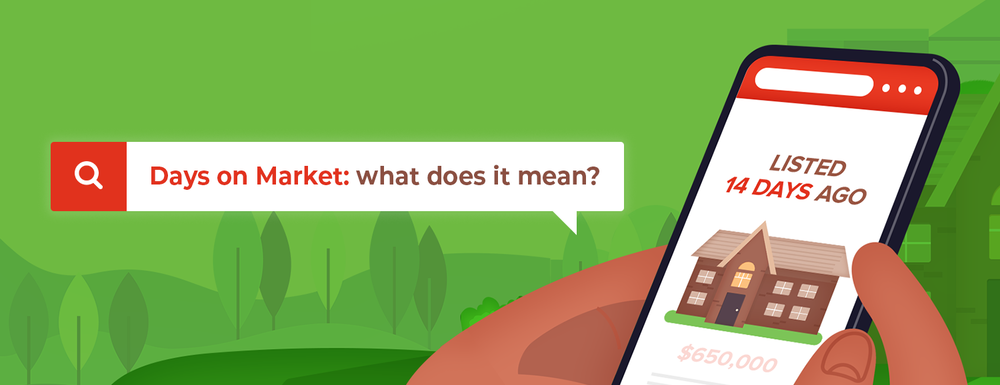
What Does ‘Days on Market’ Mean and Why Does It Matter to Home Buyers?

Here’s a sweet analogy- think of a home for sale like your favorite bread or pastry. Most, if not all, are best consumed when they’re freshly baked, much like a home that has been fresh on the market. But bread gets stale as days pass by, which makes it less and less appealing. The same can be applied to a listing. As a home’s days on the market creep higher, it gets “stale” and prospective buyers start to be curious. This can be a huge factor in real estate transactions.

Knowing a home’s days on market is critical in many ways. Read to know more!

Days on market, often abbreviated DOM, is defined by the National Association of Realtors as the number of days from the date on which the property is listed for sale on the local brokers’ multiple listing services (MLS) to the date when the seller has signed a contract for the sale of the property.

DOM can also be referred to as “time on market”, and is basically a measure of how long a house takes to sell. It is also used as a key metric by buyers and real estate agents to see which homes are fresh to the real estate market.

  • DOM as a search filter 

Buyers and their real estate agents can use DOM as a search filter to identify homes that have been listed for a long time. 

  • The DOM is an indication of how hot the market is.

The average number of days on the market is often used to describe how hot the market is in a particular area. For instance, in a seller’s market where there are more buyers than the number of homes listed for sale, the days on market are fewer because of the high demand.

  • Higher DOM = “Is there something wrong with the house?”

When a home is listed for sale on the market, the usual expectation is that the property will sell quickly. This is because homes generate the most interest when they’re new. If the number of days between the listing and sale is few, it might indicate two things: either there is a high demand or the property was underpriced but of good value. 

The more days on the market there are, the more likely it is for everyone to wonder if there’s something wrong with the house. It might be a beautiful home, but could be overpriced, need help with staging, or isn’t desirable to most buyers. It can also lead buyers to think that the seller is unmotivated, stubborn, or always unavailable to show the home.  

  • Higher DOM = a potential bargain

The good news on a house with a high DOM? It can also indicate a potential bargain, especially from sellers who haven’t received offers and who may be open to a lower offer. In an area that has a large number of houses listed for sale, and the home has been on the market longer than the other properties, the days on market can become a negotiating tool for the buyer. Work with your agent to learn more about why the property has sat so long on the market, and about the seller’s urgency to sell. 

Yes, especially in certain markets. If a listing is taken down off the market for a few weeks or months, and then gets relisted with a new, possibly lower price, the DOM counter might restart. This gives buyers the impression that the home just came on the market. The same generally happens if a new agent takes over the listing. 

However, most local MLS associations keep track of the Cumulative Days on Market (or CDOM), which is the total market time accumulated on a property, as well as the DOM. In such cases, you need to work closely with your agent to do a deep dive on a listing’s full history so you will know exactly how long the home has been for sale.

Seller December 3, 2021

Home Sellers: Here Are 10 Questions to Ask A Real Estate Agent Before Hiring

Your home is one of your biggest investments, which means when you decide to sell, it is also one of the largest transactions you will undertake. This is why it’s critical that you become pickier when hiring a real estate agent to help sell your home. You want to make sure you’ll be working with an expert who will protect your interests as a seller, guard your equity, find the right buyers, and sell your home fast without leaving money on the table.

Thanks to the wealth of information already at your fingertips, from online reviews to referrals from family and friends, you can now be extra savvy in knowing how to choose the right agent for you. However, it is still easier said than done as not all real estate professionals are the same.

In this article, we’ve put together 10 essential questions you should ask when interviewing a potential real estate agent. Asking the right questions will help you gain insight into the agent’s personality, capabilities, and expertise so you can make the best choice before entrusting your home.

Before anything else, ensure you’re working with a trained, accredited real estate professional. They must have a state license and be a member of the local real estate board, where they’ll get access to the Multiple Listing Service® or MLS. This is where they can list your property to attract more buyers.

While having other affiliations is advantageous, it’s also helpful if the agent already has a few years of experience on their plate. This not only shows their dedication to the profession but also means they’ve had enough opportunity to understand and get a good sense of the market, especially in their local area.

Likewise, be curious about whether the agent works full-time or part-time. Selling your home is a full-time job, so you want them to be focused. A part-time real estate professional may not be able to give you ample time and attention and be unavailable when you need them most, especially if they are already handling multiple clients.

The next thing you want to find out is whether you will be working with one specific agent or with members of the agent’s team. Each set-up has its pros and cons. So whether it’s a single agent with support staff, a pair of agents who share the same work, an agent who’s a part of a small team, or a group of several agents all under one business name, you’ll want to ask specifically with whom you’ll be working with.

For instance, an agent with a small team means more resources and assistance, especially since there’ll be support staff working behind the scenes. This means your agent has more time to attend to your needs and accommodate you during showings. You should be informed beforehand about what aspects of the work the agent will handle personally and whether you’ll be in contact with the other team members or only your agent. This is so you won’t end up feeling like you are being passed off to someone else.

You’d want to avoid being passed off to someone else, but you also don’t want to get lost in the shuffle. Although word of mouth is key to having a good real estate business, choosing a real estate agent to sell your home must not only depend on how popular he or she is. Likewise, the agent’s current client numbers aren’t always an indication of how good they are. Lots of factors, such as team size and communication style, come into play and need to be considered to see how many clients an agent can effectively handle.

While there’s no magic number, be wary if they’re handling a ridiculously high number of clients. Remember that each client’s needs are different, so too many clients means their time and attention will be divided too thinly. In such cases, they might not take the time to ensure all of your needs are met. Working with an agent who’s difficult to reach or who’s constantly with other clients could lead to a frustrating experience for you, and could even have a negative impact on your home sale. This is why it’s necessary for your agent to understand your expectations of their involvement.

Although it isn’t a guarantee of a quick sale, the track record of your potential agent will provide some assurance that they know what they’re doing and that you’ll be working with someone who has experience. Ask them for stats and data—how many clients they’ve worked with in the past, the number of houses sold, the price range of the homes they sold, average sale to list price ratio, average days on the market, etc. The more your agent is confident in sharing their expertise, the more you can guarantee that they will also maximize your chances of a successful sale.

The next question to ask a realtor is whether he or she specializes in selling homes in the area. You want to ensure that your potential agent knows the local market and has already sold homes like yours in your neighborhood. Because even though almost everything you need to know about an area can already be found online, there are some things that only a local real estate agent is knowledgeable about. They’ll know the selling points of the area, which is beneficial when talking to potential buyers. They must be aware of any upcoming developments, plans for stores, and other amenities that might affect the value of surrounding properties, including yours. They also likely know what local buyers are currently looking for in real estate. Having a local expert can be a huge advantage to you as a seller since he or she must be able to not only sell your home but also your neighborhood. 

Even for someone who has made a house sale before, the process can easily get complicated. More so if it’s your first! So you want to feel comfortable knowing and understanding all the steps involved—from preparing to list your home, setting a price, marketing, reviewing and negotiating offers, dealing with home inspections, managing timelines, anticipating closing costs, etc. A good and experienced real estate agent will take the time to explain these things to you in a way that’s easier to understand. As they share how they will guide you through the process, you will also see why an agent is a valuable expert to have on your side as you depart from your beloved home.

There’s nothing wrong with talking about money when interviewing potential realtors. How much is he or she going to charge you to sell your home? It is important to ask not so much so you can hire the one with the lowest fee, but so you can understand the cost and figure out exactly what your realtor brings to the table. 

Rather than getting paid hourly or weekly fees, most real estate agents typically work and earn under split commission. The traditional rate is 6 percent in most cities, which is split between the listing agent and the buyer’s agent. A good real estate agent must be able to justify his or her fee and break down what you’re going to get from him or her. 

Other than the commission, don’t forget to discuss the agent’s cancellation policy. Ask what kind of early cancellation fees may apply to you just in case you become unhappy with the realtor somewhere down the road before the contract expires.

Your home is your biggest investment, which means you want to know how much you’re going to walk away with when you sell it. You want to be prepared for the upfront costs you will be paying in the real estate transaction so you can plan accordingly. This includes the real estate agent’s commission, closing fees, title fees, attorney fees, taxes, appraisal, inspections, and more. A trusted real estate professional will explain any of these costs to you as they could affect your bottom line. They should also be able to give you a pretty good estimate of how much you will net from the sale.

Communication is key in most relationships, and this is also true when it comes to your partnership with your agent. After all, you are dealing with one of the most important investments of your life, so you and your realtor should be able to communicate regularly. You need to know upfront what will be your method and frequency of communication, which are all important in successfully selling your home. 

Make sure you tell your agent if you prefer texts or emails over phone calls, and vice versa. If they prefer email, you want to be assured that they reply in a timely fashion. Moreover, what will be the frequency of updates: will you get it weekly, or just on an as-needed basis? Find out what business hours they keep and if you can call them outside those hours just in case questions or concerns arise. These things can also be verified when you check their references and feedback from past clients.

Another way to know if they are an experienced and savvy realtor? They know exactly how you can get your home ready and what you can do to make it more appealing to buyers. They probably already have a textbook list of suggestions for their clients, but will also have more after making a walkthrough of your property. Ask them what budget-friendly repairs or upgrades you can make to attract more buyers, and whether your home needs staging aside from a good cleaning.

GeneralNew Homeowner November 19, 2021

Hosting Thanksgiving At Your New Home? Here Are Last-Minute Tips to Get Ready

Owning and buying your first home is the perfect reason to host Thanksgiving dinner. And since it’s next week, chances are you have already made a checklist and started getting ready for the long-awaited holiday. But if you haven’t or still need a few reminders to make your festivities even a little less overwhelming, we’ve rounded them up shortly but sweetly so you’ll have plenty of time to prepare not only your home but yourself so you can prioritize what really matters.

Cleaning and getting rid of any clutter around the common areas in your house, especially in the living room, entryway, bathrooms, kitchen, and dining room, will help get your home ready. This is especially true and critical in your kitchen where most of the preparation will take place. Address any usual hotspots where things tend to accumulate, such as drawers, cupboards, and even on the countertops. If you don’t have time to clean the entire home, at least clean your bathroom and kitchen. Also, empty and clean the trash cans and line them up with fresh bags. Tidying up your home is a tedious part of any holiday celebration, but making the effort will surely be worth it.

If you’re the kind of Thanksgiving cook who starts preparing and cooking certain foods ahead of time, including stuffings, stocks and sauces, pie crusts, and other desserts, you’ll need more room in your fridge to stock these things. So clean your refrigerator and freezer and start making space now. Sort through those leftovers and toss out anything that is expired or too old to eat, and plan to make use of any good ingredients you have on hand. Also, take stock of condiments that may need refilling. Having plenty of space in your fridge will make your holiday meal prep easier and even perfect to store your delicious leftovers.

Decluttering your kitchen and cleaning out your fridge will allow you to see what ingredients you need for your Thanksgiving prep. Finalize your list and purchase them a few days ahead of time. This way, you’ll have plenty of time to run back to the store in case there’s something that you inevitably forgot. There’s nothing worse than making a last-minute trip to the local grocery store on Thanksgiving Day, only to find out that it’s closed. 

It’s critical you make sure all appliances are in working condition before the holiday. Clean and test them out, especially your oven, dishwasher, and even small kitchen appliances that will help make your life easier during meal prep. If you’re a first-time homeowner who hasn’t used your oven yet after you settle into your new home, this is your chance to check and double-check to make sure your oven works.

Make sure you’ll have enough dishes, glassware, cutlery, and even serving dishes, bowls, and platters for all your guests and holiday meals. Remember that they don’t have to match unless you’re aiming for a sort of formal gathering. They’re perfect as long as they are clean and in decent condition. If you’re considering a more casual dining celebration, consider using paper plates. Also, check for things like tablecloths and other essentials so you’ll still have plenty of time to shop for any new pieces or replacements just in case. 

Likewise, since there’s a huge chance you’ll want to send your guests home with leftovers (and even keep some for yourself), don’t forget to stock up with enough plastic or takeout containers.

Taking care of the table decor the day (or even several days) before saves you a little bit of stress. Not only will you have one less thing to do and worry about on the big day, but it can also help you identify gaps in your tableware situation. Whether you opt to go all-out with some Pinterest-inspired arrangements, or just go for a simple but nice tablecloth, pretty napkins, and DIY place cards, and other seasonal centerpieces, setting the table in advance will also give you ample time to shoot and take pictures before the busy day.


The ultimate tip: Enjoy!

This tip might be the simplest to do but also the easiest to forget. Throughout the course of the busy, loud, and messy day, always remember the point of Thanksgiving. Even if you might not be able to pull it off perfectly, the most important thing is to give thanks and truly enjoy the spirit of the holiday with the people you get to celebrate it within your humble home.

Buyer November 5, 2021

Home Buyers: Here are 5 Expert Tips To Ensure A Smooth Closing

As you approach closing, the pinnacle of your home buying journey, you’d want nothing to go wrong. But with many hurdles or complications that could get in the way before you finally hold your house keys, expect the process to be more stressful and overwhelming. 

With a real estate agent by your side, you’re at least assured that the closing will be streamlined and become more bearable. But still, you have to know what to expect and do some legwork to help make it go as smoothly as possible. Here are several things you can do to prevent potential problems and close the deal with fewer hiccups:

1. Read as much paperwork in advance.

Last-minute delays at real estate closings are often caused by problems with paperwork. 

You are making the biggest purchase of your life, so it’s critical you understand every detail of your contracts. Get a head start on reviewing the paperwork as much as you can. Read every word carefully in the documents and emails being sent to you, and read everything again and again if needed. 

Doing so will give you ample time to make notes, ask questions, or address any misunderstandings in advance. This way, you won’t find yourself looking over the documents while everyone is sitting and watching. While there’s nothing wrong with taking your time during closing day, it might make you feel uncomfortable causing you to skip valuable details when signing.

2. Make sure your name is consistent throughout the documentation.

No alias, nicknames, or stage names are allowed when it comes to real estate transactions. 

You will be required to provide a government ID at closing. If your name on the ID doesn’t match your paperwork, you will have to either get a new ID that matches the one on the paperwork or redo the paperwork to match the name on the ID. This might be the case if you recently got married or divorced and failed to update your driver’s license with the name change. Either way, just know that you will not be able to close your house on that day. 

To avoid this complication, make sure your state-issued ID has your current name on it and double-check your name’s spelling on the paperwork. Likewise, always share your full legal name with the lender, your real estate agent, and the title officer when carrying out the deal.

3. Always keep relevant parties informed.

The real estate deal doesn’t just involve the buyer and the seller but also other relevant parties—the buyer’s agent, the seller’s agent, the lender, the title representative, and sometimes even a real estate attorney and an accountant.

Any changes that occur prior to closing, whether you’ve changed jobs, were furloughed, or you’ve made a deal with the seller about any last-minute repair, are important that your agent and lender are notified. Your paperwork must reflect any of these deals, which means you have to keep these relevant people in the know to protect yourself and avoid any delays at closing. 

4. Verify banking information and payment requirements.

Before sending money via wire transfer or a cashier’s check, ask questions about payment requirements and verify that all the information needed for the transfer is correct. 

Aside from your down payment which you have to pay upfront at closing, you also have to cover other closing costs, which means a huge amount of money will be moved around. Aside from making sure that the information is correct, check that the amount needed for closing costs is correct. The title company representative or the attorney will provide you with the exact amount required and how it should be paid, such as by wiring the funds in advance of the appointment.

If the attorney is requesting a wire transfer, remember that those instructions will never be emailed. To avoid falling victim to wire fraud, be vigilant and call the attorney or your real estate agent first to verify the wiring instructions. You want to guarantee that the person contacting you about the transfer of funds is the verified person instead of a scam artist.

5. Don’t hesitate to ask questions before and during closing.

If there are any words or terms you don’t understand? Just ask.

No question is too big or too small, especially when it comes to the complicated world of real estate. Whether it’s your first or even third time buying a home, it’s easy to get scared and overwhelmed. To ease some of that anxiety, call the title company before the closing day and ask them to walk you through the transaction. Clarify any issue that’s been bothering you or anything that’s still unclear about the contract. Don’t forget to also prepare and ask your agent and title officer questions during the closing. All of these measures will help the process go smoothly during closing day.