Buyer September 9, 2020

Between An Existing Home or New Construction: Which Should You Buy?

The home buying process involves a lot of decision-making. You will need to make several significant choices, and one of the major ones is whether to look for an existing home or consider buying a new construction. 
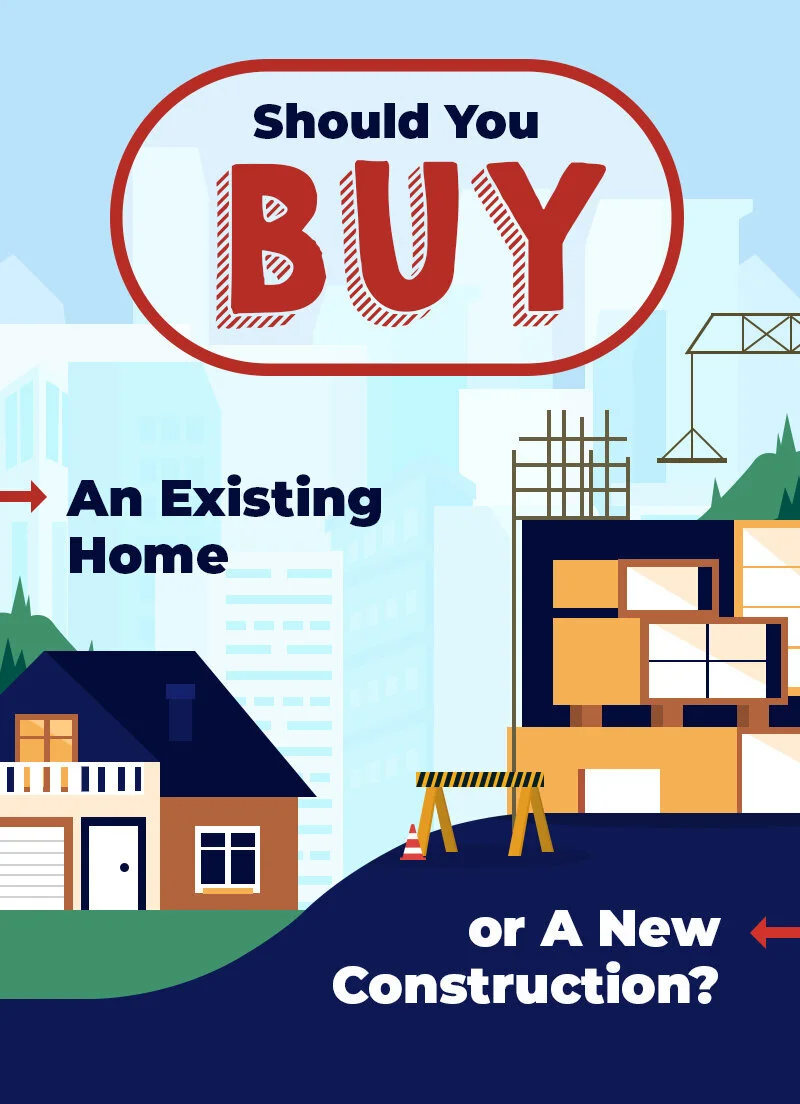
Many resale homes have a lot of interesting stories to tell, while new construction homes are brand new attractions and may be more energy efficient. Do you love a hand-me-down, or are you the type who prefers anything that is latest?

It’s also worth considering since there’s been a recent decline in the number of homes for sale, while construction of newly built homes are ramping up and builder confidence is soaring, according to the latest Housing Market Index of the National Association of Home Builders. 

Whatever it is you choose between the two, remember that for every advantage comes a flip side. This is why it’s important to consider these factors before coming up with a final decision that best suits your needs and situation, which hopefully leads you to your dream home.

While cost always varies by region, there is a substantial gap between the price of a newly constructed home and that of an existing home. The national median for existing single-family homes in the second quarter of 2020 was $291,300, according to the July 2020 Existing Home Sales Statistics by the National Association of Realtors®. Meanwhile, it’ll cost on average $315,282 to build a house, or between $166,237 and $482,652 as per HomeAdvisor. It also depends on the customization and other expensive upgrades you choose to add.

There’s also a greater opportunity for negotiations with the seller when purchasing a resale home, something you generally can’t do if you’re buying from a builder. New construction homes already have a set price for any specific model.
Buyers who are looking to purchase a house with lower maintenance might be better suited for a new construction home. Since you’ll be the first one to live in it, you won’t need to do any significant repairs for a few years or so. Most of the components of the home, including the furnace, water heater, HVAC, kitchen appliances, and others, are brand new and also come with warranties. A brand new home also has more energy-efficient options, especially in appliances, fixtures, and windows, which can help lower your energy costs that could translate to significant savings. If you’re looking to buy a custom home with your preferred style and upgrades, it also eliminates the need for any major renovations later on.

With a resale house, you may need to do some repairs depending on the age and condition of the home. Major issues related to your plumbing, wiring, roof, foundation, air conditioning, or septic system may bring additional costs. You also need to factor in the extra costs of renovations, especially if there are some parts or characteristics of the property that do not suit your taste and needs. You may need to hire a contractor to get the job done or do it by yourself if it’s just a minor renovation. The good thing is that you can make your desired upgrades while you live in the home, whenever you have the time and money to do so.

Timing is something you need to keep in mind, especially if you need to move within a particular time frame because of a change in jobs or other personal reasons. With a resale home, you can move in based on the closing date you agreed to with the seller. 

With new construction, you will need to wait for the house to be built, probably around five to six months, unless you’re looking at something that is move-in ready. Of course, a custom home will take several months longer depending on the market and the builder. But with a new construction there won’t be a need to feel rushed or compete with other buyers in the market.
New construction homes are typically built in master-planned communities in the suburbs and exurbs. Land is plentiful but commutes can be longer. Despite this, sales of newly built homes jumped 55% annually in June 2020, according to a monthly survey by John Burns Real Estate Consulting. Factors that contribute to the the increase in new construction sales even during the coronavirus pandemic include a sharp decline in the supply of existing homes for sale, increasing consumer preference for brand-new, high-tech homes with all the amenities for working and schooling, and an accelerating flight to the suburbs and exurbs.

On the other hand, existing homes are commonly located in established neighborhoods, and many are closer to downtown areas where local grocery stores, coffee shops, and restaurants are easily accessible.

Existing homes tend to have more character depending on their architectural style and features. It’s also something to consider especially if you’re looking for the charm that only older homes have. 

You also won’t need to grow a lawn or wait for plants and trees to mature since your home will most likely already have landscaping and good curb appeal. With new construction, you might need to create a new landscape, which could mean extra cost.

BuyerRenter August 31, 2020

Online Tools And Resources To Leverage When Checking A Potential Neighborhood

Neighborhoods, like people, have unique sets of personalities and characteristics. Whether you’re planning to buy a home or considering renting for the meantime, it’s important to figure out if the neighborhood you’re considering fits your lifestyle before you make your move.

This is why digging into local details such as safety, walkability, nearby schools, and other local demographics beforehand is crucial. It will help you determine if your potential neighborhood suits you, which could save you from lots of headaches or getting buyer’s remorse later on.

Your real estate agent is one of your most valuable resources about the neighborhood you’re considering. Don’t be afraid to ask them questions especially if you’re buying remotely and haven’t had time to visit the area yet. 

However, there are specific questions that real estate professionals cannot answer due to guidelines set by the Fair Housing Act, originally passed in 1968, which prohibits housing discrimination based on race, color, national origin, religion, sex, familial status or disability. They may not be able to disclose statistics regarding some issues, such as anything related to crime and safety, because it could be a reference, intentionally or not, to the racial makeup of the neighborhood. 

So if you are curious about crime statistics, school information, and other local demographic data, you may need to look them up yourself. Just remember to take any information you find with a grain of salt. Consider them carefully because not all data fairly represent the neighborhood and may carry a certain amount of bias in them.

Here are a few apps and websites that can help provide you with more information about your potential neighborhood:

Take a virtual walk on your potential new neighborhood by using Google Street View. You can do this by checking the gallery of maps below any listing or house photos in a home search site, or just go straight to Google Maps and type in the home address. You will be able to explore the neighborhood without stepping foot in there, which is especially crucial if you’re buying a home remotely or still can’t visit the area due to some restrictions. The virtual tour will give you a good idea of what the neighborhood looks like and what can be found nearby.

If it’s a historic neighborhood you’re considering, look into the history of the area via websites set up by the city’s historical society. There’s a good chance you can find digitized news archives and publications featuring local significant events, where you can learn valuable details about the community.

A neighborhood’s walk score or walkability rating is based on whether it’s possible to visit nearby grocery stores, coffee shops, restaurants, schools, and parks on foot. If part of your preference in a home is being able to easily get to places on foot, you may want to check your potential neighborhood’s walk score early in the process. Walk Score also shows separate scores for public transit options and bike-friendliness of the neighborhood. Aside from that, you can also view crime and safety data and see what locals are saying.

For parents researching their potential place, it would be beneficial to check the GreatSchools rating for nearby schools. GreatSchools publishes ratings and information so that people can get an understanding of the quality of nearby schools and help them compare schools within the state. Aside from the usual test scores, the GreatSchools Summary Rating includes other important and relevant information such as how much a school helps students improve academically, how well a school supports students from different socioeconomic, racial, and ethnic groups, and whether or not some groups of students are disproportionately affected by the school’s discipline and attendance policies.

If you’re planning to buy, take the time to research property value trends and recent sales in the neighborhood you’re considering. By taking property value trends into consideration, you’ll have a better idea about whether home prices in the neighborhood are going up, remaining consistent, or going downwards. Likewise, check how many houses on your potential street are currently for sale or rent. Too many houses for sale may indicate a possible drop in property values. 

And while property values in a particular neighborhood won’t give you the bigger picture, they’re worth looking into especially if you’re thinking of your home as a long-term investment.

With NeighborhoodScout, you can find hyper-local data on current real estate activity, neighborhood demographics, crime stats, school information, and forecasts for the housing market.

Nextdoor is a private social network and app that requires you to sign up as a member and belong to one neighborhood at a time. So if you’re in the process of checking out and keeping up to date with what’s happening in your potential neighborhood, it might be worth joining in. In the app, you can connect with your potential neighbors and participate in real-time conversations. Nextdoor lets members stay informed and share useful local information, share goods and recommendations, and send updates related to crime and safety.

On this website, you can find statistics and detailed profiles for many cities and neighborhoods in the U.S. Data include demographic makeup, median household income, graphs of the latest real estate prices and sales trends, recent home sales, geographic data, state profiles, crime data, registered sex offenders, cost of living, housing, religions, businesses, local news links, employment, weather, natural disasters, hospitals, schools, and libraries, among others.

CrimeMapping.com is a police report-tracking service that shows on a map the different crimes reported in a neighborhood or city. It provides valuable information about recent crime activity in a neighborhood.

Also similar: CrimeReports

CrimeReports or CityProtect is a map-based site that shows you up-to-date data on crimes or incidents that have recently occurred in your area. To use it, just type the address or ZIP code of your potential neighborhood and see what pops up on the map. 

This website provides a Livability Score that takes into account dozens of characteristics in seven different categories including amenities, cost of living, crime rates, education, employment, housing prices, and crime rates. When researching for the best places to live in and around a specific location, you just need to type the address, neighborhood, or zip code. You can also customize the list based on the category or factor that is most important to you. 

Buyer August 25, 2020

A First-Time Home Buyer’s Guide to Down Payment Assistance Programs

What is the most difficult part of buying a home? For many first-time buyers, their biggest hurdle is coming up with enough money for the down payment. In the National Association of Realtors® 2019 Profile of Home Buyers And Sellers, buyers cited that student loans, credit card debt and car loans make saving for a down payment difficult. 

A down payment is a portion of the total sales price of the home you will purchase, and is typically expressed as percentages. It will be given directly to the seller while the rest of the payment comes from your mortgage (unless you’re buying with cash). The median down payment for homes purchased in 2018 was around 6 percent, but putting in at least 20 percent down lets you avoid paying for private mortgage insurance or PMI.

So how can you scrape together thousands of dollars to finally hold your first set of house keys? The good news is that there are plenty of down payment assistance programs available to help buyers overcome this huge financial hurdle.

Down payment assistance is any program or funding option, such as grants, zero-to-low-interest loans, and tax credits for eligible home buyers. They provide funds to help them pay for the down payment or cover closing costs. Most of these programs are managed and funded by the federal, state or local governments, each with its own requirements and limitations. You can work with any participating lenders who are trained on the program guidelines to apply and access these aids, or you can directly contact the government agency that’s offering the program.

Here are some of the most common requirements of down payment assistance programs and low-down payment loans:

1. Available to first-time homebuyers

Did you know that you can qualify as a “first-time” home buyer even if you’ve owned a house before? You are considered eligible to apply for first-time home buyer loans and benefits if you haven’t owned your principal residence in the last three to five years. So, if you owned a home in the past but are renting now, don’t just count yourself out and make sure to check how your target program defines the term.

The FHA Loans insured by the Federal Housing Administration (FHA), an agency within the U.S. Department of Housing and Urban Development (HUD), greatly benefit first-time homebuyers who have little or no money saved for a down payment and have lower credit scores.

2. Income requirements

Most assistance programs are intended only to serve residents with low-to-moderate-income. Sometimes, a borrower’s household income must also be below a certain threshold in order to qualify for assistance. 

The Rural Development Single Family Housing Guaranteed Loan Program offered by the U.S. Department of Agriculture, or USDA loans, have adjusted household income limits that vary per state and city.

3. Residence restrictions and location

Other programs will only allow buyers to purchase homes in an approved location or in certain areas. Many cities even offer forms of assistance in order to attract residents to live and work in the area for a given time period.

For the USDA loans, borrowers must buy in areas with a population below 35,000, which includes many rural and some suburban areas. Meanwhile, the Good Neighbor Next Door (GNND) Program sponsored by the HUD, is designed to encourage the purchase of homes located in “revitalization areas” or those neighborhoods that have low household incomes and many foreclosed properties.

4. Home price limits

Many assistance programs also limit the price of the home you can buy, which is usually a percentage of an area’s median home purchase price. Home price limits sometimes also vary for existing homes and new construction. 

5. You need to live in the home for a set number of years.

Borrowers who wish to use down payment assistance may also be required to live in the homes they purchase for a set number of years, usually for at least five years. If you sell your home before the set number of years, you will have to pay back the assistance you received on a prorated basis. 

6. Some are only available to buyers of certain professions.

Your occupation can also be the key to owning your dream home. There are separate programs intended to serve specific professionals such as educators, protectors, firefighters, veterans, and households with disabled members.

The home loans offered by the U.S. Department of Veterans Affairs (VA) allow veterans, active-duty service personnel, and select Reservists or National Guard members, as well as the spouses of military members, to own a piece of the American dream by requiring no down payment and competitive rates. 

The GNND program, on the other hand, is specifically designed to provide housing aids to certain professionals such as law enforcement officers, teachers, and emergency medical technicians, with certain housing and loan conditions for each profession.

7. You may need to take a home buyer education course.

Many state and local government programs require participants to complete a homebuyer education class that features content guided by HUD. These “house counseling” classes are designed to help borrowers qualify for a mortgage and teach them to navigate the complicated home buying process. Both first-timers and “boomerang buyers” (those who re-enter homeownership after a past financial hardship or the loss of a home) can benefit from these classes.

A typical class (which can be done online) covers topics such as how much home can you afford, how to comparison shop different real estate agents and lenders, what mortgage product should you consider, how to improve your credit score, and help you settle between your needs and wants especially when house-hunting.

Is down payment assistance available during the coronavirus pandemic?

Technically, yes. Affordable housing programs and other low-down-payment loans and grants are still out there and available. In fact, according to an article from Inman, VA loan activity skyrocketed during the coronavirus pandemic, with the latest data seeing over 330,000 loans issued during the third quarter of 2020.

However, you need to remember that:

  • Many of the government agencies overseeing these programs, such as the FHA, are overwhelmed right now. They may be facing some financial strains because of their mortgage relief efforts for many homeowners.

  • There could be a significant slowdown in processing because of the circumstance mentioned above, especially in some areas.

  • If you really can’t get a big enough down payment for a loan, you have to make sure that your credit is as good as possible.

  • Fitting into the guidelines of any of those down payment assistance programs or low-interest loans can be more challenging than ever before because of the ongoing crisis. 

Despite all of these, there’s plenty of optimism to be found amid this recent downturn. Don’t hesitate to ask your real estate professional to know what products are available in your market and ready to be taken advantage of.

BuyerHomeowner August 18, 2020

How Much Should You Set Aside For Home Maintenance? Factors To Consider In Creating A Budget

Owning your home is one of your greatest achievements. It feels great and fulfilling—until you’ve got a leaky faucet. Or the paint all over your walls is peeling. Or the gutters are clogged. 

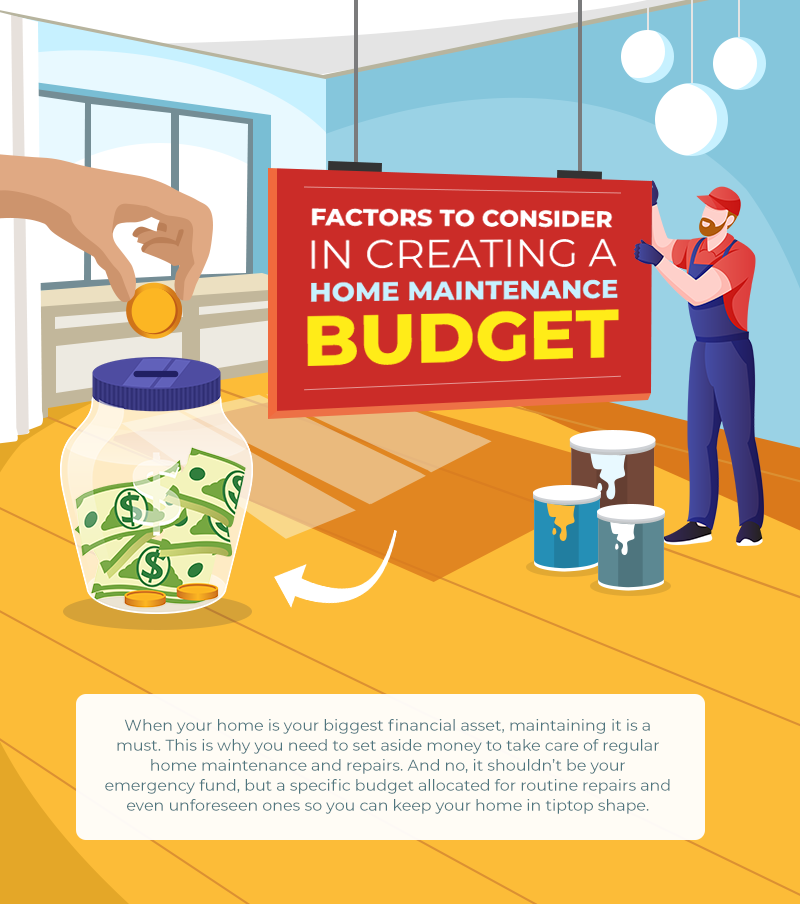
Doing home maintenance and repairs can be daunting. But there isn’t a house with walls you never have to repaint or roof that you never have to replace. And when your home is your biggest financial asset, maintaining it is a must. This is why you need to set aside money to take care of regular home maintenance and repairs. And no, it shouldn’t be your emergency fund, but a specific budget allocated for routine repairs and even unforeseen ones so you can keep your home in tiptop shape.

Figuring out how much money you will need to save for home maintenance is also crucial if you’re a first-time buyer. Maintenance and repair costs are one of the hidden expenses of buying a home—one thing you need to consider when figuring out how much mortgage you can afford.

Home maintenance is non-negotiable. You have to perform maintenance on your property in order to prevent deterioration and slow down its general wear and tear. On the other hand, a renovation or upgrade is being done to improve or change an aspect of your home. 

Your home maintenance budget should be used primarily on routine upkeep, small repairs and fixes, and prevention of bigger problems. Examples of maintenance work include:

  • mowing the lawn, treating grass, and pruning trees,

  • fixing leaky faucets,

  • cleaning out gutters and vents,

  • replacing HVAC filters,

  • cleaning the windows and siding,

  • power-washing your deck or patio,

  • cleaning your dryer ducts,

  • repainting walls,

  • inspecting your fire extinguishers,

  • oiling door hinges, etc.

While larger projects such as remodelling a kitchen or a bathroom fall under home renovation, there are times when there might be some overlap. For example, if there’s a need to replace a leaky faucet, you’d be better off upgrading it to a nicer fixture when getting the job done.

So how much should you set aside for home maintenance? While we will discuss the factors that can impact your budget later on, there are two most popular rules that you could follow when planning for maintenance costs.

First is the 1% rule, which says that you should set aside 1% of the purchase price of your home for ongoing maintenance. So if your home costs $300,000, you should budget $3,000 per year. However, this rule has its limitations since market conditions impact home prices. Not to mention that it doesn’t take into consideration the general condition of the property when you purchased it. This rule just gives you a safe estimate of how much you should have as maintenance savings. 


Another popular rule is the square footage rule, where experts recommend to budget $1 per square foot, per year. It’s a practical estimate and slightly more consistent than the 1% rule since it’s directly related to the size of your home, and your square footage doesn’t change. This means if you live in a 3,000-square-foot home, your annual home maintenance budget would be $3,000. However, this rule also doesn’t take into account the many factors that could further affect your maintenance and repair budget.

So what are the factors to consider when setting up a home maintenance budget? Here’s the list:

1. Age and condition of the home

The range of your actual maintenance costs may depend largely on the age and condition of your home. 

Older homes, specifically those that were built 10 to 20 years ago, generally require more work to maintain compared to homes that were built within the past decade. They’re also likely to need major structural, electrical, roofing, or plumbing upgrades to keep the home up to code. If your home is less than five years old, or if it has been recently renovated, you might be able to budget less for maintenance and repairs for the first few years since most of your home’s appliances, materials, fixtures, and finishes are still new and in good working condition. The 1% rule could be your appropriate range if you have a newer home, but it could go as high as 3-4% for older homes.

If you bought a new construction from a builder, you may even have an overall warranty or warranties on individual items in your property. While the warranties are still in effect, it could potentially reduce the amount you should save. However, don’t think that a new construction home is maintenance-free. Proactively taking care of your home, even if it’s new, can help you avoid future bigger problems.

2. Home size or square footage

Another general rule is that the bigger your house and lot, the higher your maintenance costs. A bigger property, such as a single-family home in the suburbs, requires more upkeep than a small condo in the city or a tiny home, regardless of how much the house is worth. A larger home comes with more room and space to maintain, both in the interior and exterior parts of the home.

3. The weather or environment and location

Weather plays a big role in how your maintenance can be affected. Snow, ice, temperature, humidity, sun exposure, rain damage, wind damage, and other wear and tear issues brought on by the local weather will impact the upkeep and repairs your home will need. If you live in a region with harsh winters, you might need to save more on snow removal costs. Homes in coastal areas that are often affected by storms might have a greater need for paint and roofing upkeep. Likewise, homes in humid regions are more prone to mold and mildew.

It’s also a different scenario if your home is located in a hurricane-prone area or in areas where there’s regular flooding. If your home is situated adjacent to a flood plain, your basement is at higher risk of water damage. These environmental and topographical variables should also be considered when setting up a home maintenance budget.

4. Building materials

The cost needed to maintain your home may also depend on the building materials used. Some materials will require more or less upkeep than others, and there are some that are more prone to damage.

5. Your family size

The more people are living in a household, the greater the chance of wear and tear, especially if there are small children. In this case, there might be a more frequent need for minimal touch-ups and repairs, which should also be considered when creating a budget.

Bottom line

Proper maintenance and upkeep will help preserve your home’s value and put you ahead of the game once you decide to sell. The key is to be proactive right from day one, rather than just relying on your emergency fund when things have already gone wrong in your home. By setting aside small, manageable amounts of money on a regular basis, you’ll be less likely to sink a large chunk of cash to cover for any unforeseen repairs, especially if you will need to pay a handyman to do the job. 

Homeowner August 11, 2020

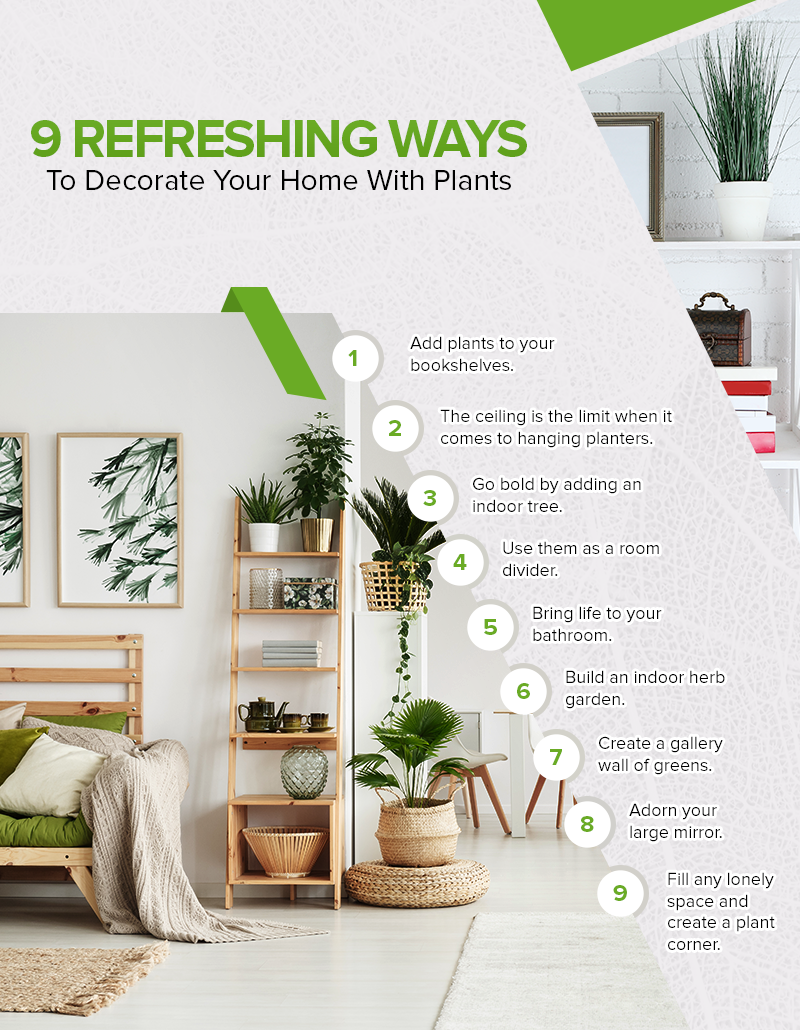
9 Refreshing Ways To Decorate Your Home With Plants

It’s a given: plants are perfect living accessories. Aside from their many health benefits, they make fantastic home decorations because they can add so much life and color to any room or space. Having house plants is also another way to appreciate your home more. 

If you’d love to accessorize your home with pretty, green foliage but need some inspiration on how to better do it, read on for these new and unique ideas. Soon thereafter, you will move on from the usual bar cart or garden rack filled with plants and come up with new ways you can spruce up your home.

Bookshelves aren’t just for books, framed photos, and other displays and accessories. If you haven’t considered this yet, try including a plant or two to your bookcase to enrich the space and add some texture. If you want to go beyond the succulents or small potted plants, place a trailing plant on the top of the shelf to add a “living layer” and create visual interest.

Love plants but don’t think you have any extra floor space? Well, the sky (or the ceiling) is the limit! Creating a garden in the air can instantly add a dreamy, bohemian look in your space. Also, setting up hanging planters at varying heights is an unexpected way to add color and visual interest. Hanging plants are also perfect if you have pets or small children and you’re afraid of them grabbing the plants on the floor or tabletop, especially since there are some plant varieties that could be poisonous to them when eaten.

You can opt for some macramé plant hangers if you want that boho-chic look. Or, simply use a hook on the coat rack in your entryway or mudroom to add a hanging planter as an instant accessory.

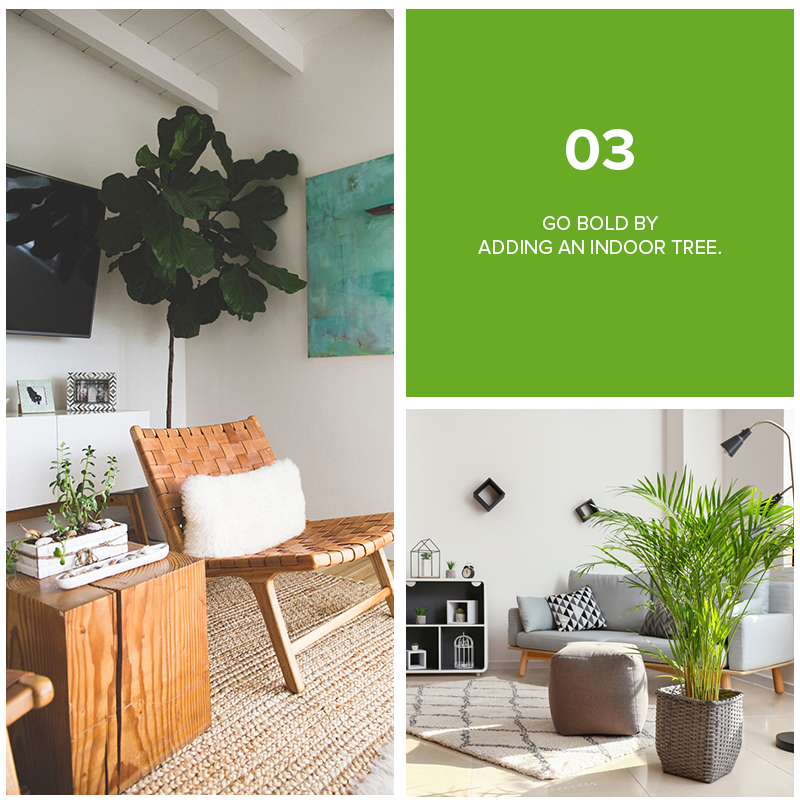
Want to try something different? Go over the top with an enormous potted tree that can add a burst of life to your space. It’s perfect if you are already tired and bored of the usual small house plants, you have a minimalist home, or if you don’t have enough space or budget for lots of plants. 

Tall indoor plants and trees like palm trees, fiddle leaf fig, olive tree, or Monstera, can be a great statement or conversational piece in any room. They can add so much more floor-to-ceiling style to any space. And since trees are natural, living furniture pieces, they can complete the look of the home with the most organic feel and spruce up any space that needs livening.

One practical way to incorporate plants into your home is to use them as a room divider. They make attractive dividers especially on houses with open floor plans or layouts, and on studio apartments where you need to create defined areas within the room. Using plants is also a great way to maximize natural light and space.

There are several ways you can craft a divider using house plants. You can use any standard open bookcase, cube storage unit, or rectangular planter between the spaces you want to separate and fill it with plants. You can also line small, similar plants on top of a long table or bench. Likewise, choose several tall planters with small trees or plants with broad or bushy leaves to create a lush screen that will add a lot of character to your open floor plan.

Plant life can pop in many areas of your home—even in your restroom. Especially if you’re looking for ways to improve the look of your boring bathroom, adding a few potted plants can add a soft, warm layer to all the hard materials. Some plants that will feel perfect in a bathroom or walk-in shower include peace lily, sansevieria or snake plant, and spider plant. The bonus is, even if you think you have a black thumb, these plants will thrive in low light and warm temperatures. Also, the moisture created from your daily bath can help your leafy friend stay alive even with less effort.

Bring the pleasure of cooking with fresh herbs straight to your kitchen by growing your own indoor garden. The beauty of this is, even if you have limited outdoor space or have no room for a vegetable garden, you can incorporate plant decor while filling your home with the calming and fresh-smelling scents of herbs. Try planting basil, rosemary, mint, parsley, and thyme in small pots or even mason jars, and then mount them on black wooden boards that you can lean against your kitchen cabinets. You can also use individual planters that will add another pattern to your kitchen wall. This way, your plants will not only serve as cooking aides but also as wall art. Plus, those herbs mentioned above are just some of your best choices for your indoor garden since they don’t grow too wide or tall. 

Instead of filling that bare wall with expensive paintings or photos, why not display some greenery? Creating a gallery wall of plants is another great and unexpected way to incorporate them in your home. Adding some greenery to your blank wall can instantly add color and texture to your space. If you love succulents and cacti, they are perfect to decorate your homes with using tiny planters, as they will do well indoors and can thrive in less sunlight. To combine geometry with greenery, opt for wall planters with unusual or eccentric shapes and see how they steal the attention of anyone in the room.  

Mirrors can make a room look larger and feel more open. However, large mirrors can at times be distracting. To counterbalance the effect, place a few tiny plants or cute topiaries in front of it. You can use plant pots or containers that match the color of your mirror frame for a more harmonious effect.

If you have any areas in your home that look lonely and unfilled, adding different layers of plants may actually do the trick. Instead of adding a potted plant on the stairs landing, why not place some pretty foliage on the wall flanking the stairs? If you have high cabinets with an unused empty space on top, add some planters in there to create a lush backdrop.

Certainly, there are better and more innovative ways to decorate your home with plants. If you can’t commit to having a mini plant sanctuary, you can always go for a few houseplants that are hard to kill and can thrive with minimal effort. Plus, plants not only make any space gorgeous, but they also have a special way of making us feel better, happy, and content just by being there.

HomeownerSeller July 31, 2020

Upgrades That Will Not Increase The Value of Your Home

Part 3 of Everything You Need To Know About Your Home’s Value series


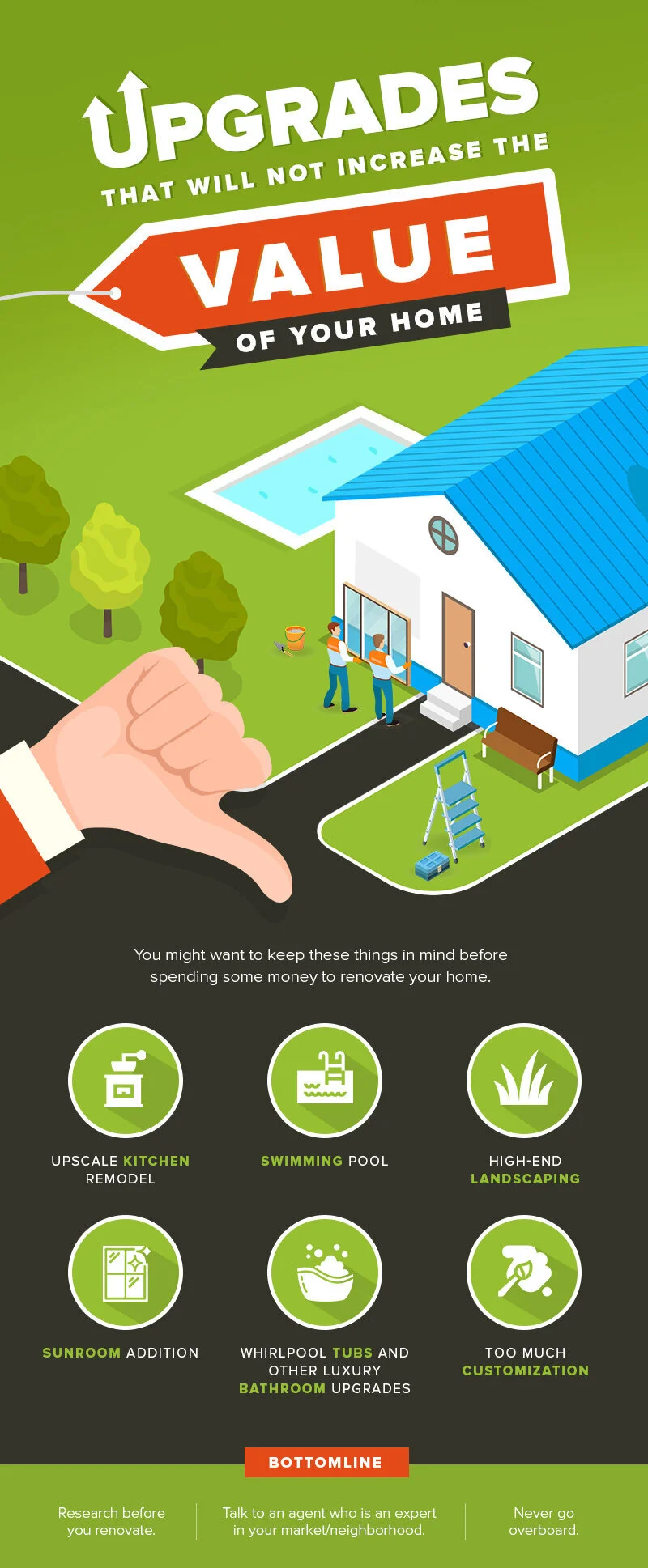
Here are home improvement projects that may not increase the value of your property, and could even bring it down when it’s time for you to sell. You might want to keep these things in mind before spending some money to renovate your home.

Upscale kitchen remodel

A high-end kitchen might be the ultimate gift for any home chef. Especially after several months of isolation, our kitchens might have become our comfort place. But if you think upgrading your kitchen to a “gourmet” status with a commercial stove, marble countertops, and high-end appliances will automatically increase its resale value, you might be in for a surprise. 

According to Remodeling magazine’s 2020 Cost vs. Value report, an upscale kitchen renovation recoups just 54% of its cost in added value. So think twice before upgrading your space into a fancy, restaurant-style kitchen whose style doesn’t fit in with the rest of the house, or the neighborhood. This kind of kitchen remodel might even deter potential buyers. Focus instead on small kitchen upgrades that could yield a bigger payoff.

Swimming pool

It’s a dream come true to lounge by the pool, cocktails in hand, in the comforts of your own backyard. But while you can’t put a price tag on how much joy a swimming pool will add to your home and quality of life, you might want to think twice before considering this update. 

According to HouseLogic, installing an in-ground pool might only make more financial sense if you live in a state with a year-round hot or warm climate, or if you live in a higher-end neighborhood where most homes have pools. Your home’s value could only increase by no more than 7% after the pool installation, and only in certain circumstances.

Not to mention, pools are expensive to install, difficult and pricey to maintain, increase your energy costs, and could even raise your homeowner’s insurance. And since a pool could also pose as a hazard, it might be a turn-off for buyers with small children. With its very minor potential value increase, a swimming pool addition may simply not be worth it.

High-end landscaping

There’s no doubt that landscaping can dramatically improve the curb appeal of a home. However, investing in expensive landscaping and going over the top to create what could be a backyard paradise will not increase your home’s value. Rather, it will only increase the maintenance required for it, which could be a concern to potential buyers. If you plan to sell, the sad truth is you won’t recoup the cost of the high-end landscaping in the sale. 

Likewise, any fancy decorative additions you add to make your lawn more attractive may not match the buyers’ tastes. This is why it’s best to stick with keeping your garden beautiful but won’t require countless hours of work. Should you wish to add any decorative window boxes and other lawn enhancements, make sure that they can be easily removed. A well-kept lawn that is easy to maintain all-year round will certainly make a better impression than a backyard with upscale landscaping.

Sunroom addition

Unless the homes in your neighborhood have sunrooms that will help you stay competitive when you decide to sell, a sunroom addition adds very little to your home’s value. This project can cost anywhere from $30,000 to $70,000, making it one of the most expensive home upgrades. And yet, it has one of the lowest returns on investment, returning an average of only about 49% of money spent. 

So even if a sunroom can be a great space for you to enjoy the outdoors, think carefully about how often you will use it before deciding to do this costly upgrade. Also, remember that a sunroom can also raise your energy costs in the winter and summer since glass doesn’t provide insulation.

Whirlpool tubs and other luxury bathroom upgrades

Similar to swimming pools, tubs and other upscale bathroom improvements are also a gamble. Hot tubs and whirlpool baths take up space, require constant maintenance, and may result in higher monthly energy bills. Plus, home buyers with younger children might consider a tub as a safety hazard as some of them are difficult to climb into.

If a hot tub is one of your must-haves, consider a portable hot tub instead of a built-in one so you could potentially take it with you when you move, or the new homeowners can easily remove it whenever they want to. Also, you might want to consider a walk-in shower that many homeowners can use frequently and will appeal to a wider pool of buyers.

Further, don’t get carried away by luxury bathroom additions like waterfall showers and over-personalized finishes that may cater only to buyers with specific tastes.

Too much customization

We all love to make our homes better and more enjoyable to live in. However, any over-personalized or drastic renovations can hurt your home’s value. Quirky tiling, wallpaper, adding textures and bold paint to walls, and other customized features will not appeal to the broadest pool of buyers. Worst, they will see it only as a distraction or as an added expense, especially if they will have to spend time and money to remodel it. So steer clear of any upgrades that are so personal or so specific that they will not add any resale value and will turn home buyers away when it’s time for you to sell your home.

Bottom Line

  • Research before you renovate.

Before doing any renovations, you need to look at your neighborhood. Look at comparable homes for sale near you and make sure the improvements you’re planning to make align with the norms of your neighborhood, especially since individual markets place different values on different home improvements. And since buyers will also look at the average price of a home in your area, remember to have almost the same features or else your property will be priced out of the expected range and you won’t get your money back.

  • Talk to an agent who is an expert in your market/neighborhood.

Especially if you’re planning to list your home soon, the best way to know what you can expect in terms of resale value is talk to a real estate agent who knows your market well. They’re sure to know the local trends and can inform you about how other homes with similar features you want to add are selling. They will also help you compare your home to all the homes that have sold in the last three years to help define its value. This way, you can make an educated decision before you start a renovation that could affect your biggest investment.

  • Never go overboard.

Lastly, remember that renovations should enhance your home, not price it out of the local market. So avoid any over-the-top renovation or too much customization that could hurt your home’s value and make it a huge turn-off to potential buyers. If your heart is already set on a particular home improvement project, do it mainly for your own enjoyment but not as an investment, especially if you’re staying in the house long-term.

HomeownerSeller July 25, 2020

Home Improvements and Repairs That Add The Most Value

Part 2 of Everything You Need To Know About Your Home’s Value series


In the real estate industry’s viewpoint, a home’s condition can be classified into four categories: poor, fair, good, and excellent. Whenever you’re considering any renovation for your home, don’t forget to ask yourself these questions first: “Am I taking the condition of my home into a ‘good’ condition?”, and “What will this update do in terms of value?” 

Even if you can’t see yourself moving in the near future, home improvements have an impact on your home’s value and appraisal. And the reality is that not all remodelling projects or upgrades will increase your home’s value enough to recoup the entire cost of the improvement. In some cases, although it will add great satisfaction to you and your family, an upgrade may not increase the value of your property and may even bring it down when it’s time for you to sell.

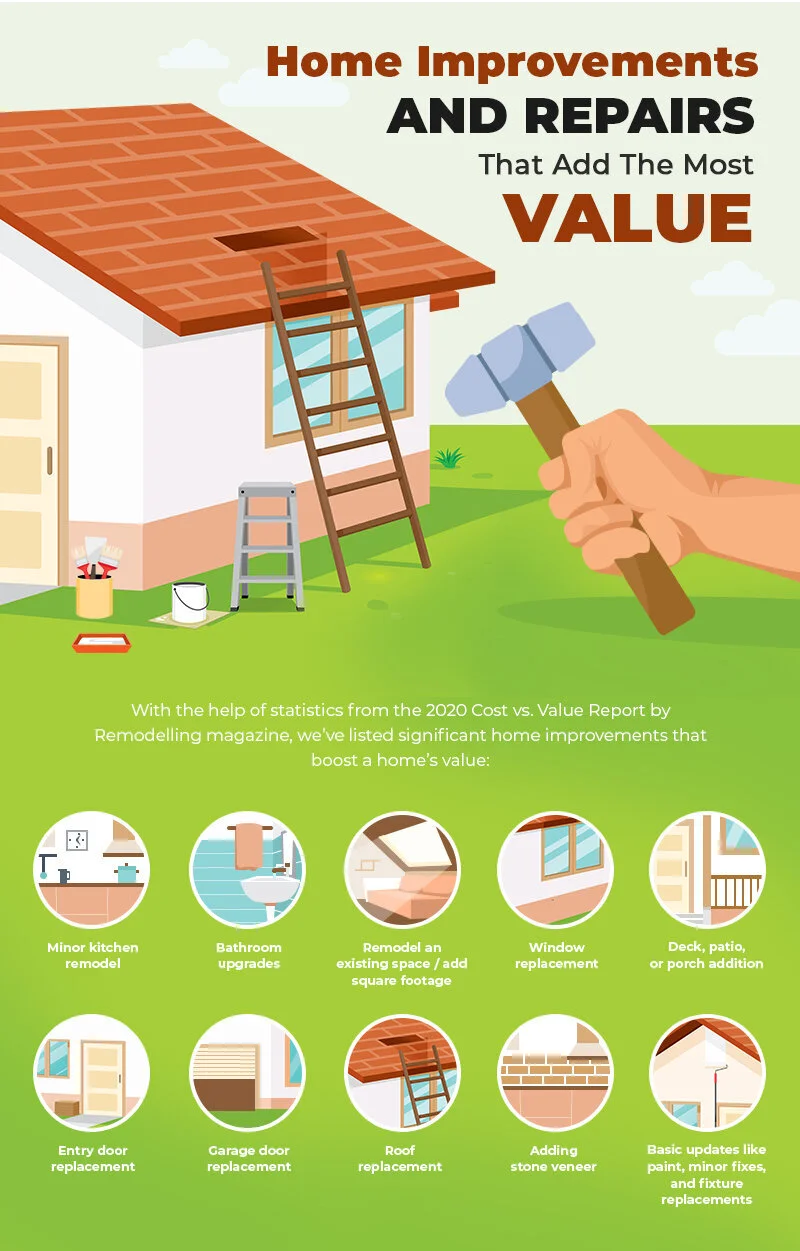
With the help of statistics from the 2020 Cost vs. Value Report by Remodelling magazine, we’ve listed significant home improvements that boost a home’s value:

Minor kitchen remodel

Because the kitchen is considered the heart of the home, updates in this space generally pay off. A minor kitchen remodel has an average cost of more than $23,000, and recovers about 78% of your spend at resale, compared to an upscale one which has a lower return on investment. It’s a key money saver and also the best choice if your space just needs a cosmetic update. 

For example, putting a fresh coat of paint can go a long way in updating the look of your kitchen. Consider using low-VOC paint to make it more eco-friendly. Other projects may include replacing cabinet fronts with an updated style and adding recessed lighting to brighten the countertops. Also, small, inexpensive upgrades such as adding matching drawer knobs, cabinet pulls, and faucets can easily add a modern touch to the room but can have a big impact when it’s time to sell.

Bathroom upgrades

A midrange bath remodel can recoup as much as 64% during resale. And just like with the kitchen, you can give your bathroom a face-lift just by swapping out fixtures. Simple fixes such as replacing the vanity lights, removing dated wall coverings, and replacing old shower doors can usually do the trick. To make it more energy-efficient, replace your old toilet with a low-flow model that uses less water per flush.

But if your home has only one bathroom, it might be better to spend money on adding a second bath or a half-bath rather than remodelling your existing one. A new bathroom will not only improve your home’s interior but can also raise its value. It might be less costly to convert any small or underutilized space, such as a walk-in closet, an area under the staircase, or an old laundry room, although it still depends largely on the items and accessories you will use. Yet, a half-bathroom is critical for homes without a bathroom on the main level, especially during this unique time where we have to keep germs from spreading into our home.

Remodel an existing space/add square footage

If you can remodel and utilize unused areas, such as your attic or basement, it’s a good way to boost value and add square footage to your home. You may opt to finish a basement and reinvent it into an entertainment bar, a game room, or a second living room; convert the attic space into a bedroom or a kids’ playroom; or turn a walk-in closet into a home office that’s perfect for many professionals nowadays. 

This way, even if you’re planning to stay in the home for a few more years, the extra space will be enjoyed and benefit your family. And once you’re ready to sell, having a versatile room that can be converted into anything will have a great appeal to prospective buyers.

Window replacement

Old, drafty single-pane windows are now a major turn-off for many potential buyers, especially if energy efficiency is in mind. This must be one of the reasons why replacing double-hung windows with insulated, low-E (low-emissivity) vinyl windows recovers about 73% of the costs, according to Remodelling magazine’s report. Windows with low-E coatings help keep the temperature in a home consistent by reflecting the interior temperatures back inside. Likewise, modern windows don’t only help with energy savings but also add curb appeal to a home.

Deck, patio, or porch addition

Due to previous lockdowns and stay-at-home orders caused by the COVID-19 pandemic, outdoor living spaces have become more desirable. In the latest survey of Realtor.com® and Toluna Insights on what homeowners wish they could change about their home to make it more livable while sheltering in, 9% of respondents wanted to add a yard or patio. Having plenty of yard space has become the ideal as we continue our lives under the new normal. 

Adding a deck is one way to upgrade your outdoor living space and increase your home’s value. While it can cost anywhere from $14,000 to $19,000 on national average, it can recoup as much as 72% during resale. Again, however, it still depends on the design and materials you use. 

If a facelift is all you need, consider improving your deck or patio by adding small details such as decorative planters, lighting, and other features that will make it more attractive and also enhance your home’s curb appeal.

Entry door replacement

Replacing your front door with a new steel entry door has had the best return on investment every year. It’s no wonder because a home with old doors that let in plenty of hot and cold air can be a huge turn-off to potential buyers as it might be more costly to live in and maintain. According to the report, an average steel entry door replacement costs more than $1,800 and returns almost 69% at resale. More buyers will appreciate the energy efficiency, low maintenance, and cold-blocking powers of metal.

Garage door replacement

On the other hand, a new garage door is one project that practically pays for itself, recouping about 95% of your costs at resale. A garage door upgrade also helps make a good impression to guests and buyers, improve security, and contribute to your home’s curb appeal.

Roof replacement

Replacing a roof might be considered by many as a maintenance project, and it’s certainly not a show-stopping improvement like a kitchen renovation. However, it’s one update that can boost your home’s value and on average, you can recover almost 66% of its cost when it’s time to sell. Buyers also appreciate a new roof because they know it will save them the hassle and expenses brought by a new roof installation. It’s especially crucial to update your roof if it is already leaking and is nearing the end of its lifespan as it could hurt the value of your home.

Adding stone veneer

Installing manufactured stone veneer doesn’t only make your home more beautiful but also increases the value of your property. According to the 2020 Cost vs Value Report, this update costs an average of $9,357, but recovers as much as 96% in resale value. It’s also a versatile project that you can add in any part of your home, may it be on the front porch, around the fireplace, or as a feature wall in the kitchen or bathroom.

Basic updates like paint, minor fixes, and fixture replacements

Never underestimate the power of doing basic updates to boost your home’s value. Small, inexpensive projects like touching up on any flaking or chipping paint, removing dirt and mold, painting the front door, replacing old door knobs and handles, and even updating your mailbox, can help keep your home in tip-top shape that will show buyers that you have a safe and well-maintained home.

Bottom Line

Kitchen and bathroom remodels continue to be the two of the best investments you can make in your home to boost its appraisal and resale value. These areas are where people spend the most time in their homes, so experts say you can almost always tell if money has been well spent or not. Also, whether your goal is to enjoy your home more or make the most return on investment when it’s time to sell, remember to never go overboard and never make a space fancier than the rest of the house or the neighborhood.

Homeowner July 17, 2020

5 Good Reasons Why You Should Know the Value Of Your Property

PART 1 of Everything You Need To Know About Your Home’s Value series


Your home is your greatest asset. When you know more about your home and its value, the more empowered you are to make informed decisions regarding your property. Whether a sale is imminent or not, determining how much your home is worth will help you become ready for your next steps. When things come up or when life throws a curveball, as they say—may it be a new job in another area or you need a little help with your finances—you will be ready and can make your investment work for you.

If you still aren’t convinced, here are five useful reasons why you should know the value of your home:

1. Homeowners insurance

When you purchased your home and drew up an insurance policy, it should have covered at least what you paid for your property. But after a few years of paying your mortgage and doing some upgrades, your home has likely increased in value. In this case, it might be time to reevaluate your homeowners insurance policy. You can set up a meeting with your insurance company for a refresher on your coverage policy. Knowing your home’s value will make sure you’re covered for the cost of its full value if something were to happen.

2. Property taxes

Your property tax bill is based on the assessed value of your property, and factors such as your property’s size, construction type, age, and location can affect it. If you think your county or municipality has appraised your property value too high, you can appeal your tax bill. 

By having a formal appraisal that will reveal the real value of your home, you can appeal the city’s assessment so you can have lower payments. The appeal process varies by area, but a written request together with the appraisal and research about recent home sales in the area will help convince the tax office that you’re paying too much in property tax compared to the market. It might sound like a hassle at first, but remember that a lower property tax bill means some savings.

3. Home equity

When you know the value of your home, you’ll see how much equity you’ve built up. And when you reach the point where the value of your home is more than what you owe in mortgage, you may be able to take out a Home Equity Line of Credit or HELOC. This loan uses that equity as a collateral and can be repaid on a fixed interest rate. You can use this fund to give you more financial flexibility, such as to get financing to start home improvements that will add value to your home, or even invest in a second property. 

Likewise, if you’re thinking of refinancing so you can capitalize on today’s low mortgage rates, the more equity you have in your home, the better is your chance to qualify for a more desirable loan term, provided that you also qualify for other credit considerations.

4. Home improvements and repairs

Knowing your home’s value is also crucial to help you decide if upgrades or repairs are in order. You want to understand where your property value is starting at, as it will give you a good basis for determining what you want to do with it. You want to make sure that any improvements you make will not only make your home comfortable to live in, but will also potentially increase the value of your property. 

It’s a good idea to prioritize projects that will enhance your home’s value, such as a kitchen or bathroom remodel, to ensure that the renovation costs will pay off. Also, you want to make sure that your upgrades match the other homes or “comps” in your neighborhood if a return on investment is important to you.

5. Selling your home

One of the major reasons why you should know what your property is actually worth is that it can help you decide whether to put it on the market. And when you know your home’s value, you can be confident in setting a sale price. You don’t want to sell your biggest financial asset for what you just think it may be worth, only to find out later that you could have gotten much more out of it. By checking your property’s value before you list it, you will know what to expect to get from the property when you sell to potential buyers. 

Remember: don’t put up a ‘For Sale’ sign just because you’ve known that your home already has value in it and you think there’s more money on the table. However, if you’ve been ready to put your home on the market for quite some time now and are planning to move this year, then knowing your home’s worth will prove to be very beneficial for you.

Bottom Line

The benefits of determining your home’s value don’t start or end when it’s time for you to sell. Your insurance premiums, annual property taxes, refinancing options, and even applying for a home equity line of credit are all based on your home’s value.

Homeowner July 10, 2020

Here’s What You Need to Know About Home Equity and The Best Ways to Use It

One of the biggest advantages of homeownership is building equity over time. But what really is home equity? Read on to learn what it is, how it works, and the smartest ways you can use it to your advantage.

What is home equity?

In simplest terms, home equity is a homeowner’s most valuable asset. It is the portion of your property that you truly “own”. Because although you’re considered the homeowner, if you borrowed money to purchase the home, your lender has an interest in the property until you pay off the loan. Your equity can be one of your biggest financial tools as a homeowner because you can tap on it later in life and make it an excellent source of funds.

According to the recent Homeowner Equity Insights Report by CoreLogic, U.S. homeowners with mortgages (roughly 63% of all properties) have seen their equity increase by a total of nearly $590 billion since the first quarter of 2019, an increase of 6.5%, year over year. This means that in the first quarter of 2020, the average homeowner gained approximately $9,600 in equity during the past year. 

And even with the impact of the COVID-19 pandemic in the latter half of the first quarter of 2020, home prices continued to rise, which added to borrower equity through March. It’s a huge win for many homeowners, especially those who are looking to sell their homes this year.

3 Ways You Can Leverage Homeowner’s Equity:

1. Home equity loan – This is also referred to as a “second mortgage” because the two loans function very similarly. With this loan, you’re borrowing against the equity you’ve built up in your home so the amount that you can borrow may be limited by how much you’ve paid down in your mortgage.

2. Home equity line of credit (HELOC) – This is the most flexible among the three options. With HELOCs, the loan is divided into two distinct pay periods: the draw period and the repayment period.

3. Cash-out refinance – In this kind of refinance, you borrow more than what you owe and receive the difference in funds, which can be used as you see fit.

4 Smart Ways to Use the Equity of Your Home

If you’ve built up equity in your home over the years, there are several ways to use that asset to your advantage:

1. Make home renovations and upgrades.

One of the most common uses of home equity is to invest in home improvements, especially those upgrades that will increase the value of your home and build more equity as a result. Renovation projects such as upgrading a kitchen or bathroom, adding more livable space, or updating appliances, can make your home more comfortable and elevate its condition so it will be more attractive to potential buyers. These renovations are a good return on investment since your home will sell quicker and for more money.

Just remember that there are some improvement projects that can actually lower your home’s value so be careful before you borrow against your equity with this purpose in mind.

2. Create an emergency fund.

One of the easiest and most convenient ways for homeowners to get cash is to tap into their home equity. And it’s especially helpful if you experience a financial emergency and your emergency fund has been depleted. Your home’s equity can serve as a low-interest alternative to credit cards or payday loans.

Experts suggest that by setting up a HELOC before you need it, you’ll be able to access your money faster and be able to qualify for one once an emergency arises.

3. Buy a second home or an investment property.

If you’ve owned your home for a few years, there’s a good chance you’ve already built up a reasonable amount of equity. This can be a valuable resource if you’re planning to purchase an investment property. When you use equity to buy another home, you’re exchanging that debt for another asset that can potentially produce income. Just remember that real estate investing is a risky business so make sure to weigh in all the pros and cons before tapping into your equity to buy another property.

4. Pay off student loans and other high-interest debts.

Equity is a tool that homeowners can use to improve their financial situation. And aside from using it for upgrades and buying a second home, you can also use it to pay off higher interest credit cards and student loans. Some cash-out refinance loans, such as student loan cash-out refinance, are specifically priced to be used to consolidate your student loan debt and mortgage into better terms. 

Likewise, because of its lower rates, a debt consolidation loan using your equity may be a more attractive option than paying higher credit card balances. It can save you money to be spent in interest over the life of the balance, depending on your debt and loan scenario. It can help improve your overall financial health as long as you’re being disciplined and not accruing additional debt while paying off the existing balance.

Bottom Line

Just remember that the biggest risk of tapping home equity is that your home serves as the loan collateral. This is why experts strongly advise against using it to buy a car or fund any expensive luxury or vacation. But at the end of the day, the smartest way to leverage equity still depends mainly on what you want or need to do with the funds, your credit score, financial situation, and other factors regardless of which option you choose.

Buyer July 3, 2020

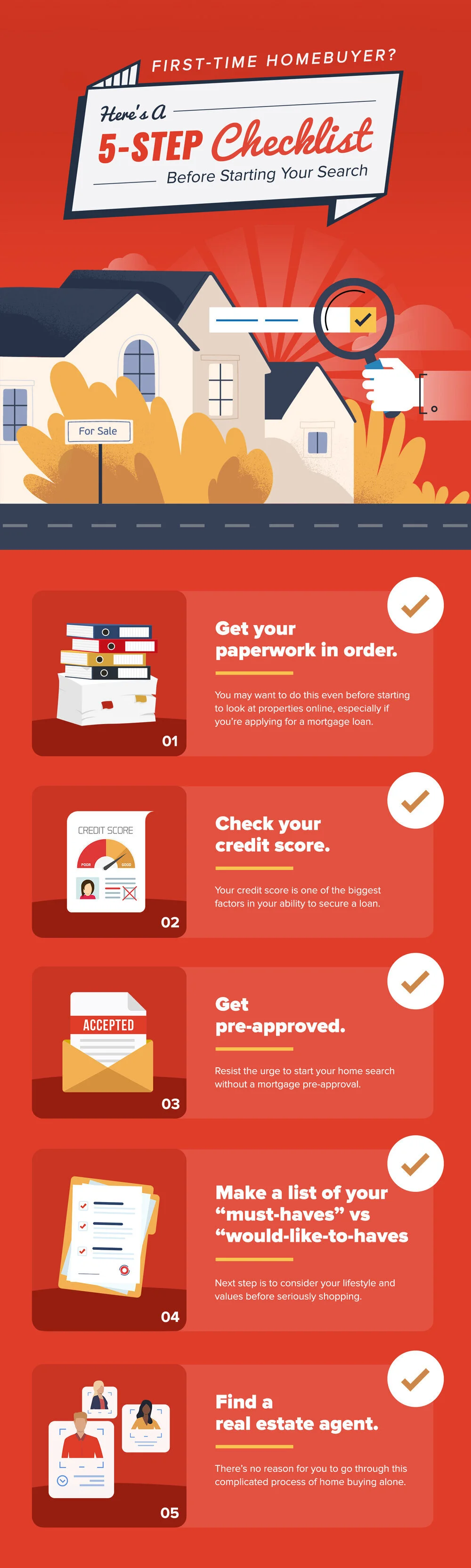
First-Time Homebuyer? Here’s A 5-Step Checklist Before Starting Your Search

Anything you’re doing for the first time can often be frustrating and intimidating. More so when it comes to buying your first home! The stakes are high, and there’s no way you can make an impulse purchase. You can’t just contact the agent of a listing you’ve seen online and say “This is mine!”—no questions asked. Or give an offer on the first virtual open house you’ve attended. There are a ton of things to do and prepare even before finally scheduling a showing and making an offer on your potential home.

Even so, searching for your first home is an exciting journey. To further help you, here are five tips to remember before starting your search:

1. Get your paperwork in order.

You may want to do this even before starting to look at properties online, especially if you’re applying for a mortgage. Some of the documents you’ll need to prepare include your last two years’ worth of tax returns, bank statements for the last three months, canceled rent checks, and current pay stubs and copies of your lease if you’re currently renting. These documents will be needed by the mortgage officer later on when he’s assessing your capability as a borrower. While assembling all that paperwork early on can be quite a pain, be assured that you’re getting a headstart on the competition.

2. Check your credit score.

Your credit score is one of the biggest factors in your ability to secure a loan. Lenders will look at this number to determine whether you are creditworthy, and it will influence your interest rate, down payment, and other terms of your mortgage. It will also help you know which type of loan you can consider getting as different loan types have different credit score requirements. 

Check your credit score and obtain a copy of your credit report before you look at real estate online. If you think there are errors on your report, contact the credit bureau to dispute inaccurate or incomplete information. For less-than-stellar credit, take the necessary steps to boost your score so you’ll be more confident in getting a better loan term as you look for your ideal home.

3. Get pre-approved.

Resist the urge to start your home search without a mortgage pre-approval. This letter lets you know how much home you can afford and will show sellers that you are serious and have what it takes to buy. Lenders will do a full review of your employment or income, credit, and assets before they issue a pre-approval, so assembling your paperwork beforehand will save you the hassle.

Getting pre-approved for a mortgage will help you gain a competitive advantage and speed up the homebuying process. And with today’s historically low mortgage rates and even low housing inventory, it has never been more crucial. Having a pre-approval before making an offer can help you stand out among sellers because it gives them extra security and confidence that the deal will push through.

4. Make a list of your “must-haves” vs “would-like-to-haves”.

Next step is to consider your lifestyle and values before seriously shopping for real estate. Then, create a list of all the features of a home that you would like and categorize them as ‘must-haves,’ ‘would-like-to-haves,’ and your ‘dream features.’ 

Ask yourself questions like: ‘Do I really need four or more bedrooms?’ ‘Is a two-car garage necessary?’ ‘Are granite countertops a must in my future kitchen?’ Your preferred number of bedrooms and bathrooms, square footage, and neighborhood features should be included in your non-negotiable elements. These crucial items should be followed by the ones that would be nice to have, such as an outdoor space, a home office, plenty of storage, and other features that are important for you and your family.

5. Find a trusted real estate agent.

Lastly, there’s no reason for you to go through this complicated process of home buying alone. Especially during this age of new normal, working efficiently with a trusted realtor will help put you in a position to act fast when you’re ready to move. Find a good realtor who has extensive knowledge of the area or neighborhood, especially if trips outside are still limited.