Buyer March 26, 2018

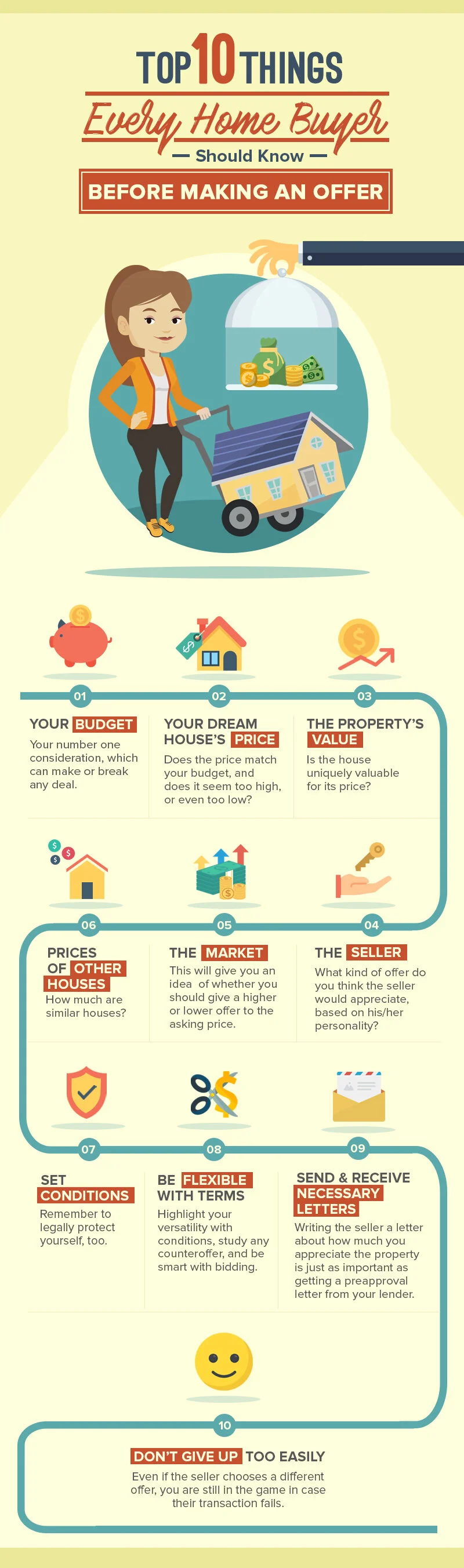
Top 10 Things Every Home Buyer Should Know Before Making An Offer

You are finally done with house hunting, and you think you’re ready to make an offer. What are the things you have to consider in settling on a price? Here are the top 10 things you should know to successfully close the deal with your offer.
1. Your budget

Before even thinking about looking at houses you might one day call your own, this should have already been settled. Knowing how much you can realistically afford should always be the number one consideration.

Getting a loan is difficult enough. If you’re still finding it difficult to chip in cash for a down payment and still have to look into other savings for this investment, you might want to think twice or even thrice if you are ready to purchase a house at this time.

2. Your dream house’s price

What’s the price of the house? After making sure that it fits your budget, investigate further if it seems too high or even too low. The following items on this list will help you with that investigation.

This will also help you estimate the price you’re willing to offer for the property–whether to add more to the asking price, or haggle with a lower-priced offer.

3. The property’s value

To be sure of the property’s value, you may want to get a legal evaluation. You may also want to consider adding (or even decreasing) its cash value for its unique traits. For example, the property’s architectural design is outstandingly your style, or maybe you’re enthralled by the design of the kitchen. It may also be something as personal as its location being close to a dear relative. For rare features like these, you can show the owner your eagerness to own the house by adding a specific amount on your offer (especially if you’re caught in a bidding war).

On the other hand, if there are some things on your dream property that you are not comfortable with, you may also mention these to the seller, and offer a lower price.

4. Prices of other houses

Look at comparable houses (“comps”) in the area, and see how much they are/were sold for. These properties should be in the same neighborhood with the same dimensions, age, and number of rooms. If it has been sold, the purchase should not be older than six months.

5. The market

If the real estate market is doing well, there’s a chance for other bidders to price their offers too high. This may cost you the house if you don’t strategize well. Not to mention that in most cases, giving an offer that is higher than the asking price may easily give you a better (if not sure) chance of owning the property. But if the market is down, you can opt to offer less than the asking price and still have a high chance of winning the bid.

6. The seller

Based on your encounter with the house’s seller, do you think he/she is the type of person who would price the property irrationally? Does the property have sentimental value to him/her? Is he/she the type who would be offended if you gave an offer lower than the asking price?

On making your move, remember that you’re not only dealing with legalities, but personalities too. If you still can, try to win the heart of the seller. Sometimes, people choose a buyer regardless of the amount of their offer, as long as they think that you are able to take care of the property when they legally transfer all its rights to you.

7. Conditions to be set

Upon making your offer, you must already mention your closing conditions to the seller. These include requesting for a home warranty, the type of deed you are obtaining, and asking for assistance with home repairs.

Payment conditions are also very important in this transaction. Will you be paying in full on a specific date? Are you offering earnest money and are willing to pay with interest? These are some things the seller needs to know off the bat.

8. Flexibility with terms

If you are in a bidding war, more than the price, you can also haggle with your versatility with the offer’s conditions. For example, you can’t offer a higher price, but you can haggle that you can pay your offer in full and on the spot. This may be quite attractive to the seller, and instantly gives you leverage on any other higher bid.

In cases where the seller gives you a counteroffer, make sure that you study it first before accepting or rejecting. You may still give your counteroffer if you study the terms and conditions wisely.

9. Sending necessary letters

If you received a loan to pay for the property, obtain necessary documents as proof like a pre-approval letter from your lender. This ensures the seller of your paying capabilities, and gives your offer a higher worth.

Another thing to consider is writing a personal letter to the seller of how much you appreciate the property. Especially for sentimental sellers, a mover like this will give you an invaluable leverage over anyone else who’s bidding for the house.

10. Don’t give up too easily

If you think that the property is really your dream house, don’t give up on it even if your offer fails. Most times, very high offers do not push through upon appraisal. In other times, buyers take back their offer, because he/she made bids on other houses.

You are still in the game as long as there has been no final transaction yet.

Seller March 26, 2018

The Best Communication Practices Between Home Sellers And Listing Agents

Before you can be honest with anyone else, you have to be honest with yourself first. The first step to effective communication is knowing what YOU truly feel and what you really want to say. Before talking to an agent, be sure that you are 100% ready to sell your home. You don’t want to make impractical decisions, so you need to ask yourself the difficult questions. Make sure that you’re selling your home for the right reasons, and not just because you’re under a lot of pressure to upgrade or to relocate. Ask yourself if it is indeed a more logical choice to sell right now, or should you actually wait a while until you’re sure that you’re truly ready.

When communicating with your agent, transparency is key. Once you sign an agreement with your agent, he or she has the legal obligation to represent only your interests in all negotiations, so it’s very important that you disclose every detail.

In order to identify and leverage your home’s strengths (and address its weaknesses without compromising the final sales price), your agent needs to know everything there is to know about the sale–such as your reasons for selling, potential problems the house may have, the time frame in which you expect to sell, etc. Likewise, if you think that your agent might be keeping his/her reservations to him/herself, or if you sense some apprehension, you are within your rights to ask for disclosure.

Note: If your reason for selling is quite sensitive (say, you and your spouse are going through a divorce), you can ask your agent to keep this private.

When working with a listing agent, you’ll have to communicate A LOT–most likely on a daily basis. This makes it very important to maintain a healthy professional relationship at all times, and the best way to achieve this is to establish a communication plan with clear and healthy boundaries.

Set your preferred methods of communication and manage your expectations when it comes to getting responses. If you’re better reached through your mobile number instead of email, make sure that your agent knows. Communicating on so many different platforms makes it hard to track your progress, so try to find one (or two at most) in which you can be sure to reach each other more effectively.

Also, this may not be an issue for highly motivated sellers and agents, but some people do not want to be called at unreasonable hours. If you’re the type of person who is comfortable being updated only between certain times in the day, then it’s best to say so early on. This also goes both ways; even though you’re paying for your agent’s services, it’s proper etiquette to set a window for phone calls and texts.

If this is the first time you’re faced with the challenge of selling your home, there may be a lot of information to process. If you’re not sure about all the real estate jargon being thrown around during discussions, don’t hesitate to clarify with your agent. This will ensure that you’re both on the same page at all times, and will prevent misunderstandings that can delay the sale of your home.

It’s hard to keep emotions in check when you’re trying to sell a home you’ve lived in and loved for a long time–which is why if a potential buyer offers below your listing price, you can get offended quickly and end up dismissing a reasonable offer.

Sure, the asking price is usually an area of conflict between the seller and his agent, and it’s no secret that some agents have the tendency to encourage sellers to settle for a lower price than what was originally expected. However, don’t jump into the conclusion that your agent is not on your side. Ask yourself (again, honestly) if your emotions are causing you to become slightly realistic about how much your house is worth. If your house has been sitting on the market for a while now, this may be a sign that you’ve priced it too high–and that waiting for more offers might drive the price down even further.

Buyer March 26, 2018

Rings or House Keys? 4 Crucial Things Couples Should Discuss Before Buying A Home

They say buying a house together test a couple’s relationship like no other. It’s undoubtedly true because many factors come into play when it comes to real estate, and little challenges can become difficult problems in a relationship later on. If you both share the same preferences, then it shouldn’t be too difficult. But if one is swooning over a sophisticated Victorian house which the other really hates, it can make the couple at odds with each other, which could result in a blame game that nobody will benefit from.

Before you start arguing about who gets which room or what color of paint to use, addressing the most important things right from the start will help you avoid getting into a squabble during your house-hunting. It will also keep your trusted real estate agent from becoming a referee in your personal match. Resolving these issues firsthand will help you meet both of your preferences and decide on the house that you can both envision yourselves living in.

‘Where should we buy?’

As real estate agents and experts always say: real estate is all about location, location, location. It especially becomes crucial for couples when they are deciding to settle down. Many couples disagree on where they want to buy their first home (or even their third!) because location affects many aspects — your commute times, a good school district, proximity to your friends and families, and so on. There’s also the fact that the neighborhood has a large impact on the home’s value. Couples could be torn whether they should choose a good location, and if it’s worth the money. One may focus on the neighborhood while the other may worry more about the potential mortgage payment.

The verdict: Before deciding to settle down, sit down with your partner and settle your choice of location first. You could create a neighborhood wishlist, which features each area’s pros and cons. If there are areas that you both like, narrow down your top choices and drive through the neighborhood a few times to really get to know the area.

However, once you start touring homes, you and your partner should have a compromise just in case one falls in love with a particular property that the other doesn’t quite prefer. The type of home and style can also be a factor, but it’s wiser to agree on your desired location first before anything else.


‘How long do we plan to live there?’

It’s important to count your future goals in the house-hunting process and see if you and your partner are both on the same page. It will help you make a better decision on the best type of home and mortgage option for both of you.

The verdict: Have a frank but sincere conversation with your partner to determine whether you have similar goals and commitment. Are you both happy with your careers that you see stability in the coming years? Then a 30-year mortgage with a fixed rate will be the most sensible choice. But if one of you have to move in the near future because of a possible job change, or maybe plans to move closer to your family or in-laws, you should consider other options. Rather than a fixed-rate mortgage, there’s an adjustable-rate mortgage option that offers lower interest rates for a fixed period. Talking about these things ahead of time will help you come up with better financial decisions related to your potential property.


‘How much can we afford?’

Knowing how much you can afford is probably one of the most crucial topics couples should discuss before buying a home. After all, only you and your partner know how your finances will work out on a monthly basis and how much money you can truly put in a mortgage while still living comfortably.

The verdict: Decide on a price range for how much house you can afford by talking to a mortgage lender and your real estate agent. There are couples who base their price range on only one income, just in case one becomes unemployed or needs to quit their job to look after the kids. It’s important to assess your financial stability by anticipating all the costs associated with homeownership, your possible future income, as well as your potential family expenses, to be able to choose a mortgage with monthly payments that you and your partner can afford.


‘Should we buy a fixer-upper or a move-in ready home?’

Choosing a home to buy is like selecting a long-time partner — you have to be very careful and wise in making that big decision. There are times when couples could be at odds between choosing a move-in ready home or a fixer-upper. One could see a move-in ready home as more practical despite the considerably higher price, while the other wants the latter so they could add their own touches to really call it their home. This may become a real challenge later on when the couple are already checking out potential properties.

The verdict: Again, you and your significant other should consider your long-term plans and clearly define what is acceptable for a fixer-upper. Carefully assess what repairs are you willing to make, what tasks will require you to get professional help, and whether those repairs will be worth the money and effort. Perhaps you can make an exception if the house is in a good location and the DIY tasks are minimal. Your realtor will suggest what could be best for you, but it’s important that you already know what you really want and when can you make an exception.

BuyerSeller March 15, 2018

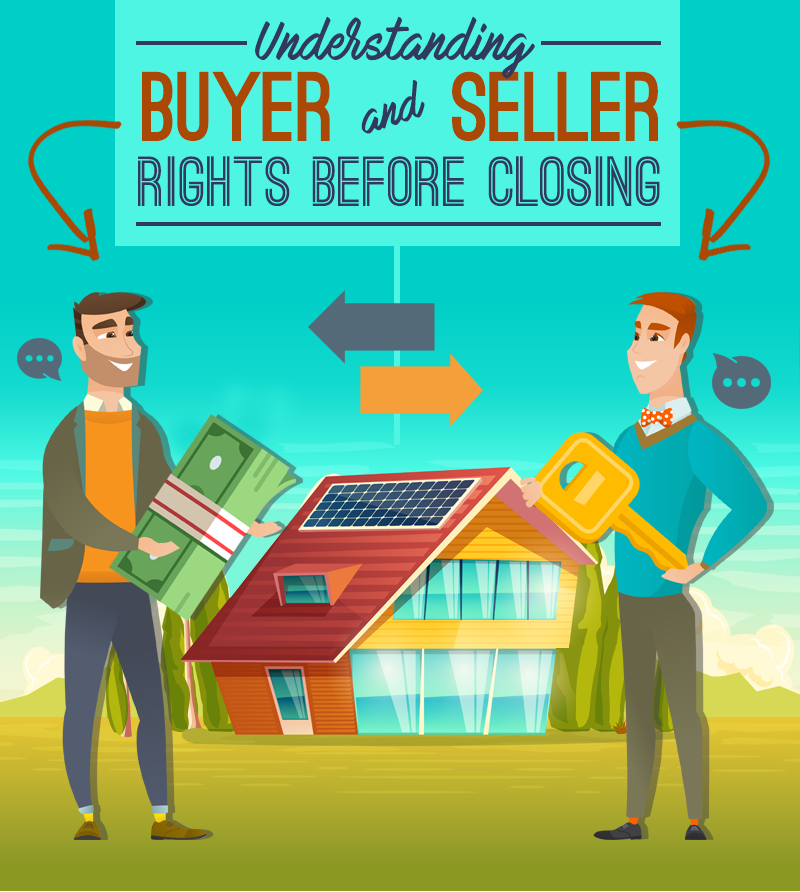
Understanding Buyer and Seller Rights Before Closing

Just like any sale, both the buyer and the seller have their own rights in making a home purchase. Are you knowledgeable about these? Don’t get into a deal just yet if you don’t know your rights!

In investing in a property, you must be familiar with your own legal advantages and limitations, and always remember that the seller has his/her own rights as well.

Before anything, be sure you know what you’re getting into!

Before closing any deal, you must know what it means to make a “sale.” Legally, this means that one party (seller) is transferring property to another party (buyer) for a price.

This price may be paid in full by the buyer upon entering the agreement, or the buyer may have promised to pay in full when he/she gets the rights to the property. Another case would be making partial payments: partial payment upon agreement (a down payment), with a promised partial payment that will complete the deal when the property has been fully transferred from buyer to seller.

Now that you’ve made a deal, remember the rights the law provides you.

1. The seller kept something about the property from me, can I do something about it?

If the seller didn’t disclose something about the property, you should look up the local guidelines for this. Laws on disclosure depend on the state, and may even vary among cities.

For example, some states allow a sale even if the seller didn’t tell you that the house you’re buying was once used to manufacture illegal drugs. In another state, though, this will not be tolerated.

2. I’m not sure about the Home Owner’s Association (HOA) contract, so I don’t think I want the property anymore.

Can you walk away from a deal if this is an issue? Yes! But this will depend on a date specified in your contract.

There is a law that protects the buyer from any disagreements about the HOA Declaration of Covenants, Conditions, and Restrictions. But keep in mind that there’s a specific time for you to check and read through these documents, and this time frame is different in every state. Make sure to check the grace period in your state when you make a deal.

3. My current home isn’t sold yet, but I already want to make a deal on my dream home. What can I do?

You wouldn’t want to be stuck paying two mortgages, so what are your options?

Try making an offer with your seller that is dependent on the sale of your current home. A deal like this gives you the option to back out from the deal within a fixed period.

You must know, however, that a contract of this kind still gives the seller a choice to back out at any time another offer comes in, especially if it doesn’t have a contingency clause. If in case this happens, don’t worry–you still have time (around 72 hours) to remove the contingency and make a deal with the seller.

1. I accepted an offer, but I still want to look at my options. Can I still do this?

Yes, you can still look at other offers, but that doesn’t mean you can accept them in place of the contract you already agreed to.

What you can do at this point is to make another interested buyer take the “backup position.” If your first deal doesn’t go well and fails for any reason, you can automatically take the deal with the second buyer.

2. The buyer’s financing is unstable. Can I back out?

Yes, especially for the following conditions:

– If the buyer’s financing fell through before your closing date, you have the right to walk away.

– If you see the buyer’s loan terms will affect you negatively, you have the right to refuse the offer.

3. The house appraisal doesn’t match the contract price. Can I stop the buyer from opting out of the contract?

Definitely.

If the house inspection raised issues your buyer is not prepared for, you can shoulder the cost for your buyer to continue with the contract.

If it’s a matter of appraisal that is less than your offer, don’t panic about the possibility of the sale falling through. If the lender allows it, you can give the buyer the option of paying the difference in cash. If not, have the buyer shoulder some of the seller’s closing costs instead. It is worth noting, though, that lowering the price is often the best solution–since a higher appraisal isn’t a guarantee when you decide to go with a different buyer (not to mention the hassle of having to sell the property again).

Buyer March 15, 2018

10 Tips On How To Be The Perfect Home Buyer

Choosing the right home is much like finding the best candidate for a job opening. You’re the boss and the house is your potential new employee. But more than only seeing a new face in the office 8-9 hours a day, 5 times a week, you’d be living with (or in it) for up to 24 hours a day!

But since houses can’t talk, how do you make sure you’re hiring the right home? Here are 10 tips on being the perfect home buyer:

1. Make sure the seller chooses you!

Just like how a potential employer may be interviewing other applicants, the seller will also be talking to other interested buyers.

So, how do you make the seller want to choose you? Simple: Be the most capable and most qualified buyer he or she will ever meet. How? Get pre-approved on your home loan before even looking at houses. Make sure that your credit history has been stable for the last three to six months, at least. Keep your money where it’s at, and don’t make any huge purchases before buying a new home.

2. Make a checklist of things you need (and want)

Now that you’re sure the seller would like you, it’s time to see if you like the house.

What are the things you’re looking for in a home? Should it be child-friendly? Do you absolutely need a fireplace? Is having your own backyard a requirement? Don’t just dive into house hunting. Make a list of your own house qualifications so you can easily narrow down your candidates when it’s time to choose.

3. Bring on your poker face

Much like a job interview, be professional. Don’t show too much enthusiasm to the seller, even if you really, really like the house.

Or, if you dislike it at first glance, keep offensive comments about the property to yourself.

Come negotiating time, everything you say or do may be used against you. So from the viewing, and even after it (don’t post anything online just yet!), keep quiet about your feelings towards the home.

4. Review all of its strengths and weaknesses

Did the house satisfy all qualifications on your checklist? Great! Now with that poker face on, ask more about what the house has to offer, and what it may lack.

Should you prepare for repairs? Are there any other offers on the house yet? What are the restrictions on the house? What are the fees included in buying this property? Are pets allowed? How long has the house been on the market? These are just some of the questions you should be asking while you can.

5. Take notes, and even photos

The seller will always put up the best photos of the property on the listing. So if you can (remember to ask the seller first!), take photos of the house for you to review later on.

And as much as we would like to, we won’t always remember all the answers the seller gave us during the viewing. Take note of these on a piece of paper, or in a reminder on your phone. You might also want to take note of things you notice that the seller didn’t mention. More than taking a mental note of important details like this, get it on paper.

6. Be a gracious guest

As professional and probing as you are, remember that it’s not your house (yet). Go through the house like you were a friend invited to view a friend’s new house.

Aside from asking first before you take photos, ask permission to do other things in your investigation of the house. It can be as simple as asking if you can check if the toilet’s flush is working, or requesting the owner to open a locked door so you can view its contents.

7. Require a physical examination!

Just like an employer would require a medical examination before signing a contract, hire a home inspector before you close the deal.

You might have asked all the right questions, but to be completely sure of the house’s health, it’s best to hire a professional.

8. Stalk the property

Much like you would do a background check on a potential employee, do one on the house you are planning to buy, too.

One surefire way to see if it’s the perfect fit for you and your family is to check it and its neighborhood at all times of the day. Remember, you’re going to spend every day in the area, so you have to make sure that you’ll be comfortable roaming the streets, both during the day and after dark.

Another thing people usually forget when buying a house is the lifestyle around it. Does the neighbor’s dog bark all throughout the night? Is there a commercial building around the area that makes rush hour traffic unbearable? These are things you’d want to know.

9. Time your purchase right

Sound knowledge of the market will help you gauge whether it’s the right time to buy, but obsessively studying and following market trends may only cause you unhealthy and unnecessary fear.

While there’s nothing wrong in being informed, know that the right time to buy will always be up to you. Which means: It will be up to your preferences and budget.

The market will always be unpredictable. It’s easier to be sure of yourself. If you followed everything mentioned above and you think you’ve really found the perfect house with the right price, then it’s time!

10. Have proper bidding etiquette

Last but not the least, when you’re finally ready to make that offer, remember two important things:

Your budget – Don’t outbid yourself! Try not to be too enthusiastic in getting the house. Keep in mind what you can and cannot afford, and try to stick to that as much as possible.

The house’s worth – Just as much as you shouldn’t be too enthusiastic, don’t be too stingy either. Don’t offend the owner with an offer that’s too low. This will only lower your chances of getting the house. Your Realtor will be your best resource in establishing a winning offer.

Seller March 15, 2018

Top 10 Home Features That Boosts A Property’s Resale Value

Whether you are buying, selling, investing, or simply enjoying being a homeowner – there’s no reason why you wouldn’t want your house to be in its best shape..

For buyers (especially first-time home buyers), you may already have a list of the features you want in a home, but it would be great to consider adding the following to your list just to be sure that you can sell your home at a great price in the future. For sellers, knowing what features in your home you can use as leverage for a better price will help you take fair advantage of your most powerful selling points.

1. Huge master suite

The master’s bedroom is the ultimate private space in a home, so if it’s made in tiptop condition, both home buyers and sellers will be at an advantage. If you’re a seller, consider having this room remodeled, but try not to overdo it so that you can still leave space for imagination (what furniture potential buyers can add, how they can decorate it according to their tastes, etc.)

It doesn’t really have to be as huge as an executive hotel suite with a California King bed — as long as there’s enough space to move around and make the homeowner feel really good about coming home.

2. Beautiful landscape

A home’s “curb appeal” will continue improving a home’s value—and, by extension, the overall value of properties in the neighborhood where it is located.

The curb is where the first impression about the home (and even the neighborhood!) is made by potential buyers, so if you’re a home seller, you can improve your curb appeal without spending a ton of cash by simply adding new attractive plants to your landscape, repainting your fence, and cleaning out overgrown bushes. These don’t cost much and it would definitely enhance your home and entice your buyers.

If you’re thinking long term, consider investing on having your yard professionally landscaped with mature shade trees to match. This may take several years and upkeep, but it could be a big selling point. However, a beautiful landscape will require some amount of maintenance, otherwise it’s going to end up being an eyesore that may negatively impact the home’s value.

For home buyers, a curb that’s in good condition is an indication that the seller takes care of their home. So if you see it in good shape, that’s a good sign.

3. An extra guest bathroom

To a lot of home buyers, bathrooms are a HUGE deal. While two is a suitable number, an extra bathroom can add tons of value to a home and attract more potential buyers.

However, this doesn’t mean that home sellers should spend an average of $25,000 just to build a new bathroom before selling. According to the NAR, new bathrooms only return an average of 60 percent of their costs at sale time — so if you’re about to add a bathroom just for the sake of raising the price a few weeks before listing your house for sale, think twice because it may not be worth it.

On the other hand, if you’re a buyer, you’re in luck if the home you’re interested in happens to have an extra bathroom that isn’t located inside the house’s private rooms. You can use this as an additional selling point once you decide to list your home for sale.

4. A functional porch or patio

A house’s porch or patio adds visual interest to it and is also a spot where family and friends can cook, have meals, and relax. Home sellers can add in a nice table and chair set or a grilling station (or both, if you have the budget) to suggest functionality to buyers.

Buyers, you’re probably going to sell the home too at some point (to relocate, upgrade, or downsize) so take note of this tip for future use!

5. Multi-purpose rooms

Extra rooms which can be turned into a home office, a playroom, a TV room, a guest room, or any kind of room depending on the home owner’s preference is sure to add value to a home.

These rooms, which are also called flex rooms or double-duty rooms, are growing popular with today’s home buyers. This is because multi-purpose rooms make a house more functional, and is great for people with telecommuting jobs and indoor hobbies. The possibilities a multi-purpose room presents can make a house an instant hit to almost any kind of buyer.

You can use this to your advantage as a seller by clearing out one room in your house and offering suggestions on how a certain buyer can make it their own.

6. Stainless steel appliances

Stainless steel appliances will assuredly be for the long haul, and the best thing is: It never goes out of style! Do take note, however, that some stainless steel appliances may not look good in some areas of the house (it depends on the color of the walls and other appliances), so you may want to limit this to the kitchen.

7. Walk-in closets

Having a spacious closet as one of the features of a home adds to the value of it and enhances every room in the house that has it. The idea of having enough storage will make a positive impact on home buyers.

8. Original wood floors

Engineered wood flooring is replacing carpets now as the new trend. It’s long-wearing, durable, and gives off the illusion of more floor space. Instead of the usual structural plywood, wood floors nowadays are made of a thin veneer of real wood or bamboo. This costs less but has the same look.

9. Efficient technology such as sprinkler systems and green-tech additions

Sprinkler systems, when used properly, help on cutting down waste and minimizing the inconvenience of pulling a hose or sprinkler around the house. Of course everybody wants their yard well-watered to maintain and showcase their lush green lawns, so you can assume that home buyers would add built-in sprinkler systems to boost the value of the house.

10. Well-maintained attic or basement rooms

Make sure that the attic or basement room has a stairway in good condition, interior walls, adequate insulation, as well as windows for air, daylight, and emergency egress. Having these spaces in good condition adds in to the functionality tab of the house because there are a handful of ways it could be of use to a family — whether it be an extra room, a study, storage space, or laundry space.

Buyer March 15, 2018

The Pet Owner’s Guide To Buying A Home: 5 Things to Consider for Your Furry Friends

If you keep dogs, cats or other pets and regard them as family members, you’re more likely to keep their needs in mind when purchasing a home. Some people even think of their pets as their “furever friends” or their “furbabies,” so their home buying preferences and decisions will be greatly influenced by them. After all, 68 percent of US households own a pet according to the 2017-2018 National Pet Owners Survey conducted by the American Pet Products Association (APPA).

Recent studies have also found that millennials’ decision to purchase their first home was influenced by their desire to have a better space or yard for a dog, or that they daydream about the day they’d be able to have their furry friend because owning a home can give them the freedom for that. So for all pet owners and pet-loving home buyers out there, here are five things to consider to ensure you and your pets can find the perfect home:

1. The local pet laws and pet owner requirements

Before purchasing a property, check the local pet laws and pet owner restrictions. You should familiarize yourself with breed-specific legislation within your state and city, as well as the limits on the number of animals allowed in a home. For an instance, dog lovers in the Los Angeles County can now own four dogs per household in an effort to give homeless dogs additional opportunities to find permanent homes. Some cities also require an owner to have a kennel license to keep several animals. There can also be restrictions on an HOA or a condo development, especially on the types and number of pets allowed. Many HOAs also enforce noise ordinances, which is important to note if you have a dog that barks a lot.

In some communities, owners also need to obey leash laws when taking your dog for a walk and clean up after your pet in public places. These restrictions are commonly in place for health and safety reasons.


2. Accessibility to pet services

Like parents who will greatly consider a good school district when choosing a neighborhood, home buyers with pets should also consider the property’s accessibility to good veterinary clinics and local pet services so that they can easily tend to their pets’ health and needs.

If you’re buying a home in a new area, make sure to also ask your local real estate agent for referrals to where you can find a pet food store or a pet grooming salon. Talk to your potential neighbors and inquire about pet sitters and walkers nearby just in case you need their services if you go on a vacation.


3. Whether the neighborhood is pet-friendly and if there are pet-friendly amenities

It’s a big must-do for home buyers to drive around their chosen area at specific hours of the day to better familiarize themselves with the neighborhood and the local traffic. For pet owners, it wouldn’t hurt to see for yourself if the neighborhood is “pet-friendly” and if there are pet-friendly amenities nearby. Drive around to see if there are dog/pet parks, a dog trail or other green spaces for your little buddy’s daily walks. Ask about the existing pet parks around the area and be informed about the rules and regulations from the local parks and recreation department.

It’s also advisable for buyers to avoid choosing a home that is located right on a busy street or highway as car traffic is dangerous, especially for dogs or cats that like to roam. Pets can dart into the street anytime once they push open a screen door, or if a gate was left open.


4. The home’s layout, flooring and other features

It’s important to assess the home’s layout and features and make sure that you and your furry friends will be comfortable living in it. For home buyers who have big dogs, they may be inclined to buy a traditional single family home with more outdoor space or a bigger yard rather than settle into a typical townhouse. They may also find an outdoor or garden faucet as a great feature, especially for bathing.

If you have several pets, estimate whether there’s enough space inside the house as they are likely to run around and chase each other in circles. Check if the windows have window ledges where cats like to sleep. If you’re looking to buy a multilevel home, consider whether your dog can handle the stairs, as dogs can get joint problems particularly as they age. Likewise, assess if the house has pet-friendly floors. Carpeting is not recommended for dog or cat owners, as carpets can easily be clawed and get stained. Having an extra closet space where you can store your pet supplies and accessories will also be an advantage for you as a pet owner.


5. Yard and fencing

If the yard does not have a fence, it’s important for you to construct one where your pets can roam around and play safely. Review your HOA covenants and see if you are allowed to build a fence, as well as the restrictions on the size and materials that can be used. If your home already has an existing fence, inspect it to know if there are loose fence boards that need to be replaced, if it is gated, and if the fence is high enough so your dog can’t jump over it.

Buyer February 13, 2018

7 Grants and Programs To Help Home Buyers Afford A Mortgage

The main reason cited by non-homeowners as to why they currently do not own a house is because they cannot afford to buy one, as revealed in the 2018 NAR Aspiring Home Buyers Profile. The results are highest at 56 percent in the last quarter of 2017. Also, many home buyers have already indicated that the most difficult step in the home buying process is saving for a down payment.

Likewise, many of these potential homeowners believe that you need a daunting 20 percent down payment to be able to buy your first home, so they already deem themselves ineligible without even trying. But the silver lining is that 61 percent of first-time buyers who purchased a home through a mortgage from December 2016 to November 2017 actually made a zero to 6 percent down payment, as reported in the NAR November 2017 Realtors Confidence Index.

And yet, coming up with a 6 percent down payment can still prove challenging for many — especially for low to medium-income earners, new graduates who are still paying student loans, single parents, or those who are still recovering from credit card debt. To help you kick-start your home buying process, here’s a list of grants and loan assistance programs you could check out to help you afford a mortgage to get your dream home.

An FHA loan is a mortgage insured by the Federal Housing Administration (FHA), an agency within the U.S. Department of Housing and Urban Development (HUD). Their most popular home loan is the 203(b) FHA Fixed Rate Mortgage Loan Program, especially for first-time home buyers. It keeps a buyer’s down payment to a minimum and could also reduce the closing costs.

FHA loans could greatly benefit those who want a home but have little or no money saved for a down payment; including students who just graduated from college, newly married couples, and also those who have had credit problems in the past because of foreclosure or bankruptcy.

Pros:

Those who have a credit score of 580 or higher can get a mortgage with a down payment of as low as 3.5 percent. For those with credit scores lower than 580, they can still qualify for an FHA mortgage, but the down payment will be at least 10 percent of the home’s purchase amount.

Borrowers can use many sources of cash to make a down payment, including from their own savings, a gift from a family member, or a grant from a down payment assistance program. The FHA has a list of these grants to help you search for the best assistance program that suits your situation.

In an FHA loan, home sellers, builders and lenders could offer to pay some of the borrower’s closing costs, such as an appraisal, credit report, or title expenses, as an incentive.

Cons:

FHA loans require a borrower to pay mortgage insurance, unlike conventional loans. This backing protects private lenders from delinquent borrowers. Despite the mortgage insurance requirement, it remains one of the most popular mortgage options that have a low down payment.

Because the FHA is only an insurer, borrowers need to get their loan through an FHA-approved lender. However, these lenders don’t offer the same interest rate and costs even on the same FHA loan. So it’s important to shop around for an FHA-approved lender that offers the best interest rate to help you.

The home buyer assistance programs offered by the U.S. Department of Agriculture (USDA) help borrowers or families with low and moderate incomes obtain a decent and safe housing in rural areas.

Pros:

If you qualify for a USDA loan, you will receive 100 percent financing with no down payment necessary. The loan payments are also fixed because the USDA offers mortgage guarantees to lenders.

These loans aren’t confined to farmland, so there’s no need for a borrower to run or buy a farm to be eligible. However, the properties must be in areas with a population below 35,000, which are mainly rural areas. But there are also some suburban areas that can qualify for the program.

Cons:

The program has income limitations, which vary per region according to the average median income of the area.

Veterans, active-duty service personnel, and select Reservists or National Guard members, as well as spouses of military members who died while on active duty, are among those who can qualify for VA loans offered by the U.S. Department of Veterans Affairs.

Pros:

VA loans come with competitive interest rates and require no down payment, which is a huge plus. These loans are also more lenient when it comes to bankruptcy and foreclosure than other loan products.

Borrowers are not required to purchase a private mortgage insurance. This benefit can help borrowers secure additional monthly savings.

Cons:

Only VA-approved appraisers can inspect the home chosen by the service member to make sure they meet minimum property requirements and that they are “safe, sound and sanitary.” VA appraisers also tend to have stricter standards than a typical home appraiser.

Although VA does not require a minimum credit score for a home loan, lenders generally have their own additional requirements and may add their own “overlays.”

The Good Neighbor Next Door Program is sponsored by the Department of Housing and Urban Development (HUD) and provides housing aid for people who belong to certain professions. Those who are eligible include law enforcement officers, pre-kindergarten to 12th-grade teachers, firefighters, and emergency medical technicians (EMTs). The initiative is designed to encourage the renewal of “revitalization areas,” which are neighborhoods that have low household incomes, low homeownership rate and a high number of foreclosures of FHA-insured properties.
The listings of houses for sale under this program can be found on the HUD Homes website. Houses must be purchased through a real estate agent who understands the GNND program because the realtor will be the one to submit a lottery bid online.

Pros:

A buyer can receive a 50 percent discount on the list price of an eligible property that is located in revitalization areas by committing to live in the property for at least 36 months.

Cons:

There are certain housing conditions for each profession. For teachers, the house must be located within the neighborhood boundary of the school where the teacher works. Meanwhile, for firefighters or EMTs to qualify, they have to serve the jurisdiction where the house is located.

A buyer must weigh in the location versus his/her savings when buying a home through the GNND program because most available properties are located in areas of rural abandonment or those which many people are reluctant to live in.

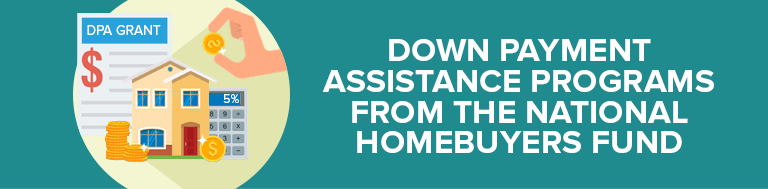
For those who are having difficulty saving for a down payment, this program provides down payment and/or closing cost assistance in the form of a non-repayable grant of up to 5 percent of the loan amount. Yes, you read it right — the DPA grant never has to be repaid. It also decreases home buyer costs and avoids burdening the buyer with additional debt. The borrower can also choose to apply to either an FHA, VA, USDA or any conventional mortgage loan.

The NHF offers two DPA programs — the NHF Sapphire program and Golden State Finance Authority Platinum program — both have different sets of requirements but are for low to moderate-income earners.

Fannie Mae and Freddie Mac are both government-sponsored entities that work with local lenders to offer mortgage options that benefit low and moderate-income families. Fannie Mae is another name for the Federal National Mortgage Association (FNMA), whilst Freddie Mac is another name for the Federal Home Loan Mortgage Corporation (FHLMC). Both entities were initially formed to stabilize the US residential mortgage market and expand opportunities for home ownership and affordable rental housing.

Through the support of these companies, local lenders can offer competitive interest rates and appealing mortgage options, including down payments as low as 3 percent of the purchase price.

Many states and cities offer a variety of down payment assistance programs to help first-time home buyers afford a mortgage. Most of these programs are location-specific and income-dependent, but many are designed for low-income buyers who need additional assistance.

In Texas for an instance, the My First Texas Home Program offers a 30-year fixed-rate loan with closing cost and down payment assistance equal to 5 percent of the loan amount (up to $8,000), but a minimum credit score of 620 is required. While in Colorado, a buyer with a minimum credit score of 680 can qualify for a 30-year purchase loan with a down payment as low as 3 percent and no mortgage insurance, through the CHFA Advantage Program.


Check with your lender or your local real estate agent to know the list of housing grants and programs available in your state/area, and know the best program for which you are eligible and might apply to your situation.

Seller February 12, 2018

3 Crucial Things Every Seller Needs To Know About Home Pricing

1. Overpricing and underpricing

Perhaps the most common mistake home sellers make is pricing the house too high because of an array of reasons: the house means so much to them, they’re looking to buy a more expensive home or trying to pay off debt, or they believe that interested buyers will ask for a discount anyway.

But this can’t be farther from the truth. In fact, a ridiculously overpriced house will perform poorly in the market because it will soon lose its appeal once it stays in the market for more than three weeks.

In pricing your home, it’s important to be as realistic and as conservative as possible. Seek out an experienced real estate agent and allow him or her to guide you in choosing the correct price of your house for sale. Don’t worry if you think the suggested price is a little low; homes that are priced below market value often receive numerous offers, which will then encourage a bidding war and drive up the price.

Keep in mind, though, that a house that is priced too low also has its dangers. Don’t assume that this strategy will work for you 100 percent since a lot of low-priced houses were purposely priced that way to drive activity. These homes are usually in great locations and at their best conditions. If your home isn’t exactly the best catch and isn’t located in a sought-after neighborhood, then you’ll have to be very careful in pricing your house too low as well. Again, it is best to seek the help of a professional appraiser and real estate agent.

2. Analyzing the competition

Reasonable home prices are set when a seller performs an accurate comparison of homes in the market.

Comparable sales, better known as “comps,” is a term that refers to homes that are similar to yours in terms of size, condition, and features, and are located in the same area. When setting a price for your home, appraisers will look at recently listed comps in the same neighborhood, and by recent, this means not older than three months. Unless your property is in a rural or very low-density area, you and your appraiser may have to check homes that are outside the usual mile radius.

Still, an experienced appraiser knows that not all homes with the same number and sizes of bedrooms, bathrooms, and kitchens will have the same price. Houses on the same street can vary immensely from each other, and it’s important to understand the nuances in the market and know how they can affect the price of your home.

For example, a house that is right down your street could actually be in a different school or tax district, which can either make it cheaper or more expensive than yours depending on which area is more desirable. A house that is the same size as yours that was listed at 10 percent more than your selling price could be because of specific features that address a particular need of the buyer. Modern additions such as “green updates” that allow homeowners to save on electricity can also affect the value of a house for sale. Remember, to “compare apples to apples,” you must dig deep into the reason why a particular house is priced as it is.

3. Hiring a real estate agent and appraiser

It might be a little difficult to decide on a selling price without bias, especially if this is the first time you’ll be selling a house which you’ve spent a good amount of time calling your “home.”

While it is ultimately up to you (the seller) to set the final price, a good real estate and appraiser will help you arrive at a suitable price range based on their expert assessments.

While there are no price restrictions in place that require you to price according to the market condition or current inventory levels, it will be to your benefit to discuss matters with your real estate agent and appraiser so that you can be sure to arrive at an informed decision. These professionals know that pricing is mainly about supply and demand, and that it is an art as much as it is a science. To find the perfect balance between important factors, it is crucial to seek advice from a expert who is experienced in dealing with all kinds of transactions.

Still, it is important to note that realtors and appraisers are not exactly the same. Realtors aren’t entirely unbiased since their main objective is to sell, while appraisers are state-credentialed valuation professionals who are required to follow a strict process in order to come up with an impartial opinion.

So how do you know if you priced your home just right?

Even if you follow all the important guidelines mentioned above, it may still be hard to know for sure if you arrived at the right price until all transactions have been completed.

If a home sells after just a few days on the market, chances are the price was too low. If it takes months before a potential buyer takes interest, then it’s probably overpriced. The best way to know whether the price is right is if your home gets steady action throughout the course of the listing period.

If your house is listed at the right price, be prepared for numerous negotiations and be sure that both you and your agent are always on the same page. If you hit the right mark, the rewards will surely be lucrative and your house will sell at its optimal price.

Buyer February 9, 2018

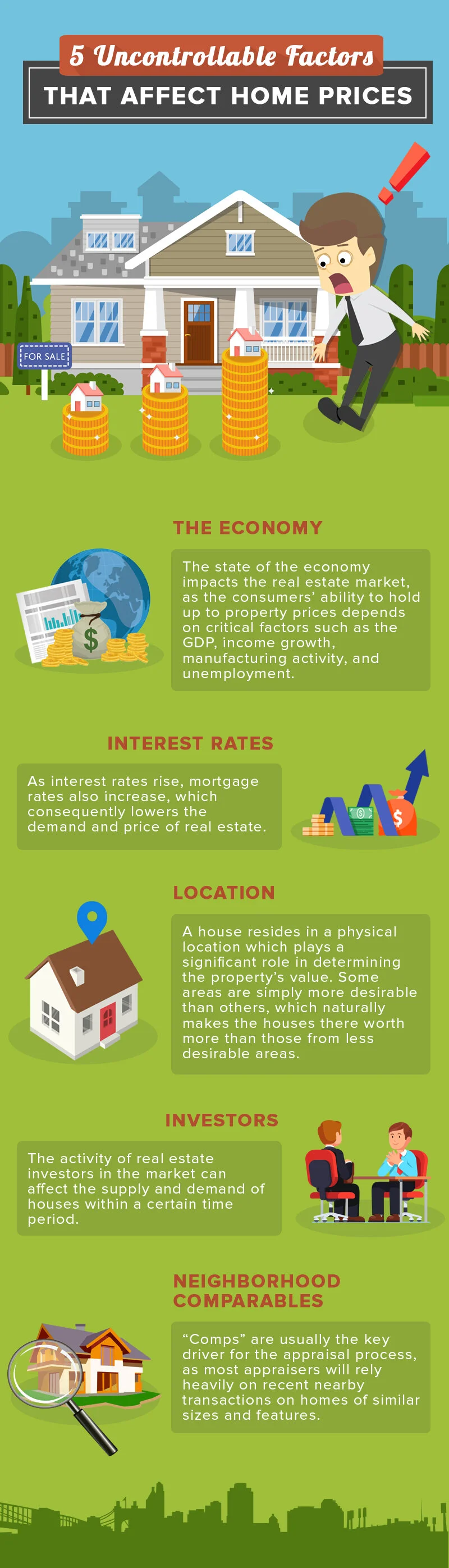
5 Uncontrollable Factors That Affect Home Prices

Since the housing crash in the late 2000’s, the real estate market in the United States has regained its composure, which paved the way for low-interest rates and limited housing inventory. This may look ideal for sellers but a burden to homebuyers (and even renters!) because they have to face increasing housing prices, long searching periods, and bidding wars as they enter the increasingly competitive market.

Several complicated factors affect the price of properties, and some are unfortunately outside of our control. Still, it’s important to be aware of these things so that you can time your purchase correctly, or – if you’re selling – list your property at the right time.

1. The economy

The Great Recession that happened in 2008 to 21012 highlighted the connection between the macro economy and real estate. Real-estate related jobs such as construction and mortgage financing underwent significant property depreciation. Note that even other local macro-trends can influence housing prices. For instance, the income growth in California was at 1.2% in the first quarter of 2015 compared to the national average of 0.9%. This increases the spending power of buyers which in turn also increases real estate prices. The demand for housing is often considered income elastic (luxury good) which means rising incomes lead to a more significant percentage of income being spent on houses.

To sum it up, the state of the economy impacts the real estate market, as the consumers’ ability to hold up to property prices depends on critical factors such as the GDP, income growth, manufacturing activity, and unemployment.

2. Interest rates

As interest rates rise, mortgage rates also increase, which consequently lowers the demand and price of real estate. The real estate crash of 2007 proved the global impact of the real estate market increased awareness of how interest rates and loans are used in home buying. If things aren’t looking good abroad, it might affect your ability to sell homes domestically. Be in the know on what’s happening in the global market and with foreign investment as these play large roles into the expectations of the local market as well.

3. Location

Properties within the proximity of establishments such as a slew of restaurants, parks, and schools, the price of houses are higher. In line with this are zoning restrictions which indirectly affect land value and directly impacts tax value. Do take note that local builder activity and local regulations in the area can dictate new home supply, and prices react to the abundance or the lack of supply of houses.

While properties remain where they are, what happens around them inevitably affects its value. The price of a house is not only dictated by what it is today, but also what it can be 5, 10, 20 years from now. New roads, schools, and other attractive infrastructure can affect the desirability of a location almost in an instant. However, even though no one can predict developments and declines with absolute certainty, a professional who knows the community in which a property is located will be able to provide valuable insight.

4. Investors

According to research by the National Association Realtors (NAR), the percentage of homes purchased by investment buyers stands at about 20% of the market. Investors are those that buy inexpensive properties to either renovate and sell for profit or put it up for rent. The housing crisis which increased the number of distressed properties (those that were foreclosed or were on short sale) made investors purchase more property. But if the number of such houses decreases, investors will want to liquidate some of their properties at some point. And if they do so untimely, this could result in too many homes hitting the market at once, which in turn could reduce the price of houses.

5. Neighborhood comparables

Comparable properties (also known as “comps”) sold in an area can also affect another home’s market value. Appraisers and real estate agents look at recent sales of homes with similar features to use as a standard against a home’s potential price. Foreclosures and short sales often complicate things because they tend to sell at lower prices, which decrease the neighborhood’s overall average sales price. Comps (along with offer details) are usually the key driver for the appraisal process, as most appraisers will rely heavily on recent nearby transactions on homes of similar sizes and features.

Remember, as with any other investment, there are a lot of factors in real estate that will be outside of your control. But staying informed about what’s happening in the market can help you make informed decisions that will allow you to maximize your returns.