Buyer October 24, 2025

Biggest Home Inspection Red Flags To Look Out For Before Buying

You think you’ve finally found your dream home and your offer has already been accepted, which means you’re heading into the inspection. You’re already halfway through the process! 

However, since buying a home is one of the largest investments you can make, a comprehensive home inspection is also one of the most critical steps in this process. A professional inspection helps uncover hidden problems that may not be visible during a casual walkthrough—issues that could cost thousands of dollars in repairs and even compromise the home’s safety and livability.

From structural defects to pest infestations, certain warning signs detailed in the inspection report can reveal underlying risks that every buyer should take seriously. Here are the top five red flags you should watch out for.

The foundation serves as the home’s central support system, keeping the building stable. Foundation problems are worrisome because they will end up affecting all parts of the housing structure.

Warning signs to look out for:

  • Large, horizontal cracks in the walls or floors

  • Uneven or sloping floors, or floors that incline noticeably along one side

  • Doors and windows that don’t close properly or have visible gaps

  • Sagging walls or ceilings

Once the inspection report is available, see if there are any mentions of foundation problems through statements like “cracks in the foundation, “uneven flooring,” or “settling,” among others. Vertical, hairline cracks are usually less concerning, unless they are large enough to stick a coin into. Still, pay attention to any of these red flags and discuss them with your home inspector. 

Foundation repairs may cost you from $5,000 to $40,000, depending on the fault’s complexity. Some issues may even compromise the very structure of the house, which is why it’s critical to get it assessed by a foundation expert before deciding whether to go ahead with your purchase.

Another major concern to keep an eye on is water damage or drainage issues, which can indicate deeper structural and maintenance problems. Water in the home can warp wood, peel paint, and even weaken the structure of the house.

Warning signs to look out for:

  • Unsightly brown or yellow water stains on the ceiling and walls

  • Peeling paint

  • Bad, musty smells in the basement

  • Water pooling near the home’s foundation

Finding water stains during the home inspection could be a huge money pit red flag since leaks and water damage can be very costly to repair. If a home has been flooded, it could also cause excess moisture in the home that can lead to mold and even compromise the integrity of the foundation. A history of flooding can also make it harder to get affordable homeowners’ insurance or certain types of coverage, signing you up for potential headaches later on when you close.

Plumbing is one of the most essential systems in any home, yet it’s often overlooked until serious issues arise. Common plumbing problems in homes stem from cracked water pipes, the use of aged plumbing systems, and inadequate water pressure systems.

Warning signs to look out for:

  • Leaks that affect the faucets, pipes, and toilets

  • Low water pressure

  • Water damage in bathrooms, kitchens, and foundations.

  • Visible rust or corrosion on exposed pipes

Minor plumbing problems are easier to fix, such as replacing the mechanism on a running toilet. However, the big ones require investment of time and money. You may need to shell out $150 to $1,000 for plumbing repairs, or even more if the issue is more extensive. And since plumbing is being used around the home daily, any issues that have been neglected can potentially lead to water damage, mold problems, and expensive repairs down the line.

Electrical flaws are among the riskiest problems in a residential property. Wiring issues in a home aren’t only expensive to fix, but outright dangerous since they can lead to house fires, electrocution incidents, and electricity breakdowns.

Warning signs to look out for:

  • Exposed or frayed wires

  • Burn marks, discoloration, or warmth around outlets and switches

  • Improper splicing or taped wires caused by DIY electrical work

  • Sparking or buzzing sounds when plugging in appliances

  • Old fuse boxes or outdated electrical panels

Older homes are especially susceptible to wiring issues and electrical systems that just no longer work with modern appliances. If a home you’re looking to buy has faulty wiring or unsafe electrical, it might need to be fully replaced according to the latest safety codes before moving in. Homeowners’ insurance policies often need to have it checked as well before issuing a policy.

Lastly, another red flag to look out for during an inspection is signs of termites, mice, carpenter ants, and other pests around the home. These pests are not only annoying but can eventually cause structural damage, deterioration, and health risks. 

Warning signs to look out for:

  • Chewed vents, gnaw marks, droppings, or nests

  • Wood that produces a hollow sound when tapped

  • Mud tubes running from the foundation to the walls

  • Crumbling and soft areas of wood near the foundation and attic

Home inspection reports indicating termite infestation should ring a bell, as these pests may be tiny but can inflict serious damage on property structures. And exterminating them is just the first step. Termite damage repair expenses can range from $3,000 to $4,000 on average, depending on the extent of the damage.


How to handle home inspection red flags

When your inspection report reveals major problems and other potentially concerning issues in the home you’re looking to buy, don’t fear, as you still have several options. The best thing to do is to consult licensed professionals for supplementary assessments and get help from your real estate agent to navigate the next steps. Then you can:

  1. Negotiate with the seller to pay for repairs, especially for those safety hazards; or

  2. Request a price reduction to cover repair costs.

  3. Walk away from the deal if the issues are too severe or overwhelming for you.

While no home is perfect, understanding these red flags can help you make an informed decision about which issues are manageable for you, and which could be absolute deal-breakers. These may all depend on your timeline, financial situation, and risk tolerance.
GeneralReal Estate Market UpdateSeller October 22, 2025

Planning To Sell in 2026? Start Preparing Now for a Smooth Sale

If you’re thinking about selling your home in 2026, what you do now could make all the difference. Whether you’re in Richmond, Chesterfield, or Henrico, early preparation can turn a stressful rush into a confident, well-planned sale.

According to Realtor.com,

“If you’re aiming to sell in 2026, now is the time to start preparing, especially if you want to maximize the spring market’s higher buyer activity.”

Spring is typically the busiest time of year for real estate. Homes show better, buyers are more active, and well-prepared listings tend to sell faster and for more. Starting now gives you the chance to tackle the updates, touch-ups, and decluttering that will make your home stand out when it hits the market.

Why Starting Now Matters

Talk to any experienced agent and they’ll tell you that in today’s market, presentation is everything. With more homes available than in previous years, buyers have choices, and that means your home needs to shine from day one.

That doesn’t mean a full renovation. But it does mean taking care of the small things that add up such as fresh paint, curb appeal, minor repairs, and smart cosmetic updates.

If you start preparing now, you can:

✅ Spread projects out over time
✅ Avoid paying premium prices for rushed work
✅ Hire quality contractors at fair rates
✅ Enter 2026 with a move-in-ready listing buyers will love

Even simple steps like fixing a leaky faucet, repainting the front door, or updating lighting can make a big difference in how your home feels to buyers.

Before you dive into repairs or upgrades, check out this quick video from Don Reid Properties for expert advice on how to prepare your home for the market:

👉 Watch Now on YouTube

This short video walks you through what to focus on first, how to time your updates, and simple ways to make your home stand out when buyer activity surges in spring 2026.

Get Expert Guidance Early

One of the best moves you can make is to connect with a local real estate professional early. A knowledgeable agent can tell you exactly what updates are worth your time and money and what can wait.

As Realtor.com explains:

“Respondents overwhelmingly agree that both buyers and sellers enjoy a smoother, more successful experience when they start early. In fact, a recent survey reveals that, for sellers, bringing a real estate agent into the process sooner can pay off significantly.”

An experienced local agent, like our team at Don Reid Properties, can help you:

  • Identify updates that deliver the best ROI

  • Recommend trusted local contractors and stagers

  • Analyze comparable sales in Richmond, Chesterfield, and Henrico

  • Build a timeline and marketing plan that positions your home for top value

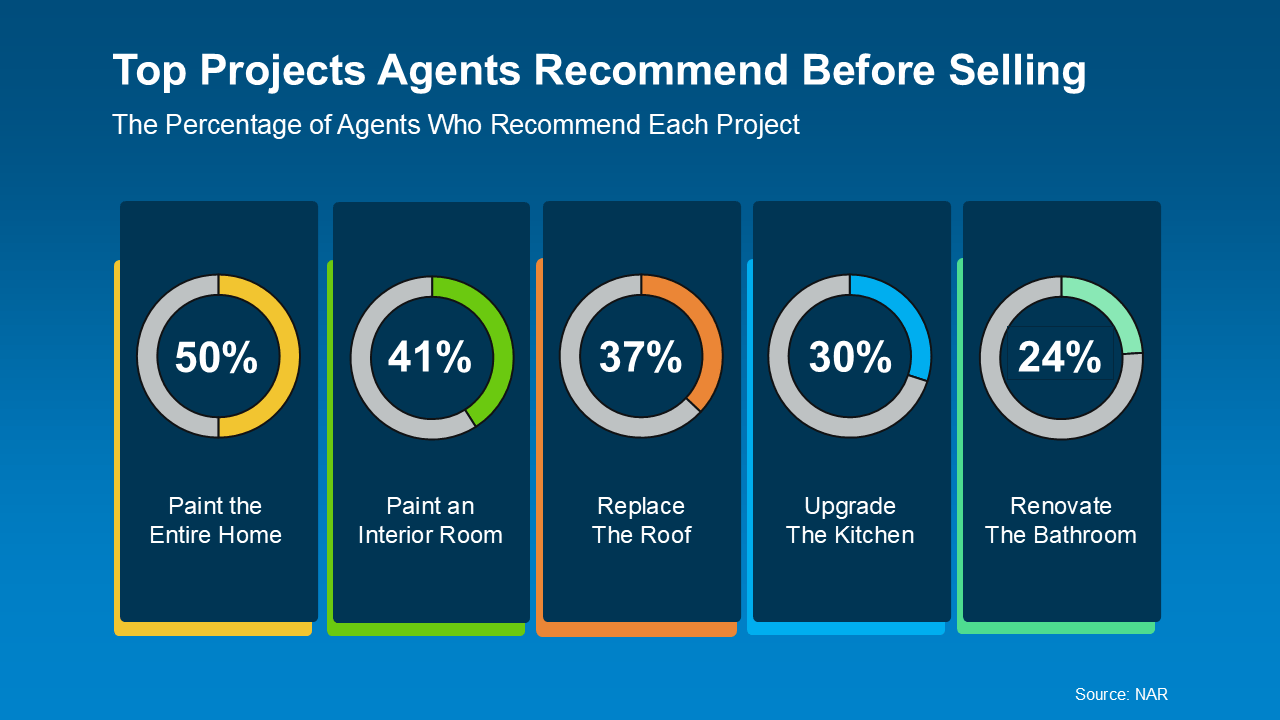
According to data from the National Association of Realtors (NAR), the most common updates sellers are focusing on include:

  • Fresh interior paint

  • Minor kitchen upgrades

  • Landscaping and exterior improvements

  • Flooring updates

  • Light fixture replacements

Keep in mind that what’s “worth updating” depends on the local competition. In some neighborhoods, simple cosmetic fixes may be enough. In others, you might need to take on slightly bigger updates to make your home stand out.

Your agent will walk you through exactly what your home needs for your specific market, helping you prioritize time and budget effectively.

Bottom Line

If selling in 2026 is part of your plan, the time to start is now. Preparing early means you’ll hit the market ready, confident, and ahead of other sellers who waited until the last minute.

Want to know which updates bring the highest return on investment in the Richmond, Chesterfield, and Henrico markets?

📲 Let’s connect today and build your 2026 game plan together.

www.donreidproperties.com

BuyerForeclosureHomeownerNew HomeownerRenterSeller October 15, 2025

2026 Housing Market Outlook: What to Expect in Central Virginia

After a couple of years where the housing market felt stuck in neutral, 2026 may be the year things shift back into gear. Expert forecasts suggest more homeowners and buyers will make their move—and for Central Virginia, that could mean a much more active, balanced market.

More Homes Will Sell

Over the past few years, rising mortgage rates and affordability challenges caused many potential movers to hit pause. But that pause won’t last forever. People move for life reasons—new jobs, family changes, upsizing, downsizing—and those motivations don’t disappear.

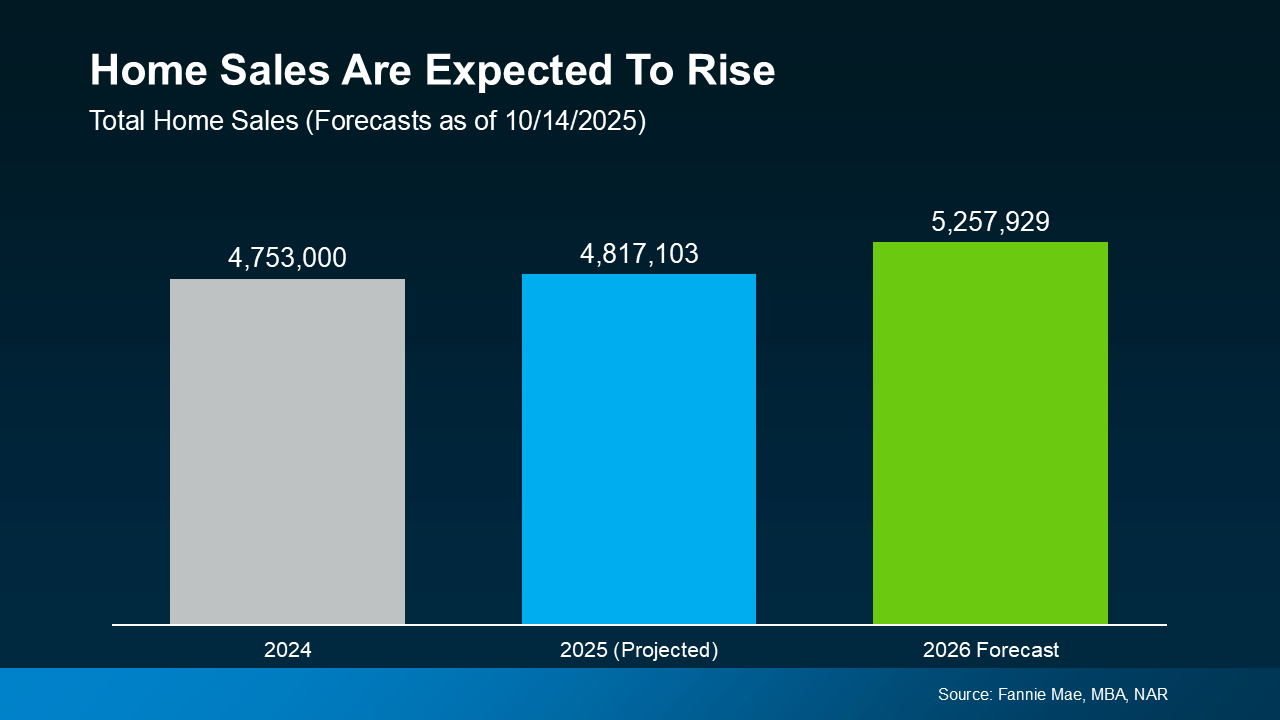
According to Zillow’s 2026 Housing Forecast, more listings and buyer activity are expected as market confidence returns. Realtor.com also predicts a gradual increase in home sales volume nationwide, and we’re already seeing signs of that momentum building here in Richmond, Chesterfield, Henrico, and the surrounding areas.

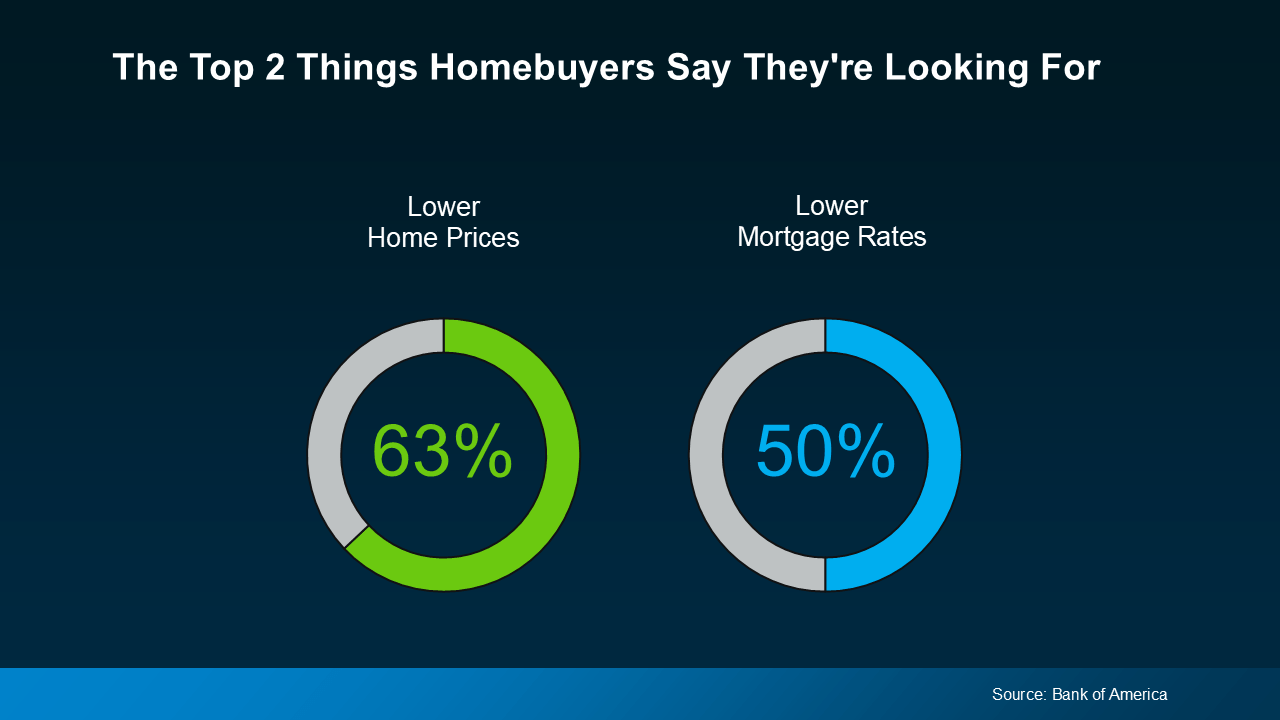
So what’s fueling this shift? Two major factors: mortgage rates and home prices.

Mortgage Rates Could Continue to Ease

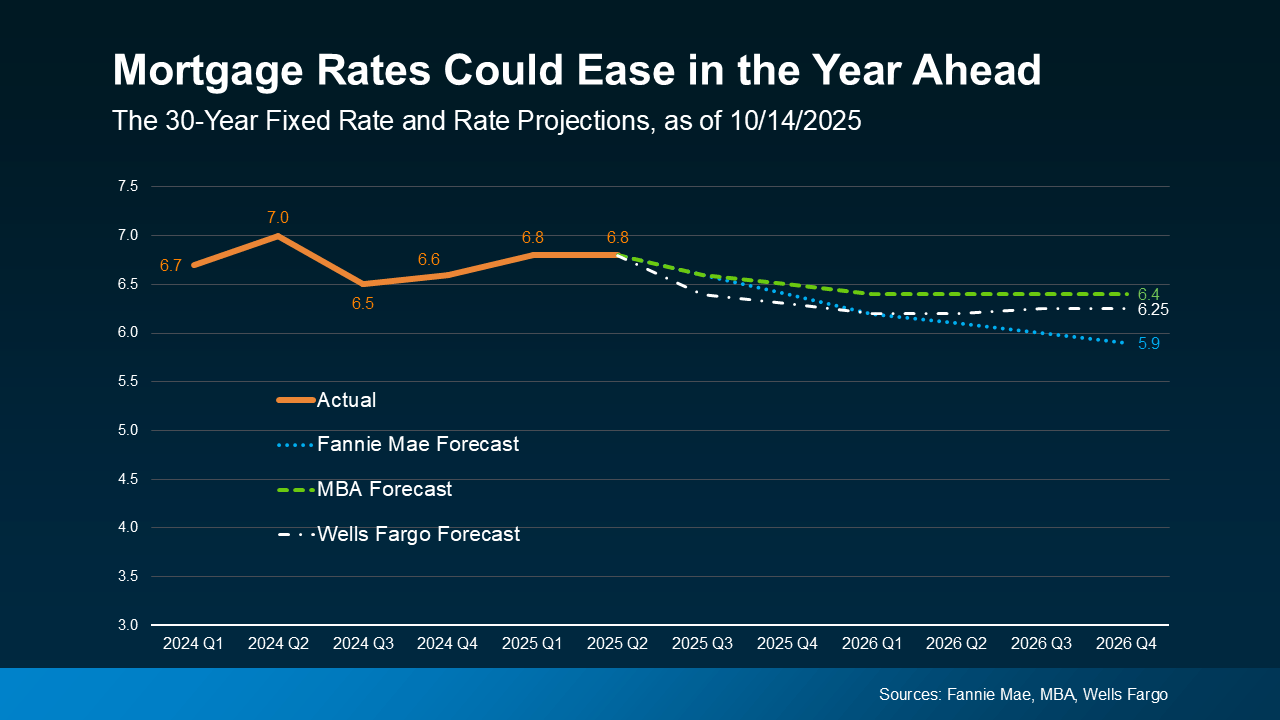
For nearly two years, buyers have been waiting for mortgage relief. After peaking near 7% earlier this year, rates are showing signs of steady improvement.

Industry experts, including Freddie Mac and Mortgage News Daily, anticipate rates could move toward the low 6s—or even dip into the high 5s—by mid to late 2026.

Remember: rates don’t fall quickly; they “take the stairs.” Progress will be gradual and somewhat bumpy as new economic data emerges. But even small improvements can make a meaningful difference in affordability.

To put that into perspective: if rates move from 7% to 6%, many buyers could save hundreds of dollars per month on their mortgage payments. That’s real savings that can open doors for families who’ve been waiting on the sidelines.

Home Price Growth Will Be Moderate

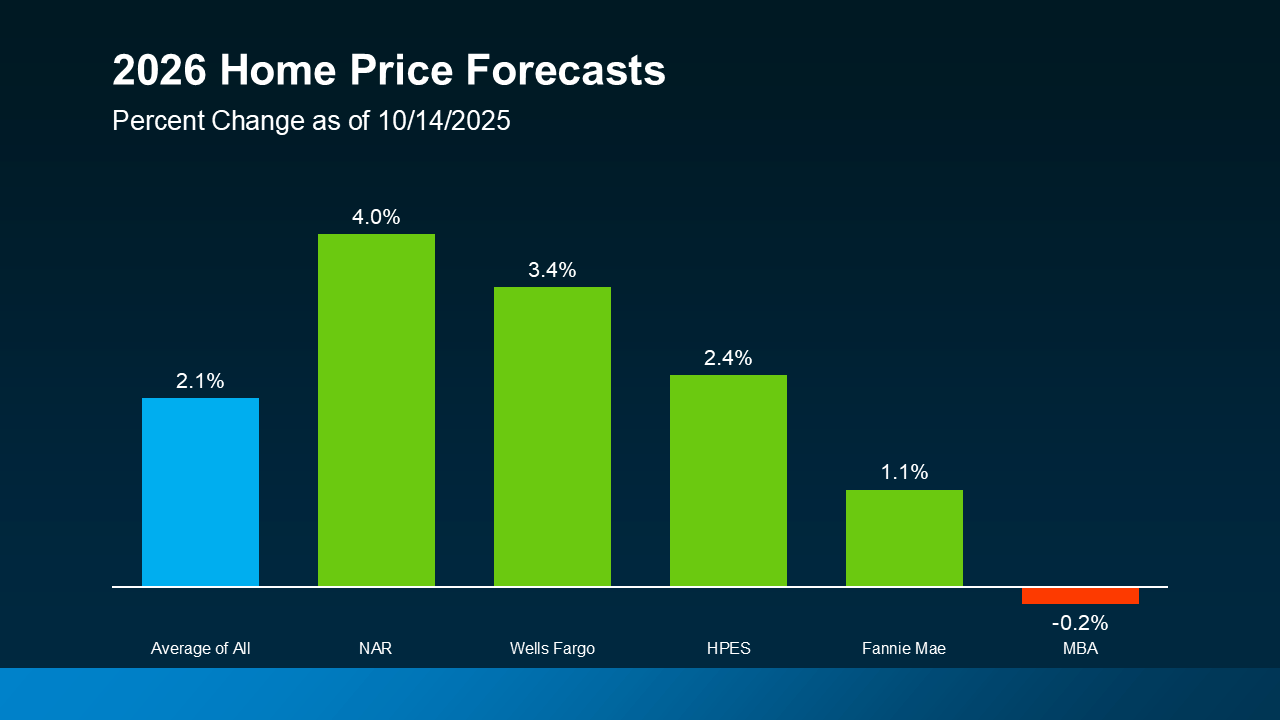
When it comes to prices, steady and sustainable is the new normal. Forecasts from CoreLogic and Redfin suggest home prices will continue to appreciate in 2026, but at a slower, more predictable pace.

That’s great news for both buyers and sellers. Buyers can plan with more confidence, while sellers can expect continued growth without the market volatility of recent years.

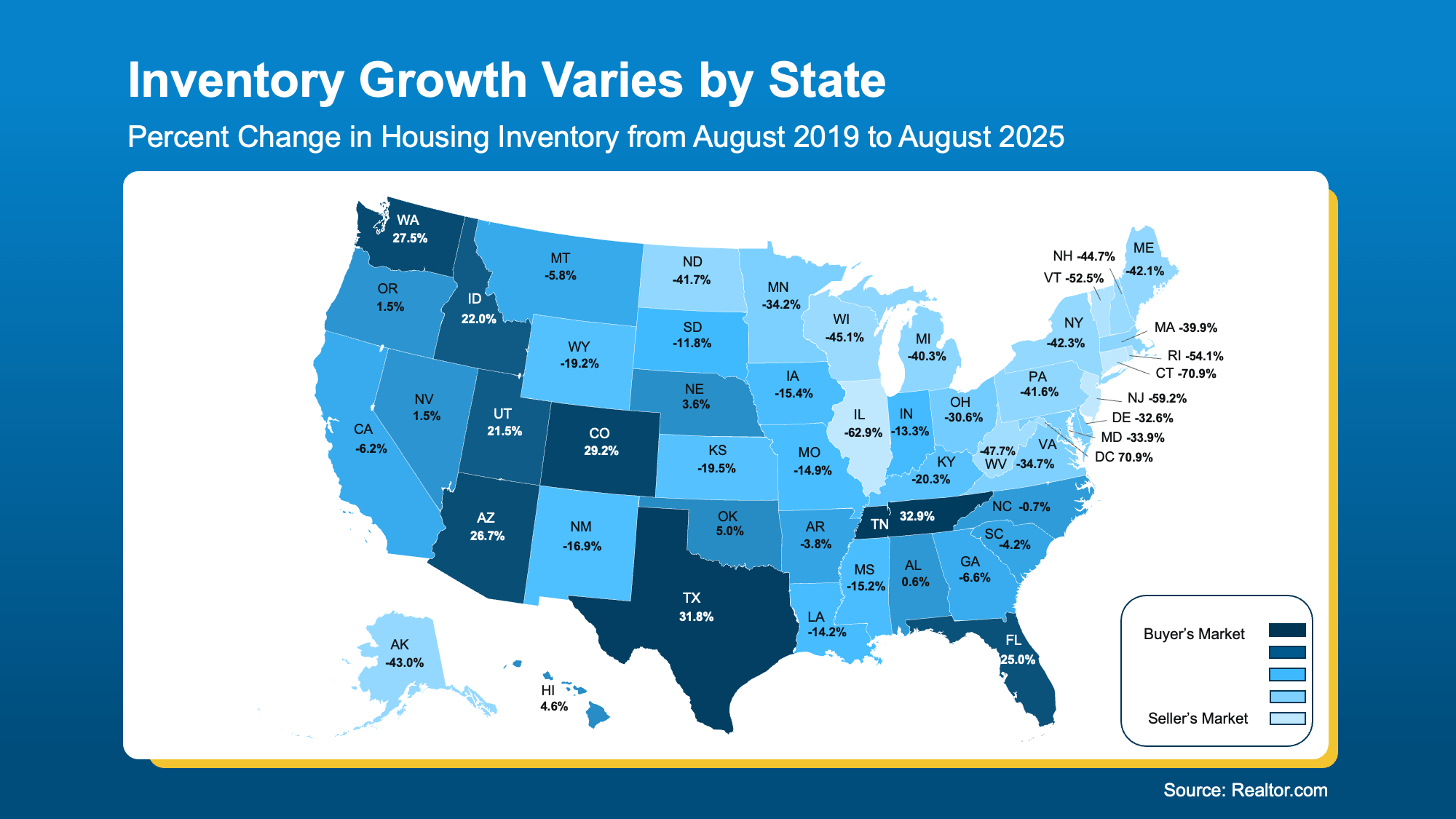
Here in Central Virginia, inventory remains tight—but not as tight as before. With more homes coming on the market, price growth will likely level out to around 2–3% annually, creating a more balanced environment for negotiations.

Even if some national markets see small dips, most local areas—especially Chesterfield, Midlothian, and Richmond suburbs—are still well above pre-2020 price levels.

The Bottom Line

After two slower years, 2026 is shaping up to be a year of renewed momentum and opportunity. With home sales projected to rise, mortgage rates trending lower, and price growth steadying, the market is finding its rhythm again.

If you’ve been waiting for the right time to make your move, now’s the time to start preparing.

Let’s connect to discuss your goals, explore current opportunities, and position you for success in the 2026 market.

Contact Don Reid Properties to start your 2026 real estate plan today.

HomeownerNew HomeownerRenterSeller October 8, 2025

Why Central Virginia Home Prices Aren’t Actually Flat

If you’ve been following national real estate headlines lately, you’ve probably seen claims that home prices are flat. But here’s the thing — that doesn’t really reflect what’s happening right here in Central Virginia.

At Don Reid Properties, we monitor the local market every day, and the story we see in Richmond, Chesterfield, and Henrico is far more detailed — and much more encouraging — than the national narrative suggests.

The Real Picture Behind the Numbers

While home prices across the U.S. have stabilized compared to the rapid climb of 2020–2022, the reality in Central Virginia tells a different story.

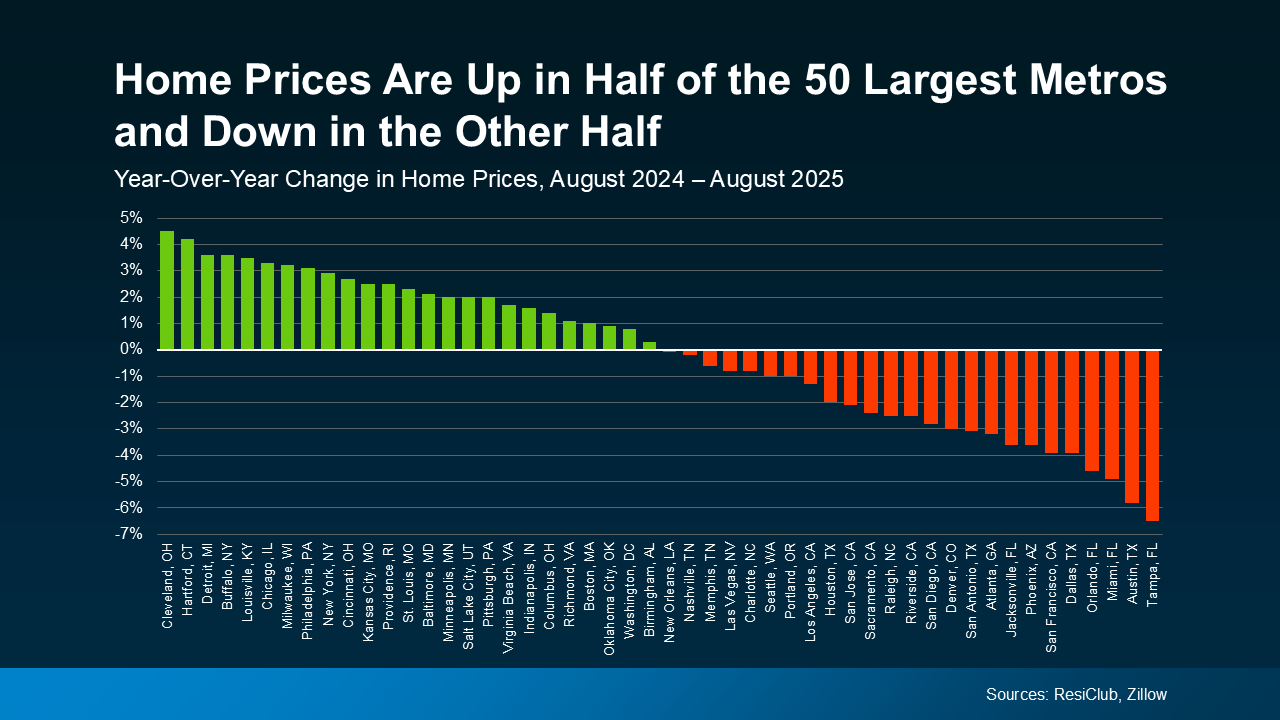
Recent data shows a market split down the middle. In many parts of Richmond and Henrico, prices are still inching upward due to limited inventory and strong demand. In others, especially where home values skyrocketed too quickly during the pandemic years, prices have started to balance out.

So when you see headlines saying prices are “flat,” that doesn’t mean prices are steady everywhere. It means that increases in some regions are offset by small declines in others — creating an average that looks flat, but isn’t what most homeowners or buyers in Central Virginia are experiencing today.

What’s Driving the Divide in Central Virginia

The biggest factor shaping this divide is inventory. The Harvard Joint Center for Housing Studies (JCHS) recently explained:

“Price trends are beginning to diverge in markets across the country. Prices are declining in a growing number of markets where inventories have soared, while they continue to climb in markets where for-sale inventories remain tight.”

That’s exactly what’s happening here in Central Virginia.

  • In Chesterfield, low inventory is keeping demand strong and prices steady.

  • In parts of Richmond City, a slight rise in available homes has created a bit more flexibility for buyers.

  • Henrico County continues to see balanced growth with strong buyer confidence.

These micro-market shifts show why local knowledge matters more than ever.

If You’re Buying

For buyers, the key is understanding your neighborhood’s market dynamic.

  • In areas where prices are still rising, waiting too long could mean paying more later.

  • In markets where prices are balancing, you may have room to negotiate on repairs or closing costs.

Your strategy depends entirely on where you’re looking — and that’s where having a local real estate expert makes all the difference. Whether it’s identifying value opportunities or guiding you through financing and offers, the Don Reid Properties team ensures you move with confidence.

Start your home search today → View homes for sale in Central Virginia

If You’re Selling

For sellers, understanding your market’s pace helps you price your home correctly and attract the right buyers.

  • In competitive areas like Henrico or Chesterfield, homes that are priced right and move-in ready are still selling quickly — often with multiple offers.

  • In markets with more supply, setting the right price early and being flexible with terms can make all the difference.

At Don Reid Properties, we combine data-driven insights with local experience to position your home effectively from day one. Ready to know what your home is worth? → Request a Free Home Valuation

The Real Story Is Local

National averages provide context, but they can’t tell you what’s happening on your street. As Anthony Smith, Senior Economist at Realtor.com, recently shared:

“While national prices continued to climb, local market conditions have become increasingly fragmented. This regional divide is expected to continue influencing price dynamics and sales activity as the fall season gets underway.”

That’s exactly why local expertise matters. Our team doesn’t just watch the data — we live it. From historic neighborhoods in Richmond to growing communities in Midlothian and Chesterfield, we track trends weekly so our clients always stay ahead.

Bottom Line

Headlines might make it sound like home prices are stagnant, but that’s not what we’re seeing across Central Virginia. Our market remains active, balanced, and full of opportunity for both buyers and sellers.

If you want the real story behind what’s happening in your neighborhood — not just national headlines — let’s talk.

📞 Call Don Reid Properties at (804) 929-4475 or schedule a consultation to discuss your next move in Richmond, Chesterfield, Henrico, and the surrounding areas.

Homeowner October 6, 2025

5 Budget-Friendly Home Improvement Projects Perfect to Tackle This Fall

Crisp air. Cooler weather. Foliage slowly but beautifully changes from green to vibrant reds, oranges, and yellows. What is there not to love about fall?

Gone are the dog days of summer, when just looking out the window is enough to make you sweat. The mild days full of autumn color and breezy mornings are enough to make you motivated. Now’s the time to consider the numerous potential updates and upgrades that can enhance both the comfort and value of your home. 

And yes, these renovations need not be a major investment or a time-consuming project. Here are some of the best low-cost projects you can tackle this season to make your home feel brand new. But first, here’s why it’s best to do them this fall.

Why fall is the best time for home renovation projects

  • Better weather conditions – The weather’s starting to get cooler, which means you can save some money on electricity since you don’t have to blast your air conditioning to keep the house cool while doing renovations. Additionally, there’s less humidity in the fall months, so materials such as paints, coatings, adhesives, and sealants will dry well. 

  • Fewer distractions – Summer has ended, which means for most people, trips are over, school starts, houses settle down, and noise levels decrease. With this change in energy, scenery, and fewer scheduling conflicts, you can now focus on home improvement projects that will breathe life into your space.

  • Prepare your home for the holiday season – With the holidays fast-approaching, the fall months are the ideal time to prepare your home for entertaining. Home maintenance and renovation should be a priority before guests and parties take over.


Home projects you can tackle this fall without breaking the bank

Lighting plays a huge role in how a room or space feels. Good lighting instantly makes everything look brighter and newer, which is why upgrading your light fixtures can make a huge impact. If you are still using those dingy yellow 2700K bulbs, maybe it’s time to replace them with 4000K daylight bulbs, especially in the kitchen or any other workspaces. 

Adding pendant lights, table lamps, or wall sconces is also a great way to add personality and charm. Plus, they’re ideal to make your home feel warm and inviting during autumn evenings.

  • Materials needed: Step stool or ladder, cloth or gloves, replacement bulbs that match the wattage and base type of your old one

  • Average cost: Standard LED bulbs cost around $4 to $10; other costs may depend on the style of your replacement and if you already have basic tools

Want a quick but effective project that will elevate your home’s aesthetic? Consider swapping out old hardware in multiple rooms, including the kitchen, bathroom, or even on your bedroom dressers. Switching out cabinet knobs, drawer pulls, and door handles around your home can give it a fresh look without the significant expense. Updating hardware is also a budget-friendly way to explore new interior design styles without a huge commitment. Matte black, brushed nickel, or polished brass are trendy, fall-inspired finishes that add warmth and modernity to your rooms.

Pro tip: Don’t forget to measure the width of your existing cabinet pulls before ordering. Also, be prepared to sand and touch up small scratches that may occur while removing old hardware.

  • Materials needed: Screwdrivers, pencil and measuring tape/ruler, level, drill bits, replacement hardware (knobs, pulls, handles), touch-up paint or stain

  • Average cost: Hardware cost as low as $3 to $25 each (low to mid-range), depending on your preferred style, material, and finish.

If you’re looking for an easy and affordable way to give your home a new look for fall and instantly boost your curb appeal, it’s painting your front door. Since the front door is usually the first thing people see when entering your home, having it in a welcoming color can make a great first impression. This project won’t take more than a couple of hours, but it has a huge impact as it makes your home stand out on the street. Once you have a freshly painted door, add beautiful new hardware and a seasonal wreath for a personal touch.

  • Materials needed: Paint, primer, painter’s tape, brushes and rollers, sandpaper, drop cloth or plastic sheeting for protection

  • Average cost: Expect to spend roughly $50 to $150

As the weather cools down, it’s time to prepare for more cozy nights ahead. And since there’s nothing better than gathering around a warm, crackling fire this fall, it’s also the perfect time to inspect, clean, and refresh your fireplace.

Chances are, you haven’t thought about your fireplace in several months. But soot and debris might have built up in your fireplace and chimney, which can become major fire hazards. This is when professional inspection and cleaning are essential to ensure your fireplace is in working order.

Once a thorough checkup and all necessary repairs are done, it’s time to give your dated fireplace a cozy makeover. Revamping your fireplace will help create a more inviting focal point in your home. Consider adding a fresh coat of high-heat paint to give it a modern look. Incorporate a stylish metal, glass, or mesh screen to revamp the look. You can also refinish the mantel and surrounding tiles for extra character, and add built-in shelves or cabinets for extra storage and display.

  • Materials needed: Basic cleaning materials, high-heat-resistant paint, and other optional decor upgrades

  • Average cost: $30-$80 for high-heat paint/primer, $20-$100 for basic cleaning materials; other costs may depend on how elaborate the makeover is.

Make the most out of this season by creating a warm and inviting home. Because let’s be honest, if there is one thing that truly resonates with fall, it is coziness. So add in some throw pillows, blankets, table runners, and rugs in fall-inspired hues and patterns to provide warmth and texture to your space. Showcase seasonal cookbooks and decorations on any open shelves. Decorate your entryway, porch, and fireplace with fall items such as pumpkins, gourds, and colorful greenery. Using wallpaper or backsplash in warm, earthy tones is also a nice touch.

  • Materials needed: Soft textiles (blankets, rugs, cushions, pillows, drapes, etc), wicker baskets, wood accents, books and magazines, pumpkins and other greenery

  • Average cost: Budget throws and pillows range from $10–25, but you can adjust the cost based on what you need

BuyerHomeownerNew HomeownerReal Estate Market UpdateRenter October 2, 2025

Central Virginia Buyers Reveal What They Want Most in Today’s Housing Market

In today’s real estate market, buyers are clear about what they need most. For homeowners in Central Virginia including Richmond, Chesterfield, Henrico, and nearby communities, understanding these buyer preferences can help you sell faster and for the best price.

According to recent housing data, affordability, more space, and move-in ready homes top the list of buyer priorities. Let’s look at what buyers are saying and how the market is responding.

What Buyers Say They Need Most

A recent housing survey shows that buyers are focused on three key things:

  • Affordability: With mortgage rates and home prices in focus, buyers want homes that fit within their budget.

  • More Space: Remote work and lifestyle changes are driving the demand for larger homes and flexible living areas.

  • Move-In Ready Condition: Many buyers want updated homes that require minimal renovations or repairs.

This graph highlights how affordability remains the number one factor influencing buyers today, followed closely by space and turnkey properties.

How the Market is Responding

In Central Virginia, sellers are adjusting to meet these needs. Updated kitchens, open floor plans, and homes in budget-friendly price points are seeing the strongest demand.

Builders in Central Virginia communities are also responding by creating new construction developments that emphasize affordability and flexible layouts for modern living.

This alignment between buyer needs and market offerings is helping maintain a balanced housing market in Virginia.

What This Means for Central Virginia Sellers

If you are thinking about selling your home, knowing what buyers want gives you a major advantage. Investing in key updates or pricing your home strategically can make your listing stand out in a competitive market.

For buyers, understanding where the market is headed helps you focus your search and find a property that fits your lifestyle and budget.

At Don Reid Properties, we specialize in helping both buyers and sellers navigate the Central Virginia housing market with confidence. Whether you are looking to sell quickly, maximize value, or find the perfect home, our team has the expertise to guide you every step of the way.

Key Takeaway

Buyers in today’s market are clear about their priorities. Affordability, more space, and move-in ready homes remain the top demands in Central Virginia.

If you are considering making a move, the best strategy is to align your goals with what buyers are actively seeking.

📞 Call Don Reid Properties at (804) 929 4475 or 📅 schedule a consultation to position yourself for success in this market.

BuyerNew HomeownerSellerVeterans September 24, 2025

Why Buyers and Sellers Face Very Different Conditions in Richmond, Chesterfield and Henrico

Why Buyers and Sellers Face Very Different Conditions in Richmond, Chesterfield and Henrico

The 2025 housing market feels very different depending on whether you are buying or selling. While buyers are working hard to navigate affordability challenges, sellers may still hold the advantage in many neighborhoods. Understanding these differences will help you make the right move and take advantage of current conditions.

Buyers Are Still Facing Challenges

Today’s buyers are balancing three major factors: mortgage rates, home prices and available inventory.

Mortgage rates remain higher than they were a few years ago, which means many buyers are facing larger monthly payments. Even a small difference in rates can change a buyer’s purchasing power by hundreds of dollars per month. In Richmond, Chesterfield and Henrico, where prices have held steady or even risen slightly, affordability continues to be one of the biggest hurdles for buyers.

According to the Mortgage Bankers Association (MBA), mortgage applications have fluctuated as buyers react to changes in rates. Some buyers have chosen to wait, hoping for lower rates or for more homes to come on the market. Others are carefully calculating their budgets and shopping with caution, often comparing several homes before making an offer.

The data shows that as mortgage rates tracked by Freddie Mac move up or down, buyer demand changes quickly. Even a small dip in rates can bring more buyers into the market, which is why affordability remains the driving force for many purchase decisions.

Sellers Have the Advantage

While buyers are cautious, sellers are benefiting from conditions that still lean in their favor. Inventory remains limited across Richmond, Chesterfield and Henrico, which means homes that are priced correctly and marketed professionally often attract strong attention.

The National Association of Realtors (NAR) continues to report that months’ supply of inventory is below what is considered a balanced market. This gives sellers leverage because buyers have fewer choices.

If you list your home now, you have the chance to reach serious, motivated buyers who are eager to act before rates change again. Because there are fewer listings compared to previous years, you are competing with a smaller pool of homes — which can mean faster offers and better terms.

Preparing your home with professional photography and staging and a competitive pricing strategy can help you stand out even more.

What This Means for the Local Market

In our area, the market is showing a mix of cautious optimism. Buyers are active but selective, and they are willing to wait for the right home that meets their needs and budget. Sellers who understand this dynamic and work with a knowledgeable local agent to set the right price are still seeing strong results.

It is also worth noting that the market could change quickly. If rates drop further, more buyers will re-enter — but more sellers might also decide to list. Acting now can give you an edge before the competition increases.

How to Navigate This Market

Whether you are buying or selling, having the right strategy matters.

  • For Buyers: Work with an agent who can help you explore financing options, stay updated on rate changes and move quickly when the right home hits the market.

  • For Sellers: Prepare your home, price it strategically and market it across multiple channels to reach the most qualified buyers.

Bottom Line

Buyers and sellers are experiencing two very different realities right now. Buyers are watching affordability closely and waiting for opportunities, while sellers continue to benefit from lower competition and steady demand.

If you are thinking about buying or selling in Richmond, Chesterfield, Henrico or the surrounding areas, now is the time to create a plan. Let’s connect today to talk through your goals and position you for success in this market.

Real Estate Market TrendsReal Estate Market UpdateSeller September 18, 2025

Why September 2025 Could Be the Perfect Time to Sell Your Home in Richmond, Chesterfield, and Henrico

If you have been waiting for the right time to sell your house, September 2025 may be your golden window of opportunity.

Mortgage rates are finally trending downward and buyers across Richmond, Chesterfield, Henrico and the surrounding areas are jumping back into the market.

Buyer Demand Is Heating Up

According to the Mortgage Bankers Association, applications for home loans are up 23% compared to early September last year. This surge in mortgage applications shows that buyers are ready to make their move and they are actively searching for homes right now.

If you had a listing that expired earlier this year or if you have been holding off on selling because the market felt slow, now is the time to reconsider. Buyer demand is the strongest it has been since July which means you do not want to miss out.

When Rates Drop Buyers React

Here is what is driving this shift.

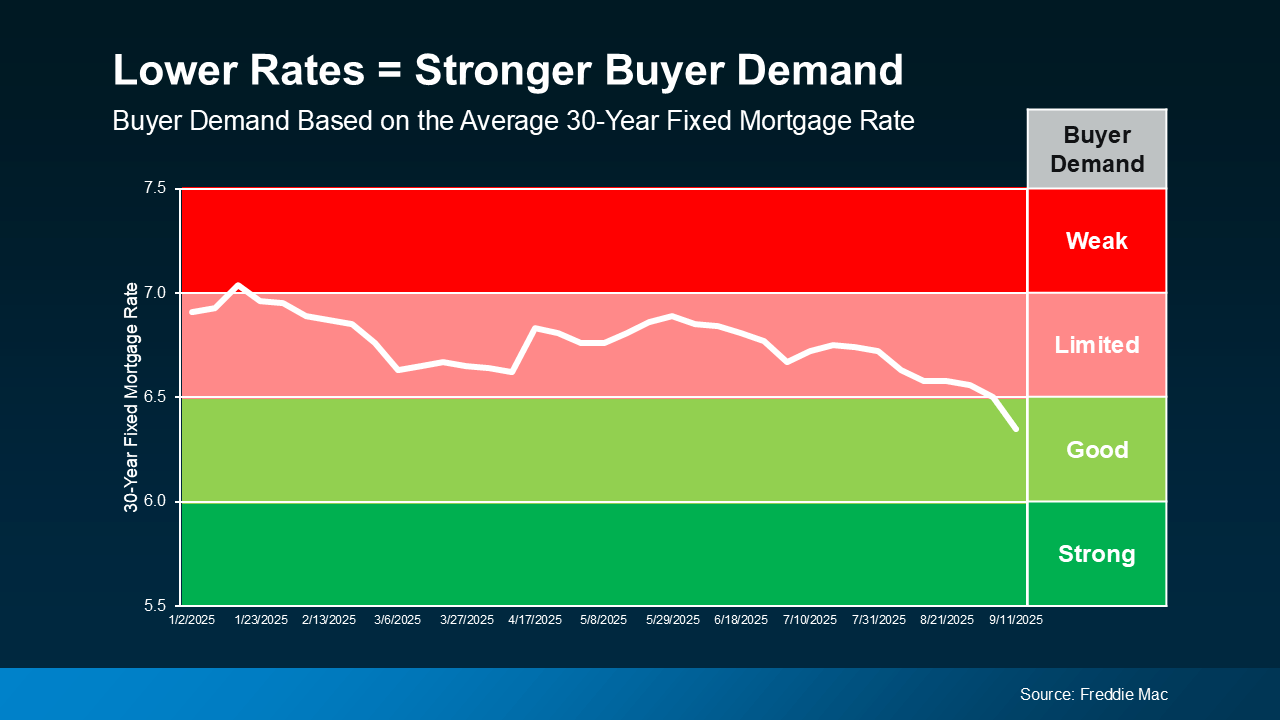
The 30-year mortgage rate just fell to 6.13% which is the lowest level since October 2024. This decline followed weaker job growth and other economic indicators that hint the Federal Reserve may cut interest rates multiple times this year. As mortgage rates dropped buyer affordability improved and demand increased.

Buyers are highly sensitive to rate changes right now. Even a small drop opens the door for many more buyers to enter the market.

Here is what the data shows (see graph below):

As you can see, as mortgage rates fall, buyer demand rises and this is already being felt in our local Richmond area housing market.

What This Means for You as a Seller

If you have been waiting for the right time to list, this may be it.

Less competition. Many sellers in Richmond, Chesterfield and the sorrounding areas may not realize the market is shifting yet. Listing now could give you a head start before more homes hit the market.

More buyers in play. With mortgage rates lower, more buyers can afford to purchase which can mean faster offers and stronger prices.

Opportunity to sell an expired listing. If your listing sat earlier this year without offers, conditions have improved and this could be your chance to try again.

Take Action Before the Market Gets More Crowded

There is a possibility that mortgage rates will drop further in the coming months which could bring even more buyers. But waiting could also mean more competition from other sellers in your neighborhood.

By acting now you can price your home strategically, capture buyers’ attention while demand is climbing and potentially sell faster and for more money.

Bottom Line

Richmond, Chesterfield and Henrico homeowners, this is your signal. Buyers are watching rates closely and many are stepping off the sidelines to make offers right now.

Do not wait until the market gets more crowded.

Let’s connect today so we can review your home’s value, create a competitive pricing strategy and position your property to attract the right buyers while demand is rising.

Seller September 15, 2025

How Many Showings Does It Take To Sell A House?

Photos, videos, and virtual tours—these are all great ways to showcase your house to buyers when selling. However, there’s nothing like physically stepping into the home and seeing the condition of the space with your own eyes.

This is where showings come in. In this blog, we’ll explore the role of showings and delve into one of the most pressing questions you might have as a seller: how many showings does it take to sell? We’ll break down the average number of showings it takes before receiving a competitive offer, as well as the crucial factors that influence this figure.

The role of showings in the home-selling process

House showings are scheduled appointments where serious buyers, typically with their real estate agent, come to view and tour the property in person. They are a crucial part of a real estate transaction because they allow buyers to see the home’s features, storage, location, and condition beyond online photos and virtual tours. The number of showings your home receives is also a key indicator of its progress on the market.

During a home showing, the prospective buyer can envision themselves living in the home and assess whether the space meets their needs. You can think of it as an audition, where your property is the main attraction and each showing is a chance to make a good impression. 

While receiving showing requests can be exciting for sellers, it can also be stressful. You have to keep your home in pristine condition, put away kids’ toys, clear any signs of pets, and just find somewhere to go during this time. This often leaves sellers wondering, “How long will this take?” and “How many times do I have to do this?”


How long do showings last?

Typical home showings last between 15 and 45 minutes. Buyers who are seriously interested in your home may spend up to an hour as they:

  • Tour each room, including the attic or basement

  • Peek into closets and other storage spaces

  • Check to see if the light switches and other appliances work

  • Measure rooms to see if their furniture would fit

  • Start planning or envisioning how each room will be used.

Although showings may feel invasive, it’s important to remember that buying a home is a major investment. Some buyers may even stay longer, especially if they want to revisit key features that will lead to them making an offer.


So, how many showings does it take on average before you sell your house? Is there a magic number

While there’s no universal answer, real estate professionals agree that it takes an average of 10 to 25 showings before a typical house attracts a serious buyer and receives an offer.

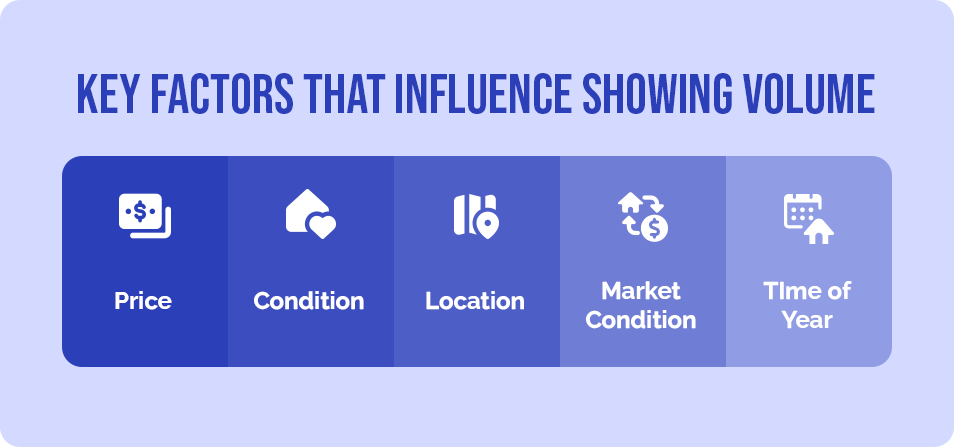
However, you could get just a handful of showings on your home and receive multiple offers. Or, your home could be on the market for weeks or months before it goes under contract. This is because showing volume can vary widely based on a number of factors: price, location, your home’s condition and how desirable it is, market conditions, as well as the time of the year. 

Here’s a general breakdown of showing volume:

  • 1-5 showings: Typical in a hot market or for highly desirable homes

  • 10-15 showings: Common when pricing, condition, and marketing align

  • 25+ showings: May indicate the home is overpriced.

Likewise, note that it’s also common for serious buyers to schedule back-to-back showings, especially if they like your home best or if your home stands out among other potential listings.


1. Listing price

Your pricing strategy is one of the most significant factors when it comes to showing activity. According to data from Redfin, the median home price for single-family homes was around $462,000 in May 2025, while the median sale price for all home types (including condos and townhouses) was lower at $440,000. In general, homes priced within the range that a majority of buyers can afford—$250,000 or below—are likely to get more showings, especially if the property is in good condition and in a desirable location. Meanwhile, homes priced around the national average of $430,000 should get an average number of showings. On the other hand, luxury or high-end homes will generally see slower showing activity since fewer buyers can afford them.

If your home is priced competitively for your housing market, you will attract serious buyers and expect to generate an average number of showing requests. But if your asking price is too high, fewer buyers will be interested, leading to minimal traffic. Remember that the price of your home must appeal to your target audience.

Besides, if you receive a lot of showing requests but they don’t turn into offers, you may need to adjust your pricing to accommodate the current market. Lowering the price might make your home more competitive and generate offers.

2. Location and neighborhood

Your home’s location plays a huge role when it comes to attracting buyers and boosting showing activity. Factors such as good school districts, proximity to shops, restaurants, hospitals, parks, and public spaces, and easy access to commuter routes are usually considered by prospective buyers, depending on their priorities and preferences. 

Homes in desirable neighborhoods usually create higher demand for showings, especially if they’re priced right. If your property happens to be located in a less desirable location or part of town, you can work with your trusted agent to improve showing activity by highlighting your home’s other strengths.

3. Market conditions

The number of showings will also be affected by current market conditions. In a seller’s market where there are more buyers than homes for sale, you may get a rush of showing requests as soon as your home hits the market. You might receive multiple offers after just a few showings. Or, your first showing could already lead to an offer since buyers know there aren’t a lot of options available, and they are under heightened pressure to make a decision.

On the contrary, your home may sit for weeks or months, even with dozens of showings in a buyer’s market, where there are more homes for sale than buyers. Buyers have a greater selection of homes to choose from, which may result in reduced showing activity per home. This is why it’s important to be aware of current market trends and work with an agent who can help position your home competitively.

4. Property condition and curb appeal

First impressions are everything when it comes to showings, so the state of your home can also impact showing volume. Your goal as the seller is to position your home at its best ahead of every showing. A clean home, decluttered, has no lingering smells and looks well-maintained, is far more likely to attract serious interest. Buyers can easily picture themselves living in a clean and tidy home, paving the way to multiple offers.

In the 2023 Remodeling Impact Report: Outdoor Features by the National Association of REALTORS®, 92 percent of REALTORS® have suggested sellers improve their curb appeal before listing a home for sale. The exterior of your house is the first thing anyone will see, which is why great curb appeal is crucial in making a good first impression. If buyers like what they see from the outside, they are more likely to check beyond the front door.

5. Timing and seasonality

Aside from current market trends, seasonality also impacts the number of showings your home is likely to receive before getting a competitive offer. Spring and summer, which are considered peak buying seasons in many real estate markets, typically yield the most visibility and showings. The only flip side is that more casual buyers—who may not be ready to purchase or are only just starting their home-buying journey—join the scene.

On the contrary, fall and winter showings might be slower but often more serious since fewer but highly motivated buyers are house-hunting in colder months. In such cases, fewer showings may still result in offers.

Get Help From A Local and Knowledgeable Real Estate Agent To Maximize Showings

There will never be an accurate answer to how many showings are needed to sell a house. The factors mentioned above each play a significant role, hence showing volumes are impossible to predict. However, having a local and knowledgeable real estate agent by your side when listing your home for sale can help you set realistic expectations based on accurate research and market insights. 

An experienced agent will give you tips on how to improve your home so it stands out, no matter the market conditions in your area. You two will work closely together to make your home more desirable to buyers. Preparing your home for showing can be tedious, but with a trusted listing agent, every effort could lead to an offer that makes all the hassles worth it.

HomeownerReal Estate Market TrendsSeller September 11, 2025

Why Your Richmond Home Isn’t Selling: It’s Price, Not Patience

Why Your Richmond Home Isn’t Selling: It’s Price, Not Patience

Is your “For Sale” sign starting to feel like a permanent fixture on your lawn? If you’re a homeowner in Richmond, Chesterfield, Henrico or the surrounding areas, and your house is sitting on the market, you might think you just need to be more patient. However, in the current Central Virginia real estate market, waiting isn’t a strategy—pricing is.

The fast-paced, offer-over-asking frenzy of the past few years has cooled. Today’s buyers are more calculated, have more options, and are extremely sensitive to price. Let’s explore why your listing price might be the one thing holding you back from a successful sale.

According to Realtor.com:

“Homes are also taking longer to sell. The typical home spent 60 days on the market in August, seven days longer than last year and now above pre-pandemic norms for the second consecutive month. This was the 17th straight month of year-over-year increases in time on market.”

The Central Virginia Real Estate Market Has Shifted

Remember when homes in the RVA market were getting snapped up in a weekend? While demand is still strong, the market dynamics have changed. According to recent data from Realtor.com, the typical U.S. home now spends about 60 days on the market, significantly longer than a year ago.

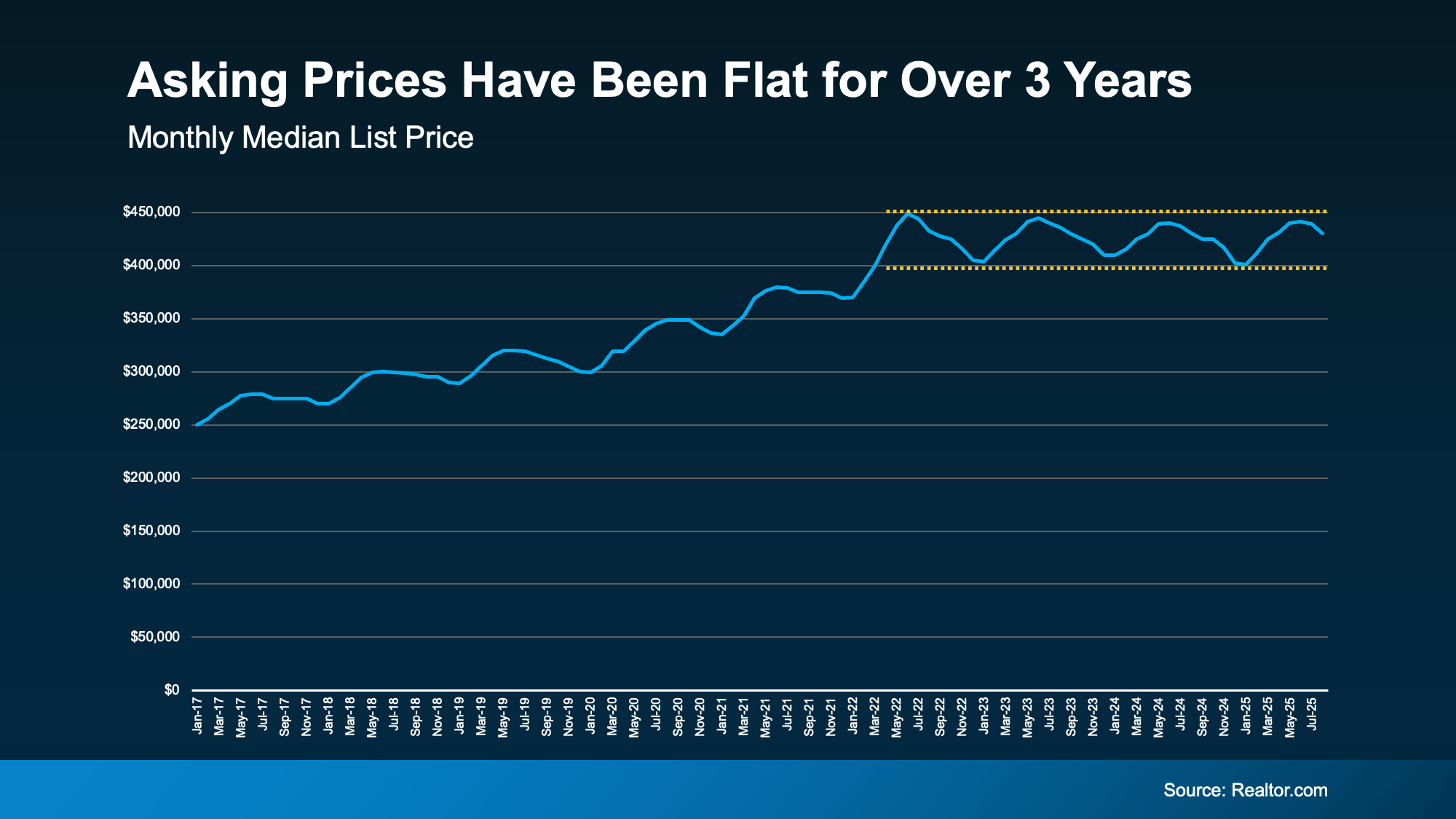
A key factor that sellers often miss is that the rapid home price appreciation we saw has stabilized. As you can see in the graph below, average list prices have leveled off after their steep climb. Buyers are no longer willing to pay any price and are carefully analyzing comparable sales (or “comps”) in neighborhoods from The Fan to Short Pump. If your home is priced based on last year’s peak market, you’re not competing effectively.

4 Telltale Signs Your Virginia Home is Overpriced

If your property isn’t getting traction, the market is sending you clear signals. Here are four red flags, identified by industry experts at Bankrate, that your listing price is too high:

  1. A Lack of Showings: The first wave of interest happens online. If your price is out of sync with the market, potential buyers won’t even book a tour. A quiet showing calendar is the number one sign of an unrealistic asking price.

  2. No Serious Offers (or Only Lowball Offers): A well-priced home, even in a balanced market, should generate offers. If all you’ve received are offers far below your asking price, it’s not the buyers who are unreasonable—it’s a direct reflection of your home’s perceived market value.

  3. Negative Buyer Feedback: Are agents and their clients consistently commenting that the home is “great, but…”? Listen closely to this feedback. If comments about the price being too high for the home’s condition or location are a common theme, it’s time to re-evaluate.

  4. Your Home Sits While Neighbors Sell: One of the clearest indicators is watching similar homes in your area go under contract while yours remains active. If your neighbor’s property sold in 30 days and you’re approaching day 60, your price is likely the differentiating factor.

The Solution: A Strategic Price Adjustment

The good news is that this is a fixable problem. A strategic price reduction isn’t an admission of defeat; it’s a smart marketing move to reposition your home in front of the right pool of buyers. Even a small adjustment can reignite interest and trigger new alerts for buyers whose search criteria you now meet.

Working with an experienced local real estate agent is crucial. They can provide a detailed Comparative Market Analysis (CMA) to show you exactly what’s selling and at what price, ensuring your home is positioned to sell quickly and for the highest possible market value.

And don’t worry about “losing” money. Given the incredible home equity growth over the last 5 to 10 years in Virginia, most homeowners are still in an excellent position to walk away with significant, tax-free gains.

Get Your Richmond Home Priced Right and Sold

In today’s market, the right price changes everything. Stop waiting and start strategizing. If you want to understand the true market value of your home and develop a plan to get it sold, our team is here to help. We provide expert analysis and proven marketing strategies for homeowners across the Richmond area.

Let’s get your home sold. Contact Don Reid Properties today for a no-pressure consultation.

📞 Call us at (804) 929 4475

🗓️ Schedule Your Free Consultation

Don Reid Properties

Serving the real estate needs of Richmond, Henrico, Chesterfield, Midlothian, Moseley, and the greater Central Virginia (RVA) area.

*Not intended as a solicitation if your property is currently listed with another broker.